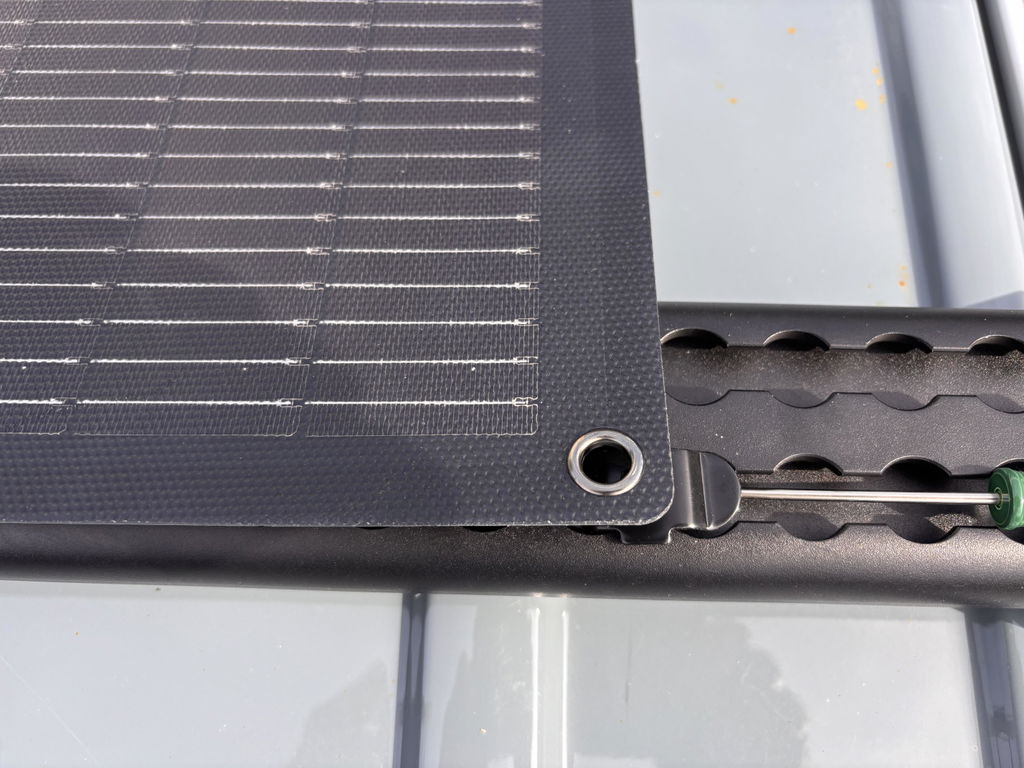
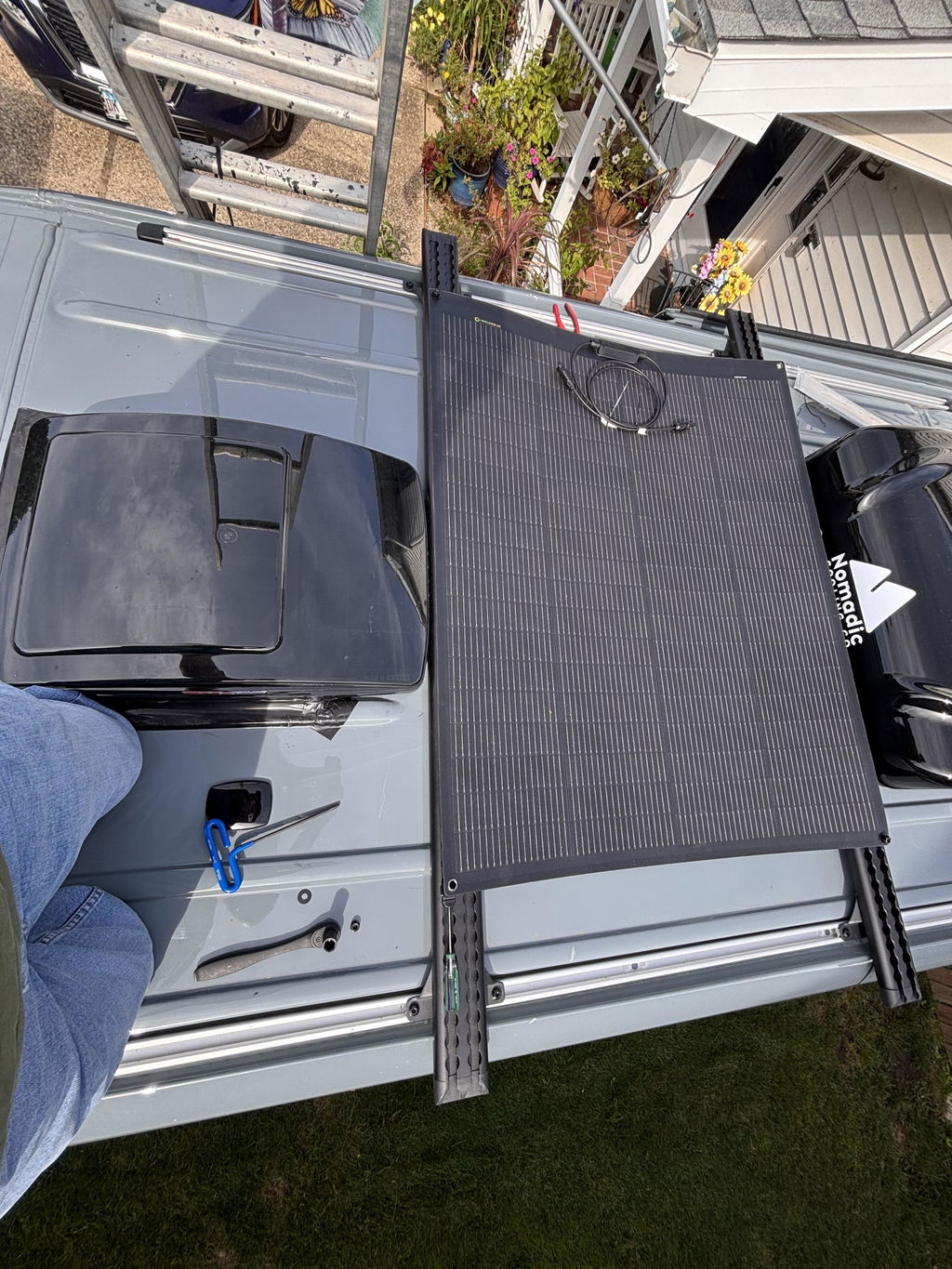
The Sprinter's 330 lb (150 kg) dynamic roof limit covers everything above the roofline — including the rack structure itself. DVA's LoadSpan-T rail system weighs 8.4 lb for the pair. Add two DualTrack-T crossbars (~15 lb combined) and you've consumed 23 lb total — leaving 307 lb for solar, fans, AC, and cargo. A heavy steel expedition rack consumes 100–140 lb before you mount anything.
The 330 lb Number Nobody Plans Around Correctly
Mercedes-Benz rates every Sprinter — VS30 (2019+) and NCV3 (2007–2018) — at 330 lb (150 kg) maximum dynamic roof load. The figure appears on page 151 of the VS30 operator's manual and is identical across all wheelbases and roof heights: 144", 170", 170 EXT, standard roof, high roof, super-high roof.
Dynamic means the load limit applies while the vehicle is moving — subject to road vibration, braking forces, and cornering loads.. Everything you plan to mount and drive with is governed by the 330 lb number.
Here's what most builders miss: the limit applies to everything above the roofline — including rack extrusions, mounting feet, crossbar hardware, solar panel frames, wiring conduit, and fasteners. Not just the gear you load after the fact.
Technically the van's 331 pound rooftop weight limit includes the weight of anything on the roof, which would include the weight of the after market roof rack (125 pounds or so for one in aluminum like the one you are considering I believe). That leaves about 200 pounds for accessories, equipment, and gear.
— Sprinter-Source, Thread #86885 (2020)
That calculation from 2020 is still accurate. At 125 lb for a full aluminum safari rack, you have roughly 200 lb of payload capacity remaining. A 200W solar array (28–36 lb), MaxxFan vent (7.5 lb), and wiring/hardware (8 lb) leaves plenty of margin. But add an AC unit (64 lb) and upgrade to 400W solar (56–72 lb) and that same 200 lb budget hits its limit fast. The rack weight is the variable most builders don't calculate until it's too late.
There's a second constraint that often goes unnoticed: Mercedes specifies a maximum of 110 lb per pair of roof rack support points. Even if your total load stays under 330 lb, concentrating too much weight on a single crossbar pair can exceed the per-point structural rating at the roof panel and rail attachment. Minimum three support pairs is recommended for loads approaching 300 lb.
What Your Roof Rack System Actually Weighs
The biggest variable in your 330 lb budget is the rack structure itself. The range is enormous — from 8 lb to 140+ lb for the mounting infrastructure before you bolt on a single accessory.
| Rack System | System Weight | Budget Remaining | Notes |
|---|---|---|---|
| DVA LoadSpan-T rails only | 8.4 lb | 321.6 lb | L-Track + T-Slot extrusion, no crossbars |
| DVA LoadSpan-T + 2 DualTrack-T crossbars | ~23 lb | 307 lb | Full crossbar grid, L-Track + T-Slot interface |
| Generic aluminum slimline crossbar kit | 40–60 lb | 270–290 lb | Budget crossbar systems, 2–4 bars |
| Aluminum walk-on platform (full length) | 75–95 lb | 235–255 lb | Full-roof aluminum deck rack |
| Steel safari/expedition rack (full length) | 100–140 lb | 190–230 lb | Heavy-duty walk-on; most budget-intensive |
The DVA system works in two layers: the LoadSpan-T rails mount to the Sprinter's factory threaded roof inserts (VS30, 2019+, no drilling) or to OEM C-rails on NCV3 vans with D13 prep code. The DualTrack-T crossbars then attach to those rails — they mount to the roof track, not directly to factory threaded inserts. This distinction matters for VS30 owners planning to skip the rail step. The LoadSpan-T rail pair runs the full length of the van roof and provides the dual-channel interface — L-Track for cargo slides and accessories, 25mm T-Slot for adjustable gear mounts. Each DualTrack-T crossbar adds roughly 7.5 lb. A full 2-bar kit totals ~23 lb — more than 5× lighter than an entry-level aluminum walk-on platform and 6× lighter than a steel rack.

What Every Common Roof Addition Weighs
Once the rack structure is accounted for, your remaining budget goes to the components you actually want up there. The table below uses published manufacturer specifications and owner-reported weights from Sprinter-Source and r/VanLife forum threads.
| Component | Weight | Notes |
|---|---|---|
| MaxxFan Deluxe roof vent | 7.5 lb | Standard across most van builds |
| Fantastic Fan 7350 | 8.0 lb | Alternative vent option |
| 100W rigid solar panel | 14–18 lb | Industry average ~16 lb per panel |
| 200W rigid solar array (2×100W) | 28–36 lb | Common minimum for van life builds |
| 400W rigid solar array (4×100W) | 56–72 lb | Off-grid power builds |
| 600W rigid solar array (6×100W) | 84–108 lb | Max-power setups — watch your budget carefully |
| Truma Aventa rooftop AC unit | 64 lb | Most common Sprinter rooftop AC choice |
| Cargo box (medium, empty) | 35–55 lb | Add loaded contents for real weight |
| Wiring, conduit, brackets, hardware | 5–15 lb | Most builders underestimate this line |
That 330lb is including the rack, solar panels, fasteners, wires, etc. You run out of allowance really fast. My rack is 42mm galv steel unistrut rails along the sprinter roof channels, installed with M8 rivnuts and butyl tape.
— r/VanLife, February 2026
The "you run out really fast" observation is accurate for heavy rack systems. With a steel rack at 130 lb, a 400W solar array (64 lb), AC unit (64 lb), and fan (7.5 lb) puts you at 265.5 lb — leaving only 64.5 lb for wiring, hardware, and any gear. Start the same build with DVA crossbar rails at 23 lb and the same gear consumes 158.5 lb — leaving 171.5 lb to spare.
Three Real Build Scenarios
These three scenarios show how rack choice directly determines your effective build capacity. Same components, same goals, dramatically different headroom based on infrastructure weight.
Rails + 2 DualTrack-T crossbars: 23 lb
200W rigid solar array: 32 lb
MaxxFan Deluxe: 7.5 lb
Wiring + hardware: 8 lb
Total used: 70.5 lb | Remaining: 259.5 lb
Verdict: Enough remaining budget to add a full AC unit (64 lb), double the solar array, and still have 90+ lb for cargo.
Steel safari rack (full length): 130 lb
400W rigid solar array: 64 lb
Truma Aventa AC: 64 lb
MaxxFan Deluxe: 7.5 lb
Wiring + hardware: 12 lb
Total used: 277.5 lb | Remaining: 52.5 lb
Verdict: Budget is nearly exhausted. Any cargo box or extra gear puts this build at or over the 330 lb limit while moving.
DVA LoadSpan-T rails + 2 DualTrack-T crossbars: 23 lb
400W rigid solar array: 64 lb
Truma Aventa AC: 64 lb
MaxxFan Deluxe: 7.5 lb
Wiring + hardware: 12 lb
Total used: 170.5 lb | Remaining: 159.5 lb
Verdict: Same gear as Scenario B, but 107 lb more headroom — effectively a full loaded cargo box recovered just by choosing the right rack architecture.

Why the Crossbar Approach Wins on Weight Budget
A full walk-on deck looks attractive — standing space on the roof, a solid surface for piling gear. But that surface costs 75–140 lb of structural weight before you mount anything useful. On a 330 lb system, a steel safari rack consumes 30–42% of your entire weight allowance on a walking surface you'll use a handful of times per year.
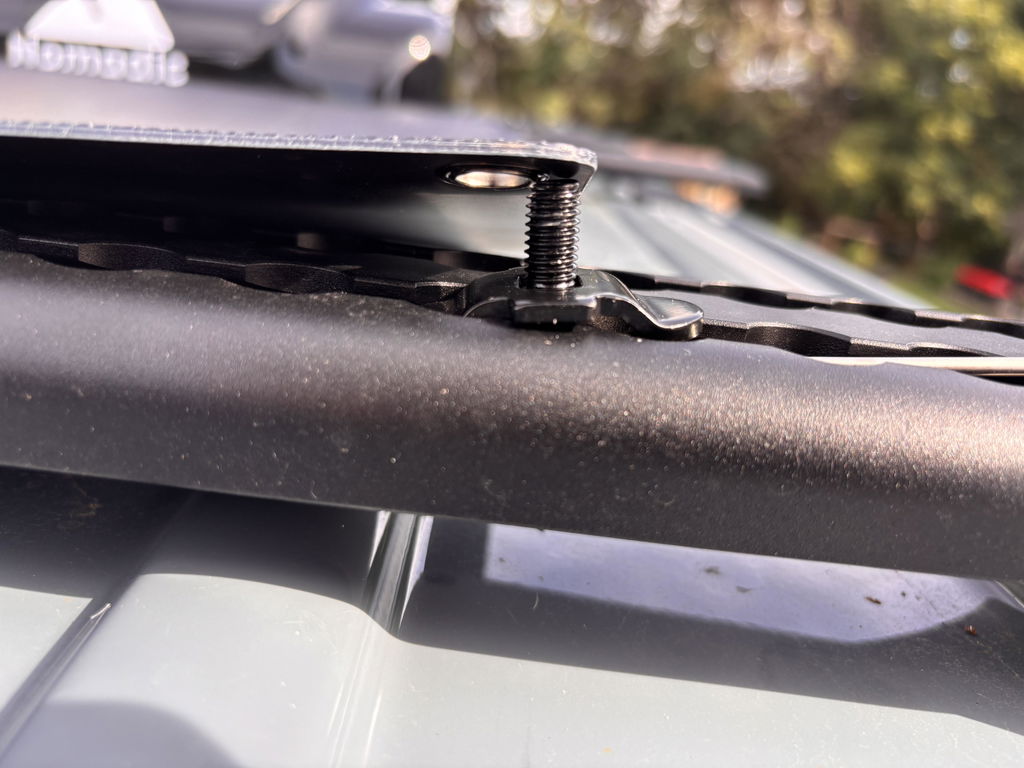
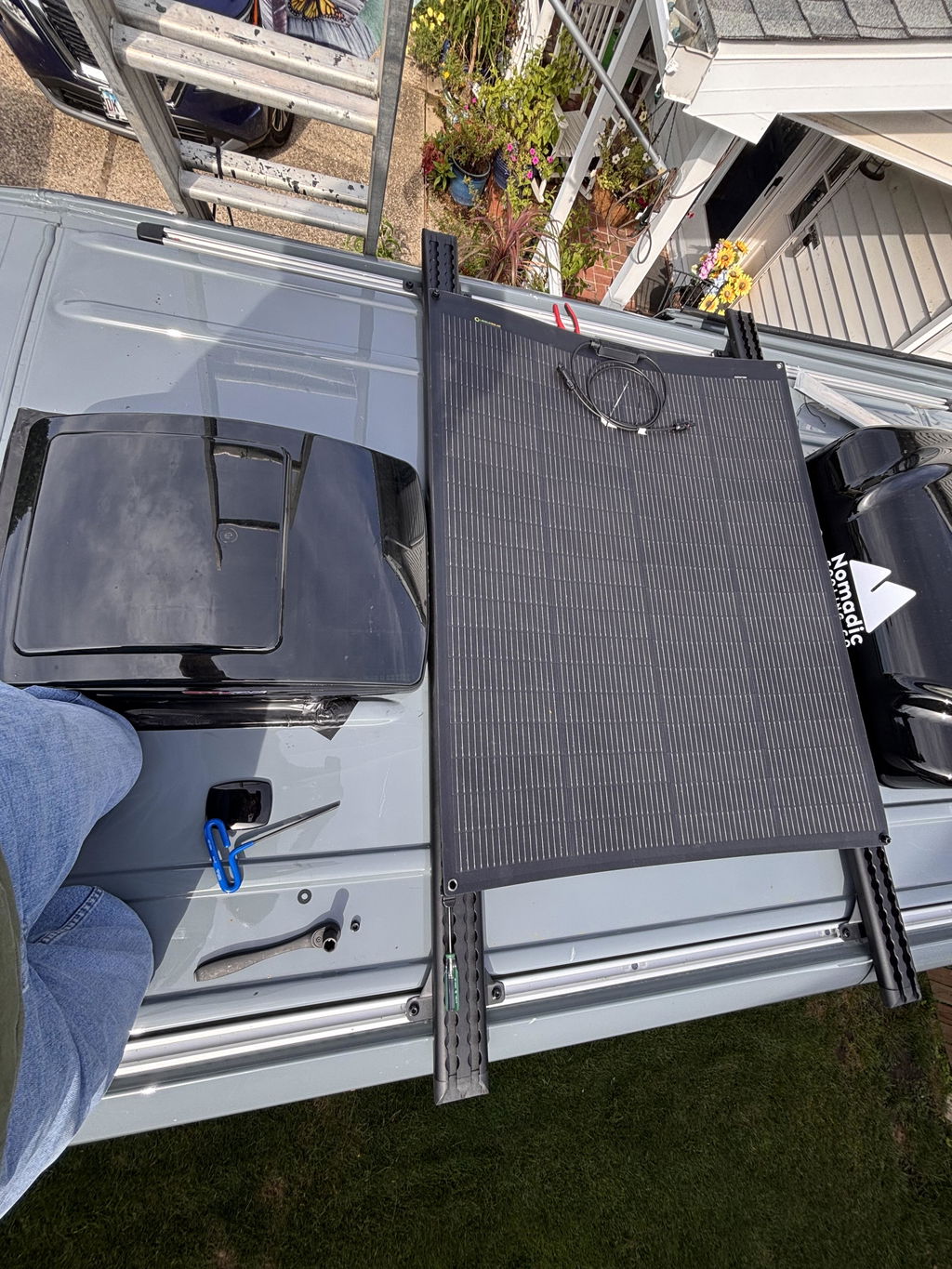
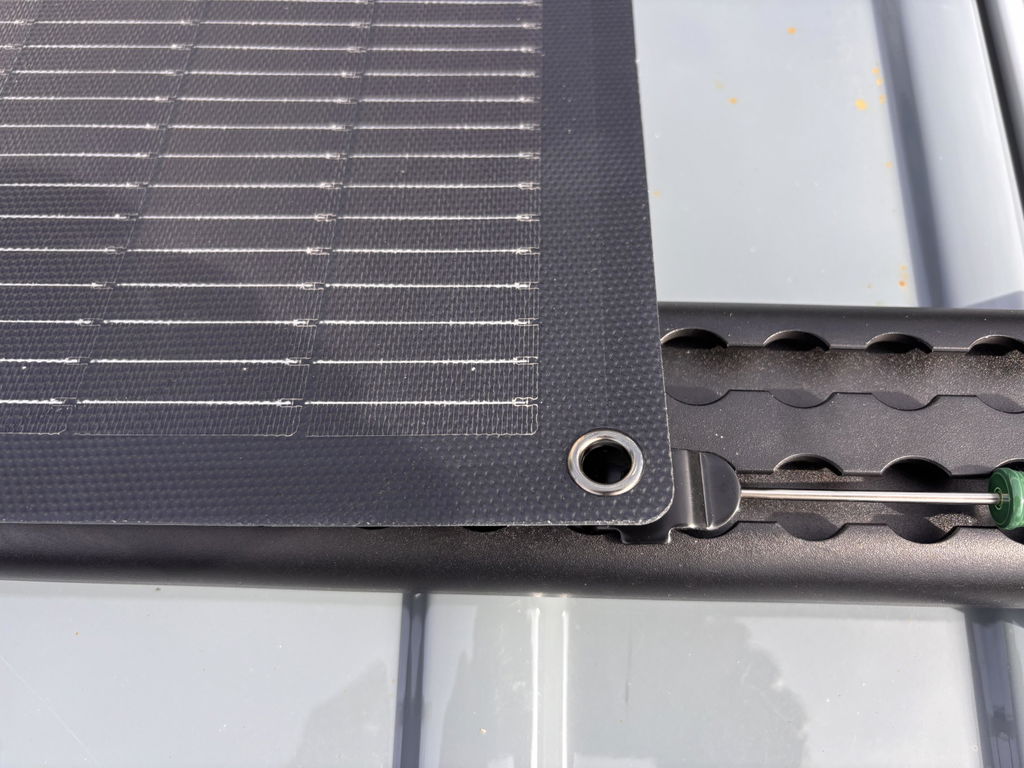
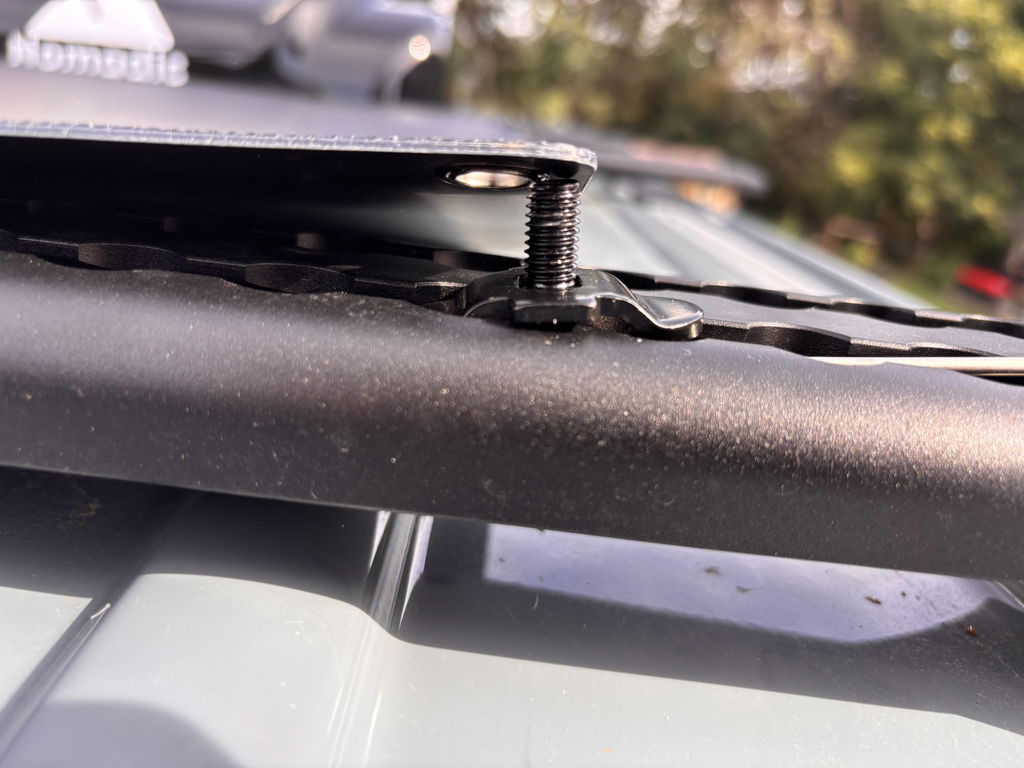
The crossbar approach gives you the same functional attachment points — L-Track channels for cargo management, T-Slot for adjustable mounting, hard-point positions for solar panels — without the deck weight penalty. Rigid solar panels mount directly to the crossbar extrusions via T-bolt clips. Cargo boxes attach through T-Slot or L-Track hardware. Awning mounts bolt directly to the LoadSpan-T rails.
The LoadSpan-T rails run the full length of the van roof and provide the dual-channel interface — L-Track and 25mm T-Slot in one extruded aluminum profile. The DualTrack-T crossbars mount transversely across those rails, creating the grid that anchors solar, fans, and roof accessories. VS30 vans (2019+) bolt directly to factory threaded inserts — no drilling, no headliner removal required. NCV3 vans with the D13 prep code use OEM C-rails as the attachment base.
For builds that need a flat walking surface without sacrificing the entire 330 lb budget, the DeckSpan™ Universal Roof Panels ($399/set) install between crossbars to create a partial or full walk-on deck. The panels add weight only where you actually need deck surface — not as a fixed full-length structure locked in at purchase.

How to Calculate Your Own Budget
Use this formula before committing to any rack system:
Run this before purchasing any roof system. The rack weight is the line most builders skip — and the one that eliminates options later in the build.
For detailed engineering analysis — static vs dynamic load calculations, per-bar stress analysis, and three full build scenarios with line-item math — see the Sprinter 330 lb Roof Load Budget Engineering Guide. For the rail system and crossbar fitment breakdown by van model, see the Sprinter Van Roof Rails: OEM D13 Install & 330 lb Guide.
The Bottom Line
The 330 lb limit is a budget, not just a cap. Every pound in your rack structure is a pound you can't put in solar, fans, or usable cargo. A steel expedition rack at 130 lb leaves 200 lb for everything else. The DVA crossbar system at 23 lb leaves 307 lb — recovering the equivalent of a full loaded cargo box just by choosing the right mounting architecture from the start.
For most Sprinter builds — van life conversions, cargo haulers, off-road rigs — the crossbar approach with LoadSpan-T rails and DualTrack-T crossbars is the highest-efficiency use of the 330 lb limit. If you need a walk-on surface, add DeckSpan panels modularly — only where deck adds real value, not as a fixed structural weight across every inch of roof.
Browse the full DVA Sprinter roof collection to configure rails, crossbars, and deck panels for your specific van and build goals.
Sources
- Mercedes-Benz Sprinter VS30 Operator's Manual, pages 151 and 286 — 330 lb (150 kg) dynamic roof load limit; 110 lb per support pair
- Sprinter-Source Forum Thread #86885: Roof Rack Weight Limit — owner discussion of OEM weight limit vs aftermarket rack weight
- r/VanLife: Cargo box on sprinter roof rack? (February 2026) — owner builds and weight realities
- Sprinter-Source Forum Thread #102425: Thoughts on roof rack and solar panels — combined rack + solar build discussion
- Manufacturer product weights: Truma Aventa (64 lb), MaxxFan Deluxe (7.5 lb), rigid 100W solar panel industry average (14–18 lb per panel)