Sprinter van crossbars mount to OEM factory C-Rails — the extruded channel running the length of your roof on most high-roof Sprinters — and bolt on without drilling in under 30 minutes. Two main types exist: standard crossbars (~$150–220, single T-slot or basic channel) that work well for kayak racks, cargo boxes, and light gear; and dual-channel crossbars like the DVA DualTrack-T™ ($299 for a 2-bar kit) that run both an L-Track cargo channel and a 25mm T-Slot solar/light channel in the same extruded rail — no adapters. For high-roof 144", 170", and 170 EXT Sprinters (2007+), the DualTrack-T fits all three wheelbase variants and handles 300 lb static / 150 lb dynamic per 2-bar kit, bounded by the van's 330 lb factory roof rating while driving. This guide covers which crossbar type fits your build, van-model sizing, and what accessories mount to each channel.
If you've spec'd out a Sprinter roof setup, you've hit the same fork in the road every van builder faces: L-Track or T-Slot. Choose L-Track and you get the tie-down, slider, and cargo net ecosystem. Choose T-Slot and you get compatibility with major roof rack brands, solar panel mounts, and light bar brackets. Each standard has thousands of accessories. Neither is compatible with the other without adapters — and adapters add height, reduce load rating, and create failure points.
DVA's DualTrack-T™ is a patent-pending crossbar extrusion that runs both an L-Track channel and a 25mm T-Slot channel in parallel, in a single monolithic aluminum rail. No adapters. No choosing sides. This article covers exactly how it works, what it mounts to, and what the engineering trade-offs are.
DualTrack-T™ crossbars fit all high-roof Sprinter variants and run L-Track AND 25mm T-Slot in a single extruded rail — no adapters required.
- Fitment: 144"WB, 170"WB & 170" EXT high-roof Sprinter (2007+); OEM C-Rails or DVA LoadSpan-T rails required
- L-Track channel: tie-down rings, sliders, cargo nets, awning mounts, DVA accessories
- 25mm T-Slot channel: solar panel mounts, light bar brackets, universal roof accessories
- Load rating: 300 lb static / 150 lb dynamic (2-bar); 600 lb static / 300 lb dynamic (4-bar) — limited by 330 lb Sprinter roof rating
- Install: bolt-on, no drilling, <30 min per crossbar — fits OEM C-Rails and DVA LoadSpan-T rails
Crossbars slot into existing OEM C-Rails and mount accessories directly. A full roof rack replaces the rail system with a platform structure. If you're comparing the two, see the Sprinter Roof Rack Buyer's Guide. This article covers crossbars only.


Sprinter Model Compatibility & Sizing
DualTrack-T™ crossbars are sized for the Sprinter high-roof platform. The number of crossbar positions available depends on your wheelbase — longer vans have more factory rail holes and more crossbar positions.
| Sprinter Model | Wheelbase | Standard Kit | Crossbar Positions | Compatible Rails |
|---|---|---|---|---|
| High Roof 144" WB | 144 in | 2-bar or 4-bar | Up to 6 | OEM C-Rails, DVA LoadSpan-T |
| High Roof 170" WB | 170 in | 2-bar or 4-bar | Up to 8 | OEM C-Rails, DVA LoadSpan-T |
| High Roof 170" EXT | 170 + ext | 4-bar recommended | Up to 9 | OEM C-Rails, DVA LoadSpan-T |
Rails required first: DualTrack-T™ crossbars mount to roof rails — they do not attach directly to the roof. If your Sprinter does not have OEM C-Rails or aftermarket rails installed, install rails first. This is the most common source of confusion for first-time Sprinter roof builds.
The Dual-Channel Design
The DualTrack-T™ crossbar is a single extruded aluminum profile that contains two independent mounting channels:
- L-Track Channel: Accepts standard L-Track single studs, double studs, O-rings, sliding mounts, tie-down anchors, cargo nets, and DVA-specific accessories (awning mounts, recovery board carriers, Pelican case brackets).
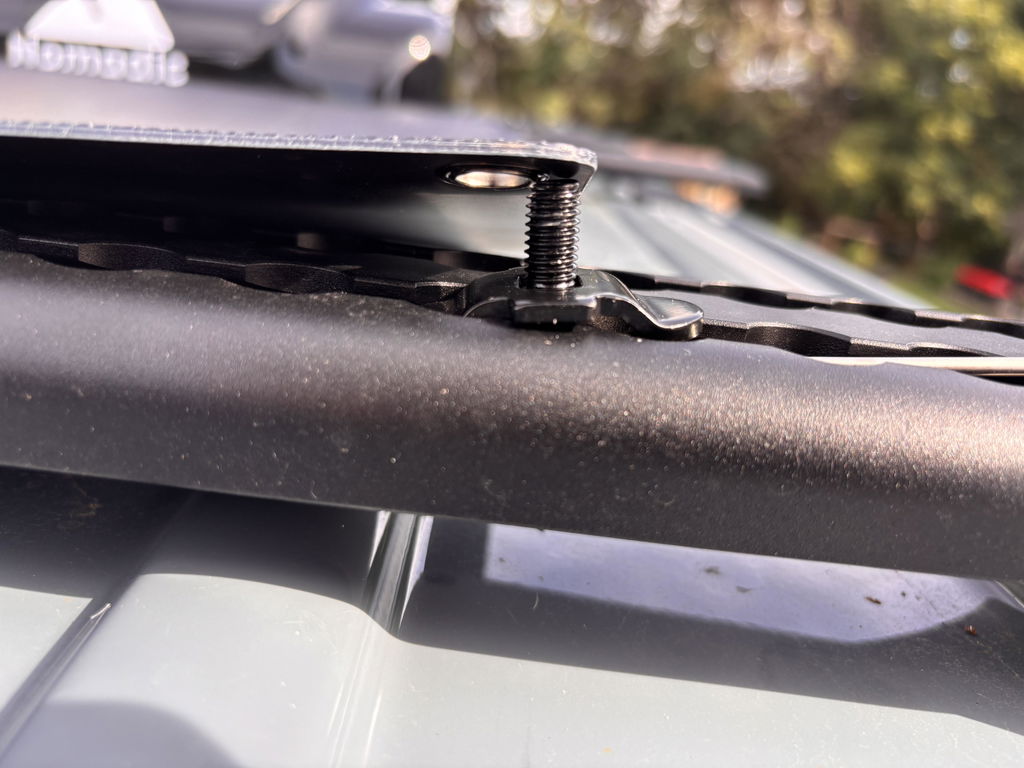
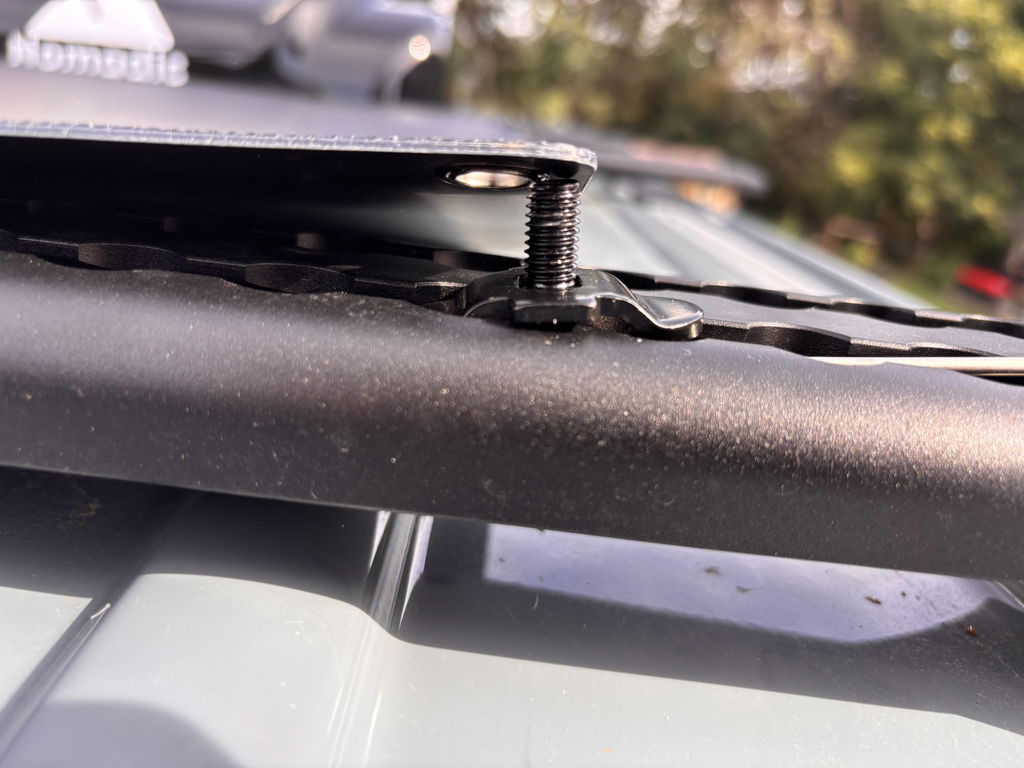
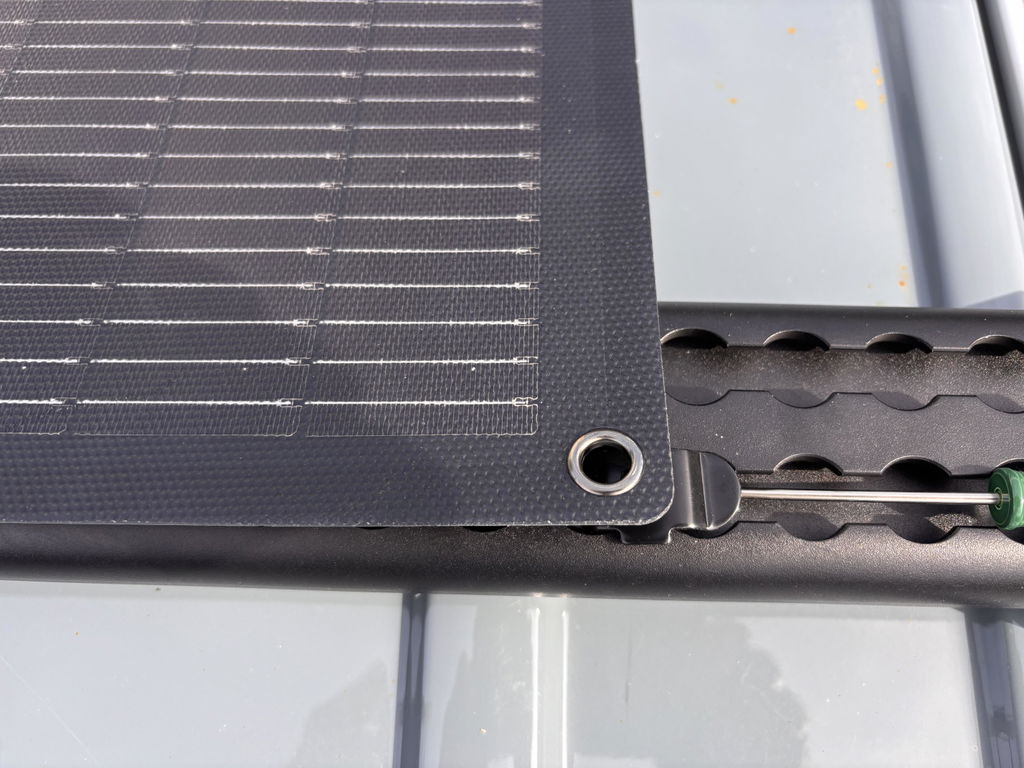
- 25mm T-Slot Channel: Accepts standard 25mm T-Slot Bolt hardware used by major roof rack brands and most universal roof accessories — solar panel mounts, light bar brackets, antenna mounts, crossbar accessories.
Both channels run the full length of each rail. You can use hardware in both channels simultaneously without interference — an L-Track slider on one side and a T-Slot bracket on the other, both locked to the same bar.
The integrated dual-channel design (L-Track + 25mm T-Slot in a single extrusion) is patent pending. This is not a rail with two separate pieces bolted together — it's a single monolithic extrusion with both channel profiles formed in one pass.
Why Two Standards Exist
L-Track (also called airline track or A-Track) originated in aircraft cargo systems and became the standard for tie-down hardware in work vans, trailers, and expedition vehicles. The L-shaped channel profile allows single-stud fittings to slide in, rotate 90°, and lock. It's the dominant standard for cargo management.
25mm T-Slot (also called T-track) is the standard used by roof rack accessories from major brands. Most name-brand roof rack systems, aerodynamic bars, and cargo carriers are built around 25mm T-Slot Bolt hardware. If you buy a major-brand roof accessory, it almost certainly expects a T-Slot channel.
Until DualTrack-T™, running both meant either: (a) two separate sets of bars, (b) adapter plates bolted to one bar type to accept the other, or (c) choosing one standard and living without the other. Each workaround has real costs — extra weight, reduced load capacity from adapter flex, increased height profile, and more potential failure points from additional hardware.
Technical Specifications
| Specification | Detail |
|---|---|
| Material | Extruded, high-grade powder coated aluminum |
| Track configuration | Dual-channel — L-Track + 25mm T-Slot (patent pending) |
| Edge profile | Curved — aerodynamic, low noise |
| Finish | Black powder coat (UV + corrosion resistant) |
| Kit contents | 2× DualTrack-T™ crossbar rails + complete mounting hardware |
| Vehicle fitment | Mercedes-Benz Sprinter |
| Installation | No-drill, bolt-on — basic hand tools, <30 min per rail |
The 2-bar kit provides 300 lb static (parked) and 150 lb dynamic (while driving) capacity. The 4-bar kit doubles to 600 lb static and 300 lb dynamic. These ratings are for the crossbar system itself — the actual roof load limit is determined by the weakest link in the chain, which is typically the Sprinter's roof rating of 330 lb (150 kg) static, the same for all roof heights.
What DualTrack-T™ Mounts To
DualTrack-T™ bolts onto three types of Sprinter roof rails:
- Mercedes OEM factory roof rails — the C-Rails that come from the dealer or were factory-installed
- DVA LoadSpan™ load-spreading roof rails — DVA's own rail system with integrated L-Track
- Compatible aftermarket Sprinter roof rails — other track-style rails that use standard bolt-on mounting
DualTrack-T™ is a crossbar system — it mounts to roof rails, not directly to the roof. If your Sprinter doesn't have roof rails installed, you need to install rails first (OEM, LoadSpan, or compatible aftermarket) before adding DualTrack-T™ crossbars.
This is the most common point of confusion in the Sprinter roof accessory space. The Sprinter roof has pre-punched holes for rails. Rails mount to those holes. Crossbars mount to rails. It's a two-step system: holes → rails → crossbars.
The confusion shows up constantly in Sprinter forums, where owners try to mount crossbars without understanding they need rails first:
We put up our ceiling before we realized we did not have the OEM roof tracks, so adding them would be an epic undertaking. Has anyone thought about putting rivnuts into the OEM holes from above and mounting the tracks that way?
— Forum user, Sprinter-Source.com, "Roof Rails" thread #110537, post #17 (2022)
This is exactly the scenario that makes rail selection a day-one decision. Once the interior is finished, going back to install rails means working around headliner panels, insulation, and ceiling builds.
The Curved-Edge Aerodynamic Profile
Flat-top extrusion crossbars are notorious for generating wind whistle at highway speeds. The turbulence that causes the noise comes from sharp leading and trailing edges creating vortex shedding — the air flow separates abruptly at the edge, creating oscillating low-pressure zones that vibrate the bar at audible frequencies.
DualTrack-T™ uses a curved leading and trailing edge profile. The curve allows airflow to stay attached to the bar surface longer before separating, which reduces the intensity and frequency of vortex shedding. This is the same aerodynamic principle used in premium aero-profile crossbars from major brands — but those bars sacrifice mounting versatility for their aero profile, typically offering only a single T-Slot channel. DualTrack-T™ maintains dual-channel functionality within the aero shape.
This matters for daily-driven Sprinters. A weekend camping van might tolerate bar noise on a highway run. A Sprinter that logs highway miles every day — a mobile office, a delivery vehicle, a daily-driven camper — needs crossbars that don't add a constant drone at 65 mph.
Wind noise and vibration are among the most common complaints in Sprinter roof rack discussions. Owners have experimented with everything from DIY solutions to premium aero bars to solve the problem:
I am planning to release these brackets on Friday. They will require 80/20 1517-LS crossbars ~46.07" long (according to MB Sprinter roof CAD model and actual measurement of my roof).
— Forum user, Sprinter-Source.com, "8020 Roof Rack?" thread #31574 (Feb 2014)
The 80/20 extrusion approach shows the lengths owners go to for a functional crossbar solution. Flat-profile aluminum extrusions are strong and cheap, but without aerodynamic shaping, they generate noise at highway speed that makes long-distance driving noticeably less comfortable.
L-Track Channel: What It Accepts
The L-Track channel in each DualTrack-T™ rail is industry-standard spec. That means it works with:
- Single-stud fittings — the most common L-Track hardware. Slide in, rotate, lock. Used for tie-down rings, D-rings, and mounting cleats.
- Double-stud fittings — two studs per fitting for anti-rotation under load. Used for heavy accessories that can't twist.
- O-rings and O-track fittings — circular rings that slide in the track. Used for bungee cord attachment and flexible cargo retention.
- Sliding cargo net hooks — adjustable position cargo net attachment points.
- DVA mounting clamps — native fit for DVA accessories including awning mounts, recovery board carriers, and Pelican case brackets. See the full DVA L-Track accessory collection →
- Universal L-Track accessories — anything built to the standard L-Track spec from any manufacturer.
25mm T-Slot Channel: What It Accepts
The 25mm T-Slot channel accepts standard T-Slot Bolt hardware:
- Major brand T-track accessories — including box mounts, bike rack feet, and ski carriers designed for standard 25mm T-track bars
- Universal roof rack accessories — any 25mm T-slot compatible hardware from any manufacturer
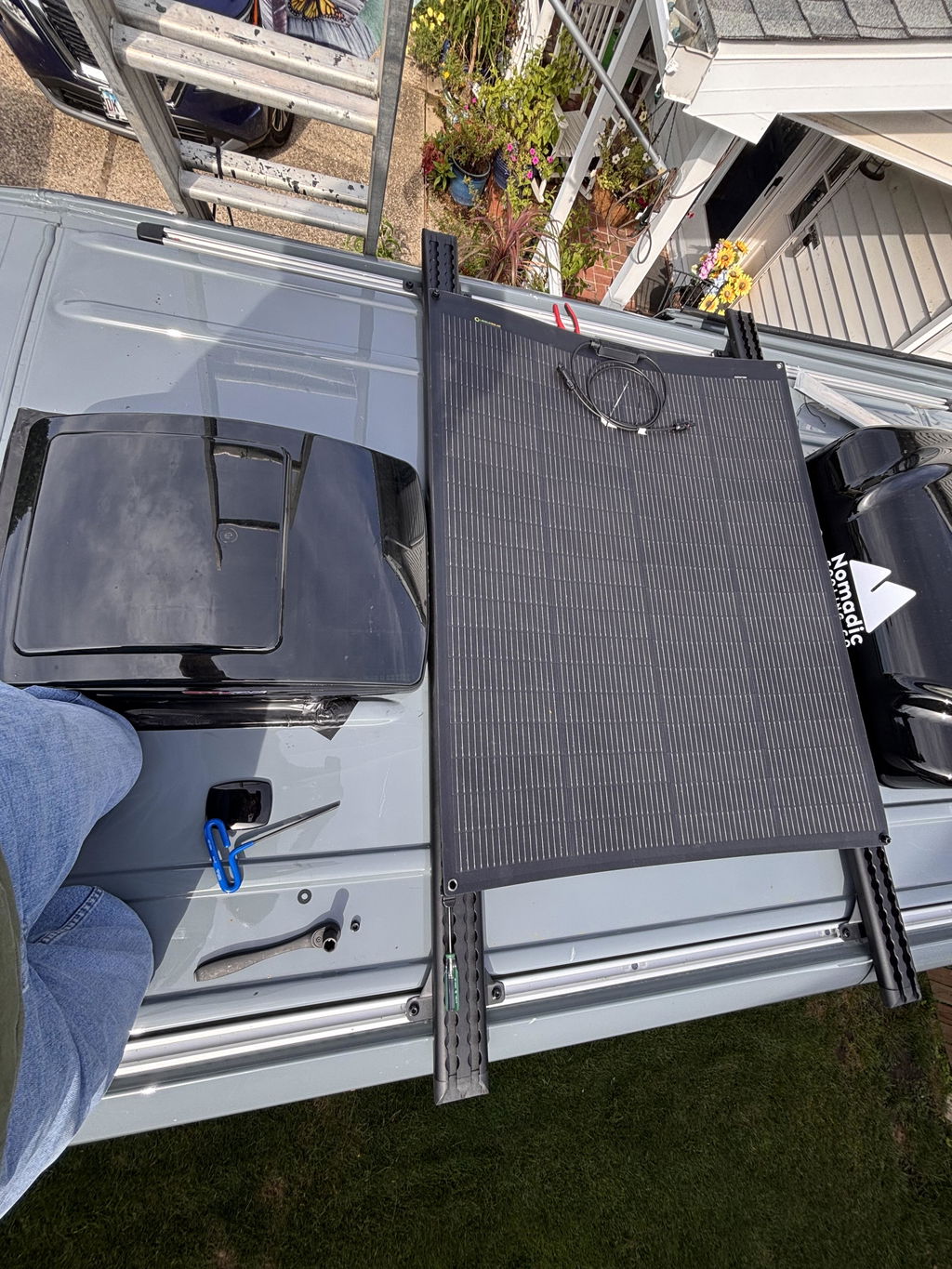
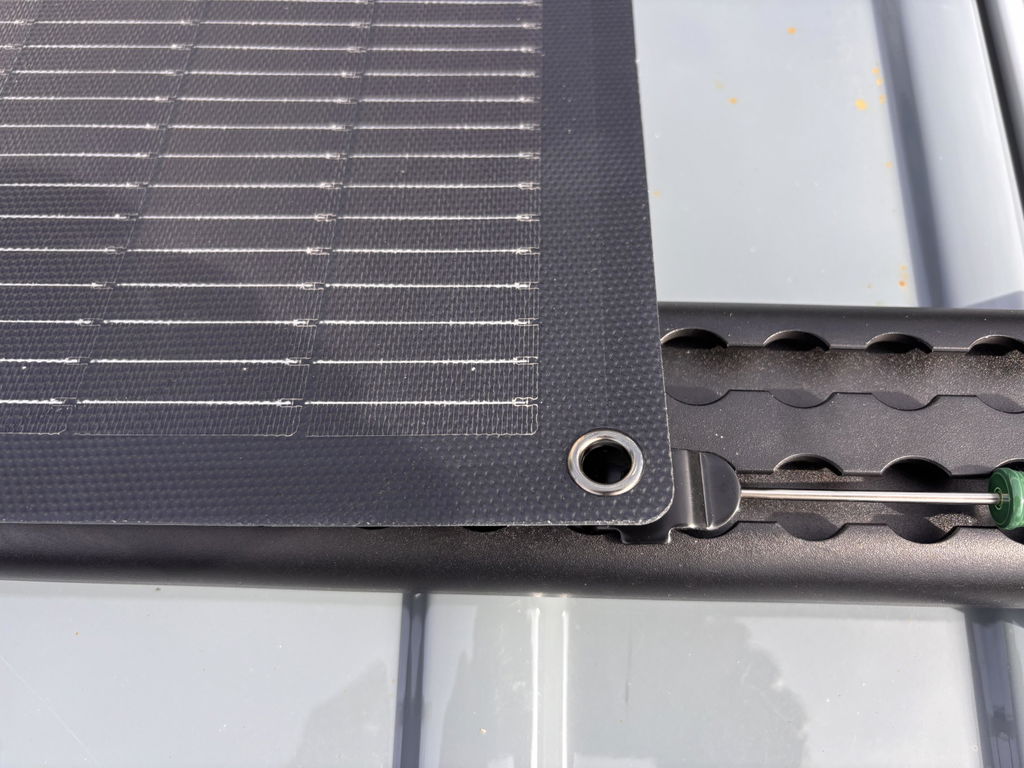
- Solar panel mounts — most universal solar panel mounting kits use 25mm T-Slot Bolts
- Light bar brackets — LED light bar clamps and sliding mounts
- Antenna brackets — Starlink, cellular booster, and communication antenna mounts
- Universal 25mm T-Slot Bolt accessories — standard across the roof rack industry
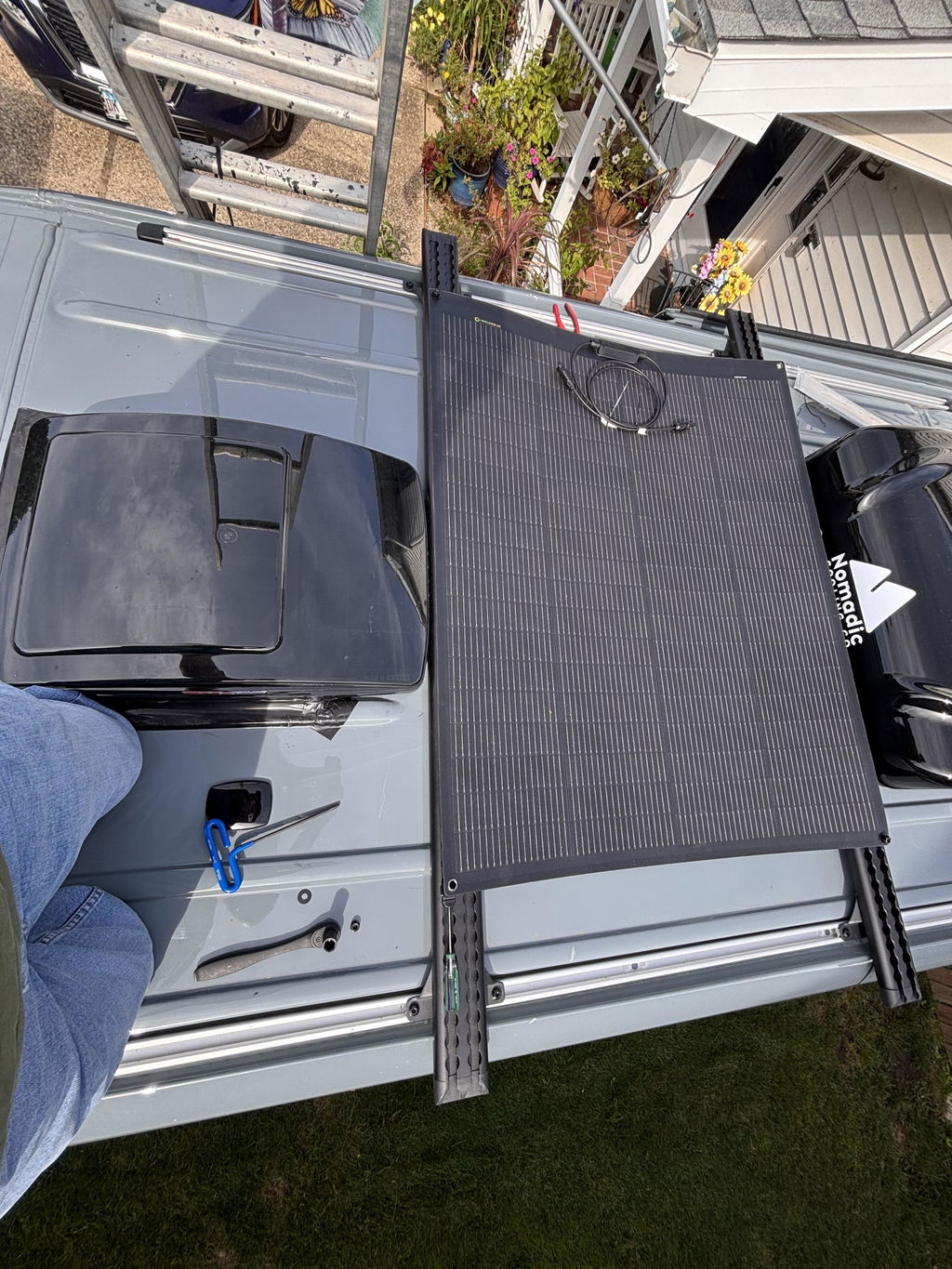
The key advantage: you can run an awning mount in the L-Track channel on one side of the bar while a solar panel is clamped with a T-Slot Bolt on the other side. Both are secured independently. Removing one doesn't affect the other.
Installation
DualTrack-T™ bolts to your existing roof rails with the included hardware kit. The process:
- Position the crossbars at the desired location along your roof rails
- Insert mounting hardware through the rail and into the crossbar
- Tighten with basic hand tools (included hardware)
- Each rail takes less than 30 minutes
No drilling. No permanent modification to the van or the rails. Fully reversible — unbolt the crossbars and the rails are back to bare. This matters for leased Sprinters and for owners who want the option to change their roof configuration as their needs evolve.
The reversibility factor is significant in the Sprinter community, where many owners have invested heavily in their builds and want to avoid permanent modifications that affect resale value or lease returns. Forum discussions consistently emphasize the value of bolt-on solutions:
I made my own rails using extruded Aluminum for a fraction of price of OEM rails.
— Dann, Sprinter-Source.com, "Roof Rails" thread #110537, post #12 (2022)
I installed them through the OEM holes. I made counter sink holes through the bars so the T-Nuts would slide in, I used 5/16 bolts with lock nuts and washers. I also used butyl tape to make sure everything was sealed properly.
— Dann, Sprinter-Source.com, "Roof Rails" thread #110537, post #15 (2022)
Our team has helped spec DualTrack-T™ crossbar setups for Sprinter builds since 2022. The most consistent spec mistake we see: owners order crossbars before confirming their rail type. DualTrack-T™ requires bolt-on roof rails — OEM C-Rails or DVA LoadSpan-T. If you're starting from a bare roof, install the rails first. On leased Sprinters, the no-drill reversibility is worth calling out to fleet managers upfront — both the rails and the crossbars come off cleanly at lease return.
DIY rail approaches work, but they require fabrication skills, custom drilling, and careful sealing. The DualTrack-T™ system eliminates the fabrication step — it's a finished, engineered product that bolts onto existing rails with included hardware.
The Sprinter Roof Load Question
Every Sprinter roof accessory discussion eventually hits the load rating question. Here are the verified numbers:
Mercedes-Benz Sprinter roof load rating: 330 lb (150 kg) static — the same for all roof heights. There is no difference between low roof, standard roof, and high roof for the factory-rated static roof load. This number comes from Mercedes-Benz engineering documentation and applies to the NCV3 and VS30 platforms.
The DualTrack-T™ crossbar system is rated for 300 lb static (2-bar) or 600 lb static (4-bar). But the practical limit is always the van's roof rating, not the bar rating. With a 4-bar DualTrack-T™ setup, the bars themselves can hold 600 lb — but the Sprinter roof under them is rated for 330 lb. The weakest link determines the safe maximum.
Your actual roof load capacity is the lowest rated component in the chain: roof sheet metal → rails → crossbars → mounting hardware. For most Sprinter setups, the factory roof rating of 330 lb dynamic is the limiting factor, regardless of how much the crossbars themselves can hold.
Dynamic load — the weight you can safely carry while driving — is lower because road forces (acceleration, braking, bumps, crosswinds) multiply the effective load on the roof structure. The DualTrack-T™ 2-bar dynamic rating is 150 lb; the 4-bar dynamic is 300 lb. Plan your driving load around the dynamic number, not the static number.
Which Sprinter Crossbars Are Right for Your Build?
Standard single-channel crossbars are the right call if your build is simple — cargo box, kayak rack, or bike mount — and you only need one mounting standard. The DVA DualTrack-T™ dual-channel design makes more sense for Sprinter owners who:
- Already own L-Track accessories and T-Slot accessories and don't want to choose between them
- Are building a multi-use roof setup (awning + solar + cargo retention + lights) that spans both mounting standards
- Drive their Sprinter daily and need a crossbar that doesn't generate wind noise at highway speed
- Want the ability to change their roof accessory configuration without buying new bars
- Prefer a system that bolts on without drilling or permanent modification
If you only need one mounting standard and never plan to mix, a single-channel bar — L-Track or T-Slot — will work fine. The dual-channel design exists because most Sprinter builds evolve over time, and the accessories you buy in year two rarely match the mounting standard you committed to in year one.
As of mid-2026, dual-channel crossbar designs have become the default recommendation in Sprinter build communities for full-time van life and multi-use cargo setups. The L-Track vs T-Slot debate that dominated forums in 2022–2023 has largely resolved: builders who run both accessory ecosystems (awning + solar + cargo, for example) find that single-channel bars force a retrofit within 12–18 months of the initial build. The DualTrack-T™ dual-channel approach addresses this directly at the hardware level, without adapters or secondary bars.
Sources
- DVA Mechanics product page: DualTrack-T™ Crossbar Rail Kit for Mercedes Sprinter (dvamechanics.com) — specifications, load ratings, compatibility, installation details
- DVA Mechanics product page: LoadSpan™ Roof Rails (dvamechanics.com/pages/loadspan-landing) — rail system compatibility
- Mercedes-Benz Sprinter specifications: 330 lb (150 kg) static roof load rating, all roof heights (DVA verified)
- Sprinter-Source.com: "Roof Rails" thread #110537 (Jun 2022) — owner discussion of track systems, Van Tech compatibility, crossbar needs
- Sprinter-Source.com: "MB factory roof rack system" thread #30097 (Dec 2013) — channel nut discussion, aftermarket rail compatibility
- Sprinter-Source.com: "8020 Roof Rack?" thread #31574 (Feb 2014) — 80/20 extrusion crossbar approach, roof measurement data