Every pound you bolt to the roof comes out of a budget most owners never calculated. Here's the math — and what happens when you get it wrong.
The Mercedes-Benz Sprinter roof weight limit is 330 lb (150 kg) dynamic load — consistent across all models (VS30 and NCV3), all wheelbases, and all roof heights. Typical budget consumed: roof rack or rails 12–90 lb, solar panels 30–120 lb, rooftop AC 64 lb. Most full builds leave a 37–229 lb margin. The math below shows exactly why Scenario B (full overland) is effectively over budget.
The Number Everyone Quotes but Nobody Plans Around
Mercedes-Benz rates every high-roof Sprinter — VS30 (2019+) and NCV3 (2007–2018) alike — at 330 lb (150 kg) maximum dynamic roof load. That figure appears on page 151 of the operator's manual for VS30 models. It is consistent across 144″, 170″, and 170″ EXT wheelbases. It does not change with GVWR rating, drive configuration, or model year.
The number is dynamic load: the maximum weight the roof structure can carry while the vehicle is moving and subject to acceleration, braking, cornering, and road vibration. Static load — what the roof handles while parked — is roughly double, around 661 lb (300 kg) [Manufacturer specification, independently referenced by loadspanvans.com]. That distinction matters if you're climbing up for maintenance, but it's irrelevant for anything you plan to drive with.
DVA's DVA L-Track collection offers aviation-grade cargo management hardware designed specifically for van builds.
Why 330 lb Disappears Faster Than You Think
Three hundred and thirty pounds sounds generous until you start adding components. Most Sprinter owners install some combination of roof rails, crossbars or a rack, solar panels, a ventilation fan, and possibly an air conditioner. Each one eats into the budget, and the mounting hardware itself is a significant consumer.
Here's what common roof components actually weigh:
| Component | Typical Weight | Notes |
|---|---|---|
| Full-length roof rack (170″ WB) | 60–90 lb | Aluminum racks toward the low end; steel racks at the high end |
| Roof rails only (pair, 170″) | 12–25 lb | Load-spreading rails without crossbars |
| Crossbar set (3–4 bars) | 12–20 lb | Aluminum 25mm T-Slot or L-track compatible |
| Rigid solar panel (100 W) | 16–20 lb | Standard aluminum-framed monocrystalline |
| Rigid solar panel (200 W) | 26–33 lb | Larger panel; check dimensions vs. usable roof width |
| Rigid solar panel (335 W) | ~41 lb | Oversized; consumes significant roof real estate |
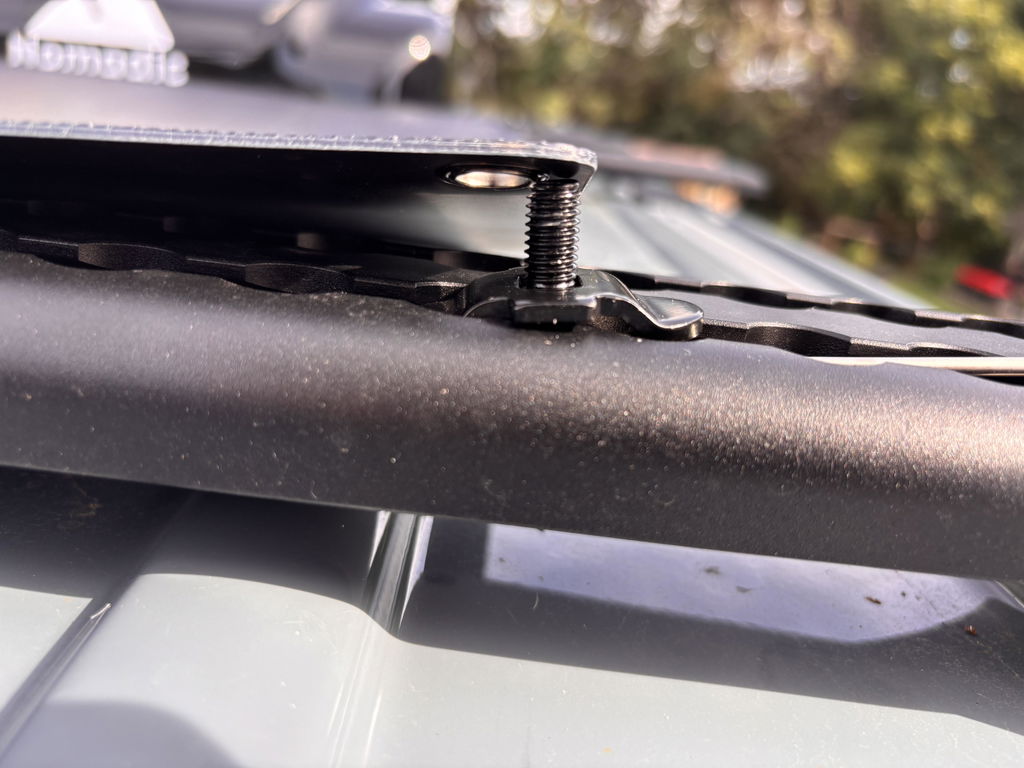
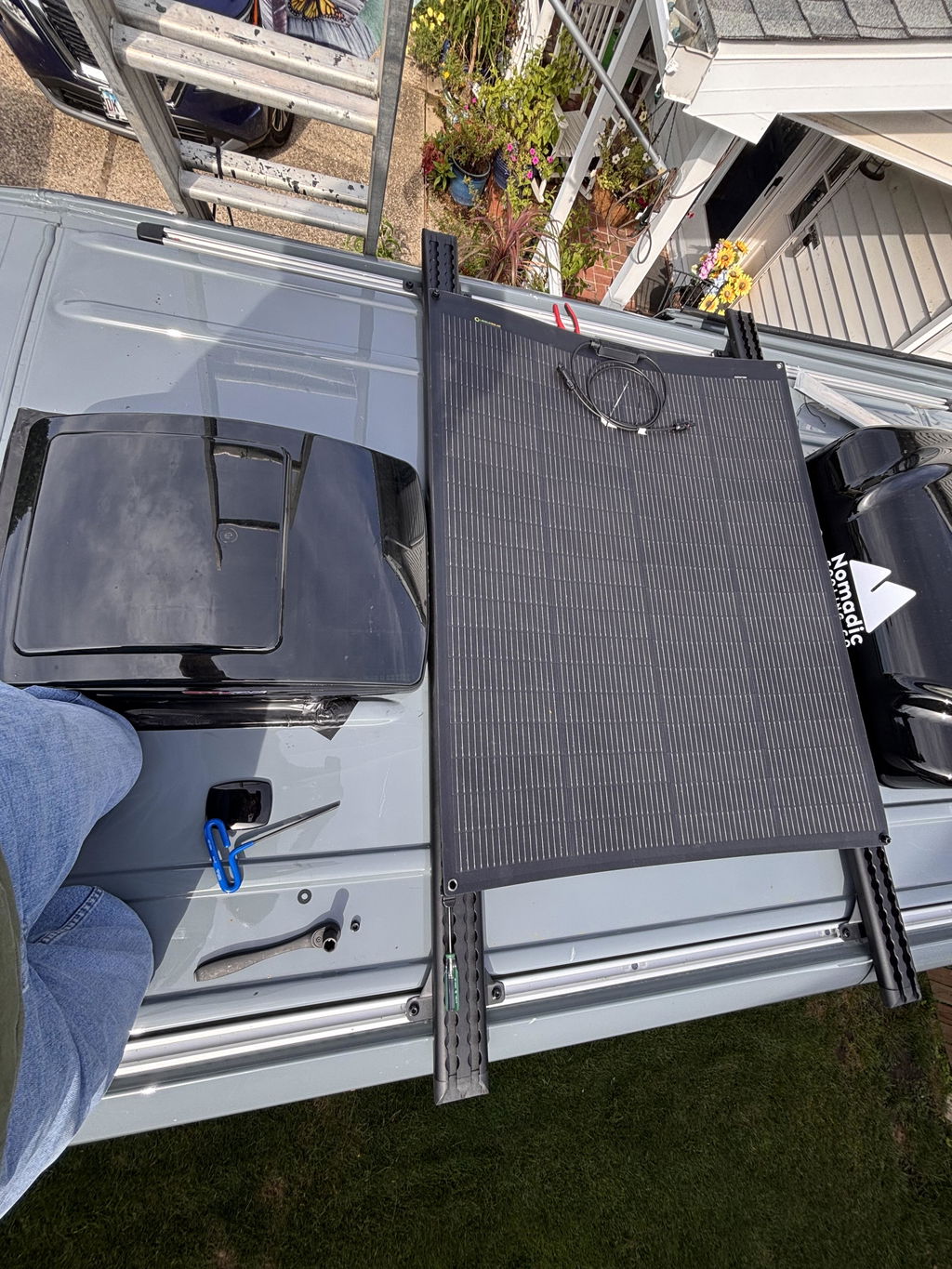
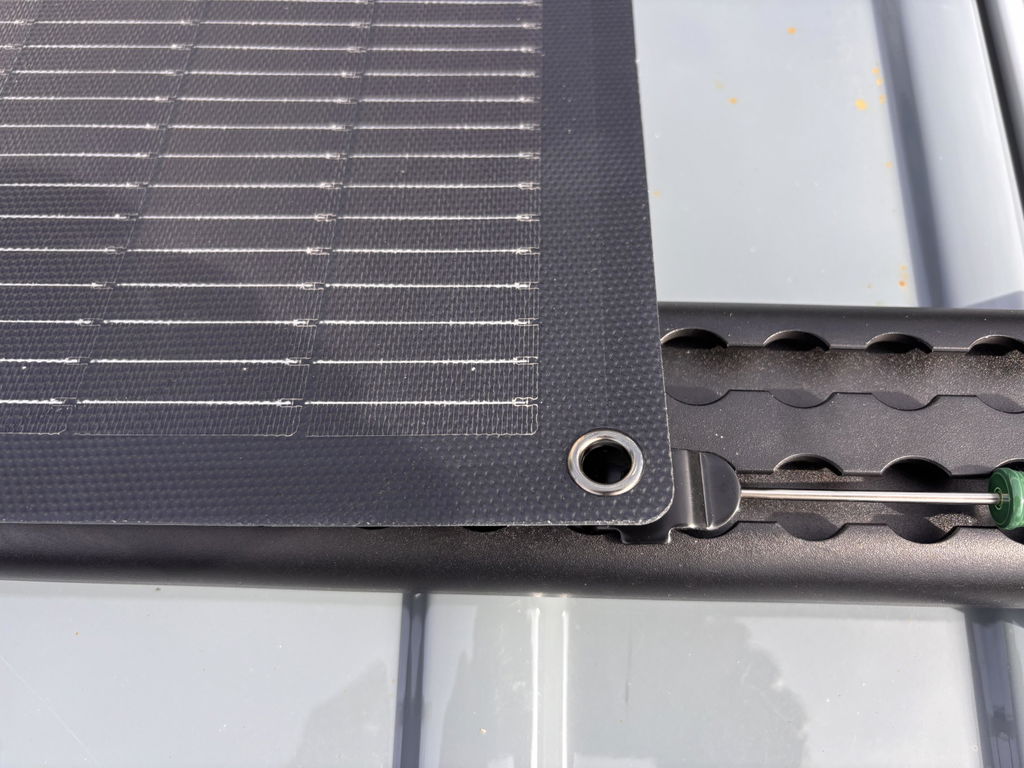
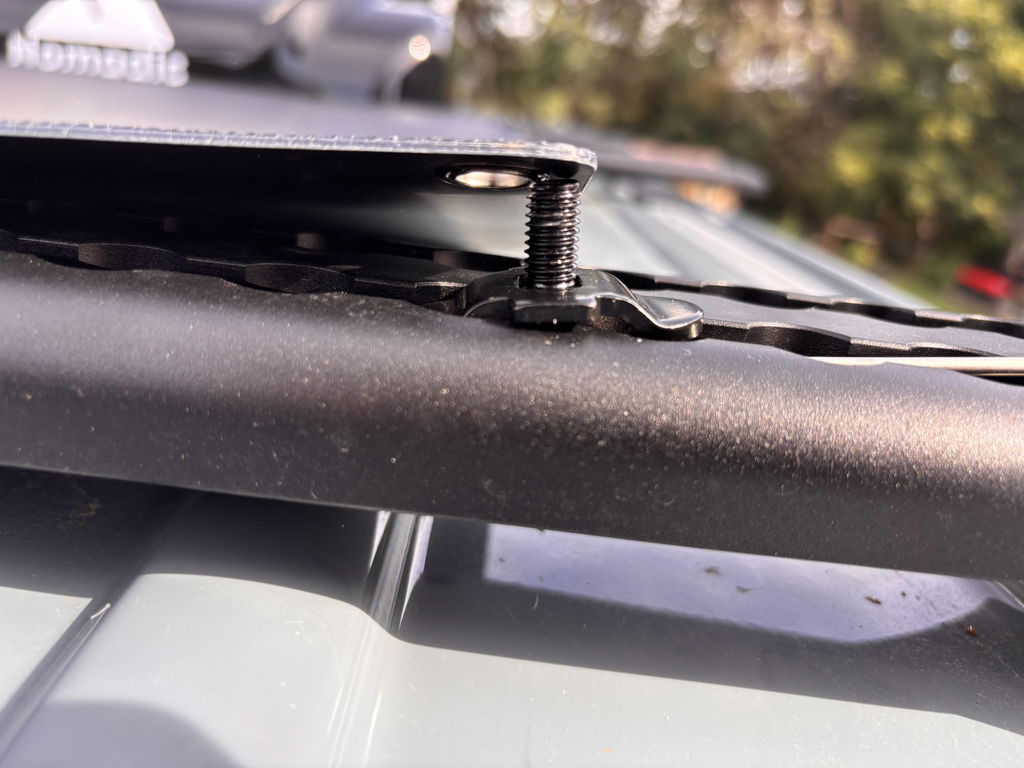
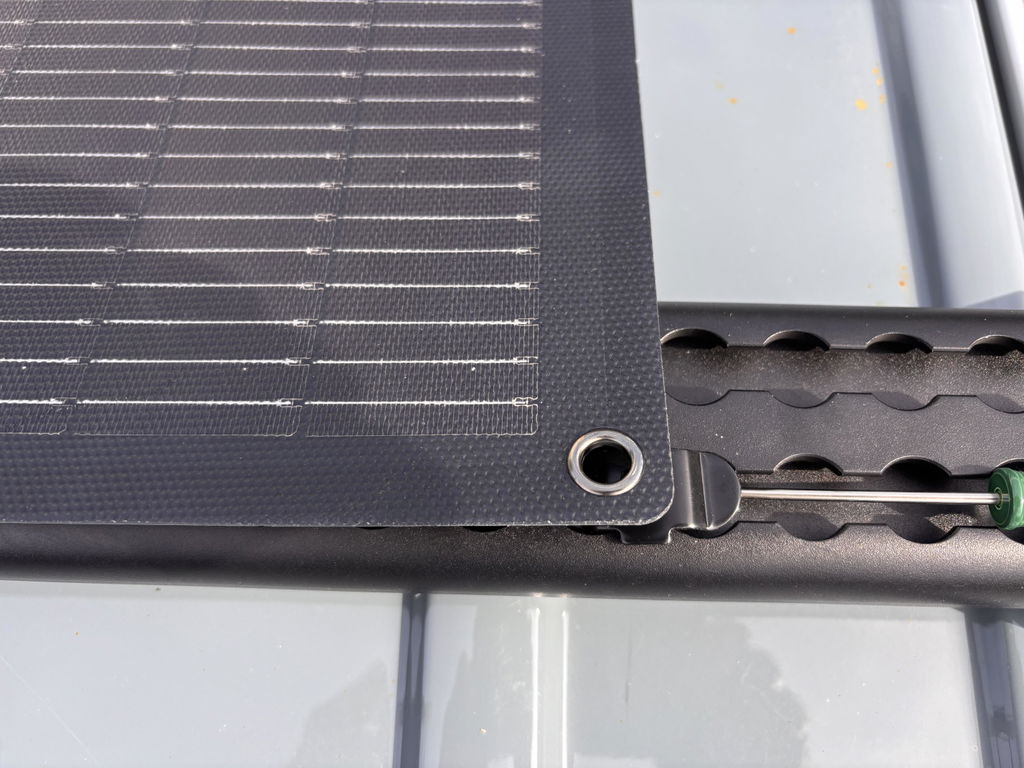
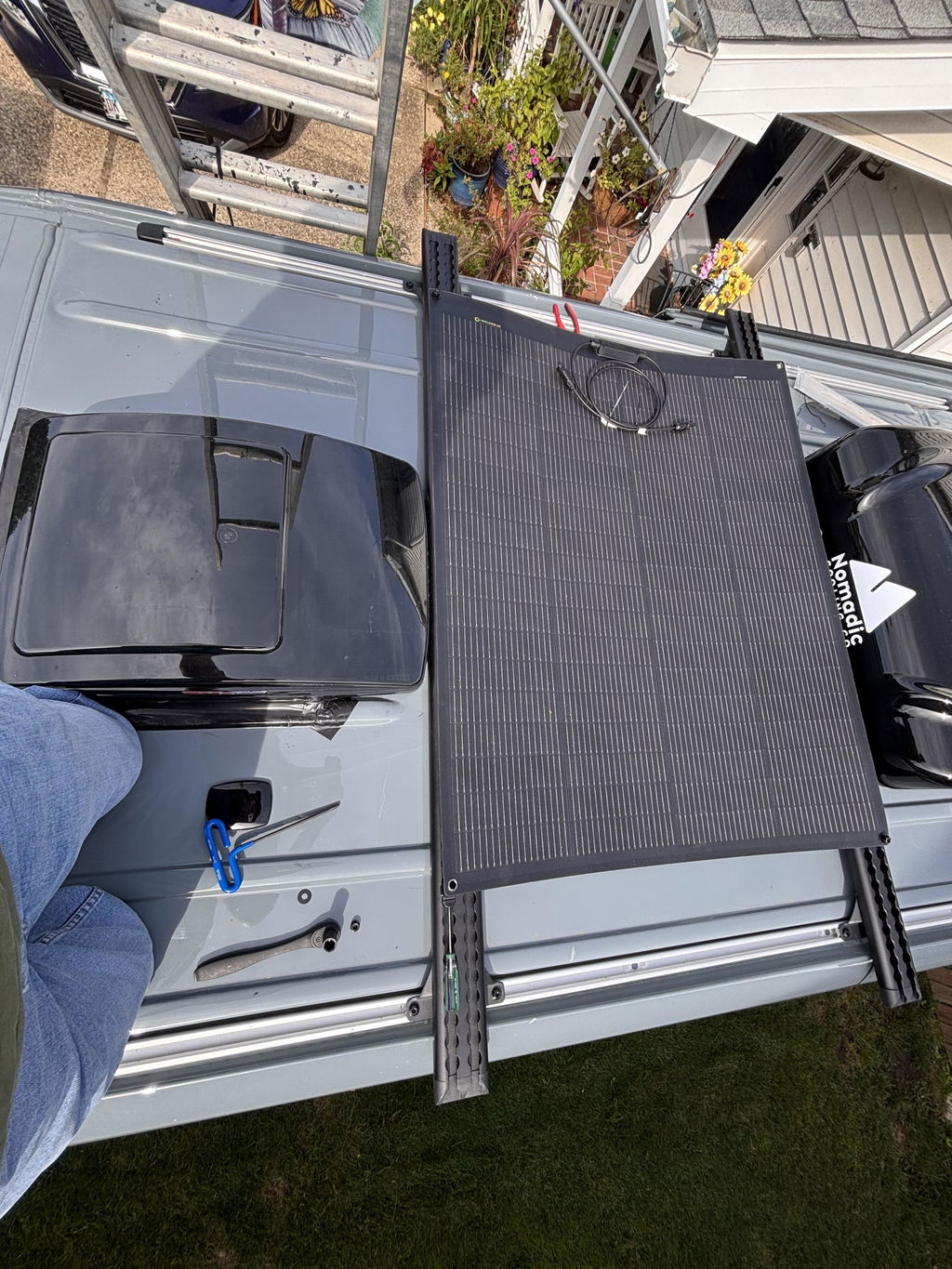
| Flexible solar panel (100 W) | 4–6 lb | Direct-bond mount; no rack required but shorter lifespan |
| Maxxair MaxxFan Deluxe | ~12 lb | Mounted in 14″×14″ roof cutout |
| Dometic FreshJet 3 (13,500 BTU AC) | 64 lb | Roof-mount unit only; interior shroud adds more below the roofline |
| Rooftop cargo box (empty) | 35–55 lb | Weight of contents is additional |
| Recovery boards + carrier mount | 18–25 lb | MaxTrax MKII pair: ~8 lb + carrier bracket |
The Weight Budget Worksheet
Every Sprinter roof build should start with a budget calculation. Not an estimate — an actual line-item accounting of every component weight including hardware.
Let's run three real scenarios.
Scenario A: Lean Vanlife Build (144″ WB)
| Item | Weight |
|---|---|
| Aluminum roof rails (pair) | 14 lb |
| 3 crossbars + hardware | 15 lb |
| 2 × 200 W rigid solar panels | 60 lb |
| Maxxair MaxxFan | 12 lb |
| Total | 101 lb |
| Remaining budget | 229 lb |
Plenty of headroom. This build could add an AC unit (64 lb), a cargo box, and still stay under limit. The light rail-and-crossbar approach is doing the heavy lifting — by not being heavy.
Scenario B: Full Overland Build (170″ WB)
| Item | Weight |
|---|---|
| Full-length aluminum roof rack | 75 lb |
| 4 × 200 W rigid solar panels | 120 lb |
| Maxxair MaxxFan | 12 lb |
| Dometic FreshJet 3 AC | 64 lb |
| Recovery board carrier + boards | 22 lb |
| Total | 293 lb |
| Remaining budget | 37 lb |
Thirty-seven pounds remaining — and that's before accounting for mounting brackets, wire conduit, sealant hardware, and anything else you forgot. One cargo box tips this over the limit. Adding the 15% safety margin [DVA editorial recommendation] pushes this build to effectively over budget.
Scenario C: Work Van with Solar (170″ EXT)
| Item | Weight |
|---|---|
| Heavy-duty steel roof rack | 90 lb |
| 3 × 100 W rigid solar panels | 54 lb |
| LED light bar + mount | 8 lb |
| Conduit and wiring | 5 lb |
| Total | 157 lb |
| Remaining budget | 173 lb |
Looks comfortable — until the crew starts tossing ladders and pipe on top. That "173 lb remaining" doesn't stretch far when a 28-foot extension ladder weighs 60–80 lb and bundled conduit adds another 50+.
The Mounting System Is the Largest Variable
Look at Scenario A versus Scenario B. The difference between rails-plus-crossbars (29 lb) and a full-length rack (75 lb) is 46 pounds — enough for an entire additional 200 W solar panel or a Maxxair fan plus hardware.
This is the single most impactful decision in roof load planning: how much of your 330 lb budget does the mounting infrastructure consume before you put anything useful on it?
A lightweight rail system that distributes load across factory mount points and adds only 12–25 lb gives you the structural platform to mount crossbars exactly where you need them — and nowhere else. You're not carrying seven feet of rack framework over sections of roof that hold nothing.
The engineering rationale is straightforward: roof rails spread load across the van's factory-reinforced mounting positions along the roofline. Crossbars then span between rails at the specific intervals your accessories require. This two-part approach means you only add structure where you need support, and every pound of mounting hardware is doing useful work.
The Per-Support Limit Most People Ignore
Mercedes didn't just set a total limit. The 110 lb per pair of supports specification means load distribution matters as much as total load.
Consider a common mistake: mounting a heavy rooftop AC unit between only two crossbar points. A 64 lb Dometic FreshJet concentrated on a single crossbar pair is already at 58% of that pair's rated capacity — before accounting for the crossbar's own weight contribution to those same mount points.
Where people get into trouble is stacking. A cargo box sitting on two crossbar pairs with 50 lb of gear inside it, plus the box's own 40 lb weight, puts 90 lb across two pairs — 45 lb per pair if perfectly centered, but real-world loading is rarely symmetric. Braking shifts load forward. Cornering shifts it laterally. The actual peak load on the forward pair can exceed 60 lb during a hard stop.
The Solar Panel Trade-off Matrix
Solar is the most common roof accessory for converted Sprinters, and it presents the clearest weight-versus-capability trade-off.
| Configuration | Total Watts | Weight (panels only) | % of 330 lb Budget |
|---|---|---|---|
| 2 × 100 W rigid | 200 W | ~36 lb | 11% |
| 3 × 200 W rigid | 600 W | ~90 lb | 27% |
| 4 × 200 W rigid | 800 W | ~120 lb | 36% |
| 4 × 100 W flexible | 400 W | ~20 lb | 6% |
| 6 × 100 W flexible | 600 W | ~30 lb | 9% |
Flexible panels save enormous weight — 600 W in flexible is 30 lb versus 90 lb in rigid. But they have trade-offs: shorter lifespan (typically 5–10 years vs. 20+ for rigid), lower efficiency when hot (they can't dissipate heat as well without an air gap), and they're not walkable without specialized construction.
The weight-conscious approach is to right-size your solar to actual consumption rather than maximizing wattage. A 400 W system with a properly sized lithium battery bank covers most vanlife electrical loads. Going to 800 W adds 60+ lb of roof weight for capacity you may only use during short winter days or heavy AC draw.
What Happens When You Exceed 330 lb
The consequences of overloading a Sprinter roof are not dramatic in the short term — which is exactly why so many people do it. There is no alarm. The van doesn't handle noticeably differently with 350 lb versus 320 lb. But the failure modes are cumulative:
- Roof panel fatigue. The Sprinter's high roof is a pressed-steel panel with stamped reinforcement ribs. Overloading accelerates metal fatigue at the mount point holes, particularly under sustained vibration on rough roads. The failure mode is mounting hole elongation — the holes gradually oval out over thousands of miles, loosening the rack.
- Seal failure. Every roof penetration (rivnuts, bolts, fan cutouts) depends on gaskets and sealant to keep water out. Excessive load shifts stress these seals, opening micro-gaps that admit water. Roof leaks in a Sprinter conversion are expensive — insulation, headliner, and electrical all sit directly below.
- Center of gravity elevation. This is the physics issue nobody talks about. Every pound on the roof raises the van's center of gravity. A high-roof Sprinter already has a tall CG; adding 300+ lb at the highest point increases body roll in corners and crosswind sensitivity on the highway. Emergency lane changes become more dynamic.
- Warranty implications. Mercedes's roof load rating is a warranty-relevant specification. Demonstrable overloading can void structural warranty coverage on roof and body panels.
Planning the Build: A Decision Framework
Start from the budget, not the wish list.
- Weigh your mounting system. Get the actual weight from the manufacturer — including all hardware. If they can't tell you, weigh it yourself. This is line item one.
- Allocate solar by need, not by roof area. Calculate your daily electrical consumption in amp-hours, then size your solar to replenish that with a reasonable margin. Don't fill every square inch of roof just because you can.
- Decide on AC early. A rooftop AC unit is the single heaviest component at 64+ lb. If you might want one eventually, reserve that weight in your budget now. Adding it later and discovering you're over limit means removing something else.
- Account for seasonal loads. Snow accumulation, ice, standing water after rain — these add real weight. A 170″ roof can collect 50+ lb of wet snow. That 15% safety margin [DVA editorial recommendation] in the formula above isn't conservative; it's minimum.
- Check per-pair distribution. After totaling everything, map where each component sits and which support pairs carry its load. No single pair should exceed 110 lb.
The Lightweight Mounting Advantage
The math leads to an obvious conclusion: the less your mounting infrastructure weighs, the more you can carry. A system that delivers 14 lb of rails instead of 90 lb of rack gives you 76 lb of payload that heavier alternatives consume in structure.
This is why the industry has moved toward rail-based systems for Sprinters. A pair of load-spreading roof rails bolted to factory mount points provides the structural backbone. Crossbars slide into position along the rails wherever your components need support. You get full load distribution without carrying dead weight over empty roof sections.
The DVA LoadSpan roof rail system follows this approach — 6061-T6 aluminum rails with integrated L-Track channels for accessory mounting, designed to use the Sprinter's factory roof mounting points without drilling. The rails plus a set of DualTrack-T crossbars put the total mounting infrastructure weight well under what a full-length rack would consume, freeing that difference for the accessories that actually matter to your build.
That weight difference is the whole point. Your roof load budget is fixed by Mercedes at 330 lb. Every engineering decision should maximize how much of that budget goes to functional payload versus structural overhead.
Reference: Sprinter Roof Load Specs by Configuration
| Configuration | Dynamic Load | Static Load | Min. Support Pairs | Max per Pair |
|---|---|---|---|---|
| All Sprinter Models (Low Roof, High Roof, all WB) | 330 lb (150 kg) | 661 lb (300 kg) | 3 pairs | 110 lb (50 kg) |
The 330 lb (150 kg) dynamic and. [Manufacturer specification, independently referenced by loadspanvans.com]
The roof is a finite resource. Treat its weight capacity the same way you'd treat payload capacity on the vehicle itself — with a spreadsheet, real numbers, and a margin for error. The vans that develop leaks, loose racks, and handling problems three years into a build are almost always the ones where nobody ran the math before the first bolt went in.
Ready to Upgrade Your Sprinter?
DVA Mechanics engineers purpose-built Sprinter accessories — designed, tested, and backed by real-world data.
- DVA LoadSpan™ Roof Rails
- DVA LoadSpan-T™ Roof Rails
- DVA DualTrack-T™ Cross Bars
- DVA L-Track collection