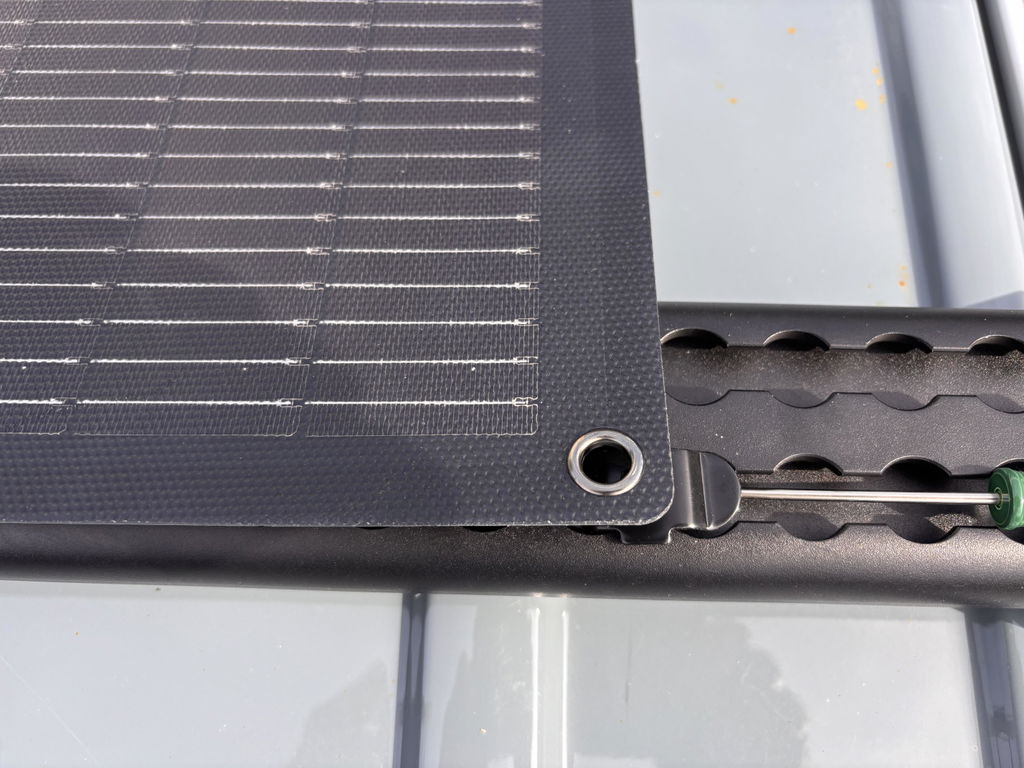
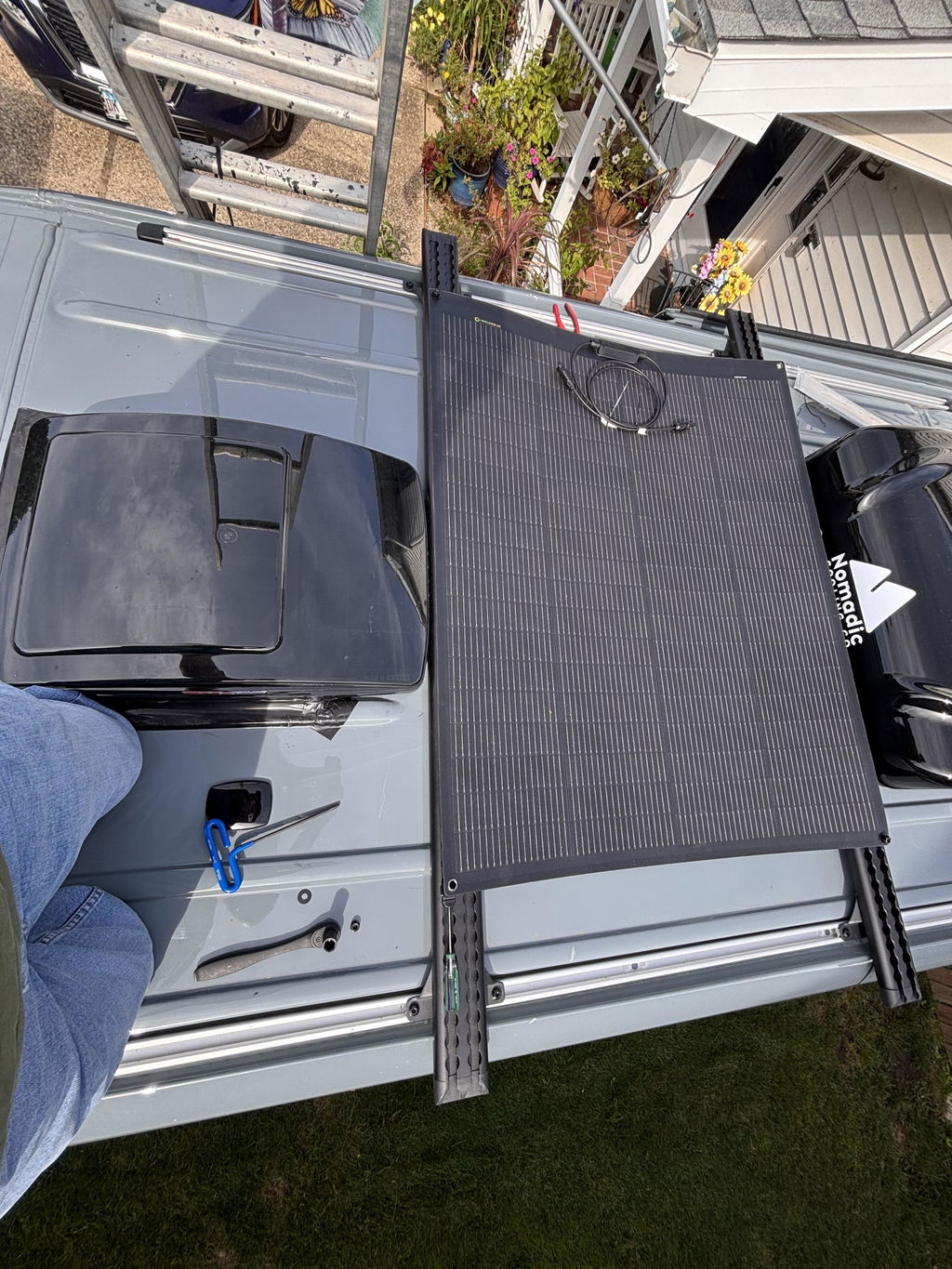
Crossbars alone are enough when you're mounting one or two specific accessories — a solar panel here, a kayak there — with plenty of open air between. Roof deck panels are the right call when you want a continuous walk-on surface, need to maximize solar coverage across the full rack width, or want a weather shield and shade layer over the living area. Three DVA DeckSpan™ panels span 58.5 inches — the full width of a Sprinter rack — at 5 mm aluminum thickness, with integrated L-track slots for tie-downs anywhere on the surface.
Crossbars vs. Panels: What Actually Changes
Crossbars give you two or more fixed horizontal rails across the roof — attachment points for loads, but open space between them. This is the standard Sprinter roof starting point. Mount a cargo box to the forward bar, a bike carrier to the rear, and you're done. The gaps are a feature, not a flaw: airflow, light weight, easy access to whatever is mounted under the bars.
Deck panels fill that space. You lay flat aluminum sections on top of the crossbar structure and bolt them down, creating a continuous surface across part or all of the roof. The roof becomes a floor you can work on, a base for flexible solar positioning, a weather break for cargo stored underneath, and a structural platform that doesn't care where your attachment point is — because there are slots and L-track cut-outs across the entire panel face.
The key distinction: crossbars constrain accessories to fixed rail positions. Panels give you an arbitrary attachment grid. On a panel system, a tie-down strap can anchor to any of the integrated slots — no need to align cargo with crossbar locations. That matters a lot when you're juggling solar, a fan cutout, a roof vent, and an awning bracket all on the same footprint.
Having crossbars will be useful as would deck / tread plates to be able to easily get around the roof. The prospect of an extra layer of sun shade is also appealing.
— j12y, Sprinter Source forum · 2022 144" High Top build planning

The Sprinter Roof Width Problem
A standard Sprinter roof rack spans roughly 58.5 inches across the van's width. That number is important because it's not round, not modular, and not the same as most general-purpose roof rack panels on the market.
The DVA DeckSpan™ panel is 19.5 inches wide — sized specifically so that three panels lay edge-to-edge across the full 58.5 inches without a gap. This matters for solar: a discontiguous surface creates shading geometry problems, and gaps large enough for rain to funnel down into the cargo space are a maintenance issue. A continuous deck solves both.
Each panel is 34 inches long front-to-back, so a single row of three panels covers 34 inches of the roof's length. A full-length Sprinter rack runs considerably longer than a single panel row: plan on 2 rows minimum for a 144-inch wheelbase build, with 3 rows for complete front-to-rear coverage. For 170-inch builds, 3 rows is the starting point. For 170-EXT builds, count on 3 rows and likely 4 for full deck coverage. Two rows get you 68 inches of coverage; three rows is 102 inches.
Four Use Cases Where Panels Win
1. Maximizing solar coverage
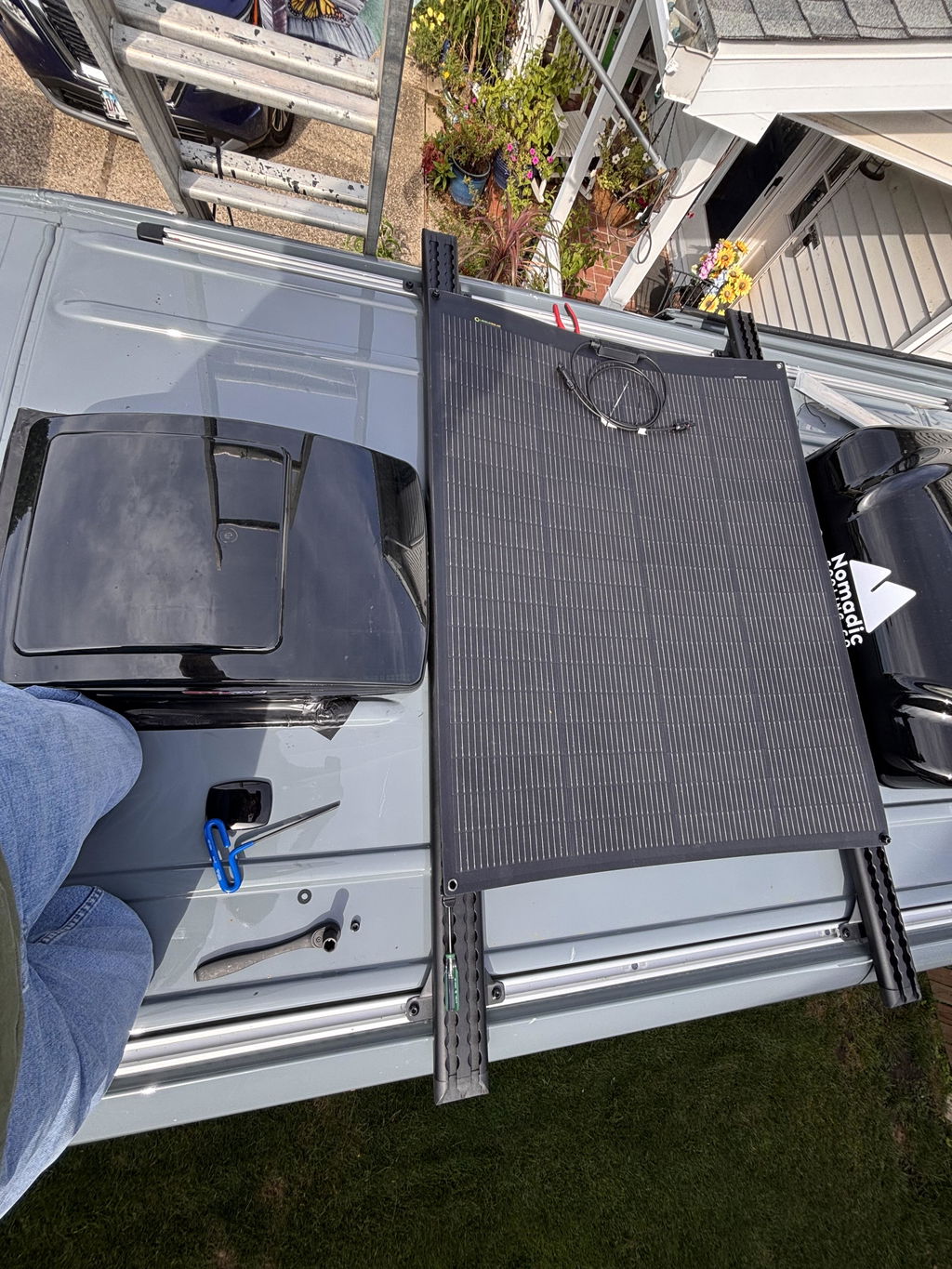
Panels give solar installers a flat, rigid base that doesn't shift or flex. Crossbars force you to mount panel frames at crossbar locations; the gaps between bars introduce span-load calculations and vibration risk over long hauls. On a deck panel surface, solar panel mounting brackets can anchor to any slot position — you optimize for wiring runs and shade avoidance, not bar locations. The 5 mm formed aluminum in the DeckSpan is thicker than the 3/16-inch (4.76 mm) panels common in this market, which reduces panel bow under thermal cycling and load.
2. Building a walkable work surface
If you're regularly going onto the roof to clean solar, adjust antennas, or load gear, a crossbar-only setup is an ankle problem. You're either stepping between bars or loading a single crossbar with your full weight at a fixed span location. A continuous deck panel distributes weight across the entire surface. You stand anywhere. The 5 mm formed aluminum doesn't flex underfoot at standard build loads, and the panel system handles occasional maintenance access without any special reinforcement.
Basically, my goals were to fit the most solar panels I could around a rooftop AC and fan, have a large deck, and be able to easily mount an awning on the side and a lightbar on the front.
— r/VanLife · Sprinter build planning, 2024
3. Weather shielding and cargo shade
A solid deck panel acts as a weather break for anything mounted below the rack — awning hardware, light bar cables, battery boxes on the exterior. It also shades the roof metal directly, which makes a measurable difference in interior temperature on high-roof Sprinters in summer. Open crossbars pass direct sunlight through to the roof skin; panels don't.
4. Flexible cargo anchoring
The integrated L-track cut-outs and through-slots in the DeckSpan panel give you tie-down points across the entire panel face. Strap a kayak at any fore-aft position. Run a ratchet strap diagonally without worrying about crossbar interference. Add L-track fittings for D-rings, gear hooks, or solar clamps anywhere on the surface. Crossbars give you two fixed rail positions; panels give you a continuous attachment grid.


When Crossbars Alone Are Enough
Panels aren't always the right answer. Crossbars-only builds work well when:
- You're mounting a single cargo box or rooftop tent. A framed RTT or hard cargo case spans both crossbars and distributes load correctly without a deck surface underneath it. Adding panels adds cost and weight for zero functional gain.
- Airflow matters more than coverage. On van conversions where interior heat is a major issue and you're not running AC, open crossbars let air move across the roof skin. Deck panels reduce this convective cooling effect.
- The build is constantly reconfiguring. Crossbars are quick to remove accessories from — unclamp a bike carrier, slide off a kayak bracket. Deck panels aren't difficult to work with, but they're more of a permanent decision than bare bars.
- Weight is the primary constraint. Crossbar-only rail systems weigh less than crossbars plus deck panels. If you're running at the edge of your 330 lb dynamic roof load budget, every pound of infrastructure counts. See the Sprinter roof load budget guide for the full weight calculation.
Weight Budget: The Numbers
The Mercedes-Benz Sprinter (VS30, 2019+) factory roof load specification is 330 lb dynamic limit — the maximum load the roof rails and attachment points are rated for during vehicle operation. This isn't the rack weight limit; it's the entire system including the rack itself, panels, and all cargo mounted to it.
| Component | Approx. Weight | Notes |
|---|---|---|
| LoadSpan-T™ Roof Rails (pair) | 8.4 lb | Extruded aluminum, full-length |
| DualTrack-T™ Crossbars (2-rail kit) | ~12 lb | Estimate; varies with bar count |
| DeckSpan™ Panels (set of 2, 1 row) | ~18 lb | 5mm aluminum, 34 × 19.5 in each |
| Full-row DeckSpan (3 panels) | ~27 lb | Full 58.5 in coverage |
| Rails + Bars + Full Deck Row | ~47 lb | Leaves ~283 lb for cargo |
A complete LoadSpan-T rail + DualTrack-T crossbar + one full DeckSpan row comes in around 47 lb of infrastructure. Against the 330 lb limit, that leaves roughly 283 lb for everything you mount on top — solar panels, cargo, antennas, an awning bracket on the rails, lights. For comparison, a 400W solar panel setup (4 × 100W panels) runs approximately 48–60 lb, leaving 220+ lb for additional gear. Most Sprinter builds land well under the 330 lb limit on a panel-equipped system.
Note that weight estimates above are approximations. Verify actual panel weight against your specific DeckSpan set before finalizing load calculations on builds near the limit.
Installation: What You Need First
DeckSpan panels mount to crossbars — they don't attach directly to the Sprinter roof or to roof rails. The installation sequence is:
- Roof rails first. The DVA LoadSpan-T™ rails mount to the Sprinter's factory pre-punched holes along the roofline — no drilling required on 2019+ VS30 vans. The dual-channel design (L-Track + 25mm T-slot in each rail) lets crossbars mount via T-bolt into the T-slot channel, leaving the L-Track channel free for accessories on the rail itself.
- Crossbars second. The DVA DualTrack-T™ crossbars slide into the LoadSpan-T T-slot channel and lock down with T-bolts. Crossbar spacing is adjustable — position them to clear your fan, vent, or solar inverter before committing.
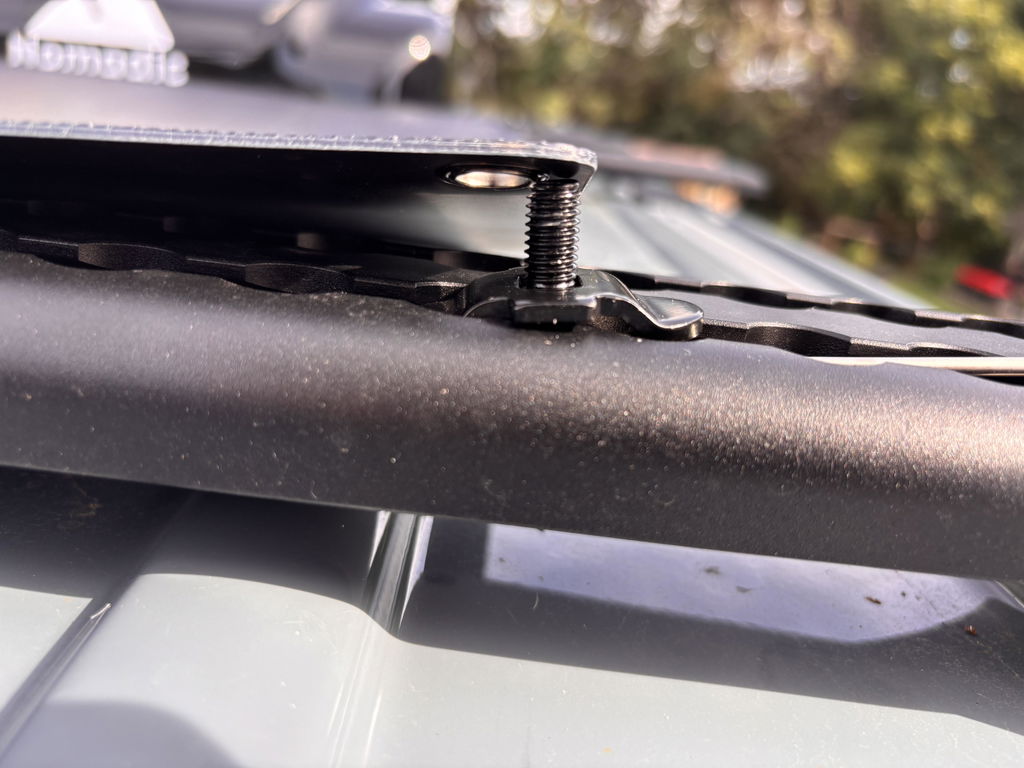
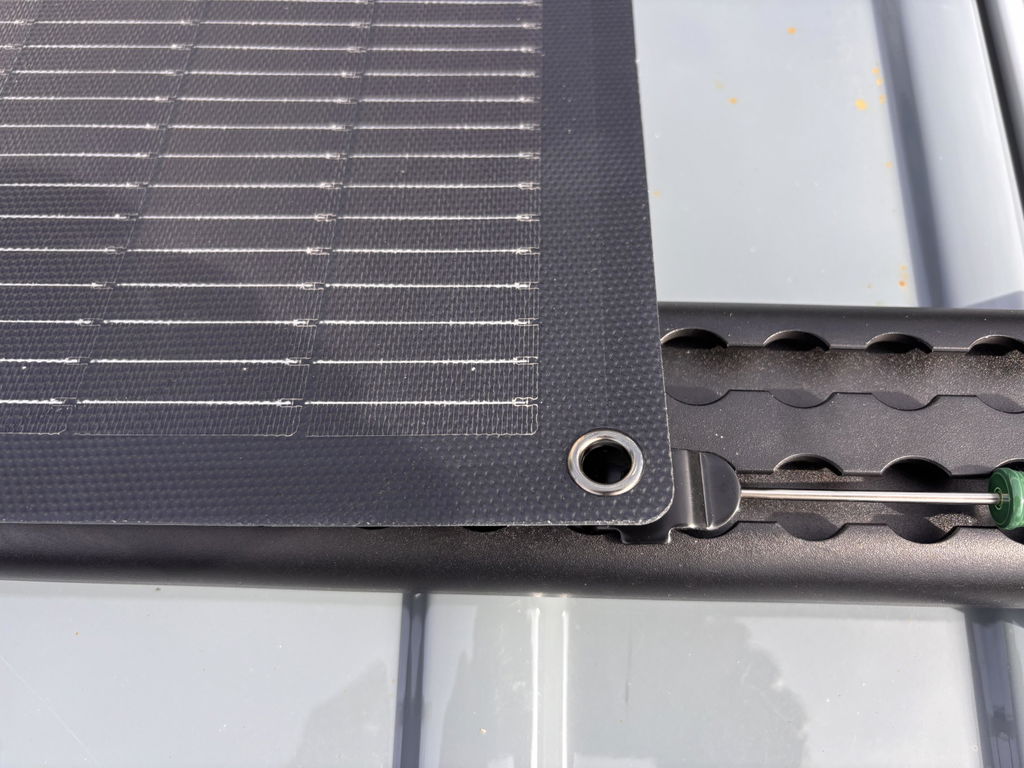
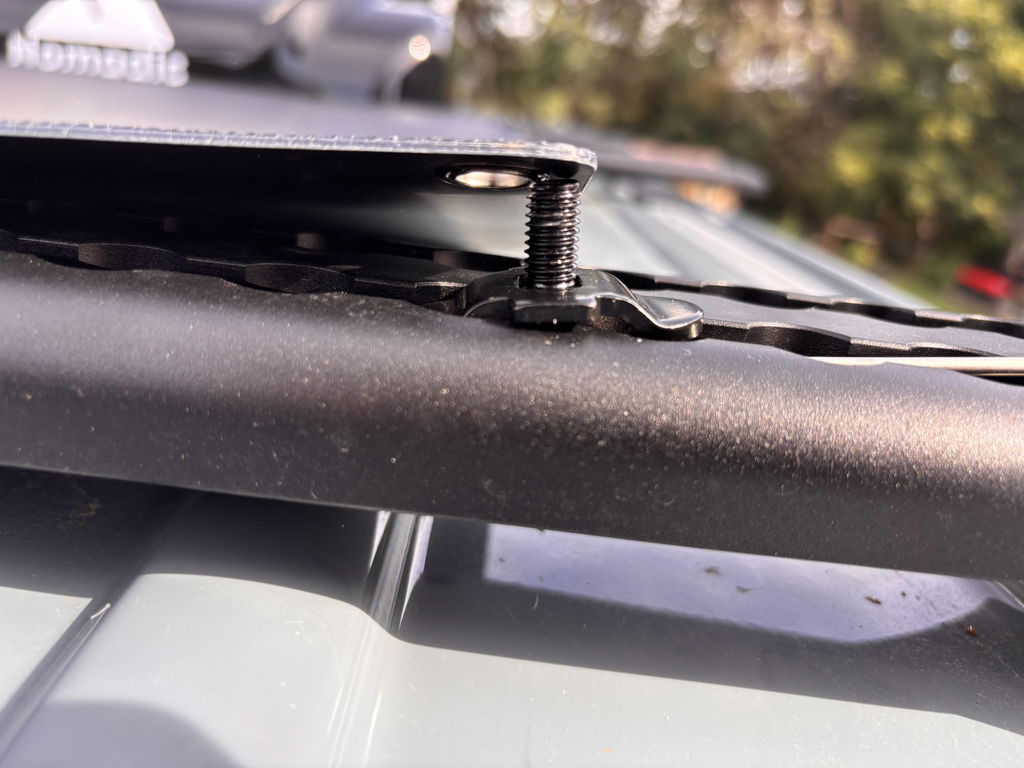
- Panels on top. DeckSpan panels drop onto the crossbar structure and bolt down through the panel slots into the crossbar extrusion. The DualTrack-T's integrated channels are machined to receive DeckSpan panels cleanly — the mounting interface is purpose-built. On third-party crossbars, DeckSpan still works if they use standard 80/20-style extrusion profiles.
For the complete rail installation guide — including the D13 prep code check, bolt torque specs, and headliner-free installation for finished builds — see the DVA Sprinter roof rails guide. For crossbar positioning and compatibility, the DualTrack-T crossbars guide covers the spacing math and accessory mounting options.