The wheelbase decision shapes everything — from where you can park to how your roof rack loads distribute. Here's the dimensional data, payload math, and real owner experiences that actually matter.
Quick Answer
144" = 11.5 ft buildable interior. 170" = 14.9 ft. The 3.4 ft difference determines whether a north-south bed, dedicated bathroom, and full galley are possible — or not.
- Choose 144" if: solo or couple off-roading, urban daily driver, east-west sleeping, compact cargo rig
- Choose 170" if: full-time van life, north-south bed, dedicated bathroom, galley kitchen, couples
- Payload note: 144" 4×4 carries ~330 lb more than the 170" — factor this into conversion weight planning
Why This Decision Matters More Than You Think
Every Sprinter conversion starts with the same fork in the road: 144 or 170? It seems like a simple length question, but it cascades into payload math, parking logistics, off-road geometry, roof loading characteristics, and build layout physics that will define your ownership experience for years.
Most buyers fixate on interior square footage — how many feet of countertop, whether the bed fits lengthwise, if there's room for a wet bath. Those are valid considerations. But the less obvious factors — breakover angle on forest roads, roof rack load distribution across longer spans, the compound effect of build weight on a shorter payload budget — are where the real engineering decisions live.
This guide draws on extensive build experience across both wheelbases. This guide covers the dimensional reality, the physics, and what actual owners report after living with their choice.
The Dimensional Breakdown: Actual Specifications
Before opinions, let's establish the numbers. These specifications are based on the current VS30 platform (2019+) with the high roof configuration, which accounts for the vast majority of van conversions.
"The 144 wheelbase is 232.5″ overall and the 170 wheelbase is 296.2″ overall. The 170 WB is about 60″ (or ~5 feet) longer… The 170 certainly wins for RV space, hands down. However, the 170 won't fit a normal parking space length wise."
| Specification | 144" WB High Roof | 170" WB High Roof | 170" EXT High Roof |
|---|---|---|---|
| Overall Length | 233.5" (19'5") | 274.3" (22'10") | 289.8" (24'2") |
| Overall Height | 111.3" (9'3") | 110.9" (9'3") | 110.9" (9'3") |
| Interior Standing Height | 79.1" (6'7") | 79.1" (6'7") | 79.1" (6'7") |
| Interior Cargo Length | 137.4" (11'5") | 178.2" (14'10") | ~186" (15'6") |
| Buildable Interior Length | ~10.5 ft | ~14 ft | ~15.5 ft |
| Interior Width (at floor) | 70.4" | 70.4" | 70.4" |
| Cargo Volume | 372.8 cu ft | 488.1 cu ft | ~530 cu ft |
| GVWR (2500) | 9,050 lbs | 9,050 lbs | 9,050 lbs |
| Payload Capacity (2500 AWD) | ~3,726 lbs | ~3,395 lbs | ~3,200 lbs |
| Curb-to-Curb Turning Radius | ~36.4 ft | ~40.4 ft | ~43 ft |
| Max Towing Capacity | 5,000 lbs | 5,000 lbs | 5,000 lbs |
| Base MSRP (2026 Cargo 2500 AWD) | ~$64,050 | ~$67,210 | ~$69,650 |
A few things jump out immediately. The 170 gives you 3.4 feet more buildable interior, but it costs you 331 pounds of payload capacity and adds 4 feet of turning radius. The GVWR stays identical at 9,050 lbs on the 2500 — the 170 simply weighs more empty, so you get less room before you're overweight. For a deep dive on why that matters, see our Sprinter overweight and payload guide.
The Payload Math Nobody Talks About
Here's where most wheelbase comparisons fail: they treat payload as a line item, when it's actually the single constraint that governs your entire build.
A typical full van conversion — insulation, flooring, cabinetry, electrical system, water tanks, bed platform, galley — weighs between 1,500 and 3,000 lbs depending on materials and complexity. Add two passengers (340 lbs), a dog (60 lbs), water in the tanks (8.34 lbs/gallon × 30 gallons = 250 lbs), food and gear (200 lbs), and you're looking at 2,350 to 3,850 lbs of total added weight.
The math is clear: if you're doing a full conversion on a 170" wheelbase, the 2500 chassis puts you dangerously close to GVWR limits. This is why many professional build shops spec the 3500 for 170" conversions — it adds nearly 2,000 lbs of GVWR headroom.
Ride quality tradeoff: The 3500 uses stiffer rear springs designed for higher load capacity, resulting in a firmer ride when unloaded. If you plan frequent empty miles or prioritize ride comfort, factor this into your 2500 vs. 3500 decision.
The 144's payload advantage isn't just about raw numbers — it's about forgiveness. A 676 lb margin means you can add a roof rack with solar panels, throw the mountain bikes up top, fill the water tanks, and still stay legal. On a 170 2500 with a full build, adding a loaded roof rack might be the difference between legal and overweight.
This is where rack material matters more than most buyers realize. Steel crossbar systems can add 80-120 lbs to a 170" setup before you've mounted a single accessory. Extruded aluminum systems like LoadSpan-T™ cut that rack weight significantly, and the integrated L-Track eliminates the need for separate accessory mounting hardware — each bracket you don't need is another pound back in your payload budget.
Driving Dynamics: What Changes with 26 More Inches of Wheelbase
The 144" Sprinter drives like a tall F-150. The wheelbase is nearly identical to a full-size pickup, and if you've driven one of those, the Sprinter will feel familiar — just taller. Crosswind sensitivity is moderate, lane changes are confident, and U-turns rarely require more than a single maneuver.
The 170" adds approximately 26 inches between the axles, which changes three things: turning radius increases by 4 feet, highway stability actually improves (longer wheelbase = less pitch oscillation), and low-speed maneuvering in tight spaces gets noticeably harder.
This is a point that surprises many buyers. The longer wheelbase distributes suspension loading across a greater span, which dampens high-frequency road inputs. At highway speeds, the 170 feels more planted than the 144, particularly when unloaded or in crosswinds.
Turning Radius in Practice
The spec sheet says 36.4 feet versus 40.4 feet. In real-world terms, that means:
- U-turns: The 144 can execute a U-turn on most two-lane roads. The 170 needs a three-point turn or a four-lane road.
- Parking garages: Spiral ramps in multi-story garages are tight in both, but the 170 requires more corrective steering inputs and may clip curbs on the inside.
- Campground sites: Pull-through sites accommodate both. Back-in sites with tight angles heavily favor the 144.
- Gas stations: The 170 will overshoot pump-side approaches more often, requiring repositioning.
For context, a Ford F-150 SuperCrew has a turning radius of approximately 39-44 feet depending on bed length. The 144 Sprinter turns tighter than almost any full-size pickup. The 170 is right in the middle of the pickup range.
Parking: The Daily Reality
This is where opinions diverge sharply. A standard parking stall is 18 feet long. The 144" Sprinter is 19'5" — already slightly over, but close enough that it fits in most lots with minor overhang. The 170" Sprinter is 22'10" — nearly 5 feet over a standard stall.
"My 170 friend's advice was simple: It either fits or it doesn't. I've never NOT been able to park it. You just might need to park in the far corners of a parking lot or a few extra blocks away but you'll always be able to park it."
— hmbltn, Sprinter-Source.com — Comparing Sprinter Sizes 144 vs 170 vs 170 Extended
The practical reality falls between these two perspectives. 170 owners consistently report that:
- Big-box store parking lots (Walmart, Costco) are fine — pull-through spots are abundant
- Downtown urban parallel parking is essentially impossible
- Parking garages are a height problem before they're a length problem (most garages have 6'6" to 7'0" clearance — both wheelbases with high roof are 9'3")
- Campground and trailhead parking is usually not an issue
If the Sprinter is your daily driver for errands, school runs, and commuting: the 144 wins. If it's a dedicated adventure vehicle or weekend camper that lives in a driveway during the week: the 170's parking penalty barely registers.
Off-Road Geometry: Where Wheelbase Actually Matters
For owners who plan to drive forest roads, BLM land, or any unpaved terrain, wheelbase isn't a preference — it's a physics constraint.
"Love being able to drive and park it in regular parking spots. It's also much easier to drive off road which I do frequently. Many places I go to would be near impossible in a 170."
— r/SprinterVans — 170 v 144 for RV (Sep 2024) (on choosing the 144)
Breakover angle is the maximum angle of a ridge or crest the vehicle can straddle without the undercarriage making contact. A shorter wheelbase means a steeper breakover angle, which translates to better performance on terrain with sharp undulations — washboard roads, creek crossings, rutted two-tracks.
The 170 can handle graded gravel roads and mild fire roads without issue. Where it struggles is terrain with sharp elevation changes — deep ruts, steep driveway aprons, washouts. The longer wheelbase also makes three-point turns on narrow forest roads significantly more stressful. If off-road access is a core part of your use case, the 144 is the objective engineering choice.
One often-overlooked off-road factor: roof rack loading under vibration. Washboard roads and rutted terrain create repetitive vertical loading cycles on every crossbar mounting point. Point-mount crossbar systems concentrate this fatigue stress at a few bolt locations, which can loosen hardware and stress the roof skin over time. Full-length rail systems that distribute load continuously across the roof structure — rather than at discrete points — handle these vibration cycles significantly better, especially on the 170" where the longer span amplifies resonance between mounting points.
The Rear Overhang Factor
On the 170 EXT, the rear overhang extends well past the rear axle, which creates a secondary geometry problem: departure angle. When you pull off a steep slope or driveway apron, the rear bumper or any underbody components (exhaust, spare tire carrier) can contact the ground. This is why the 170 EXT is generally not recommended for anything beyond paved roads and well-maintained gravel.
Conversion Layouts by Wheelbase
The 3.4 feet of additional build length in the 170 isn't just "more space" — it unlocks entirely different layout categories.
What Fits in a 144" (10.5 ft buildable)
- East-west bed (sleeping across the van) — works for people under 6'0" without flares, up to 6'6" with flares
- Compact galley — typically 3-4 feet of counter, single-burner, under-counter fridge
- Rear garage — approximately 24-30" of vertical space under a raised bed platform
- No dedicated bathroom — portable toilet under bed or cassette toilet is the max
- Limited seating — bed doubles as seating, or a small fold-down table setup
144" space tip: L-track cargo rails make every inch count — mount gear to walls and ceiling to preserve floor space for sleeping and movement. DVA L-Track system →
What Fits in a 170" (14 ft buildable)
- North-south bed (sleeping lengthwise) — full queen platform fits comfortably
- Full galley — 5-6 feet of counter, two-burner stove, full-size fridge, sink
- Rear garage — 36-48" of vertical space under bed, fits bikes standing up
- Wet bath option — small enclosed shower/toilet compartment is achievable
- Dedicated seating — dinette, swiveling cab seats facing a table, or bench seating
170" roof planning: The longer roof gives you more mounting positions for solar + rack combination. LoadSpan-T dual-channel roof rails span the full length with integrated L-track channels for crossbar positioning anywhere in the 178" cargo zone.
| Build Feature | 144" WB Feasibility | 170" WB Feasibility |
|---|---|---|
| Fixed queen bed | East-west only (tight) | Either orientation |
| Full galley kitchen | Compact (3-4 ft) | Full-size (5-6 ft) |
| Wet bath / shower | Not practical | Achievable |
| Rear gear garage | Small (24-30") | Large (36-48") |
| Dedicated workspace | Fold-down only | Permanent desk possible |
| Dinette seating | Bed converts to seating | Separate dinette possible |
| Solo/couple travel | Excellent | Excellent |
| Family (2+ kids/pets) | Very tight | Comfortable |
Roof Rack Selection: Where Wheelbase Gets Overlooked
Here's a factor that almost no wheelbase comparison covers, and it matters enormously for long-term ownership: how roof rack loading changes with van length.
A roof rack on a 144" van typically uses 6 crossbars spanning approximately 139" of roof length. A 170" rack uses 8-9 crossbars spanning approximately 179". That's 29% more crossbar span, which fundamentally changes the structural engineering.
Load Distribution Physics
When you mount equipment on a roof rack — solar panels, storage boxes, kayaks, a rooftop tent — the load creates bending moments on the crossbars and mounting points. The farther a load sits from a mounting point, the greater the moment arm, and the higher the stress on that connection.
The key insight: on a longer van, roof load distribution matters more than on a shorter one. A poorly distributed load on a 170" roof — say, 200 lbs of gear concentrated at the rear — creates asymmetric loading on the roof structure that the factory mounting points weren't engineered to handle in that pattern.
This is exactly why L-track based roof rail systems like LoadSpan-T™ matter more on longer vans. L-track allows infinite adjustment of tie-down and mounting positions, so you can position loads directly over structural mounting points regardless of where your gear needs to sit. On a 170" van with nearly 15 feet of roof real estate, that adjustability is the difference between properly engineered load paths and stress concentrations that lead to roof deformation over time.
Solar Panel Mounting
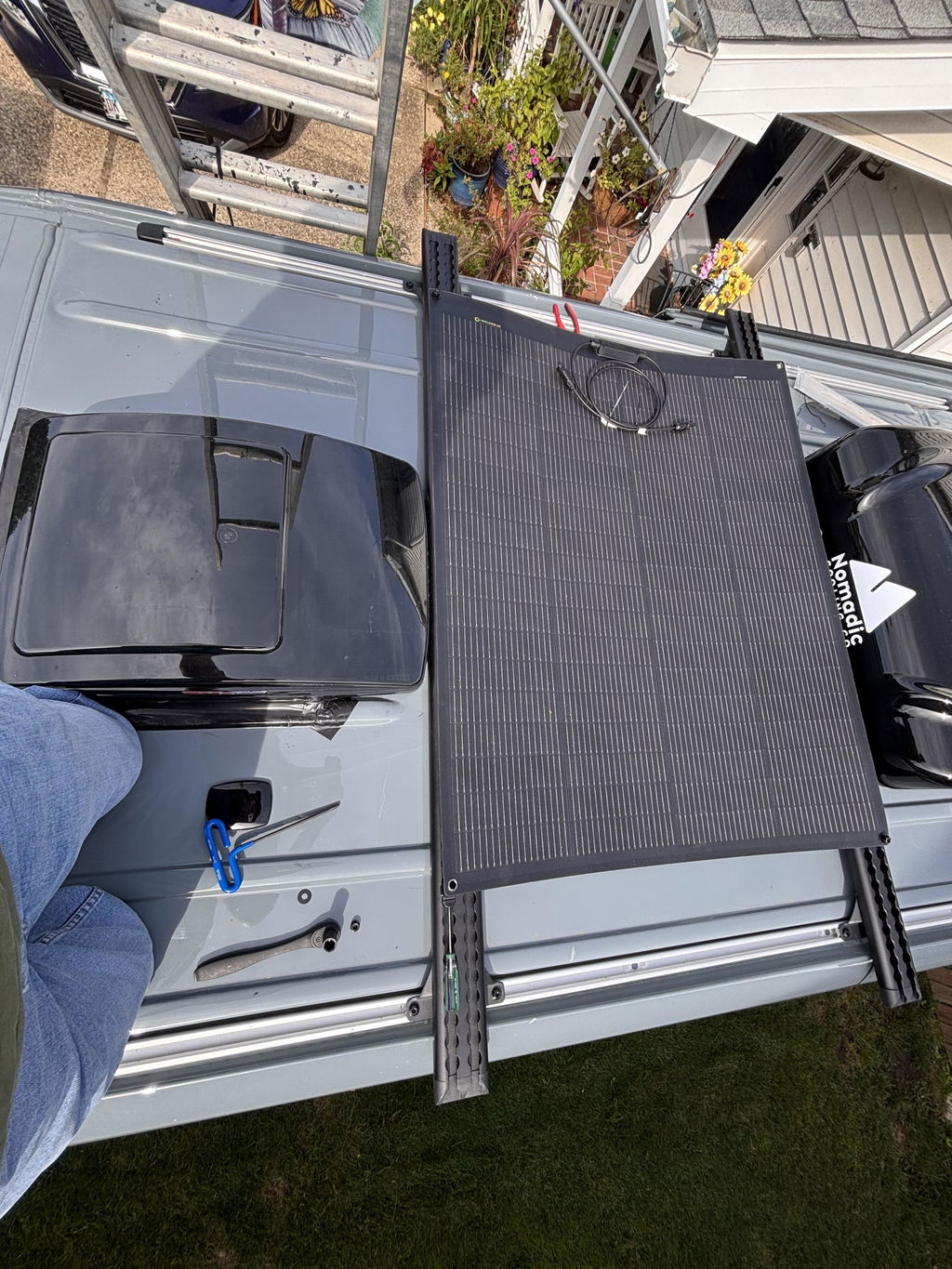
The 170" roof is the clear winner for solar installations. You can comfortably fit three to four 200W panels on a 170" roof (600-800W total), while the 144" maxes out at two to three panels (400-600W). For full-time van life with significant electrical demands (induction cooking, residential fridge, air conditioning), the 170's solar capacity is a meaningful advantage.
However, more panels means more weight — each 200W panel weighs approximately 25-30 lbs, and mounting hardware adds another 5-10 lbs per panel. Four panels plus mounting hardware equals roughly 140-160 lbs on the roof. On a 170 2500 that's already near payload limits, this matters.
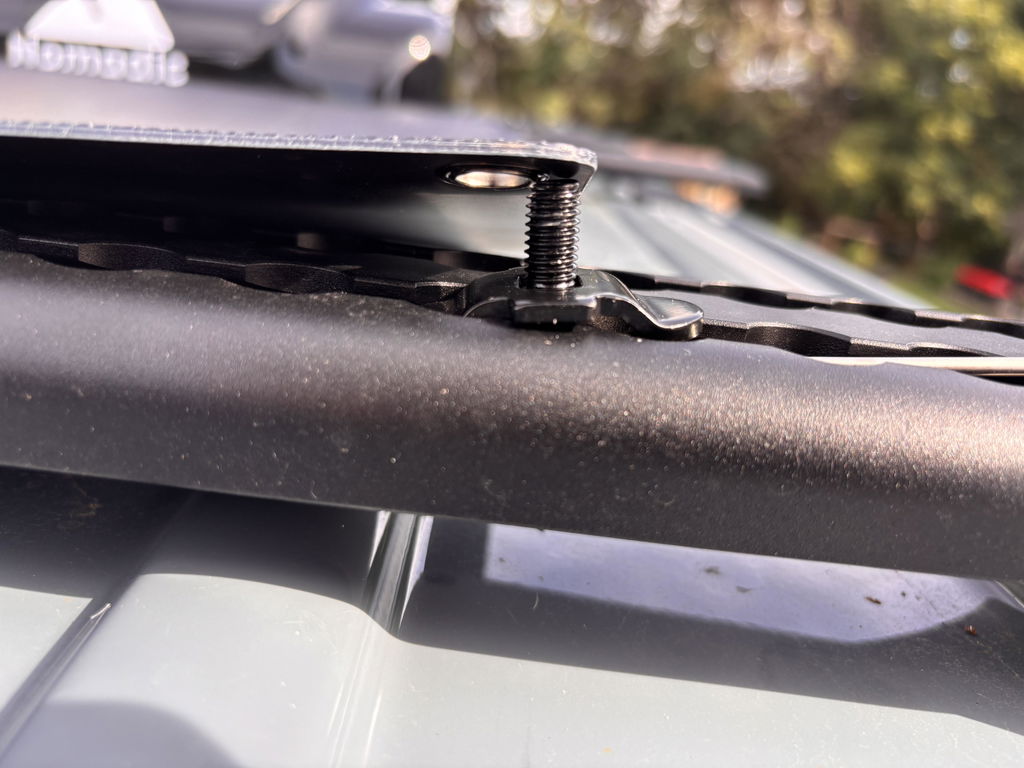
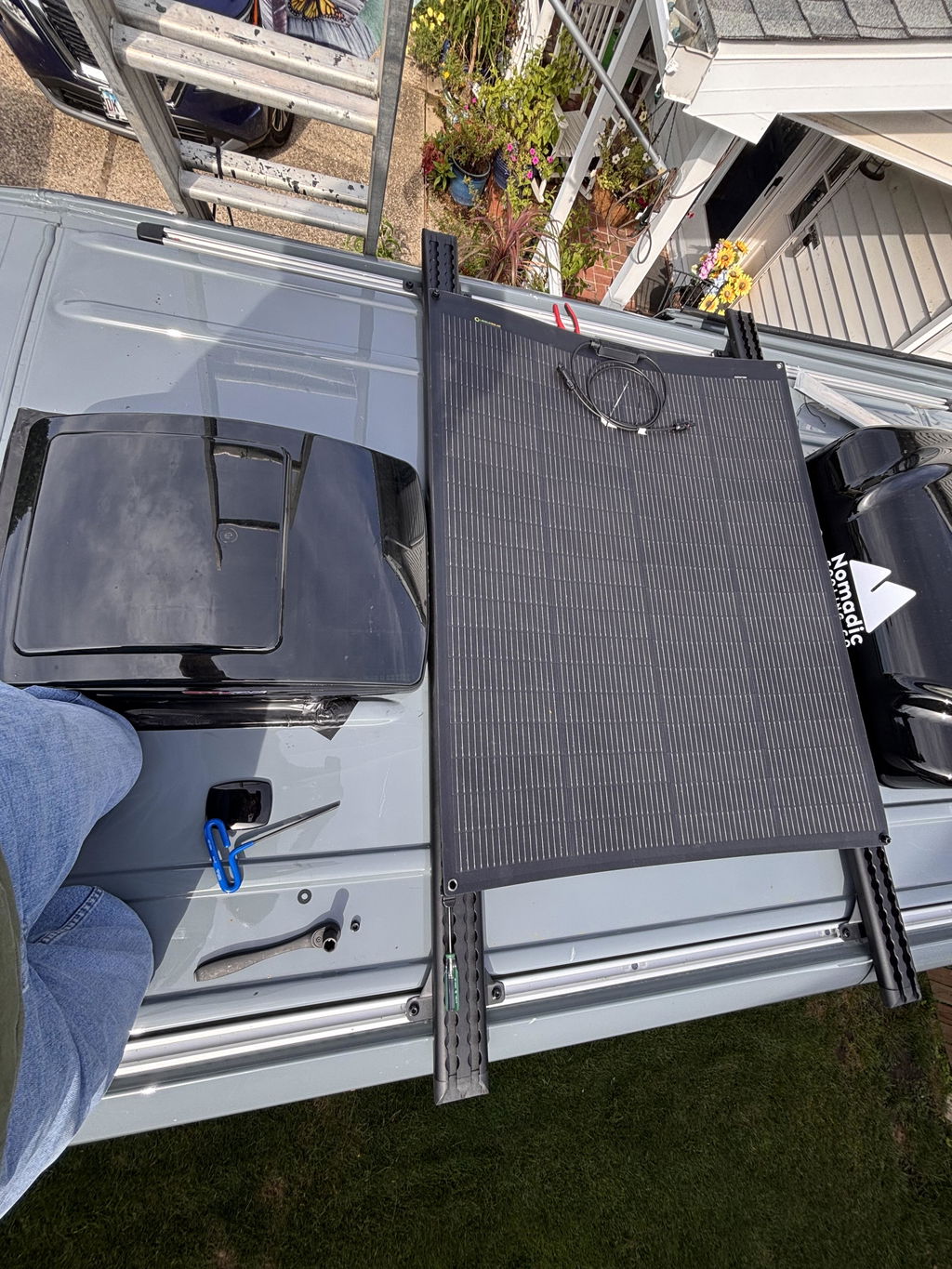
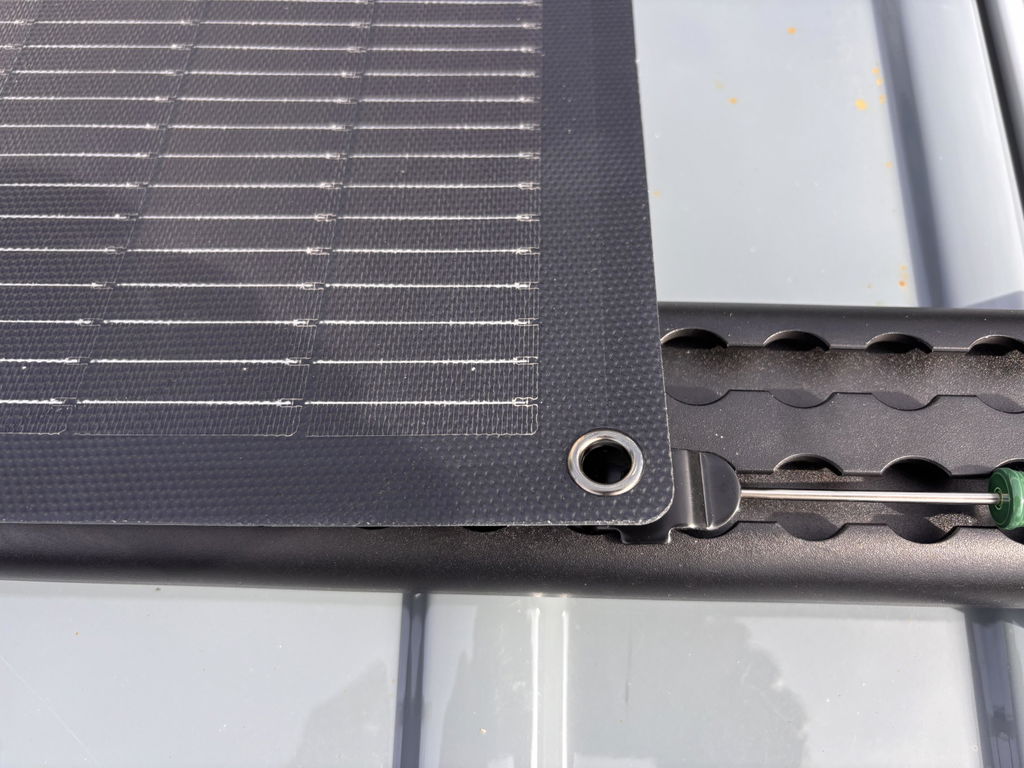
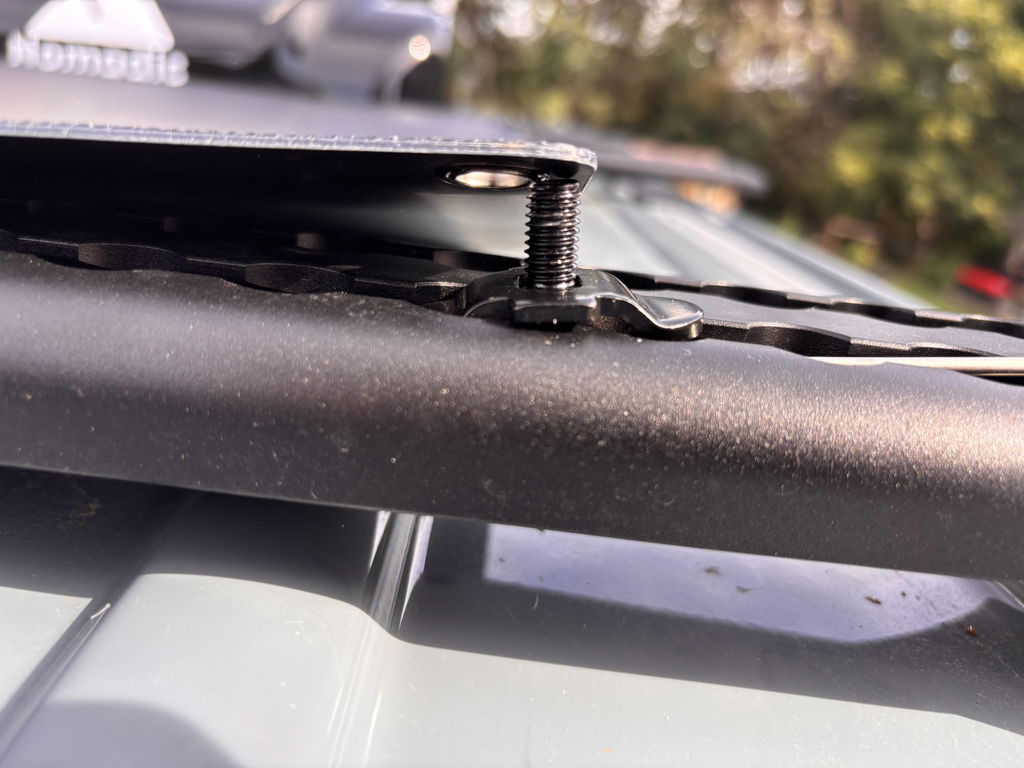
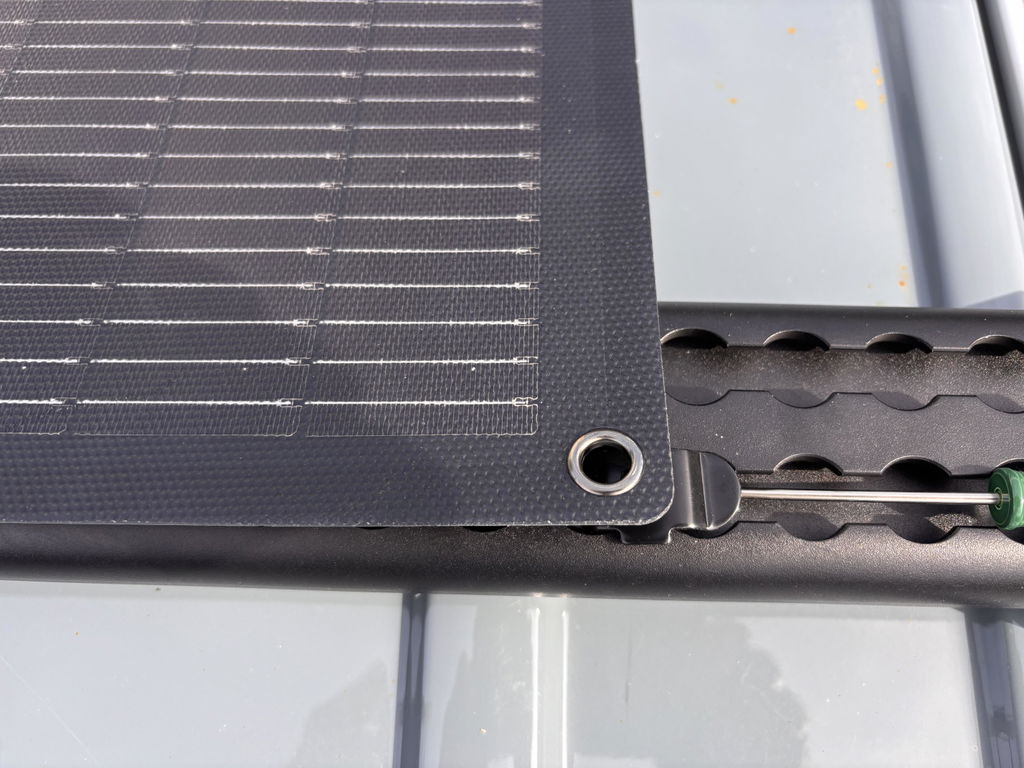
L-Track roof rail channels simplify solar mounting considerably — panels bolt directly to the track at any position along the rail length, so you can optimize panel placement for your specific electrical layout without drilling new holes or fabricating custom brackets. On a 170" van running three or four panels, the ability to reposition them as your build evolves (adding an A/C unit, swapping panel sizes) saves time and preserves the roof structure.

Fuel Economy: The Honest Numbers
Mercedes doesn't publish official MPG ratings for the Sprinter cargo van. Real-world numbers from owners cluster around these ranges:
| Configuration | Highway MPG | Mixed Driving MPG | City MPG |
|---|---|---|---|
| 144" 2.0L 4-cyl RWD | 22-25 | 18-21 | 15-18 |
| 144" 2.0L 4-cyl AWD | 20-23 | 17-20 | 14-17 |
| 170" 2.0L 4-cyl RWD | 20-23 | 17-19 | 14-16 |
| 170" 2.0L 4-cyl AWD | 18-21 | 16-18 | 13-15 |
The difference is approximately 1-3 MPG depending on conditions, build weight, and driving style. Over 15,000 miles per year at $4.00/gallon diesel, that's roughly $200-500 per year in additional fuel cost for the 170 — noticeable but not dramatic.
Speed is a bigger fuel economy factor than wheelbase. The aerodynamic drag increase from 65 to 75 mph costs more MPG than the wheelbase difference ever will.
The 170 EXT: When (and When Not) to Go Bigger
The 170" EXT adds approximately 15.5 inches of additional body length behind the rear axle, bringing total buildable space to about 15.5 feet. It's in a different category from the standard 170.
The EXT makes sense for:
- Mobile medical or commercial upfit requiring maximum interior volume
- Expedition builds where the van is the permanent residence and base camp
- Families who need a wet bath, full galley, AND dedicated sleeping for kids
- Mobile offices that require workspace separation from living space
The EXT does NOT make sense for:
- Any off-road use beyond paved roads (rear overhang and departure angle are deal-breakers)
- Urban daily driving
- Towing — the extended rear overhang creates dangerous pendulum dynamics
- Budget-conscious builds (more length = more insulation, flooring, cabinetry, wiring)
The 170 EXT's turning radius of 43 feet means U-turns require three lanes. Parking lot maneuvers that are merely annoying in a standard 170 become genuinely stressful in the EXT. Most van conversion shops recommend the standard 170 unless there's a specific, compelling reason for the additional length.
The Decision Framework: Who Should Buy What
After all the specifications and owner experiences, the decision framework simplifies to three questions:
Choose the 144" if:
- It's your daily driver (commuting, errands, school runs)
- You plan to drive unpaved roads, forest service roads, or any off-road terrain regularly
- Solo or couple travel without major gear requirements
- Budget is constrained (lower purchase price, lower build cost, better fuel economy)
- You want to stealth camp in urban areas
- Parking anxiety is real for you — the 144 parks like a big SUV
Choose the 170" if:
- Extended trips or full-time living is the plan
- You need a fixed bed AND a full galley AND seating — all at once
- Family or multi-person travel (kids, dogs, significant gear)
- Maximum solar capacity matters for electrical independence
- Highway driving dominates your route profile (the 170 is more stable at speed)
- The van lives in a driveway, not a parking garage
Choose the 170" EXT if:
- You need wet bath + full galley + queen bed + workspace — no compromises
- Commercial/medical upfit requiring maximum volume
- You genuinely don't care about parking convenience
- Paved roads and campgrounds are your primary terrain
Roof Rack Accessory Considerations by Wheelbase
Your wheelbase choice has downstream effects on every roof-mounted accessory. Here's what to plan for:
| Accessory | 144" WB Notes | 170" WB Notes |
|---|---|---|
| Solar Panels | 2-3 panels (400-600W max) | 3-4 panels (600-800W max) |
| Roof Rack Weight | ~60 lbs (6 crossbars) | ~76 lbs (8 crossbars) |
| Awning Mounting | Standard 8-10 ft awning | Can accommodate 10-12 ft awning |
| Roof Box/Storage | Single box + panels, tight fit | Multiple boxes + panels feasible |
| Rooftop Tent | Fits, but limits remaining roof space | Fits with room for panels alongside |
| Bike/Kayak Mounts | 1-2 bikes or 1 kayak | 2-3 bikes or 2 kayaks |
| MaxTrax/Recovery Gear | Side-mount, limited positioning | Multiple mounting options |
The 170's additional roof real estate is one of its underappreciated advantages. On a 144, installing solar panels often means choosing between panels and a roof box — you can't have both without stacking. On a 170, you can dedicate the forward section to storage and recovery gear, the middle section to solar, and the rear section to recreation mounts, all without interference.
Regardless of wheelbase, proper load distribution through adjustable L-Track roof rail systems ensures your gear sits over structural mounting points rather than creating localized stress on the roof skin. This becomes proportionally more important as your roof rack gets longer and heavier. DVA's LoadSpan roof rail system is engineered for both the 144 and 170 — the modular crossbar design scales to match your wheelbase length while keeping weight under 10 lb per bar, preserving payload budget for the cargo and solar that actually matters. DVA's LoadSpan-T™ roof rails and DualTrack-T™ crossbars are engineered for all three Sprinter wheelbases with the same bolt-on, no-drill installation.
Resale Value and Market Considerations
(Based on recent market trends in the van conversion community.)
Both wheelbases hold their value well in the current market, but patterns emerge:
- 144" vans are more common on the used market (higher production volume) and sell faster due to broader appeal
- 170" vans command a slight premium when converted, particularly with professional builds
- 4x4/AWD models in either wheelbase hold a significant premium over RWD
- High roof configuration is essential for resale — standard roof vans are difficult to sell in the conversion market
If you're buying new with the intent to convert and eventually sell, the 170 AWD high roof is the strongest resale configuration. If you're buying used on a budget, the 144 offers more options at lower price points.
Final Engineering Assessment
The 144 versus 170 decision isn't about which van is "better." It's about which set of tradeoffs aligns with your actual use case. The physics don't lie: a shorter wheelbase is more maneuverable, carries more payload per square foot of build, and handles rough terrain better. A longer wheelbase provides more living space, better highway stability, and more roof capacity for solar and accessories.
The most common mistake we see in our shop is buyers choosing the 170 for the space, then being surprised by the payload limits on the 2500 chassis. The second most common mistake is buyers choosing the 144 to save money, then wishing they had more room six months into van life.
Both of those owners are correct — for their use case. The data in this guide gives you the framework to figure out which one you'll be.
Measure twice, buy once. Then go build something worth driving.