Most Sprinter van conversions exceed GVWR — often by 500–2,000 lbs. A 2500 170" Extended 4WD with a typical full build leaves just 475 lbs of payload after the conversion, fuel, water, and two passengers are accounted for. If you suspect your van is overweight, start with the number on your door placard (not the brochure spec), subtract curb weight, fuel, water, and conversion weight — whatever remains is your actual margin for cargo and gear. This guide walks through the complete GVWR calculation, real forum examples, the legal and mechanical consequences, and six ways to reduce weight if you're already over.
Operating a Mercedes Sprinter beyond its GVWR creates serious safety risks, legal liability, warranty voidance, and insurance coverage gaps. This article examines the technical realities behind Sprinter overweight problems plaguing the van conversion industry.
The Sprinter Overweight Crisis
The Mercedes Sprinter van conversion industry has a widespread problem: a significant percentage of converted vans exceed their Gross Vehicle Weight Rating (GVWR). Forum discussions show owners discovering their "professionally built" conversions are hundreds or even thousands of pounds overweight, creating mechanical, legal, and financial problems.
Understanding GVWR vs. Payload Reality
GVWR represents the maximum safe total weight of the vehicle including passengers, cargo, and fuel. It's not a suggestion; it's a legal and engineering limit that affects every system from brakes to tires to suspension.
DVA's DVA L-Track system offers aviation-grade cargo management hardware designed specifically for van builds.
2019+ Sprinter GVWR Specifications
Source: Mercedes-Benz VS30 Body Builder Guide, 2023 Edition, Section 2 "Weights and Dimensions" (approx. pp. 12–18) (available on the Mercedes-Benz Upfitter Portal — registration required). Curb weights include standard equipment; actual weights vary by factory options. Verify against your vehicle's door placard for model-year-specific values.
| Model Configuration | GVWR (lbs) | Base Curb Weight (lbs) | Max Payload (lbs) | Roof Load (lbs) |
|---|---|---|---|---|
| 2500 144" WB Cargo | 9,050 | 4,927 | 4,123 | 330 |
| 2500 170" WB Cargo | 9,050 | 5,291 | 3,759 | 330 |
| 2500 170" Extended 4WD | 9,050 | 5,754 | 3,296 | 330 |
| 3500 170" WB Cargo | 9,990 | 5,291 | 4,699 | 330 |
All Sprinter models have a 330 lb (150 kg) roof load limit — regardless of 2500 vs 3500 designation. This severely constrains solar panels, air conditioners, and cargo boxes. Proper load distribution across multiple roof attachment points reduces point loads compared to single-point mounting.
Real Owner Experiences: Forum Testimonials
Sprinter forums and Reddit communities document numerous overweight situations with serious consequences. Here are representative experiences:
We recently had our new van (2019; 170ext; 2500 4WD; 9,050 GVWR) converted, and I just had it weighed at about 9,500 (full water, full gas, full passengers, partial gear). The plan was to finish out the rest of the conversion with a roof rack, side ladder, and awning, but my calculations say the extra weight could put us up to about 10,200 (13% over GVWR). It does sag a bit in the back, and can be sluggish uphills.
— Sprinter-Source Forum User
The (reputable) outfitter company I'm using is telling me that it's not uncommon for 170ext's to exceed their GVWR limit, and that there shouldn't be any unusual wear & tear on brakes, engine, etc. since the drivetrain of this van is the same that is used for other models that are capable of about 12,000 GVWR.
— Same Forum Discussion
You have a very serious issue here. First, the assumption that the engine & drive-train is fine is not correct. The 2500 axle, differential and wheel are designed for load rating much less than a 3500. Premature failure/wear may occur. Secondly, the factory tire size has a weight rating of 3050 lbs or 6100 lbs per rear axle. You are probably exceeding that and over 7K lbs as we speak.
— Experienced Forum Moderator Response
I feel like I'm too heavy. I never thought about it until after I was done building and I think I effed up. Fully loaded with all my water tanks and gas tanks full, I'm over 8k pounds. Tell me I'm the same as everyone else here!
— r/vandwellers Reddit User
Definitely don't mess with going over GVWR. Makes accidents a lot more likely, and if you do get into an accident, it will be a lot worse, and if your insurance sees you were overweight, they won't cover a dime.
— r/vandwellers Safety Warning
Payload Math: Real-World Calculations
Let's examine a typical overweight scenario using actual specifications:
Case Study: 2019 Sprinter 2500 170" Extended 4WD
This leaves just 475 lbs for personal belongings, food, tools, spare parts, and recreational equipment, before adding any roof-mounted accessories.
Typical Conversion Weights
*Component weight ranges sourced from: (1) published build logs on Sprinter-Source Forum ("Build Journals" subforum — multiple documented 170" EXT conversions with itemized weight tracking), (2) DVA Mechanics Sprinter build data from customer installations, and (3) manufacturer-published component weights (e.g., Victron Energy battery specs, Dometic appliance datasheets, Havelock Wool insulation density data). Actual weights vary significantly by material choices. Weigh components during your build.
Roof Accessories
*Approaches 330 lb roof limit
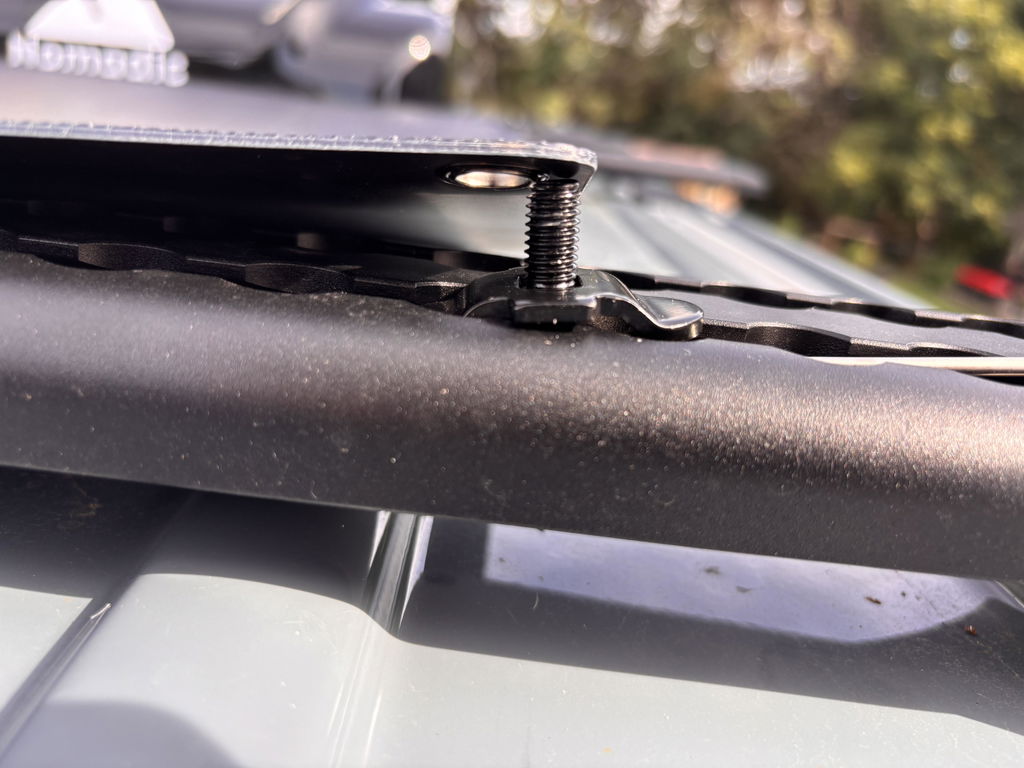
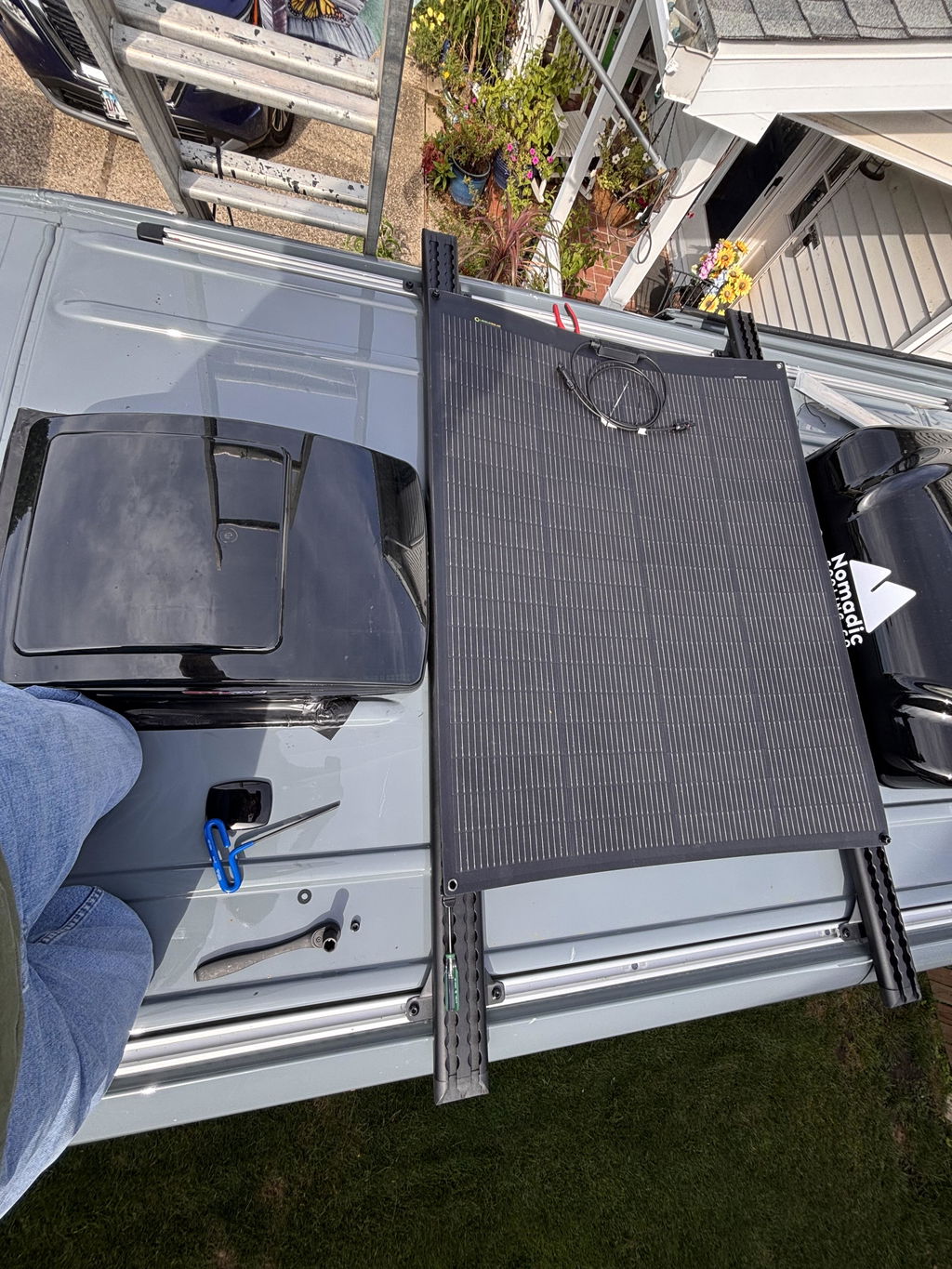
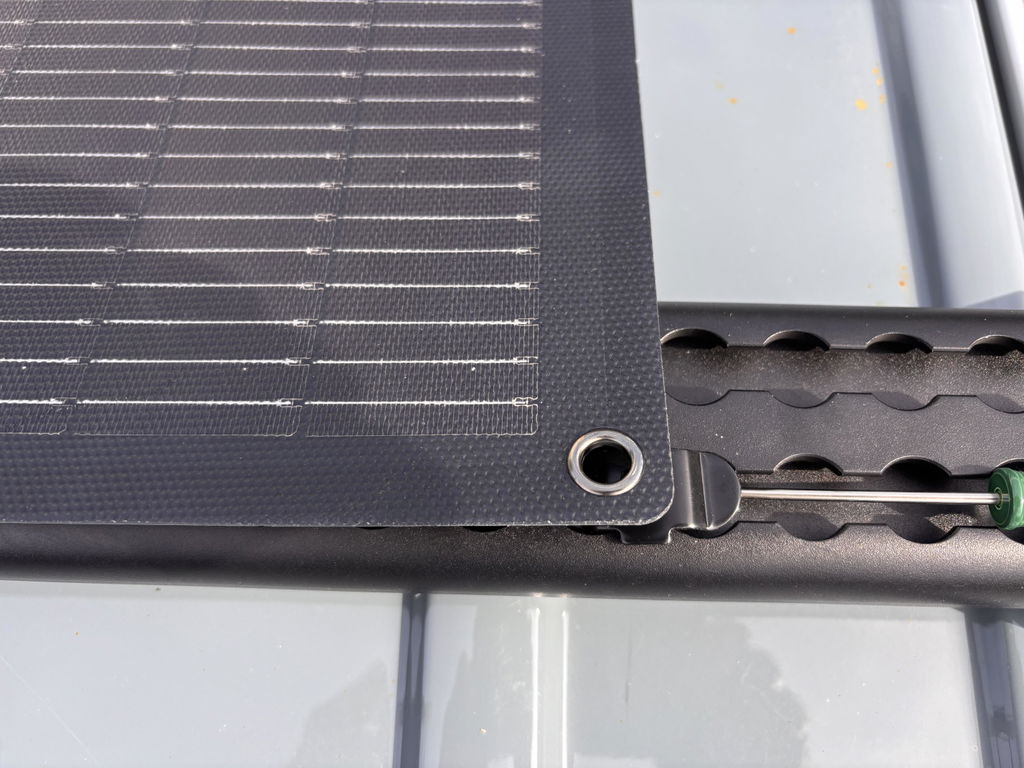
Lightweight crossbar systems like the DVA DualTrack-T crossbar kit weigh under 12 lbs per bar — compared to 25–40 lbs for steel alternatives — recovering critical payload budget without sacrificing load capacity.
Engineering Consequences of Overweight Operation
Exceeding GVWR isn't just about numbers — it compromises critical vehicle systems designed with specific weight limits.
Brake System Failure
Brake components sized for GVWR limits experience accelerated wear, reduced effectiveness, and potential failure. Stopping distances increase proportionally with mass.
Tire Overload
Standard LT245/75R16 Load Range E tires rated at 3,042 lbs each at 80 PSI (Load Index 120, per TRA 2024 Year Book, Table 4.3, Load Index Ratings, p. 47). Overloading causes heat buildup, premature wear, and potential blowouts.
Suspension Damage
Leaf springs, shock absorbers, and mounting points experience stress beyond design limits. Results in sagging, poor handling, and component failure.
Frame Stress
The 3500 uses a heavier-gauge frame rail rated for higher GVM. Continuous overloading of the lighter 2500 frame can cause stress cracks, particularly at rear spring perches and body mounting points.
Drivetrain Wear
Transmission, differential, and driveline components experience increased load, potentially shortening service life and voiding warranties.
Handling Degradation
Poor weight distribution unloads front axle, reducing steering control. Van becomes unstable in crosswinds and emergency maneuvers.
My former Fedex van had cracks in the unibody - floor, walls, rear spring perches (big sheet metal tears there). I took it several places and everyone agreed it was due to being overloaded.
— Sprinter-Source Forum User on Structural Damage
DOT Enforcement and Weigh Station Requirements
While most Sprinter vans operate below the 10,001 lb commercial vehicle threshold, overweight violations can still trigger enforcement action:
- Visual Inspection: Obviously sagging suspension attracts law enforcement attention
- Accident Investigation: Overweight status becomes evidence in crash liability determination
- State Variations: Some states have lower thresholds or specific RV enforcement provisions
- Commercial Use: Any business use may trigger commercial vehicle regulations
I think you're far more likely to get pulled over, especially the way the van is currently riding, and be asked to weigh the vehicle which could mean serious fines from the DOT.
— Forum User on Enforcement Risk
Warranty and Insurance Implications
Operating overweight creates significant coverage gaps that many owners don't discover until it's too late.
Mercedes-Benz Warranty Considerations
Under the Magnuson-Moss Warranty Act, manufacturers must prove that modifications caused specific failures. However, overweight operation provides clear causal links:
Nothing you do to the van automatically voids the warranty. The manufacturer has to prove that your modification was the cause of the issue. So, if you put so much stuff in your conversion van that you exceeded your GVWR, the manufacturer would find it pretty easy to say you caused additional damage to your suspension, transmission, brakes, or pretty much any other part of the vehicle.
— Sprinter Adventure Van, Warranty Analysis
- Suspension and steering components
- Brake system failures
- Transmission and drivetrain issues
- Tire and wheel bearing problems
- Structural and body damage
Insurance Coverage Gaps
Insurance policies typically exclude coverage for vehicles operated beyond manufacturer specifications:
- Accident Liability: Overweight operation may constitute negligence in collision claims
- Property Damage: Comprehensive coverage may be voided for overweight-related damage
- Commercial Policies: Many RV policies have specific GVWR compliance requirements
Engineering Solutions for Weight Management
Staying within GVWR requires systematic weight control from the design phase through operational use.
Lightweight Construction Strategies
- Aluminum Framing: Replace steel with aluminum where possible
- Composite Panels: Use lightweight wall and ceiling materials
- Polyiso Insulation: High R-value per pound (~R-5.5/inch per PIMA 2023 standard specifications) at low density, reducing insulation weight vs. alternatives
- Lithium Batteries: 50-70% weight reduction vs. lead-acid
- Compact Appliances: Avoid oversized components
- Strategic Water Storage: Minimize tank capacity or use flexible storage
Load Distribution Optimization
Proper weight distribution is as critical as total weight control:
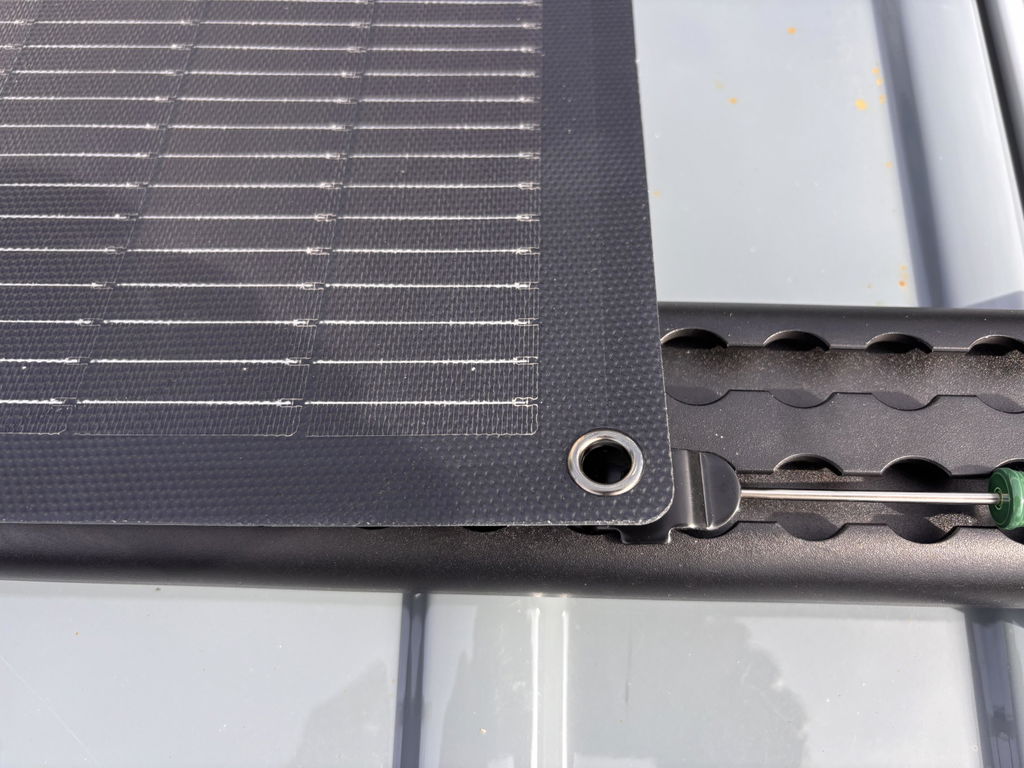
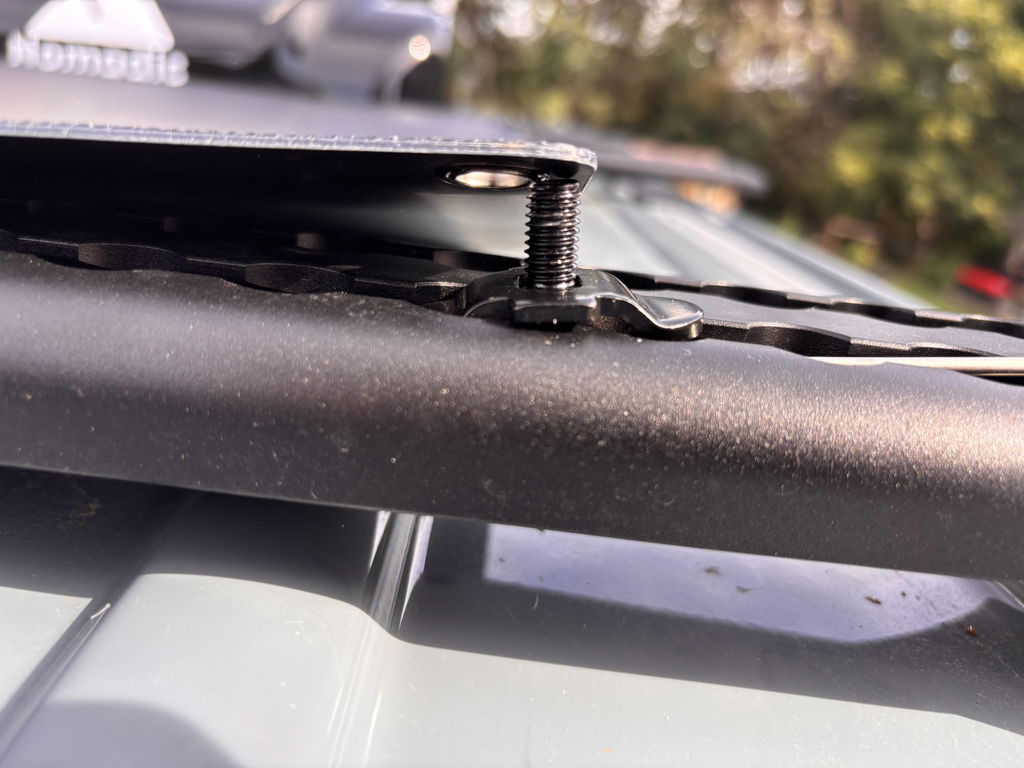
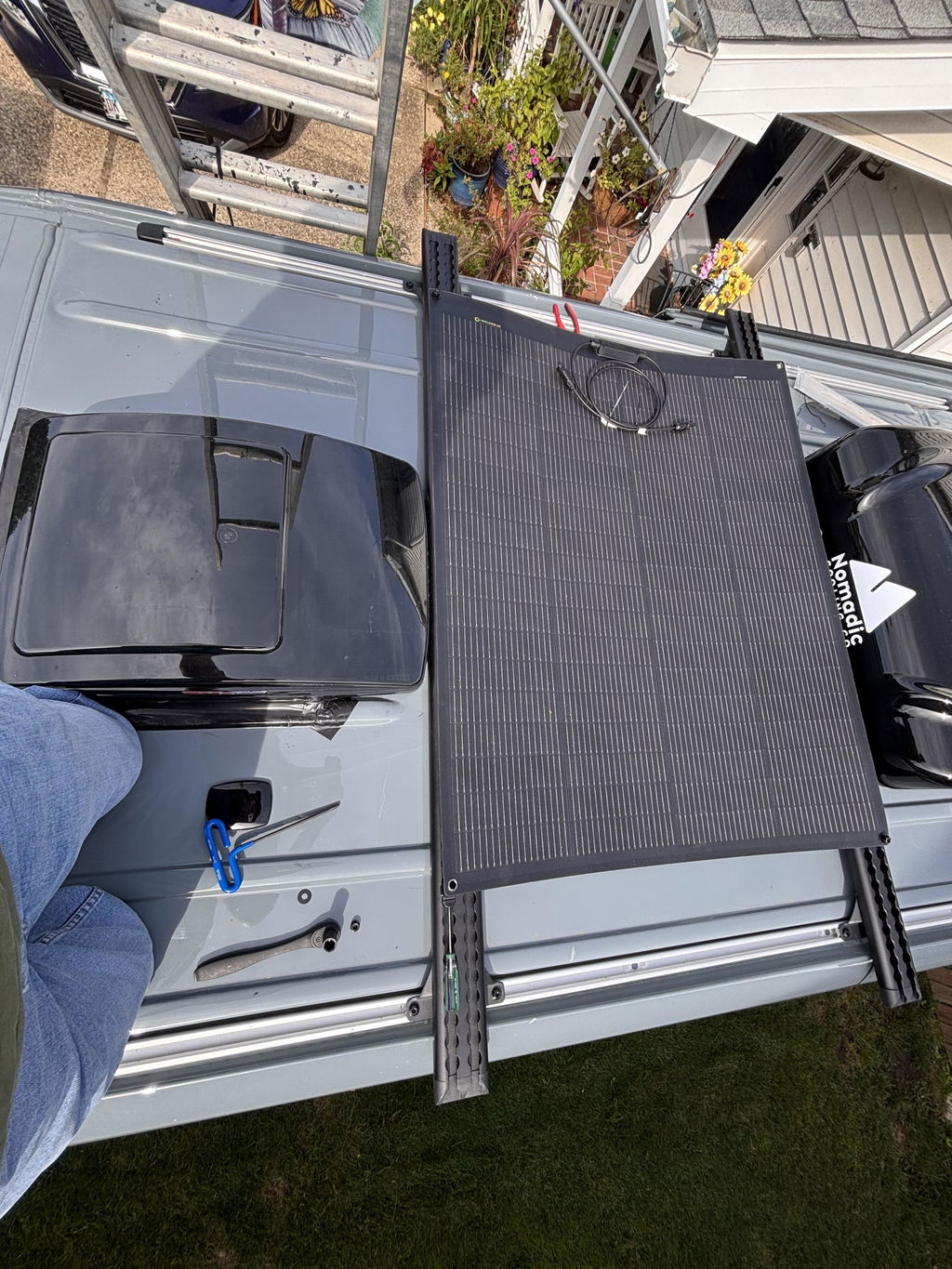
Crossbar systems distribute point loads across multiple roof attachment points instead of concentrating load on single mounts. This approach reduces stress at individual attachment points while staying within the 330 lb total roof limit.
DVA's LoadSpan-T dual-channel roof rails are engineered from 6061-T6 aluminum and use factory mounting points to distribute load across the roof structure rather than concentrating stress at custom penetrations.
3500 vs 2500: The GVWR Advantage
The Sprinter 3500 offers significant payload advantages that justify the upgrade cost for serious conversions:
| Specification | Sprinter 2500 | Sprinter 3500 | Advantage |
|---|---|---|---|
| GVWR | 9,050 lbs | 9,990 lbs | +940 lbs |
| Typical Payload (170") | 3,759 lbs | 4,699 lbs | +940 lbs |
| Frame Construction | Standard gauge | Heavier gauge (rated for higher GVM) | Structural |
| Rear Axle Rating | 5,360 lbs | 6,300 lbs | +940 lbs |
Practical Weight Monitoring
Successful weight management requires continuous monitoring throughout the build and operation phases.
Weighing Methodology
- Component Tracking: Weigh all conversion components before installation
- Progressive Weighing: Check weight at major build milestones
- Full Load Testing: Weigh with all fluids, passengers, and typical cargo
- Axle Weight Distribution: Use commercial scales to check front/rear balance
- CAT Scale (truck stops): ~$15 per weigh, available at most major truck stops. Use the free CAT Scale app to locate nearby stations and store weigh tickets. Provides total weight + individual axle weights.
- Portable wheel scales: Intercomp PT300 series ($800–$1,200 for a set of 4) provides per-wheel weights at home. Useful for tracking build progress and optimizing load distribution.
- Municipal scales: Many recycling centers, gravel yards, and agricultural co-ops have public scales for $5–$10.
Industry Responsibility and Consumer Protection
The conversion industry bears significant responsibility for the overweight epidemic affecting Sprinter vans.
I would ask him to put in writing that it is common that such vehicles exceed the weight. Tell him that you have concerns about the liability if you were to hit someone when it states to never go over the GVWR. He wont do it. In which case you know he has no faith in the vehicle as it is.
— Forum Advice on Converter Accountability
Red Flags in Conversion Contracts
- No mention of GVWR compliance
- Vague weight estimates or allowances
- Claims that "everyone goes over" GVWR
- Pressure to upgrade suspension instead of reducing weight
- Dismissal of legal or safety concerns
Conclusion: Engineering Integrity Over Marketing Promises
The Mercedes Sprinter overweight problem represents a fundamental conflict between marketing desires and engineering limits. While upfitters may promise that "everyone does it" or that suspension upgrades solve overweight issues, the physical realities remain unchanged.
The Bottom Line
- GVWR limits are engineering constraints, not suggestions. They define the safe operating envelope for brakes, tires, suspension, and frame.
- Exceeding limits compromises safety systems across the vehicle. Longer stopping distances, tire blowout risk, and structural fatigue compound over time.
- Legal and financial liability increases dramatically when overweight. Insurance gaps, warranty denials, and DOT enforcement create cascading consequences.
- Professional conversions must prioritize weight management from design inception. Lightweight materials, honest payload math, and realistic expectations are non-negotiable.
The solution lies in honest payload calculations, lightweight construction techniques, and realistic expectations about what can be safely accomplished within each van's limits. For extensive conversions requiring maximum payload, the Sprinter 3500 provides the appropriate foundation with its higher GVWR and reinforced construction.
Engineering weight management means distributing loads properly rather than adding materials. Good upgrades consider the complete vehicle system: they stay within rated limits, distribute forces efficiently, and maintain the vehicle's original safety margins.
Why Accessory Weight Matters: The DVA Approach
The payload math above makes every pound count. A roof rack system that weighs 90 lb eats into the same budget as your water, tools, and passengers. DVA's LoadSpan roof rail system for the Sprinter is engineered with 6061-T6 aluminum at under 10 lb per crossbar — a complete installation comes in at a fraction of traditional platform rack weight while distributing loads through the Sprinter's factory roof mounting structure. When you're fighting for every pound of legal payload capacity, lightweight accessories aren't a luxury — they're an engineering requirement.
Ultimately, staying within GVWR limits requires discipline, engineering knowledge, and honest communication between converters and customers. The alternative — operating overweight vans with compromised safety and legal vulnerabilities — serves no one's long-term interests.
Ready to Upgrade Your Sprinter?
DVA Mechanics engineers purpose-built Sprinter accessories — designed, tested, and backed by real-world data.
Browse All DVA Products →Sources
- Mercedes-Benz Official Specifications: MY2019+ Sprinter Vehicle Weights Technical Bulletin. Covers GVWR, curb weight, and payload for all configurations.
- Sprinter-Source Forums: Owner discussions and forum moderators documenting overweight conversions, structural damage, and brake system consequences.
- Reddit r/vandwellers: Firsthand owner accounts of overweight issues and insurance implications.
- Tire Load Ratings: LT245/75R16 standard specifications at 3,050 lbs per tire capacity.
- Magnuson-Moss Warranty Act: Framework for manufacturer warranty denial based on owner-caused modifications.