- Layer 1 — Roof platform first: DualTrack crossbars and/or roof rack. Everything else mounts to this. Don't skip it.
- Layer 2 — Side access: Utility Belt (exterior body rails) and side steps. These define what you can carry at hip height and how you get on the roof.
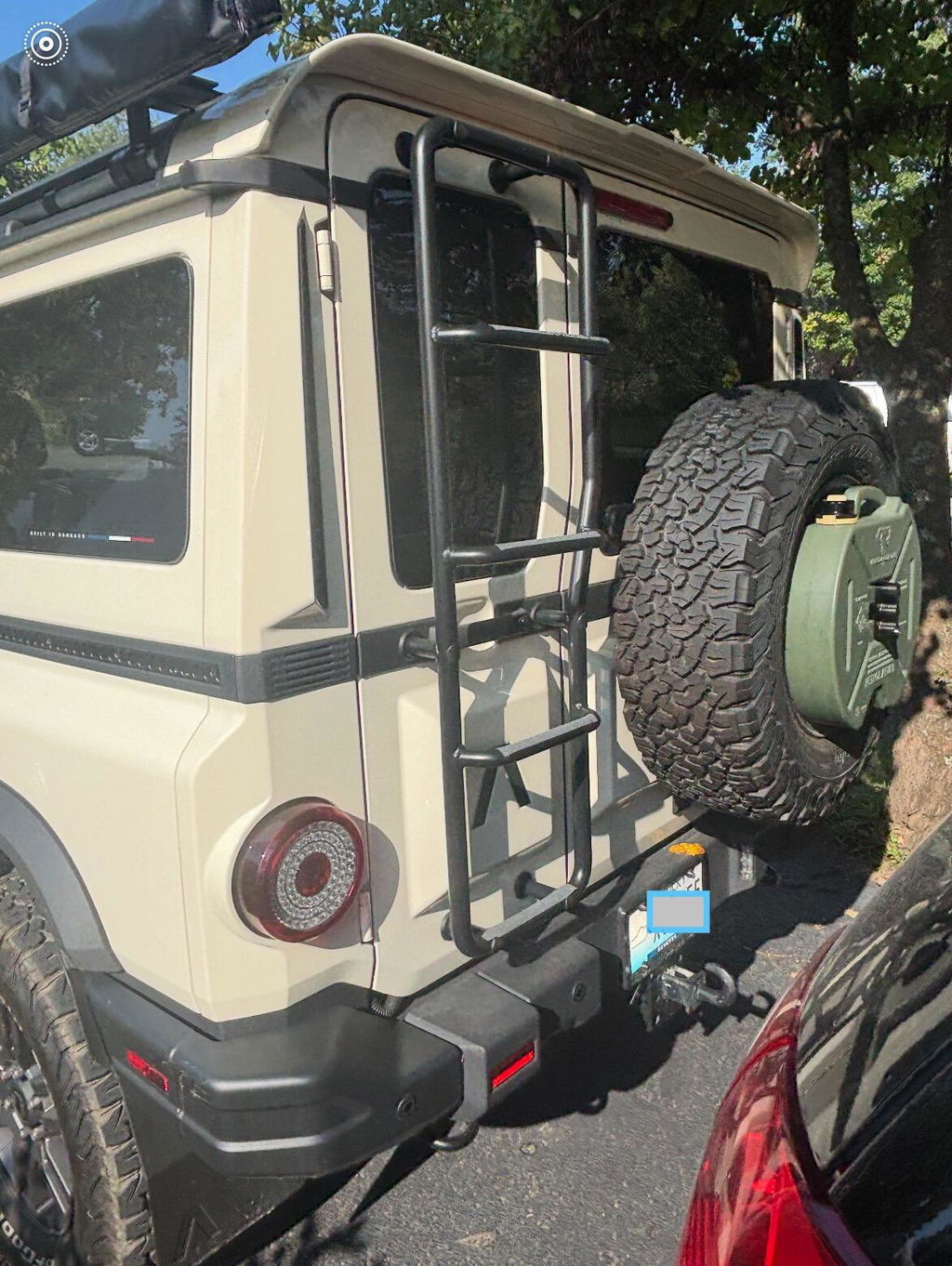
- Layer 3 — Rear access: Ladder-mounted carriers for recovery boards and jerry cans. These bolt directly to the factory rear ladder.
- Layer 4 — Lighting: Roof light bar (DTP-powered) and bumper lights after the mounting platform is confirmed.
- Layer 5 — Interior: Cargo rails, drawer systems, and tie-down accessories once exterior is set.
The INEOS Grenadier launched with an unusual advantage: INEOS designed the factory roof rails, Utility Belt body rails, and DTP roof power system as an integrated accessories platform from day one — not as an afterthought. The result is a vehicle that rewards a methodical build approach and punishes impulse accessory buying.
Forum members on TheIneosForum.com have logged the same lesson repeatedly since the Grenadier arrived in North America in 2023: owners who started with the roof and body mounting systems spent less overall. Owners who started with the coolest-looking individual accessory frequently had to re-buy or re-mount when they realized the foundation wasn't right.
This guide covers the build order that works — and why the Grenadier's factory architecture makes certain decisions easier than on competing platforms.
Why the Grenadier Rewards Platform Thinking
Most off-road vehicles get accessories designed for them after the fact. The Grenadier was engineered with its accessory system in mind from the start. INEOS built in:
- Factory roof grab bar rails — pre-threaded mounting points along each side of the roof. No drilling required for aftermarket roof crossbars that use the factory bolt pattern.
- DTP connector system (Deutsch DTP) — Factory-routed 12V circuits terminating in Deutsch DTP weatherproof connectors at the roof (EXT2/EXT3 ports). Available with the optional High-Load Panel. Plug-and-play power for lights, Starlink, and accessories without running wire.
- L-Track body rails (Utility Belt) — OEM-offered rails along both body flanks. Industry-standard L-Track channel accepts thousands of off-the-shelf fittings.
- Factory rear ladder — Direct-mount points for bolt-on accessory carriers, no fabrication required.
That infrastructure is why experienced Grenadier builders treat the vehicle's body rails and roof hardware as the first purchase decision, not the last.
"Its incredible how many companies are developing really cool aftermarket accessories for the grenadier. Once this ecosystem is in place it acts as an additional magnet for grenadier sales."
— parb, TheIneosForum.com, "The amount of aftermarket accessories" thread, May 2024 (source)
"The best thing that happened to the Grenadier was the Australian and American market opening up. Once that happened the amount of available accessories snowballed dramatically."
— Shaky, TheIneosForum.com, "The amount of aftermarket accessories" thread, May 2024 (source)
Layer 1: The Roof System
Everything on the roof — crossbars, roof racks, RTT platforms, Starlink mounts, light pods — needs a structural foundation. That foundation is either the factory bolt-on crossbar system or a full aftermarket roof rack mounted to the factory grab bar rails.
What to decide first
The first question isn't which brand of crossbar. It's this: do you want full ground clearance (≤1" crossbar profile) or a full roof rack platform?
- Full rack (150 kg dynamic): Maximum cargo. Fits RTTs, large solar, full lighting arrays. Adds 5–8" of height. Check garage clearance before ordering.
- Low-profile crossbars: Stays close to the roofline. Fits 7' garages. Dual L-Track channel accepts lights, solar, Starlink, cargo mounts without additional hardware. Load capacity scales with number of bars installed.
- Grab bar rack only: Minimum profile, minimum cost. Works for camp lights and small accessories. Limited cargo capacity.
The DVA DualTrack™ crossbar system is the low-profile option built specifically for the Grenadier's factory rail dimensions — 58.5" extruded aluminum bar spanning factory bolt points, dual-row L-Track channel per bar, installs in 45–60 minutes without drilling.
Roof wiring: plan it now
If your Grenadier has the DTP roof power option (standard on Trailmaster, optional on other trims), route your light and Starlink wiring before the crossbars go on. DTP connectors are accessible under the grab bar rail covers. For rail-mounted accessories (like Starlink mounts and auxiliary lights that clamp to crossbars), this is critical — run wiring before bars go on. A roof-mounted LED light bar uses a different approach: it's precision tape-mounted directly to the roof surface and connects to the factory EXT2 switch via the DTP circuit, so that wiring run is short and accessible independently.
Layer 2: Side Access — Utility Belt and Side Steps
Once the roof system is set, the question becomes: what do you need to reach from hip height? The Grenadier's factory body flanks run full-length body rails (the Utility Belt) — the same L-Track standard as the interior cargo rails.
Utility Belt — exterior body rails
The Utility Belt mounts at door-sill height on both body flanks. It provides L-Track mounting for jerry cans, MOLLE panels, Hi-Lift jacks, recovery boards, and dozens of L-Track-compatible fittings. DVA's Exterior Utility Belt is a bolt-on upgrade that uses dual-finish anodized + powder coat aluminum for superior UV and chip resistance versus the OEM anodize-only option.
Side steps
Side steps are primarily a roof access decision, not a convenience decision. If you're mounting anything on the crossbars — solar panels, an RTT, cargo bags — you will be climbing up regularly. The OEM side steps are fixed at one height and work for most use cases. Aftermarket folding steps (like the DVA SideStep) mount at the rear door hinge and fold flat when not in use, preventing trail damage on tight terrain.
Side Accessory Carrier — the bridge between roof and body
The Side Accessory Carrier Gen 2 creates a structural bridge between the roof rail system and the Utility Belt body rails, extending L-Track mounting to the body flanks at height. It's designed specifically for the Grenadier's factory mounting points — bolt-on, 30 minutes, no permanent modification.
Layer 3: Rear Access — Ladder Carriers
The Grenadier's factory rear ladder is a structural mounting point that most owners underuse. It accepts bolt-on accessory carriers directly — no custom brackets, no welding.
Recovery board carrier
Recovery boards — traction boards, sand ladders, self-recovery panels — are heavy and awkward to store inside the cargo area. The ladder is the right place for them: accessible in the field, out of the way during normal use. DVA's Ladder-Mounted Recovery Board Carrier uses quick-release pins so boards come off in seconds. The ladder stays fully climbable with boards removed.
Modular ladder accessory carrier
For owners carrying jerry cans, MOLLE panels, and additional recovery gear on the rear, the Ladder-Mounted Accessory Carrier Gen 2 provides a modular system for all of it — with the ladder still fully functional for roof access.
Layer 4: Lighting
Lighting comes after the mounting platform is set — because where you can put lights depends on what's already on the roof and bumper. Grenadier lighting decisions split across three zones: roof, bumper, and interior/cargo.
Roof light bar
Forum discussion on TheIneosForum.com's auxiliary LED thread reaches a consistent conclusion: roof-mounted forward light bars work best with the housing as far aft as practical, keeping the bonnet out of the light spill. One forum member tested multiple bars including the INEOS OEM unit and noted: "the light spot spreads very far — between 400 and 560 m where we still could see light." That beam spread amplifies bonnet glare if the bar is mounted too far forward.
"LED bars are very good at flood light, less so for spot light at great distance. I used a combo consisting of an LED bar and two spot lights to great effect... I would not install an LED bar on my roof rack facing forwards, but happy to have it on the front bumper or Roo Bar. I do not want flood fill light falling on my white bonnet at night."
— thedocaus, TheIneosForum.com, "Auxiliary LEDs - Lightbars, Lights, Pods" thread, November 2023 (source)
DVA's roof LED light bar takes a different approach: precision-molded to the Grenadier's specific roof contour, it mounts flush with no rearward extension. The DTP Edition connects directly to the factory DTP roof power system — no wiring required if your Grenadier has the DTP option. The FOB Edition uses an under-hood DC connection controlled by Bluetooth fob.
Bumper lighting
For forward driving light, the bumper is a better position than the roof for most use cases: no bonnet spill, forward throw is lower and more useful at speed. DVA's bumper light kits mount directly to factory mounting points on the Grenadier's front bumper — no cutting, no approach angle loss. Three kit configurations (3-light bar, 2-light bar, or 32" LED bar) depending on output requirements.
Layer 5: Interior Cargo System
Interior cargo management is Layer 5 because it depends on what you're carrying after the exterior is set up. Owners who start with interior drawers sometimes discover they needed a different drawer configuration once their external recovery gear placement was finalized.
The Grenadier's interior uses the same L-Track standard as the Utility Belt body rails — which means the same fittings, O-rings, gear hooks, and anchor mounts work inside and out. DVA's Interior Utility Rails are a bolt-on upgrade using factory mounting points in the cargo floor, providing a solid L-Track foundation for tie-downs, drawer systems, and cargo partition mounts.
What Owners Actually Get Right (and Wrong)
The most common mistake reported in Grenadier owner build threads: buying lighting before the mounting platform. Forum members who purchased roof light bars before deciding on their crossbar/rack configuration frequently had to remount, replace mounting hardware, or abandon the roof placement altogether in favor of bumper.
The second most common: buying a full roof rack when a low-profile crossbar system would have served them fine. A full rack is the right call for RTT owners and serious overland builds. But for owners doing weekend trails with solar and a camp light, a full rack adds 6+ inches of height (relevant for garages and parking structures), significant weight, and meaningful wind noise. The crossbar system delivers 200 lb capacity at 4 bars, which handles most realistic non-RTT roof loads.
"I ordered the Grenadier rock sliders and am either going to have some custom aluminum bolt-on / bolt-off side steps fabricated and anodized to install on my Grenadier rock sliders or sell my Grenadier Rock Sliders and go for one of the aftermarket solutions."
— DaBull, TheIneosForum.com, "Must have options" thread, June 2023 (source)
That quote is from 2023, and the answer has improved significantly. The aftermarket ecosystem for the Grenadier expanded faster than any other overlanding platform in the past decade — exactly the dynamic that long-time forum member parb predicted in 2024. DVA's Grenadier lineup specifically was built to address the "buy the mounting system, not just the accessory" problem.
The DVA Utility Platform for INEOS Grenadier
DVA Mechanics builds every Grenadier product around a single design constraint: bolt-on to factory mounting points, no permanent modification, compatible with the L-Track ecosystem that ties roof, body, rear ladder, and interior together. The result is a modular system where each product expands on the previous one — the crossbars make the roof useful, the Utility Belt extends that usefulness to the body, the Side Accessory Carrier bridges the two, the Interior Rails bring the same system inside.
Every product in the system uses the same L-Track standard. Every fitting — O-ring studs, anchor mounts, gear hooks, threaded lugs — works across all surfaces.