The best INEOS Grenadier accessories start with: DualTrack roof crossbars (the foundation for every roof-mounted system), auxiliary LED lighting (DTP plug-in, no wiring harness), exterior utility belt, interior cargo rails, and recovery board carriers — in that sequence, based on 18 months of DVA order data. OEM dealer accessories (checker plates, tailgate table, snorkel) serve a different purpose: warranty tie-in and stock fitment. This guide covers all twelve aftermarket priorities with 2026 pricing, install time, and the engineering rationale that distinguishes each choice from cheaper alternatives.
- DualTrack roof crossbars — foundation for roof tents, awnings, light bars ($800–$1,400)
- Auxiliary LED lighting — bumper/roof-mount, DTP plug-in, no splice needed ($300–$800)
- Exterior utility belt — full-perimeter channel for side-mounted gear ($299–$499)
- Interior cargo rails — L-track trunk system for tie-downs and sliders ($200–$400)
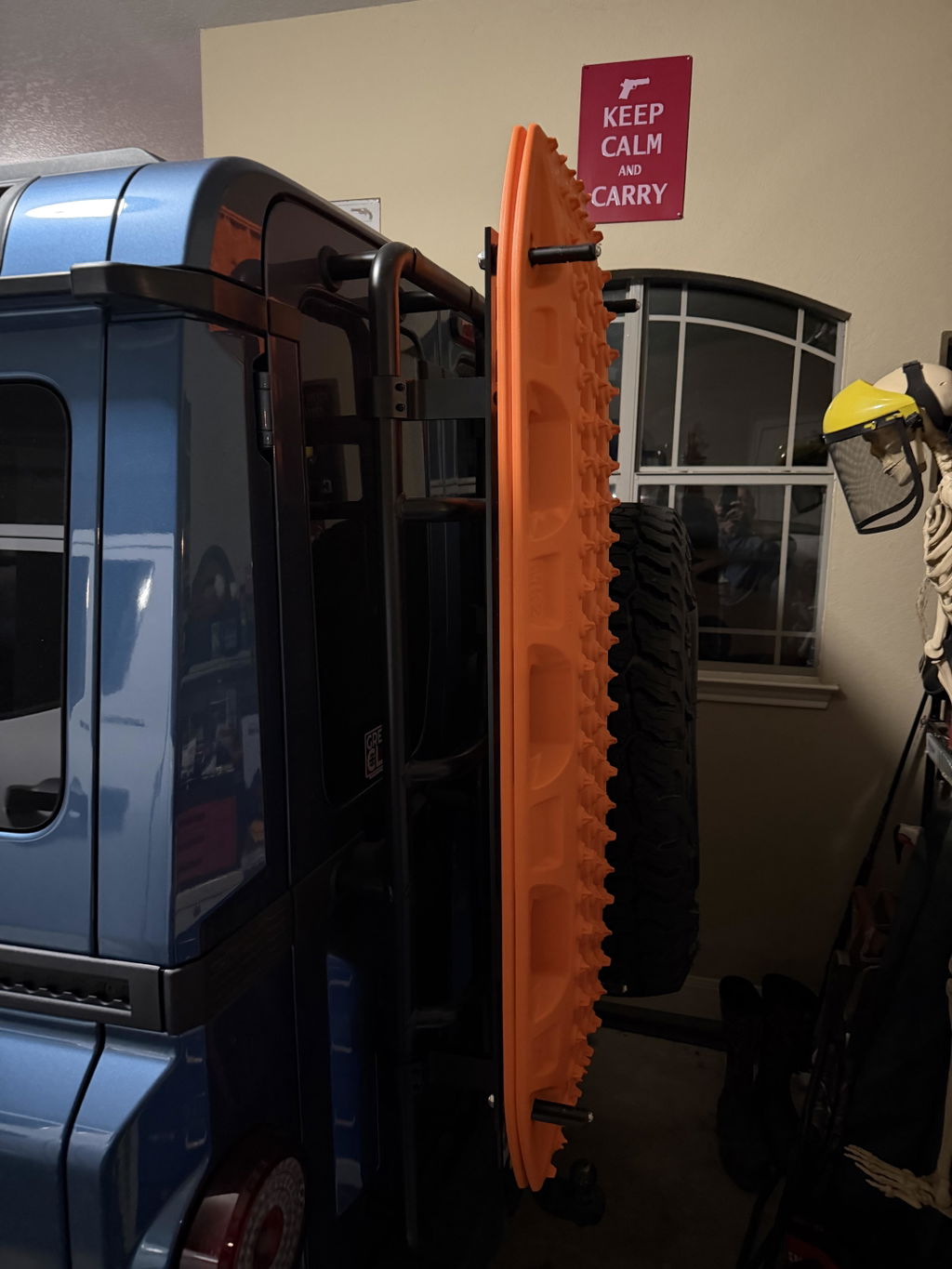
- Recovery board carriers — side-mounted traction boards, no drilling ($150–$350)
- Jerry can carrier — ladder-mounted 20L NATO fuel storage ($180–$280)
- Awning mount — DualTrack-compatible, tool-free removal ($200–$350)
- Rear hitch receiver — heavy-duty 2" hitch for bikes, boats, trailers ($300–$500)
- Starlink power cable — 3-meter DTP-native connection, no splicing ($89)
- DTP power splitter — run two accessories from one EXT port ($45–$75)
- Side-mounted light kit — roof-bar DTP lights for trail edges ($250–$450)
- Long-range fuel tank — OEM-certified range extension, owners' favorite upgrade ($1,200–$2,000)
| Accessory | Price (USD) | Install | DVA System |
|---|---|---|---|
| Roof Crossbars | $299 – $499 | 30–60 min | DualTrack™ Crossbars |
| Exterior Utility Belt | $299 – $499 | 45–90 min | SideGear™ System |
| Auxiliary LED Lighting | $150 – $900 | 20–60 min/zone | DTP-plug lighting |
| Interior Cargo Rails | $200 – $400 | 60 min | Interior Utility Rails |
| Recovery Board Carriers | $150 – $350 | 30–45 min | Side Accessory Carrier |
| Jerry Can Carrier | $180 – $280 | 20–30 min | Rear Ladder Carrier |
| Awning Mount | $200 – $350 | 30 min | DualTrack Awning Mount |
| 2" Hitch Receiver | $300 – $500 | 45–90 min | Grenadier Rear Hitch |
| Starlink Mini Mount | $89 – $149 | 20 min | Starlink Mini Mount v2 |
| Side Steps / Rock Sliders | $800 – $1,800 | 2–4 hours | Third-party (see article) |
Prices in USD. DVA Mechanics ships to all 50 US states. Last updated June 2026.
The Grenadier shipped from the factory with a surprising amount of mounting infrastructure already in place. Roof rails with gutter channels. Pre-wired EXT and INT power circuits with weatherproof DTP connectors. An exterior utility belt channel running the full perimeter. The best INEOS Grenadier accessories take advantage of what's already there — no drilling, no splicing, no compromises to the factory warranty.
Rankings are based on three factors: how many owners buy it first (DVA purchase data, Jan 2025–Jun 2026 across 400+ Grenadier builds), how often it comes up in owner forums (r/ineosgrenadier and The INEOS Forum), and how much it changes daily usability. Recovery boards are cool, but most owners aren't wheeling every weekend. Accessories that improve every drive rank higher than accessories that improve one trip a year. OEM factory accessories are noted where they're the practical choice; aftermarket alternatives are listed where they deliver better performance-per-dollar.
INEOS dealers stock a range of factory-certified accessories for the Wagon and Quartermaster: side runners (footstep bars), checker plates, tailgate picnic table, snorkel, safari roof hatch, and a factory roof rack. These carry full INEOS warranty coverage and guaranteed OEM fitment — a real advantage if you want to keep the stock look or plan warranty work later.
Where most forum owners land after 6–12 months: protection accessories (checker plates, rock sliders) skew OEM or OEM-equivalent for warranty coverage. The roof system, lighting, and utility belt categories skew hard toward aftermarket — better load ratings, L-track modular integration, and lower cost-per-function. The tailgate table is universally loved. The snorkel divides opinion: genuine utility for river crossings, less useful for the average USA trail day.
Key distinction: OEM accessories are engineered to INEOS tolerances and sold through dealers with factory installation. Aftermarket accessories (including DVA's) offer better load specs and modularity in most categories, without the OEM warranty tie-in.
Full category guide: For a deep-dive by category (Roof / Recovery / Lighting / Interior), see the INEOS Grenadier Accessories Hub: Complete 2026 US Build Guide. This article ranks the 12 by owner purchase priority; the Hub covers the full ecosystem.
Low-Profile Roof Crossbars
The Grenadier comes with roof rails but no crossbars. Without crossbars, you can't mount a roof-top tent, cargo box, awning, kayak cradle, or light bar. They're the foundation every other roof accessory depends on.
What to look for: A system that uses the factory gutter channel (no drilling) with a low enough profile to fit in standard parking garages. The Grenadier already stands ~80" tall at the roof rails — add a bulky rack and you're scraping every parking structure in the city. Dual-track systems with both L-track and crossbar channels give you the most mounting flexibility long-term.
DVA's DualTrack crossbar system was engineered around this exact problem: low-profile enough for daily driving, rated for 150 kg dynamic load per INEOS specs, and compatible with L-track accessories along the rail length.
Engineering note: The Grenadier's roof load limit is 150 kg dynamic / 420 kg static. Your crossbar system itself counts against that limit. A steel rack at 25+ kg eats into your payload before you've mounted anything. Aluminum systems in the 8–14 kg range preserve more usable capacity. See our roof load engineering guide for the full breakdown.
DVA install note: The DualTrack mounts to the factory Grenadier roof rail attachment points via aluminum brackets and stainless hardware — bracket alignment first, then clamp bolts torqued in sequence. No sliding T-bolt, no modification to the factory rails. No drilling, no butyl tape, no sealant required. The extruded aluminum rail runs the full length without welded joints, which is what gives it the stiffness advantage over welded tube racks. First-time installers typically finish in under 90 minutes; repeat installs take under 45.
DVA DualTrack Roof Rail System
Low-profile crossbar system
Gutter-channel mount, no drilling. 150 kg dynamic load rated. L-track + crossbar channels for full mounting flexibility.
Shop DualTrack System →L-Track Slider for DualTrack
Modular mounting hardware
Threaded-lug sliders for the DualTrack L-track channel. Reposition any L-track accessory without tools.
Shop L-Track Sliders →Starlink Mini Roof Rail Mount
Kickstand-style rail mount
Mounts Starlink Mini to the DualTrack crossbar. Kickstand design tilts for optimal satellite acquisition angle while driving.
Shop Starlink Mount →Auxiliary LED Lighting
The Grenadier's factory headlights are adequate on paved roads but fall short the moment you leave tarmac. Auxiliary LED lighting — bumper-mounted, roof-mounted, or side-mounted — is consistently the second purchase owners make.
What to look for: Lights that plug into the factory EXT power circuits via DTP connectors. The Grenadier has pre-wired EXT ports (roof and under-hood) specifically designed for auxiliary accessories. Any light that requires you to tap into the fuse box, splice wires, or run custom harnesses is working against the truck's design, not with it.
DVA offers bumper light mounts, roof-mount side lights, and 3-light bumper bar kits that use these factory circuits. For the full wiring strategy, read our lighting engineering guide.
Engineering note: The EXT circuits are fused at 10A–25A depending on position, giving you 120W–350W per circuit. A typical 3-light bumper bar draws ~110W. Most owners will never approach the circuit limits even with multiple lighting zones active. Read the EXT/INT power system guide for circuit-by-circuit specs.
LED Side Light – Roof Bar Mount (DTP)
DTP plug-in, no wiring harness
Uses the Grenadier's factory DTP port. Roof bar mount positions the light for wide side illumination. Plug-in install under 20 min.
Shop LED Side Light →Front Bumper 3-Light Bar Kit
Bumper-mount LED bar
Three-pod bumper light bar. Integrates with factory bumper geometry — no cutting. DTP-compatible power option.
Shop Bumper Light Kit →Exterior Utility Belt
The Grenadier's body has a perimeter channel designed for INEOS's own accessory mounting system. The exterior utility belt turns that channel into a functional rail where you can mount recovery boards, shovels, axes, jerry can holders, and anything else you need externally accessible.
What to look for: Full-perimeter coverage (front and rear sections) with L-track compatibility for maximum attachment flexibility. Partial sets work, but you'll want the ability to rearrange gear as your build evolves. Powder-coated steel or anodized aluminum construction — the belt lives outside, exposed to road debris, UV, and weather year-round.
DVA's exterior utility belt runs the full Grenadier perimeter and accepts standard L-track accessories. Available as a rear section or front section if you want to start smaller.
Engineering note: The utility belt channel is structural — it's part of the body panel design, not a bolt-on afterthought. Accessories mounted here benefit from distributed load across the belt length rather than point-loading on a single bracket. This matters when carrying heavy items like full jerry cans (20L = ~16 kg each) at speed on rough terrain.
Exterior Utility Belt – Full Set
Complete front + rear kit
Perimeter MOLLE channel system. Front and rear sections. Snap-in mount for recovery gear, dry bags, and camp tools — no drilling.
Shop Full Set →Exterior Utility Belt – Rear Only
Rear section only
Rear utility belt for tailgate-area mounting. Pairs with the front set for full perimeter coverage. Common first purchase.
Shop Rear Set →Recovery Board Mounts
Recovery boards are useless if they're buried under camp gear in the cargo area when you need them. External mounting — on the utility belt, roof rails, or a rear carrier — keeps boards accessible without sacrificing interior cargo space.
What to look for: A mount that secures boards rigidly without rattling at highway speed. Quick-release for trailside access. Compatible with standard board sizes (most are roughly 1,100 mm × 330 mm). Mounts that use L-track sliders let you reposition boards when you change your loadout.
Engineering note: Two recovery boards mounted externally add about 7–9 kg to the vehicle but free up significant cargo volume. On expedition builds where every liter of interior space counts, external mounting pays for itself on the first trip.
Rear Ladder Recovery Board Carrier
Ladder-mounted, quick-release
Secures standard recovery boards (1,100×330 mm spec) to the factory rear ladder. Boards stay accessible without occupying cargo or roof space.
Shop Recovery Carrier →Side Accessory Carrier – Gen 2
Side-mount recovery board slot
Mounts boards flat along the vehicle side via the utility belt system. Keeps rear ladder clear for Hi-Lift or jerry cans.
Shop Side Carrier →Power Distribution & DTP Accessories
The Grenadier's EXT/INT power system is one of the most overlooked features on the truck. Factory-installed DTP connectors on the roof, under the hood, and inside the cabin provide switched 12V power for accessories — no fuse taps, no relay boxes, no wiring harnesses needed.
What to look for: DTP-to-device adapter cables (for Starlink Mini, fridges, compressors), DTP splitters to run multiple accessories from one circuit, and power extension cables to reach accessories mounted further from the ports. Weatherproof ratings matter — these connectors live outdoors.
DVA's Starlink Mini power cables and DTP splitters are purpose-built for the Grenadier's connector system.
Engineering note: Each EXT circuit is independently fused and switched from the dashboard. You can turn roof lights on/off without affecting your bumper lights or Starlink feed. This isolated circuit architecture means one accessory fault won't cascade to others — a design decision that more owners should take advantage of.
Starlink Mini DTP Power Cable
Direct DTP connection
Powers Starlink Mini from the Grenadier's factory DTP port. No secondary battery or inverter needed. 5m length for roof mount.
Shop DTP Power Cable →PowerVault™ Utility Hub R2
Exterior power distribution
Weatherproof exterior power hub. Multiple DTP-compatible outputs for lights, fridge, and camp gear. Mounts to utility belt or roof rail.
Shop PowerVault →DTP Rooftop Power Splitter
2-way DTP splitter
DTP06-2S male to 2x DTP04-2P female. Run two roof accessories (Starlink + LED) from the factory single DTP output.
Shop DTP Splitter →Side Steps / Rock Sliders
The Grenadier stands tall. Getting in and out — especially for shorter passengers or with heavy gear — is noticeably easier with a step. For owners who take their trucks off-road, dual-purpose rock sliders that protect the body panels while serving as a step are the better investment.
What to look for: Steps with sufficient ground clearance that they don't become the lowest point on the truck when off-road. Steel construction (minimum 3 mm wall thickness) for sliders that need to take rock hits. Non-slip step surface. Mounting that uses factory frame points — no drilling into the body or subframe.
Engineering note: The Grenadier's step height from ground to door sill is approximately 550 mm. A fixed step at 250–300 mm splits the difference. Retractable power steps add complexity and potential failure points for off-road use — fixed steps or sliders are mechanically simpler and tougher.
INEOS Grenadier Side Steps (Set of 2)
Fixed aluminum step
Bolt-on fixed side steps. Low-profile enough for moderate off-camber trails. Black or red powder coat. No rock slider conflict.
Shop Side Steps →Electric Power Side Steps (LED)
Auto-deploy step with LED
Auto-extends when door opens, retracts flush to body when closed. LED strip illuminates the step at night. Plug-and-play install.
Shop Electric Steps →Interior Utility Rails
The Grenadier's cargo area has factory tie-down points, but they're fixed positions. Interior utility rails add adjustable L-track channels to the cargo walls, letting you secure boxes, pelican cases, fridges, and drawers at any position along the rail.
What to look for: Rails that mount to factory bolt points (no drilling). L-track compatibility for standard spring-loaded fittings. Powder-coated or anodized finish to resist scuffing from cargo movement. Full-length rails give you more repositioning flexibility than short segments.
DVA's interior utility rails bolt into factory mounting points and accept standard L-track hardware.
Engineering note: Unsecured cargo in the Grenadier's flat-floor cargo area becomes a projectile during hard braking or off-road impacts. L-track rail systems with ratchet straps are the fastest way to secure irregular loads. The factory tie-down points work, but they limit you to four fixed positions. Rails give you infinite adjustment.
Interior Utility Rails
L-track ceiling/cargo rail
Ceiling-mounted L-track rails for the cargo area. Hang dry bags, medical kits, tools, and camp gear from standardized L-track hardware.
Shop Interior Rails →Jerry Can Carriers
The Grenadier's factory fuel tank (approximately 75L) gives decent range for highway driving, but extended off-road trips at lower speeds and higher consumption burn through fuel faster. External jerry can carriers mounted on the utility belt or rear carrier let you add 40–80L of reserve fuel without touching the cargo area.
What to look for: NATO-spec jerry can compatibility (20L standard). Carriers with positive locking mechanisms — you don't want a full can working loose at speed. Mounting position matters: rear-mounted cans have less impact on front-axle load than side-mounted cans placed forward.
DVA's NATO jerry can carrier mounts to the utility belt and rear carrier systems.
Engineering note: Four full 20L jerry cans add approximately 64 kg of fuel weight. On a Grenadier with a GVW limit of 3,500 kg, that's a meaningful chunk of your payload budget. Plan your fuel carry against your total build weight, not in isolation. Our axle load guide breaks down the math.
NATO Jerry Can Carrier (Side Mount)
20L NATO-spec carrier
Mounts to the side utility belt system. Holds one 20L NATO jerry can externally, freeing interior cargo space. Quick-release bracket.
Shop Jerry Can Carrier →Awning Mount System
An awning turns the Grenadier from a vehicle into a camp. Shade from sun and rain without pitching a tarp. The mount system matters more than the awning brand — a solid mount lets you swap awnings over the life of the truck.
What to look for: Mounts that attach to your crossbar system (not directly to the roof rails, which limits load capacity). Universal awning bolt patterns that accept most 270° and side-pull awning brands. High enough mounting position that the awning clears the roof line when stowed.
DVA's awning mounts for DualTrack bolt directly to the crossbar L-track channel.
Engineering note: A deployed awning acts as a sail in wind. The loads transfer through the mount into your crossbar system and then into the roof gutter. Make sure your awning mount's rated capacity exceeds the wind load you expect — most manufacturers rate for static load, not dynamic wind load. Retract your awning when wind picks up. Broken awning arms are the most common campsite damage on overlanding rigs.
Awning Mount V2 for DualTrack Rails
Set of 2 brackets
V2 mount brackets for 270° or standard awnings on DualTrack crossbars. Positioned 300 mm inboard of each rail for optimal spread angle.
Shop Awning Mount V2 →Awning Mount (Original) for DualTrack
Single bracket kit
Original awning mount for the DualTrack system. Compatible with standard awning arms. Pair with V2 for dual-arm setups.
Shop Awning Mount →2" Hitch Receiver Upgrade
The Grenadier comes with a tow ball setup in some markets, but a standard 2" receiver opens up the entire ecosystem of hitch-mounted accessories: bike racks, cargo carriers, swing-out tire carriers, and trailer hitches. It's the universal adapter for the rear of the truck.
What to look for: A receiver rated for both towing (tongue weight and gross trailer weight) and accessory use. Steel construction with corrosion-resistant coating. Make sure it doesn't interfere with your departure angle if you're doing serious off-road work — some receivers hang lower than the factory setup.
DVA's 2" hitch receiver is rated for heavy-duty towing applications.
Engineering note: The Grenadier's frame is rated for a 3,500 kg braked tow capacity. Your hitch receiver needs to match or exceed this rating. A hitch-mounted bike rack loaded with four e-bikes can exceed 80 kg — that's tongue weight that reduces your rear axle's remaining payload capacity. Factor it into your weight budget.
DVA Rear 2″ Hitch Receiver
US-standard 2″ receiver
Bolt-on 2″ receiver for all Grenadier variants. Uses existing chassis mounting points — no drilling, no welding. Fits standard ball mounts, bike racks, cargo carriers.
Shop Hitch Receiver →Bumper Protection / Bull Bar
The Grenadier's steel bumpers are tougher than most, but they're not sacrificial. A bull bar or bumper guard protects the factory bumper, headlights, and radiator from animal strikes, brush, and low-speed impacts on the trail.
What to look for: ADAS/camera compatibility — the Grenadier has forward-facing sensors that many bull bars obstruct or block. Steel construction rated for winch mounting if you plan to add one later. Mounting that bolts to the frame, not the bumper. Weight matters: a heavy bull bar shifts the front axle load and can affect steering feel.
Engineering note: Adding a bull bar changes the front overhang weight, which affects both the approach angle and front axle load. A 40 kg bull bar mounted 800 mm forward of the front axle adds roughly 32 kg of equivalent axle load due to the lever arm. On a Grenadier with a 1,667 kg front axle limit, that's not trivial. Make sure your bull bar supplier provides a weight spec, and subtract it from your available front payload.
Front Bumper Light Kit (3-Light Bar)
Bumper-integrated LED
Mounts three LED pods to the factory bumper geometry. Adds light without the weight or cost of a full bull bar. DTP-compatible power option.
Shop Bumper Light Kit →All Grenadier Accessories
Browse full catalog
Full range of DVA Grenadier-specific parts: roof rails, utility belts, lighting, hitch, interior rails, and more.
Shop All Grenadier →Fire Extinguisher Mount
Not glamorous. Not Instagram-worthy. But a properly mounted fire extinguisher is the one accessory you'll be desperate for when you need it. Under-seat mounts keep it accessible from the driver's seat without consuming cargo space.
What to look for: Quick-release bracket that can be operated with one hand. Mounting position accessible from the driver's seat (not buried in the cargo area). Size: a 1 kg or 2 kg dry chemical extinguisher is the minimum for vehicle fires. Replace or service annually — an expired extinguisher is dead weight.
Engineering note: The under-seat area of the Grenadier is tight. Measure before you buy. Mount the extinguisher so the handle faces outward and can be pulled free without unbuckling your seatbelt first. Seconds matter in a vehicle fire.
How to Prioritize Your Build
Twelve Grenadier accessories is a lot of gear. Most owners don't buy everything at once — and you shouldn't either. Here's how to think about build priority based on what hundreds of Grenadier owners have done before you.
🔧 Month 1: Foundation
Crossbars, side steps, and a utility belt section. These change daily usability and unlock everything that comes after. Most owners spend $1,500–$2,500 on their first order.
💡 Month 2–3: Visibility
Bumper lighting and side lights. One zone at a time. Start with bumper (the biggest visibility improvement per dollar), then add side and roof lighting as budget allows.
⛺ Month 4–6: Camp & Expedition
Awning, interior rails, jerry can carriers, recovery board mounts. These are trip-specific — build toward your first big trip and add what that trip demands.
🛡️ As Needed: Protection & Towing
Bull bar, hitch receiver, fire extinguisher mount. The bull bar is the most expensive single item on this list — take time to choose one that fits your use case and weight budget.
The single biggest mistake in Grenadier builds is ignoring weight. The truck has a 3,500 kg GVW limit with 1,667 kg front and 2,150 kg rear axle limits. A fully accessorized Grenadier with crossbars, bull bar, dual jerry cans, awning, lighting, and a roof-top tent can easily consume 150–200 kg before you load a single bag. Track your accessory weights. Our center of gravity guide and axle load breakdown explain why this matters.
There's no wrong order to build your Grenadier. When it comes to INEOS Grenadier upgrades, the owners who report the most satisfaction started with the foundation (crossbars + utility belt) and expanded outward from there. The ones who bought the flashiest accessories first often backtracked to install the mounting infrastructure they should have started with.
The best INEOS Grenadier accessories aren't the most expensive ones. They're the ones that match how you actually use your truck. A weekend highway driver doesn't need recovery boards. A daily commuter doesn't need a bull bar. Build for your life, not someone else's Instagram feed.
See all INEOS Grenadier accessories engineered by DVA Mechanics — crossbars, lighting, utility belts, power cables, and mounting hardware. Browse the full Grenadier collection →
Under-Seat Fire Extinguisher Mount
Passenger-side under seat
Mounts a standard 1kg or 2kg extinguisher under the passenger seat. Keeps it accessible without occupying cargo space or a door pocket.
Shop Fire Ext. Mount →