Sprinter Van Roof Cargo Box Guide: What Fits, Weight Math, and How to Mount It Right
Most cargo boxes require two crossbars spaced 24–28" apart. Your Sprinter's factory T-slot rails don't ship with crossbars — you add them. The total of rack system + box + gear must stay under 330 lb dynamic (the figure Mercedes publishes for moving loads, all roof heights). A fully loaded high-roof Sprinter with a box installed will not clear a standard 84" garage door.
Cargo boxes are one of the most practical upgrades you can make to a Sprinter roof. They keep gear weather-protected, don't shift load on corners, and free up interior space on road trips and overland builds. But the first time most owners go to mount one, they run into a wall: the box mount requires crossbars, the factory rails don't include them, and the spacing has to match what the box expects.
This guide covers the three things Sprinter owners consistently get wrong on their first attempt — and how to set the system up correctly from the start.
The Crossbar Requirement (Why Your Bare Rails Won't Work)
A roof basket or full cage gives you a continuous grid or platform to strap things to. A cargo box is different — it's a sealed, rigid container designed to mount to two parallel crossbars via integrated clamps or U-bolt hardware. Nearly every box on the market is designed around a crossbar-based car rack, and the expected crossbar spacing is usually 24 to 28 inches, sometimes up to 32 inches for larger box models.
The factory Sprinter roof rails run front-to-back, not side-to-side. They give you the anchoring points, but the crossbars that span between the two rails (the bars the box actually clamps to) are a separate purchase — and they have to be the right type.
The factory Sprinter rail profile uses a 9mm-wide T-slot channel. To add crossbars that span the two rails, you need either:
- T-bolt crossbars — bolts that slide into the factory T-slot, with a crossbar clamped above. This is the most common approach.
- Rail-integrated crossbars — aftermarket rail systems that include crossbar channels built in, allowing you to set and lock crossbar position anywhere along the rail length without drilling.
One owner on Sprinter-Source described the process from a functional perspective: he mounted a full 18 cubic foot cargo box on a 1/4 rack using crossbars made from 1-inch schedule 40 stainless pipe with small angle pieces to attach to the T-slot rails. His conclusion: "The box is light enough to be easy to on/off on a high roof 144 by myself, but I find I like the extra room for the most part of the year, so I don't take it off very often." (Sprinter-Source, thread #97680, Apr 2021)
The key detail in that build: he added crossbars to the T-slot rails. The rail didn't do the mounting — the crossbars did.
The Weight Math: How a Cargo Box Eats Your 330 lb Budget
The Sprinter's published roof load capacity is 330 lb (150 kg) dynamic for all roof heights — standard roof and high roof share the same number. Dynamic means while the van is moving: highway speed, lane changes, expansion joints, hard braking. There is no separate, higher "static" figure published for parked load. Plan against the 330 lb dynamic figure and leave margin for rough road.
When you add a cargo box, that weight comes out of the same 330 lb budget as everything else on the roof. Here's how the math typically plays out:
| Component | Typical Weight | Notes |
|---|---|---|
| Crossbar system (pair) | 8–18 lb | Varies by material and span width |
| Mid-size cargo box (empty) | 28–42 lb | Roughly 12–16 cubic feet capacity |
| Large cargo box (empty) | 42–65 lb | Roughly 18–22 cubic feet capacity |
| Box contents (gear load) | 0–200+ lb | This is where most owners overload |
A mid-size box with a moderate gear load — camping equipment, tools, a couple of duffels — can easily hit 80–120 lb by itself. Add crossbars and a partial solar panel setup and you're at 130–160 lb on the roof before you throw in anything else.
Budget your roof system weight first, then see what's left for payload. If you're also running solar panels, an antenna, or additional crossbar accessories, subtract those first. Most owner builds that end up close to the limit have cargo boxes as the surprise culprit.
The 330 lb figure governs loads while driving. Hard cornering, washboard, and sudden stops multiply the force the mounting points actually see. Off-pavement use should run well under the rated limit, not at it.
The DVA Foundation: LoadSpan Rails Make Cargo Box Mounting Clean
The reason most first attempts at mounting a cargo box on a Sprinter are clunky isn't the box — it's the rail-to-crossbar interface. Factory Sprinter rails are designed as passenger vehicle accessory rails, not as mounting infrastructure for 40+ lb rigid containers loaded with gear. The T-slot is functional, but it's not optimized for adjustable, repositionable crossbar placement across the full rail length.
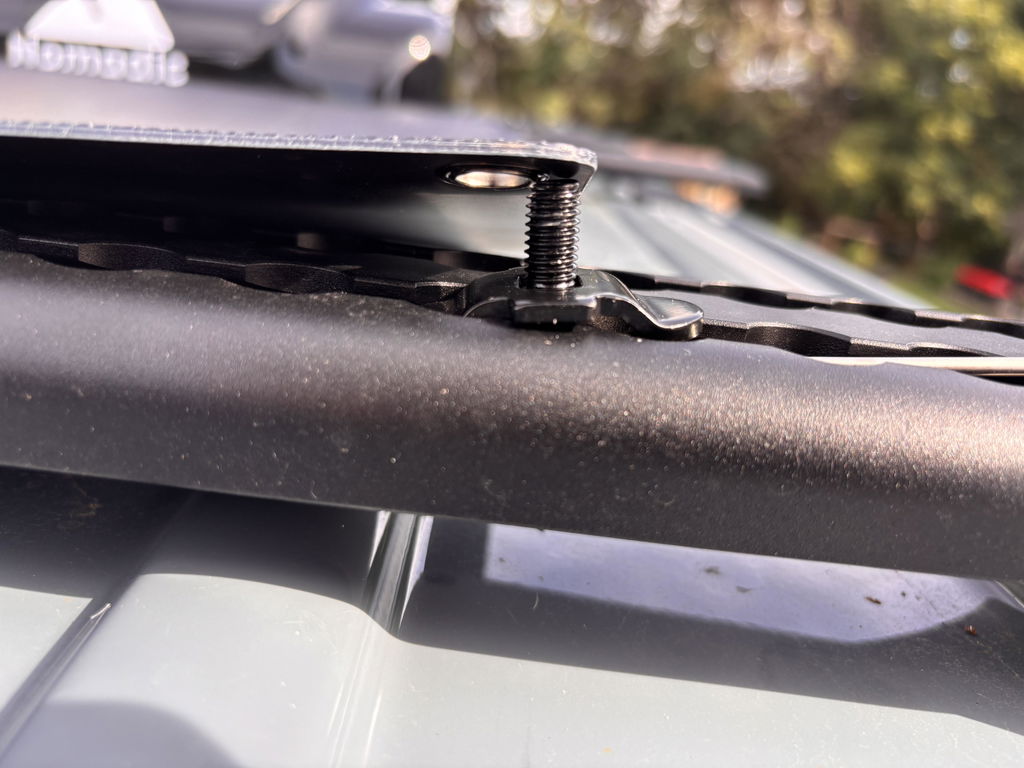
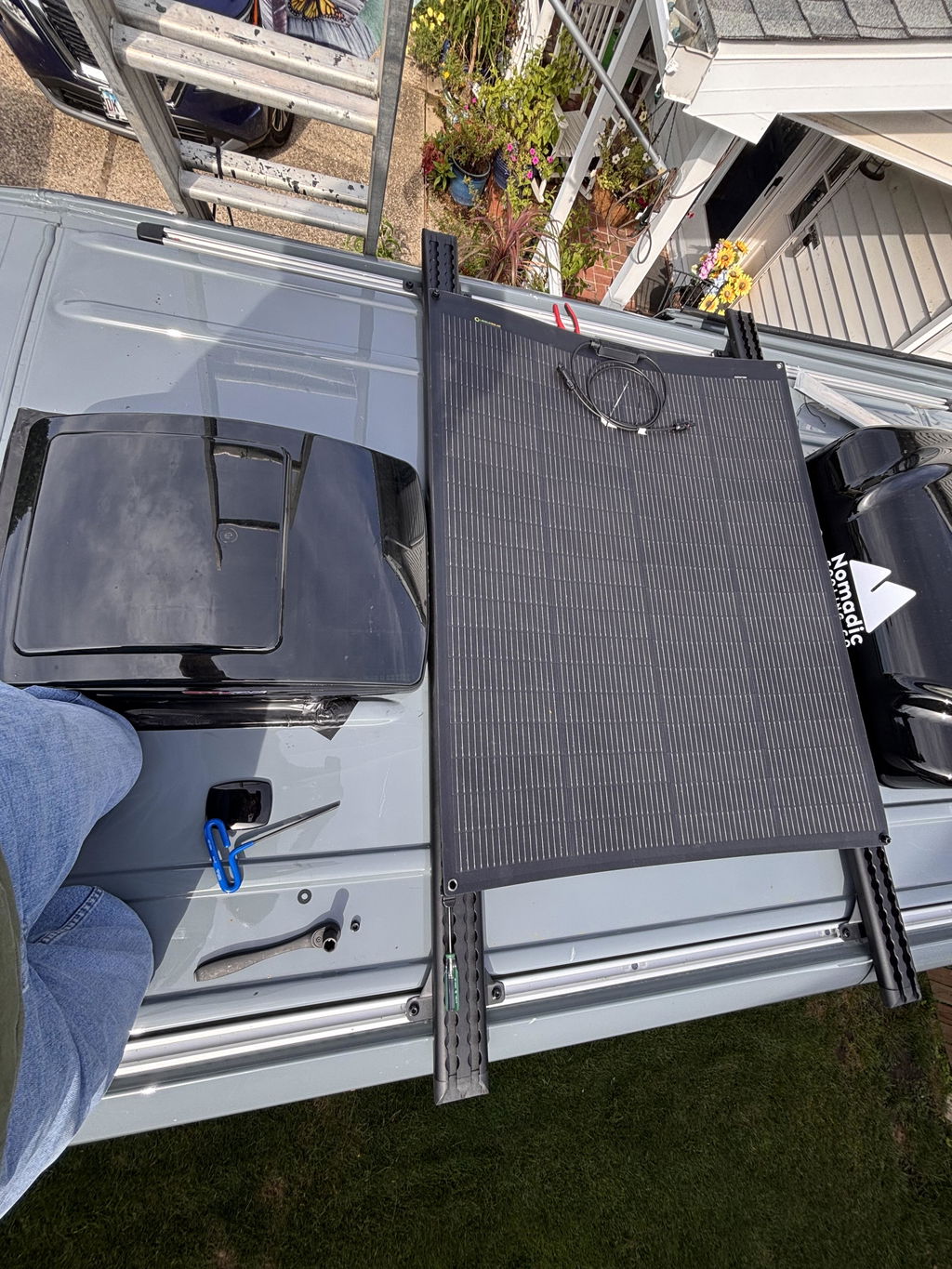
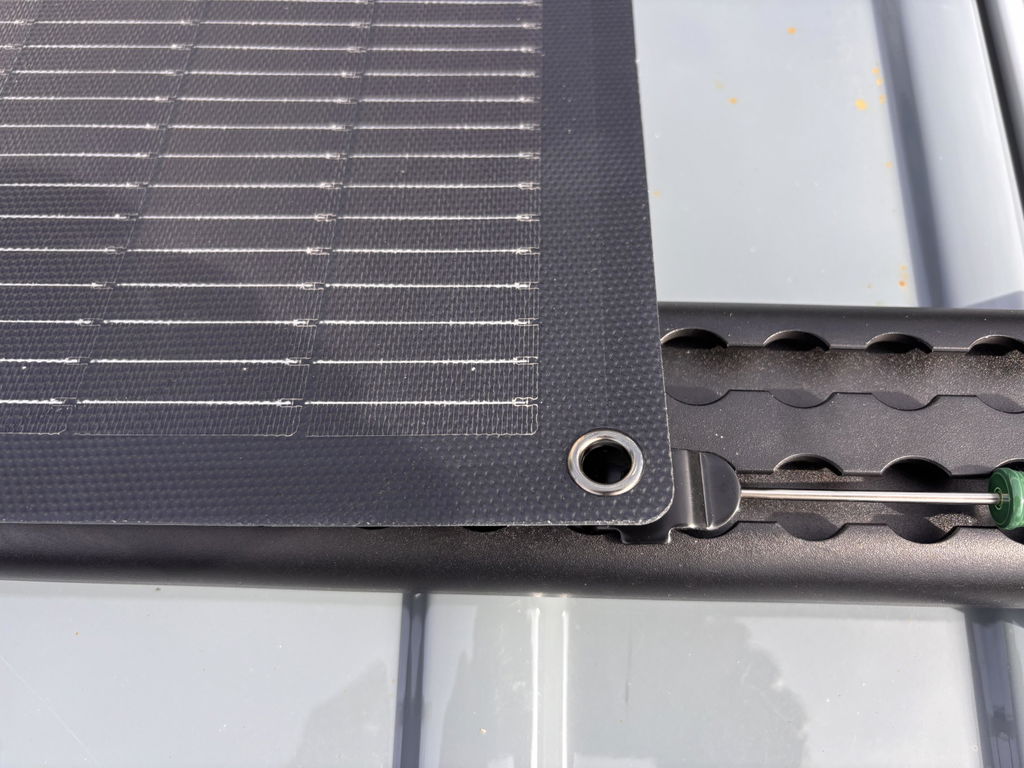
DVA's LoadSpan™ Roof Rails address this directly. LoadSpan runs front-to-back along the Sprinter roof, mounting to the factory hard points with no drilling. The key difference from the factory rail is the integrated native L-Track channel — a full-length, continuous track that accepts standard L-Track hardware at any point, not just at pre-punched T-slot locations. This makes crossbar positioning genuinely adjustable: you set the crossbars where your box requires them, lock them in, and the system holds that position under load.

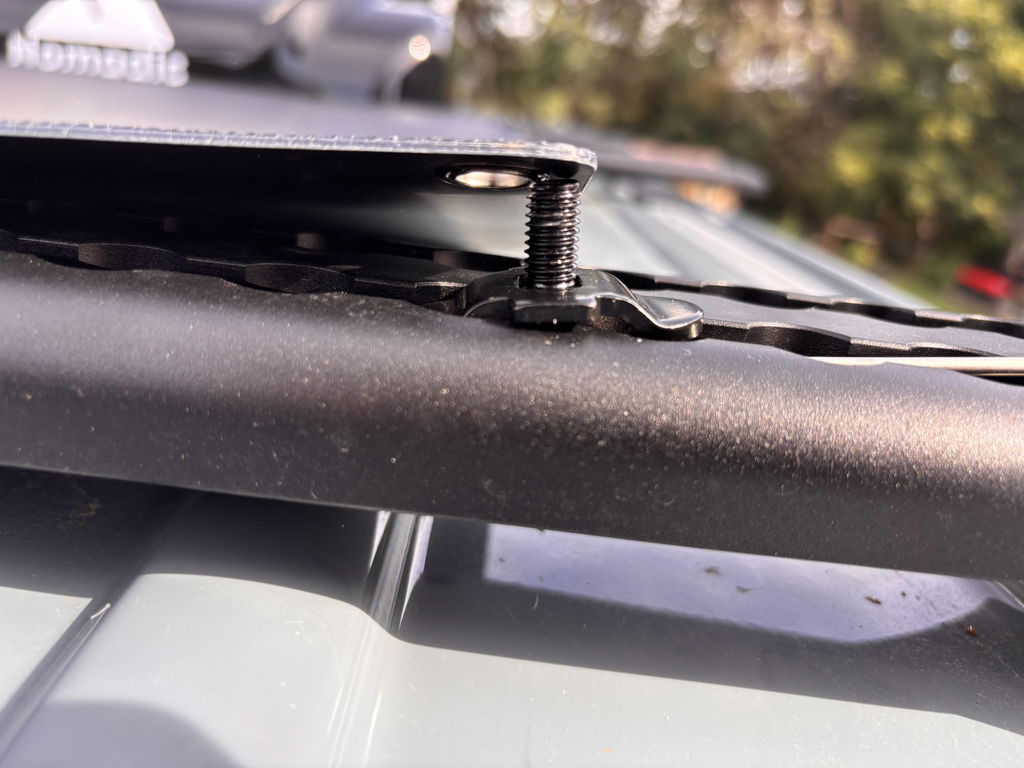
For owners who want both cargo box capability and the flexibility to mount L-Track accessories at any point, the LoadSpan-T™ Roof Rails are the version to consider. The DualTrack-T™ channel runs simultaneous L-Track and 25mm T-bolt in a single extrusion. That means crossbar hardware slides into the T-bolt slot, L-Track accessories lock into the L-Track channel, and neither system interferes with the other. You don't choose between crossbar mounting and L-Track accessory mounting — the rail handles both at the same time.

Both LoadSpan and LoadSpan-T mount to factory roof hard points (interior access required for the bolts). No drilling, no permanent modification. Load distribution exceeds what the factory T-slot rail provides; published product ratings are on each product page.
LoadSpan and LoadSpan-T fit 2019+ Sprinter 144", 170", and 170" Extended. See all Sprinter roof accessories for the full lineup.
Height Clearance: The Problem Builds With Cargo Boxes
Every discussion about cargo boxes on Sprinter forums eventually comes back to height. And for good reason: this is one category where a standard roof Sprinter and a high-roof Sprinter face genuinely different realities.
The base high-roof Sprinter (2019+ W907) is approximately 110–112 inches tall at the factory roof. Add crossbars (typically 2–4 inches above the rail surface), add a cargo box (the lowest-profile boxes run about 10–14 inches tall, larger units 14–20+ inches), and you're adding 12–24 inches to an already-tall vehicle.
"I have a 2018 4x4 cargo van with aftermarket air, solar panels and fan on top, no suspension mods, standard tires. The height of my van is 9'10". I feel okay putting it in storage, but I want to see an honest 12' clearance or more anywhere else."— user post, Sprinter-Source.com thread #114724, "How TALL is your van?" (Nov 2022)
A 9'10" van without a cargo box. Add even a modest box (12 inches) and you're looking at over 10'10" — 130 inches. The standard residential garage door opening is 84 inches (7 feet). Many commercial garage doors are 96–108 inches. A fully equipped high-roof Sprinter with a cargo box mounted simply does not clear standard garages, and you need to verify clearance before driving into any parking structure or drive-through service lane.
"If you have antennas it's a pain to put them down. Most tunnel and bridge heights in the US are required to be 13'. I'm 12'7" with antennas and kayaks."— user post, Sprinter-Source.com thread #114724, "How TALL is your van?" (Nov 2022)
The practical guidance from experienced Sprinter owners: track your maximum height and note it somewhere visible in the cab before you drive anywhere new. The cargo box adds height even when empty, and the consequences of miscounting are significant.
Height Math by Roof Type
| Configuration | Approximate Total Height | Clears Standard 84" Garage? |
|---|---|---|
| Standard roof, no accessories | ~96–100" | No — already above 84" |
| Standard roof + crossbars only | ~100–104" | No |
| Standard roof + crossbars + cargo box | ~114–124" | No |
| High roof, no accessories | ~110–114" | No |
| High roof + crossbars + cargo box | ~124–136" | No — not even close |
The numbers above are approximations based on factory dimension data and owner-reported measurements from Sprinter-Source. Tire size, suspension lift, and roof accessory stackup affect your specific van's actual height. Measure before driving anywhere new.
Box Selection: What to Look for on a Sprinter
Not every cargo box designed for passenger cars translates cleanly to a Sprinter roof setup. A few factors that matter specifically for van builds:
Crossbar Span Width
Sprinter factory rails are spaced approximately 44–46 inches apart (rail center to rail center) depending on wheelbase. Many cargo boxes expect crossbar spans of 24–28 inches. This means your crossbars will span only part of the available rail width — the box sits centered on the crossbars, not spanning the full rail width. This is fine structurally if your crossbars are properly anchored; just note that some box designs have wider foot spacing than typical car crossbars accommodate.
Rear-Opening vs. Top-Opening
One owner on Sprinter-Source (#97680) specifically chose a rear-opening box so he could access contents from the ladder without climbing fully onto the roof: "I wanted a storage box that opens from the rear so access is easier from the door ladder." For high-roof Sprinters, a rear-opening box is worth the extra consideration — you're accessing the box at 9'+ height every time.
Box Profile Height
Low-profile boxes (10–12 inches tall) minimize height penalty and reduce aerodynamic drag. Larger volume boxes (16–20 inches) cost you height and fuel economy but offer significantly more storage capacity. If you're using the box primarily for camping gear on weekend trips, a lower-profile box often makes more sense than maximizing cubic footage.
Weight Rating and Mounting Hardware
Verify that the box's mount hardware — clamps, U-bolts, or track hardware — is compatible with the crossbar system you're running. T-bolt slider hardware on LoadSpan-T rails accepts standard 25mm T-bolt fittings. If a box comes with U-bolt clamps designed for round crossbars, you'll need to verify compatibility with the square or T-slot profile on DVA rails or confirm the clamps have adequate clamping range.
Putting It Together: Recommended Sequence
If you're starting from bare factory rails and want to add a cargo box, this is the sequence that avoids most of the gotchas:
- Choose your rail upgrade first. If you want adjustable crossbar positioning and L-Track compatibility, the LoadSpan-T™ rails give you both channels simultaneously. If you're primarily building a crossbar-and-box setup without needing L-Track, the LoadSpan™ rails are the more straightforward option.
- Determine your crossbar spacing. Look at the cargo box manufacturer's recommended crossbar spread before buying crossbars. Most list this in their specs. Match the crossbar position to what the box requires.
- Do the weight math before ordering. Sum: empty box weight + expected maximum gear load + crossbars + any other roof accessories. Stay under 330 lb (the published dynamic rating). Leave a buffer for off-pavement conditions.
- Measure total height before driving anywhere. Factory roof + crossbar height + box height = your new clearance requirement. Mark it in the cab.
Sources
- Sprinter-Source.com, Thread #97680: "1/4 Roof Rack with Cargo carrier" (April 2021)
- Sprinter-Source.com, Thread #114724: "How TALL is your van?" (November 2022)
- DVA LoadSpan™ Roof Rails product page — /products/sprinter-loadspan-roof-rails
- DVA LoadSpan-T™ Roof Rails product page — /products/mercedes-sprinter-loadspan-t-load-spreading-roof-rails-with-l-track
- Mercedes-Benz Sprinter W907 specification: 330 lb (150 kg) dynamic roof load, all roof heights (DVA verified)