- Interior cargo length (144" WB): ~132 in. / 11 ft. from bulkhead to rear doors
- Interior height (low/standard roof): ~59 in. / 4'11" — seated work height, not stand-up
- Interior width at floor: ~70 in. max / 53 in. between wheel wells
- Dynamic roof load limit: 330 lb — same for ALL Sprinter roof heights
- OEM rail spacing: 51.875 in. — matches DVA LoadSpan-T and DualTrack-T (VS30, 2019+)
- Exterior height (standard roof): ~97.9 in. / 8'2" — fits most parking structures
- GVWR (2500): 8,550 lb · Verify door placard for your specific VIN
- Model year note: 2022 VS30 dimensions are identical to 2019–2024 — same platform
The 2022 Mercedes-Benz Sprinter 144" Low Roof is a VS30-generation van — meaning its interior dimensions, roof structure, and factory rail attachment points are identical to the 2019–2024 production run. If you’re searching for 2022-specific specs to plan a roof rack, bed platform, or cargo build, those numbers land you in the same place as any other VS30: 132" cargo length, 59" interior height, 330 lb dynamic roof load, and 51.875" rail spacing. This guide covers what those numbers mean for a real build, what changed for the 2022 model year, and which DVA roof systems bolt directly to the factory VS30 attachment points without drilling.
What Changed for the 2022 Model Year?
For 2022, Mercedes-Benz introduced the updated OM654 2.0L I4 diesel engine in US-spec Sprinter 2500 configurations. For a roof or cargo build, this engine change is irrelevant — the VS30 body dimensions, roof structure, factory attachment points, and rail spacing carried over unchanged. Every measurement in this guide applies equally to a 2019 through 2024 VS30 Sprinter 144" Low Roof. If you're buying used and want to verify powertrain history, check dealer service records for any DPF regen tune updates; otherwise, plan your build exactly as you would for any VS30.
Why the 144" Low Roof? Four Builds Where It Wins
The 144" Low Roof is not the compromise Sprinter — it’s the right chassis for four specific applications where the 170" High Roof cannot compete:
- Garage storage. The VS30 standard-roof exterior height is approximately 97.9 in. (8'2"). Most residential two-car garages have door openings of 7 ft.; some newer construction clears 8 ft. The 170" High Roof’s ~108 in. exterior height eliminates home-garage storage unless you’ve got a commercial or RV-height door. For owners who park at home every night — and want weatherproof, secure van storage — the 144" LR is often the only option.
- Parking structure access. Urban and airport structures typically post 8'0"–8'2" clearances. The standard-roof Sprinter clears them reliably. Photography crews, regional service fleets, and airport-route shuttles that park in structured decks regularly can’t use a high-roof van without planning around every location.
- Commercial and trade builds. Electricians, plumbers, and HVAC techs favor the 144" WB for tight residential driveways, loading-dock access, and the ability to reverse where a 170" won’t turn. The 132" cargo floor (11 feet) still handles 8-foot lumber, conduit runs, and a full service kit.
- Compact overlanding and day-van builds. The 144" LR is the stealth van: shorter, lower, quieter visually. The shorter wheelbase improves approach and departure angles for off-pavement tracks and reduces turning radius to approximately 19 ft. vs. the 170"’s ~25 ft. Jake M., a DVA customer who converted a 2022 cargo van in late 2023 for weekend desert runs out of Tucson, noted: “The low roof is what let me actually use the van as a daily — fits my driveway, fits the parking garage at my office, and still carries bikes and gear with the LoadSpan rails on top.” Sprinter-Source user DesertVanWorks echoed this in a 144" LR vs. 170" HR comparison thread: “If garage storage matters to you at all, the 144 standard roof is the only answer. I’ve seen too many people buy the high roof and then realize they can’t get it into their own driveway.” (Sprinter-Source.com, 144 LR vs HR thread, 2024)
Interior Dimensions: What to Measure Before You Buy Components
Mercedes-Benz publishes nominal specs, but VS30 interior measurements vary slightly between vans depending on trim, factory options, and whether the cargo partition is a solid bulkhead or cargo net. These are the builder-verified numbers:
| Dimension | 144" LR (Standard Roof) | Notes |
|---|---|---|
| Interior cargo length | ~132 in. (11'0") | Bulkhead face to rear door closed |
| Interior height (standard roof) | ~59 in. (4'11") | Floor to ceiling, center; not stand-up height |
| Interior width — max at floor | ~70 in. (5'10") | Behind wheel wells, mid-cargo |
| Width between wheel wells | ~53 in. (4'5") | Critical constraint for lengthwise bed platforms |
| Exterior height (standard roof) | ~97.9 in. (8'2") | Roof skin to ground; critical for parking structures |
| Exterior length | ~233.5 in. (19'5") | Full van, bumper to bumper |
| Cargo volume | ~195 cu ft | Standard roof; vs ~270 cu ft for 144" High Roof |
The 59-inch ceiling is the key build constraint. You cannot stand upright in a standard-roof Sprinter. Bench work, gear loading from a kneeling position, and seated workstations are all practical. Any build requiring a standing galley kitchen, a loft with head clearance, or a full insulation + flooring + bed stack with comfortable room will push most owners to a High Roof. The Low Roof is the stronger choice for sleeping flat, commercial cargo organization, and day-van configurations where you’re not living in the van full-time.
Roof Specs and Load Limits
The VS30 Sprinter roof is an aluminum-skinned structure with four factory rail attachment points per side. These specs are consistent across every VS30 model year, including the 2022 144" Low Roof:
- Dynamic roof load limit: 330 lb. This is the load the roof structure can carry while the van is in motion. Mercedes-Benz specifies 330 lb for all VS30 models — standard roof and high roof, 144" WB and 170" WB. Static load (van parked) may be higher in practice, but 330 lb is the safe operating limit. That 330 lb budget includes the weight of the rack itself, cross bars, and any cargo mounted to the roof.
- Rail spacing (VS30, 2019+): 51.875 in. Center-to-center distance between left and right OEM factory rails. This spacing is identical across all VS30 models and all production years. DVA’s LoadSpan-T and DualTrack-T cross bars are engineered to this exact measurement.
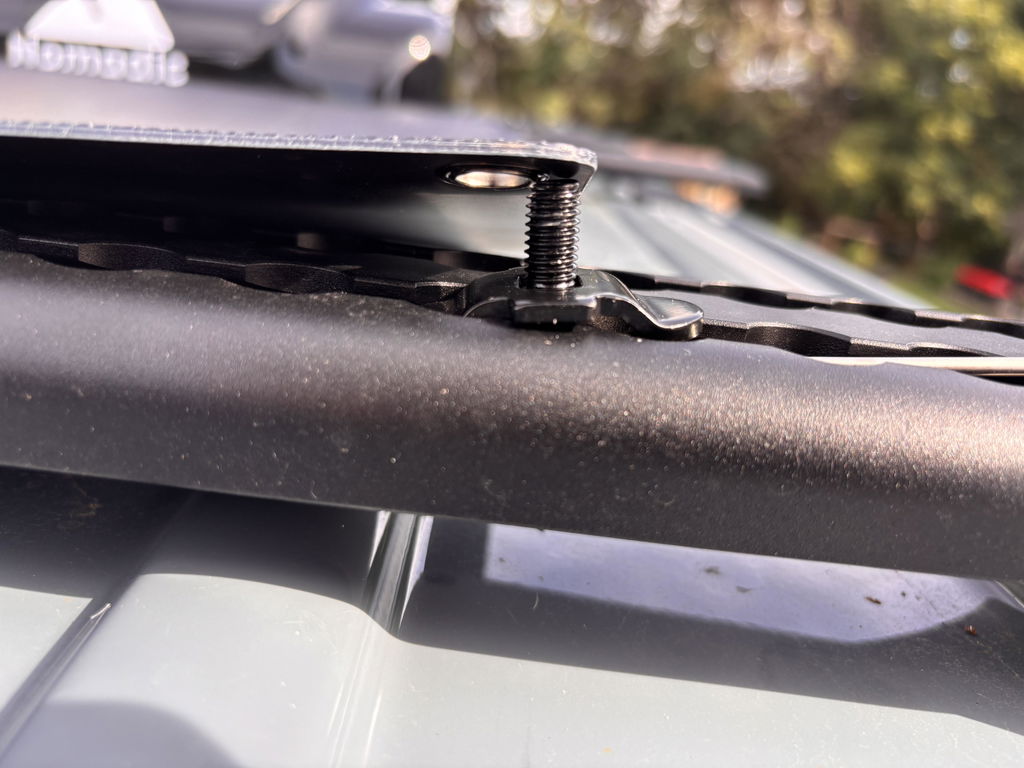
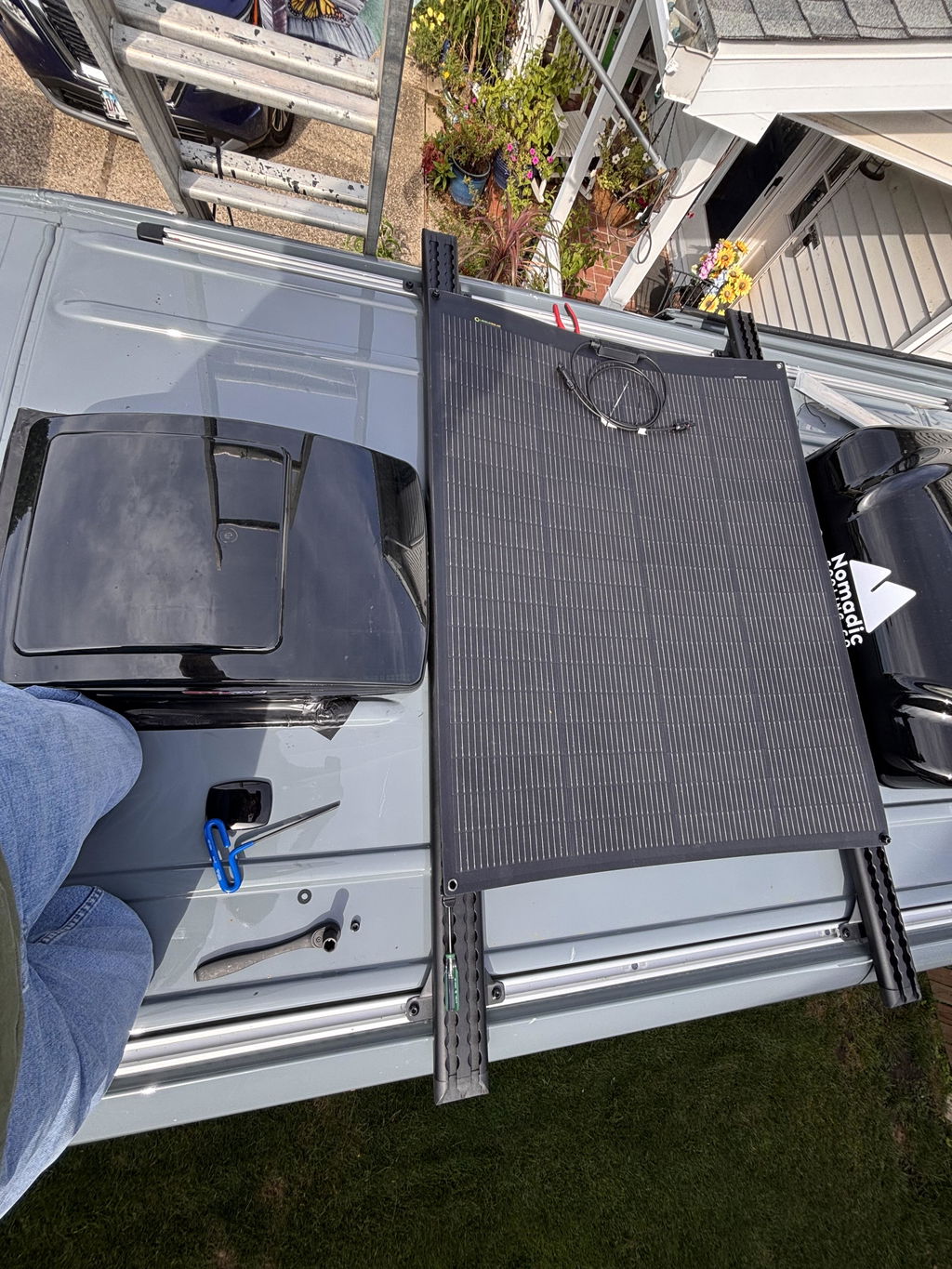
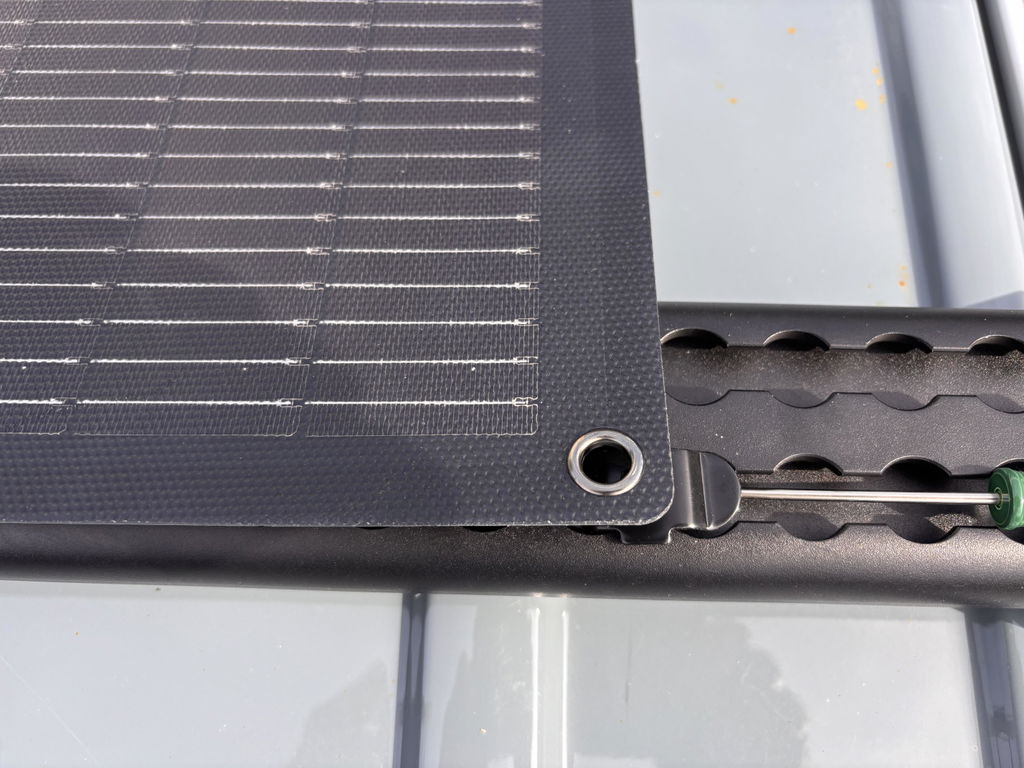
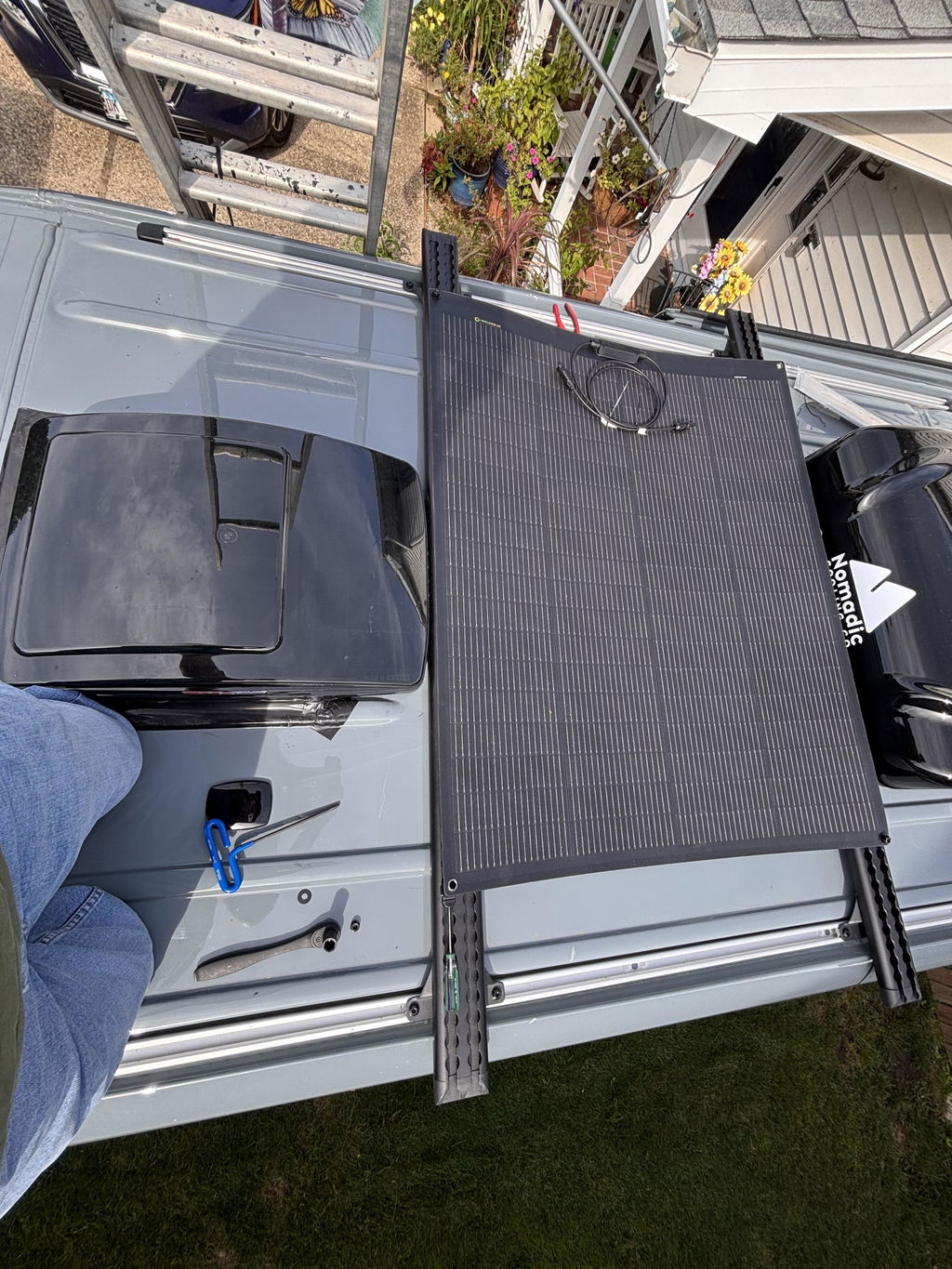
- Usable roof rail length (144" WB): ~150–160 in. The span from the forward-most to rear-most factory attachment hole. This is roughly 30–40 in. shorter than the 170" WB (~190–200 in.). Solar planning note: the 144" LR typically fits two 200W panels comfortably; three full-size panels require a narrow-format third panel or a custom offset layout.
- Factory mounting points: 4 per side. Each attachment point uses an M8 threaded insert in the VS30 roof rib. DVA LoadSpan-T rails bolt directly to all four points — no drilling, no additional sealing compounds required beyond the factory-applied sealing already in place.
2022 vs. 2023 Sprinter 144" LR: What Actually Differs for a Build
If you’re deciding between buying a 2022 vs. a 2023 unit for a build project, the answer for roof and cargo planning purposes is: nothing material differs. The VS30 platform, body dimensions, roof structure, and factory rail attachment points are carried over unchanged. A LoadSpan-T purchased for a 2023 Sprinter 144" LR installs identically on a 2022.
For general ownership: the 2022 OM654 diesel integration means some early-production vans had DPF regen tune updates issued by Mercedes dealer service in 2022–2023. If buying used, a dealer service history confirming software currency is worth verifying. This does not affect any roof or cargo system.
DVA Roof System for the 2022 Sprinter 144" Low Roof
Both DVA roof products specify the 144" WB at checkout and bolt directly to the four factory attachment points on the VS30 standard-roof platform:
- LoadSpan-T™ Dual-Channel Roof Rails — Anodized 6061-T6 aluminum rails with integrated full-length L-Track + 25mm T-Slot. Distribute load across all four factory attachment points (vs. two for single-bolt stud-mount rails). Select the 144" WB option at checkout. 330 lb dynamic rating matched to Mercedes spec. The load-spreading advantage of the LoadSpan-T is particularly meaningful on the standard-roof platform, where the lower roof rib height reduces the moment arm available for point-load absorption.
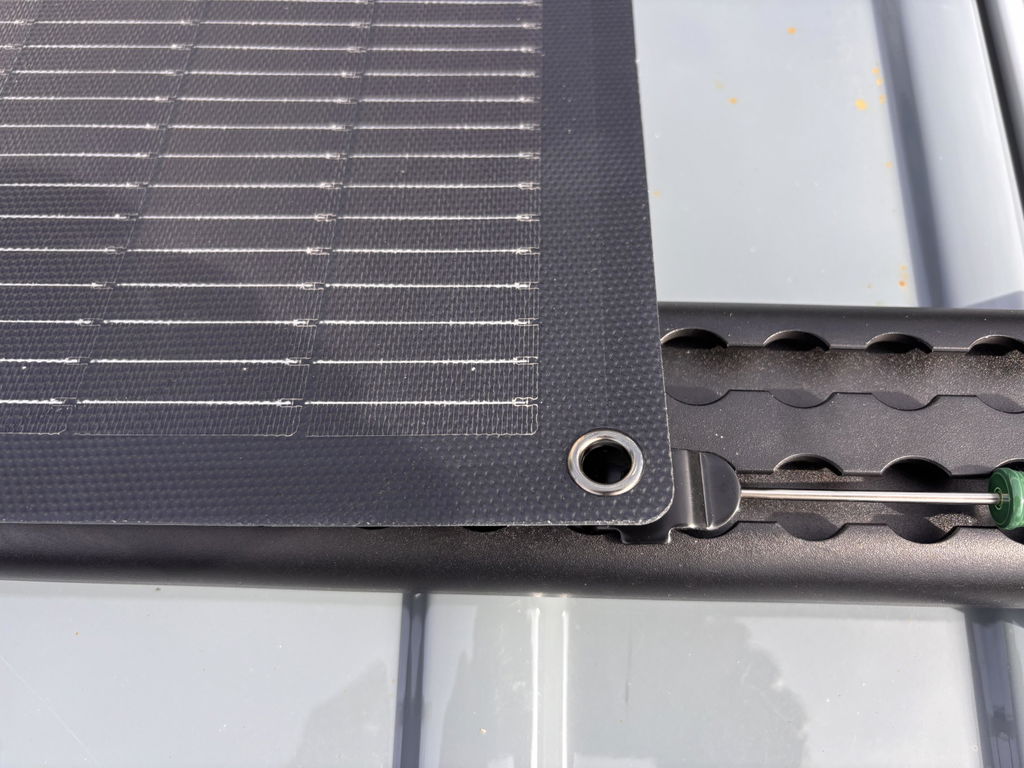
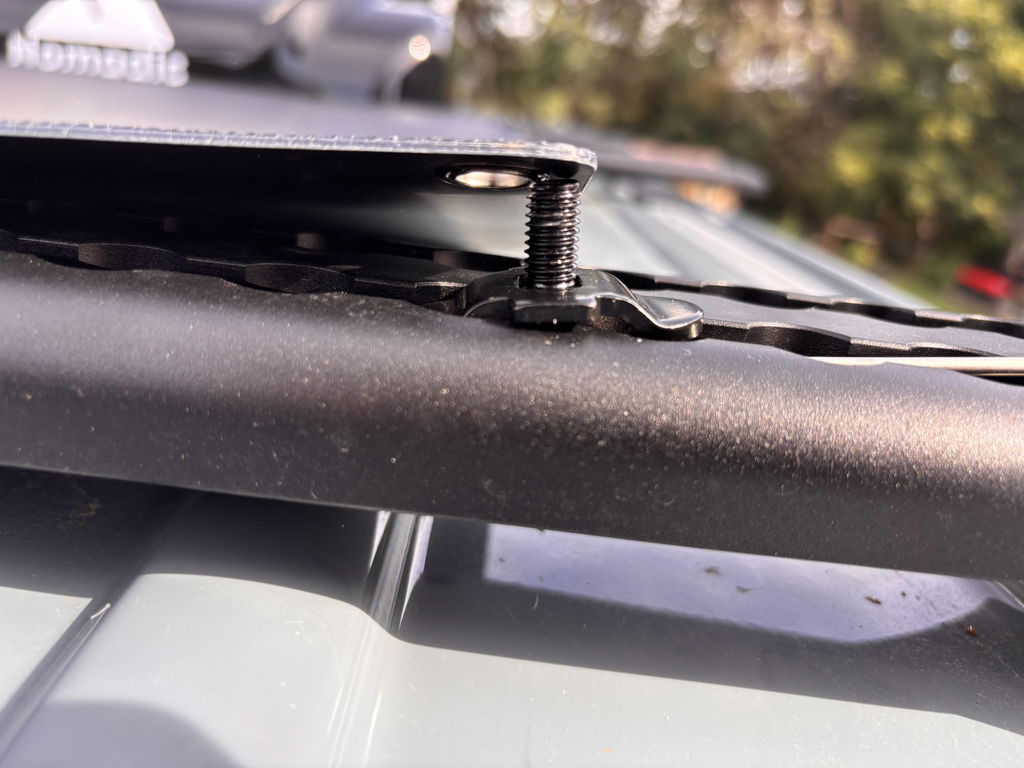
- DualTrack-T™ Cross Bar Kit — Bolt-on cross bars that attach to the LoadSpan-T channel. Slide and lock anywhere along the 150–160" usable rail length without tools. Repositionable for solar panels, bike carriers, or cargo nets without removing the rails.
Browse the full selection: Sprinter Roof Rails · L-Track & Accessories
Payload Math: What Fits in the 330 lb Budget
The 330 lb dynamic roof limit sounds tight until you run the actual math. A typical DVA LoadSpan-T + DualTrack-T installation on a 144" WB van:
- LoadSpan-T rails (pair): ~22 lb
- DualTrack-T cross bars (pair): ~12 lb
- Two 200W solar panels (mono, 40W frame style): ~38 lb
- Mount hardware: ~3 lb
- Total system weight: ~75 lb
That leaves approximately 255 lb of the 330 lb budget for cargo: two full-size rooftop cargo bags, a kayak, a set of roof-mounted storage boxes, or a combination of recovery gear and lighting. Most 144" LR commercial builds never approach the 330 lb limit in normal operation. Where builders exceed it is when they add heavy wet sand, wet gear bags, or a rooftop tent without accounting for tent weight on the spec sheet — a rooftop tent sized for a standard-roof Sprinter can run 90–140 lb for the tent body alone.
Build Strategies for the 2022 Sprinter 144" Low Roof
Commercial / Trade Build
Maximize the 132" cargo floor. Shelving along the driver-side wall, a bulkhead-to-wheelhouse workbench with a locking top box, and a full-length ladder rack above using DVA LoadSpan-T rails (select 144" WB) with a rear overhang cross bar for conduit and pipe. The 53" between-wheel-well width is wide enough for a stacked drawer unit on the passenger side without blocking floor access.
Day Van / Weekend Warrior Build
Fold-flat rear seating, a platform bed frame (53" wide sleeping surface between the wells), and a roof-mounted gear system using DVA rails for bikes, paddle boards, or surfboards. The 59" interior ceiling height means a platform bed at 8–10" off the floor gives approximately 49" of crawl space — comfortable for changing, gear access, and casual lounging. Add two 200W panels to the LoadSpan-T and a 100 Ah LiFePO₄ battery for weekend self-sufficiency.
Ultralight Overlanding Build
The 144" LR’s shorter wheelbase (~19 ft. turning radius) and lower profile make it the preferred configuration for technical dirt-road access where a 170" High Roof is unwieldy. DVA’s L-Track system on the interior floor and walls enables fast reconfiguration between day-use cargo mode and overnight camp mode without removing fixed furniture. The 330 lb roof budget typically handles recovery boards, a rooftop cargo net, and a small lighting bar simultaneously on the standard-roof platform.
144" Low Roof vs. 144" High Roof: Quick Comparison
| Feature | 144" Low Roof | 144" High Roof |
|---|---|---|
| Interior height | ~59 in. (4'11") | ~75.5 in. (6'3") |
| Exterior height | ~97.9 in. (8'2") | ~109 in. (9'1") |
| Cargo volume | ~195 cu ft | ~270 cu ft |
| Garage / parking clearance | ✅ Most structures | ❌ Limited |
| Stand-up headroom | ❌ Not possible | ✅ Yes (under 6'3") |
| Roof rail spacing | 51.875 in. | 51.875 in. |
| Dynamic roof load | 330 lb | 330 lb |
| DVA LoadSpan-T compatible | ✅ Yes (144" WB option) | ✅ Yes (144" WB option) |
| Best for | Commercial, trade, garage storage, day van | Full-time living, tall builds, stand-up galley |
Factory Roof Rails and VS30 Attachment Points
The 2022 Sprinter 144" LR ships with OEM factory roof rails as standard equipment. These are separate from the factory attachment points — the rails are the visible aluminum trim running the length of the roof; the attachment points are M8-threaded inserts in the roof ribs beneath them. This distinction matters for aftermarket roof systems:
- The OEM rails provide a decorative and light-duty attachment surface but are not designed to span cross-load stress across the full 330 lb limit independently.
- The factory attachment points (4 per side) are the structural anchors. DVA LoadSpan-T rails bolt to all four points, spreading the load across the full roof rib structure rather than concentrating it at two midpoints.
- Installing a cross bar or cargo carrier to the OEM rail clamps alone (without bolting to the attachment points) concentrates the load at two clip points — a common source of rail deformation under heavy or dynamic loads.
DVA’s installation procedure for the LoadSpan-T replaces the OEM rail covers with the new aluminum channel rail, which locates and bolts to all four VS30 attachment points. The process takes approximately 45–60 minutes per side on a clean van. No drilling, no roof penetration sealant required — the factory inserts are sealed at assembly.
See also: Complete Sprinter Roof Rails Guide for detailed torque specs, cross-bar placement math, and installation tips across all VS30 configurations.