In 2026, slider windows go on the sliding-door side and at bed level for cross-ventilation. Awning windows work best on fixed panels where opening in rain matters. Glass outlasts acrylic on off-road builds; acrylic insulates better and costs less for pavement-focused vans. Plan window locations before any roof penetration or rail installation — holes are permanent, panel conflicts are not.
Every Sprinter cargo van conversion faces the same question early: which windows, where, and how do you cut a hole in a perfectly good van without ruining it? The forums have over a decade of documented installs — successful and otherwise — and the consensus is clearer than you'd expect. The right windows transform a dark cargo box into a livable space. The wrong ones leak, rattle, or crack within two seasons.
This guide covers every window type available for the Sprinter, the slider-versus-awning debate, glass-versus-acrylic tradeoffs, installation fundamentals, and the five mistakes that show up in almost every "what I'd do differently" thread.
1. Why Windows Matter More Than You Think
Windows aren't just about light. They're your primary cross-ventilation system when paired with a roof fan, your emergency egress in some jurisdictions, and the single biggest factor in whether your van feels like a camper or a shipping container.
My opinion, stated several times, openable windows and a roof exhaust fan provides excellent cross ventilation. You don't need two fans in that case, but you want the fan to be away from the windows, so if you want to be comfortable while sleeping, windows near your face and fan up front works well.
— Mark, Sprinter-Source.com (Van Window Thoughts thread)
The physics are simple: a MaxxAir fan pulling air out creates negative pressure inside the van. Open windows at bed level let cool outside air flow directly across you. Two fans without windows just recirculate the same stale air at different speeds.
2. Window Types Compared
There are four categories of windows you can install in a Sprinter cargo van, each with distinct tradeoffs in appearance, thermal performance, durability, and cost.
| Window Type | Opening Style | Material | Price Range | Best For |
|---|---|---|---|---|
| OEM factory glass | Fixed or pop-out | Tempered glass | $300–$600 | Clean factory look |
| Bonded aftermarket | Slider or awning | Glass or acrylic | $400–$1,000 | Flush, OEM-like finish |
| Clamp-in / framed | Slider or awning | Glass or acrylic | $200–$600 | DIY-friendly install |
| RV-style | Crank-out awning | Acrylic | $100–$300 | Budget builds |
OEM Factory Glass
If your Sprinter has existing window openings (crew van, passenger van), you can source OEM replacement glass from salvage or aftermarket suppliers. These bond directly into the factory-stamped openings with urethane adhesive, look completely stock, and have zero rattle. The downside: most are fixed — they don't open. You get light and visibility but zero ventilation.
Bonded Aftermarket Windows
This is what most professional conversion shops install. Brands in this category use urethane adhesive to bond the window frame directly to the van body, creating a flush, weather-tight seal. The result looks nearly factory and eliminates the compression-ring gap that cheaper options leave.
I also put in bonded windows — I prefer the installation and cleaner look of the bonded windows over the framed clamp-in style, but it's just a very minor preference.
— r/vandwellers (Using RV Window for Sprinter thread)
The tradeoff: bonded installs are permanent. You can't easily swap or reposition them, and the urethane adhesive requires temperatures above 40°F to cure properly. Plan your install for warmer weather.
Clamp-in / Framed Windows
These use a compression ring system — an inner and outer frame that sandwich the van body panel and tighten together with screws. The most common example in the Sprinter world installs with a gasket seal and requires a slightly oversized cutout. They're more forgiving of imperfect cuts and can theoretically be removed later.
2015 cargo without windows. Installed 2 aftermarket T-vent windows without issue. No leaks or noise that I notice. With one helper it was a 6 hr job. However my wife couldn't watch us cut holes in our van…
— Sprinter-Source.com (Any Regrets Adding Windows thread)
RV-Style Windows
Designed for 1.5-inch thick RV walls, these are the cheapest option but the worst fit for a Sprinter. The van's body panel is far thinner than an RV wall, which means the clamping mechanism doesn't seat properly. You'll need spacer rings or creative shimming, and the result often looks obviously aftermarket.
Typical RV windows are designed for 1.5-inch walls. Sprinter body panels are roughly 1/16 to 1/8 inch thick (single or double skin depending on location). Van-specific windows exist for this reason — they're built for thin-wall mounting. Using RV windows on a Sprinter requires spacer adapters and usually produces a less weather-tight seal.
3. Slider vs Awning: The Great Debate
This is the most opinionated topic in Sprinter window threads. Both have loyal advocates, but the consensus leans toward sliders for most conversions — with one exception.
Slider Windows
Sliders are the forum favorite for several practical reasons. They're mechanically simple (no linkage to break), provide a large opening when fully retracted, and — critically — they're stealthy.
I am a fan of sliders over awning style as it is not so obvious that someone is inside or windows are open when unattended.
— Sprinter-Source.com (Van Window Thoughts thread)
When a slider is cracked an inch, it's nearly invisible from outside. An awning window propped open is a neon sign that says "someone is sleeping in here." For urban stealth camping, this matters enormously.
Awning Windows
The primary advantage: you can leave them open in rain. The outward-opening panel acts as a small awning, deflecting water away from the opening. For those who camp in wet climates, this is a genuine functional advantage.
The downsides are real, though. The awning mechanism is more complex, and several forum members have noted durability concerns over time:
I have an awning-opening window behind the driver's seat and I find the open-close linkage complex and probably impossible to repair. So far, with careful operation, no issues. But if I could do it again, it'd be a slider.
— Sprinter-Source.com (Van Window Thoughts thread)
The Sliding Door Exception
On the passenger (sliding door) side, a slider is the only safe option. An awning window protruding outward would interfere with the sliding door's travel path. Every builder who's worked through this confirms: slider on the sliding-door side, your choice everywhere else.
4. Glass vs Acrylic
This choice comes down to priorities: durability versus thermal performance.
| Factor | Glass | Acrylic |
|---|---|---|
| Scratch resistance | Excellent | Poor — scratches from brushes, cleaning |
| Impact resistance | Good (tempered shatters safely) | Excellent — harder to break in |
| Thermal insulation | Poor (single pane) | Better — especially dual-glazed |
| Weight | Heavier | Lighter |
| UV clarity over time | Stays clear indefinitely | May yellow or haze after years |
| Off-road durability | No surface damage from trail use | Pin-striping from brush contact |
One full-time builder on Sprinter-Source summed up the off-road concern perfectly:
I went through a stint where I wished I had done insulated acrylic windows, but having seen some pretty bad pin-striping on them when you're dragging by brush, I quickly changed my mind. Plus, most of the acrylic options have a much smaller "window" than an all-glass option.
— Sprinter-Source.com (Van Window Thoughts thread, 115K miles full-time)
The verdict: If you drive overgrown forest roads or off-road trails, glass wins on durability. If you're primarily highway and campground and want better insulation, dual-glazed acrylic is worth considering.
Forum consensus as of mid-2026 has shifted toward double-pane acrylic for year-round builds. Sprinter-Source threads from the past 18 months consistently cite insulation performance as the deciding factor over glass for builders using their van in cold climates or desert summers — even on mid-budget conversions. Single-pane glass sliders remain the default for off-road and overlanding builds where scratch resistance and impact durability outweigh thermal gains.
5. Installation Fundamentals
Cutting into your van is the most intimidating step in any conversion. The good news: the forums have documented this process exhaustively, and the consensus installation technique is well-established.
Transfer the Cut Line
Sprinter body panels have factory stampings on the interior that indicate where windows would go on passenger/crew versions. Drill small pilot holes from the inside along these stampings to transfer the outline to the exterior. Your jigsaw cuts from the outside — the foot needs the flat exterior surface.
Cut with a Jigsaw
Use a variable-speed jigsaw with a fine metal-cutting blade. Tape the jigsaw foot to prevent scratching, and tape along both sides of your cut line on the exterior. Go slow. Start with straight sections to build confidence before tackling corners.
Cutting into a vehicle is scary for a lot of us. Something about the combination of shiny new paint, beautiful factory stampings, and the finality of it all makes us fearful. I knew that I wanted to make the cuts with a jigsaw, and this dictated from which side I would cut — because of the foot on the jigsaw, the only practical way to cut is from the outside.
— Sprinter-Source.com (Installing an Aftermarket Window in the Sliding Door thread)
Treat the Cut Edges
Bare metal rusts fast. Sand the cut edges smooth, prime with automotive primer, apply touch-up paint, then seal the gap between the double-skin panels with body seam sealant. This is the step most DIYers rush — and the step that causes leaks and corrosion years later.
Fit and Seal the Window
For bonded windows: apply urethane primer to the mounting surface, then a bead of urethane adhesive. Set the window, shim for even gaps, and support it while the adhesive cures (typically 24–48 hours). For clamp-in windows: set the outer frame, apply the gasket, position the window from outside, then tighten the inner compression ring from inside.
Urethane adhesive for bonded windows requires ambient temperatures above 40°F (4°C) to cure properly. If you're installing in a garage during cooler months, use a space heater to keep the work area warm during the full cure window. Cold-cured urethane bonds are the number one cause of window leaks that develop months after installation.
The Sprinter's factory floor rail channel accepts DVA's L-Track Tie-Down Rings and the full L-track accessory system without drilling. Map your floor L-track layout before finalizing window positions — ventilation zones and cargo tie-down positions can compete for the same wall panel real estate.
6. Window Placement Strategy
Where you put windows depends on your layout, but the forum consensus has settled on a few principles:
- Bed-level windows are non-negotiable for ventilation. Whether your bed is at the rear or mid-van, you want openable windows at sleeping height. Combined with a MaxxAir fan elsewhere, this creates the cross-breeze that makes sleeping comfortable without AC.
- Sliding door side: always a slider. Awning windows interfere with the door's travel. No exceptions.
- Rear doors: optional and often skipped. There's no rear-view mirror to use anyway, and rear door windows sacrifice insulation and stealth for views you rarely need.
- Higher placement brightens without sacrificing wall space. Windows mounted higher in the body panel let light in without conflicting with cabinets, shelving, or wall-mounted storage below them.
All I have is 2 sliding bunk windows flanking either side of the bed and a fan over the bed and it is a perfect setup. Open bunk windows and 20% air out creates a great cross breeze across the bed at night.
— Sprinter-Source.com (Van Window Thoughts thread)
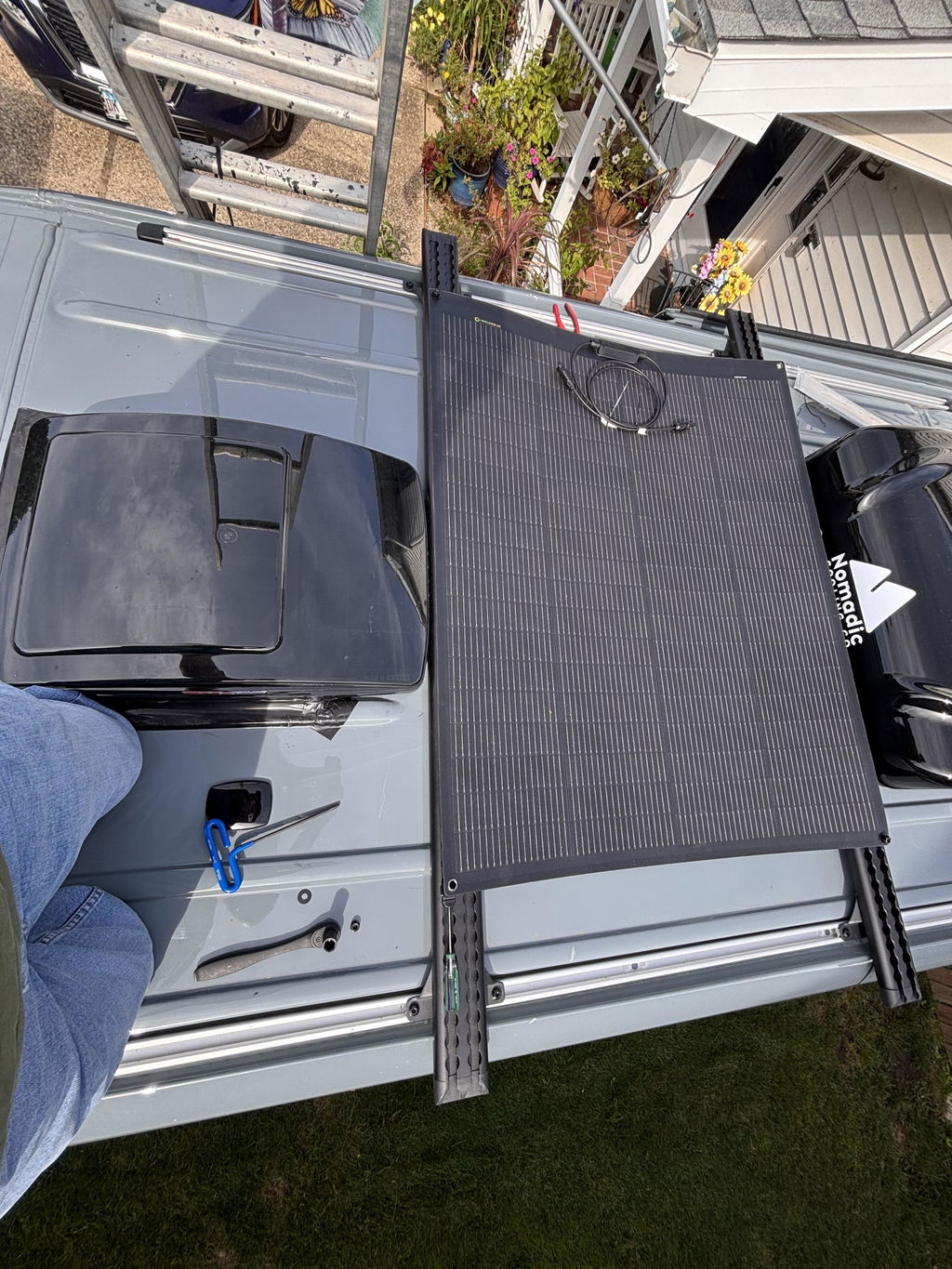
If you're also adding a roof rail system — DVA's LoadSpan-T™ Roof Rails with a DualTrack-T™ Crossbar Kit mount in the Sprinter's factory C-rail channel — coordinate the rail footprint with your side window cut lines before you start. Roof rail hardware sits in specific body locations and a 2-inch conflict on paper beats a fix-in-place problem after the windows are bonded.
7. Five Common Mistakes
Skipping Rust Protection on Cut Edges
The most common long-term failure. Raw steel exposed during cutting will rust within weeks if not primed and sealed. Every cut edge needs primer, paint, and seam sealant — no exceptions.
Using RV Windows Without Spacers
RV windows are designed for 1.5-inch walls. A Sprinter's body panel is a fraction of that thickness. Without proper spacer adapters, the clamping mechanism can't create adequate compression, leading to rattles and water intrusion.
Installing Awning Windows on the Sliding Door Side
An awning window protruding outward hits the sliding door track. This seems obvious in hindsight, but it shows up in forums every few months. Slider only on the sliding-door side.
Cutting from the Inside
A jigsaw needs a flat surface under its foot plate. The Sprinter's interior has ribs, stampings, and insulation backing. Cutting from outside gives you the flat painted surface the tool needs for clean, controlled cuts. Transfer your line from inside to outside with pilot holes first.
Not Supporting the Cut-Out Piece
As you near the end of your perimeter cut, the sheet metal panel becomes a heavy, floppy piece attached at one corner. If it bends or tears, it can damage the surrounding paint and body work. Have a helper support the cut-out from inside, or cut bottom corners first so the piece can hang safely.
The Bottom Line
Quick Decision Framework
- Budget build, comfort with imperfect aesthetics: Clamp-in framed windows with slider mechanism. Most forgiving of cut imperfections, removable if needed.
- Clean finish, professional look: Bonded aftermarket windows. Flush mount, no visible frame ring, but permanent and requires warm-weather installation.
- Off-road and trail use: Glass over acrylic. Brush contact destroys acrylic surfaces — glass shrugs it off.
- Wet climate, lots of rain camping: Awning style (except on sliding door side). Being able to ventilate in rain is a genuine comfort advantage.
- Stealth and urban camping: Slider windows with tinted glass. A cracked slider is invisible from outside — an open awning window is not.
Windows are one of the few van conversion decisions that are genuinely permanent. You can swap a bed platform, reroute plumbing, or rewire electrical. You can't un-cut a window hole. Take the time to plan placement around your layout, choose the right type for your use case, and treat every cut edge like the corrosion entry point it is.
Sources
- Van Window Thoughts — Sprinter-Source.com (2024)
- Any Regrets Adding Windows to a Cargo Van vs. Buying a Crew Van — Sprinter-Source.com (2021)
- Installing an Aftermarket Window in the Sliding Door — Sprinter-Source.com
- Replace Rear Side Window with Opening Window — Sprinter-Source.com (2018)