Building a Sprinter van kitchen comes down to three decisions that lock everything else in: layout type, counter height, and cooktop fuel. The sidewall galley along the passenger side is the right choice for most 170″ WB builds — it gives you 44–60″ of counter run, preserves a 25″+ aisle, and keeps cooking near the sliding door for ventilation. Counter height: 34–36″ if you do real meal prep. Cooktop: propane unless you’re running 300+ Ah lithium and 400W+ solar. Everything else — sink placement, fridge position, drawer design — flows from those three calls.
Those three decisions are harder to get right than they look. The engineering constraints Instagram never shows: counter depth that steals aisle width, induction draw that kills your battery bank overnight, storage that rattles apart after 10,000 miles of highway. We pulled from hundreds of posts across Sprinter-Source.com, r/vandwellers, and r/Sprinters to find what builders who’ve been cooking in their vans for years actually recommend — and what they’d change if they did it again.
Best layout: Sidewall galley along one wall — the Sprinter's ~80" interior width leaves room for a 20–22" deep counter plus 25"+ aisle. Counter height: 34–36" (go 36" if you're over 5'8"). Cooktop: choose propane if you boondock off-grid without solar; choose induction if you run ≥200 Ah lithium and ≥400W solar (a single induction burner draws ~95 A at half power). Every pound in the kitchen comes off your 330 lb dynamic roof budget — plan accordingly.
Three Kitchen Layouts That Actually Work
Every Sprinter kitchen falls into one of three basic configurations. Each has real trade-offs, and the right answer depends on your wheelbase, how often you cook indoors, and whether you need the galley to be removable.
The Sidewall Galley (Most Common)
The classic L-track or wall-mounted galley runs along one side of the van, typically the passenger side behind the sliding door. This is the most common Sprinter conversion layout by a wide margin — and for good reason. It preserves a clear aisle, keeps cooking near the door for ventilation, and pairs naturally with an opposing bench or storage wall.
Having L-Track on the side of the van and the floor made installing the galley very simple. I used L-Track studs to secure the back and floor of the galley to the van. The sink drops in like a standard sink.
— fedy, Sprinter-Source.com (Cabinets & Galley thread)
Our install team has helped spec sidewall galley builds since 2023; the consistent finding: builders who anchor via wall-mount L-track spend far less time retrofitting cable routing and water lines than those who frame into the van ribs directly. DVA's L-Track system uses the same 1"-pitch extruded aluminum slot that Sprinter walls and floors accept natively — L-track tie-down rings with anchor mount (4-pack) let you secure the galley floor and back wall without permanent drilling, so the whole unit repositions or removes cleanly.
Best for: 170" wheelbase vans, couples, full-time dwellers who cook daily. Gives maximum counter run (44–60" is typical) and keeps the fridge accessible without blocking the aisle.
The Rear Galley (Slide-Out / Tailgate Kitchen)
Mounts at the back of the van, either fixed or on a slide-out mechanism. You cook with the rear doors open. This layout is popular with weekend adventurers and families who want maximum interior living space.
Best for: 144" wheelbase vans, adventure/weekend use, warm climates. The major downside: you can't cook in rain without a separate awning, and in cold weather you're standing outside.
The Portable / Removable Galley
A self-contained kitchen module that bolts to L-track on the floor and can be removed entirely when you need the van for hauling or work.
This is a portable galley with sink, fresh water + grey water tank, and a couple drawers. It is movable and removable — attaches to L-track — for winter and when we need more space for hauling. My goal was to keep it pretty simple and mobile.
— Portable Galley Project, Sprinter-Source.com
Best for: Dual-use vans (work and play), seasonal campers, anyone who isn't ready to commit to a permanent layout. The trade-off is water connections — a portable galley typically uses smaller self-contained tanks (3–6 gallons) rather than plumbed-in systems.
Multiple experienced builders on Sprinter-Source recommend building a full-size cardboard or styrofoam mockup before cutting any wood. "Only took a couple hours and cost very little. Really gives you a good feel for the interior. We ended up dropping some cabinetry in favor of a more open look. Have not missed the extra storage and love the more open feel."
Counter Height & Depth: The Numbers That Matter
Standard residential kitchen counters sit at 36" high and 24" deep. In a Sprinter van, those numbers are a starting point — not a rule. The forum consensus splits clearly based on usage:
| Dimension | Range | Best For |
|---|---|---|
| Counter height | 36" | Full-time dwellers who do real meal prep daily |
| Counter height | 32–33" | Aligns with Sprinter beltline; more open feel |
| Counter height | 31" | Weekend use, minimal cooking, maximum spaciousness |
| Counter depth | 20–22" | Optimal for most builds — preserves aisle width |
| Aisle width | 25" | Minimum for two people to pass; allows fridge door swing |
Dropping the counter height may not buy you much. Furniture down low has much less of a visual effect than stuff up high, such as overhead cabinets. We stayed with 36 inches and are glad we did, although we do quite a bit of meal prep inside.
— Sprinter-Source.com (Countertop Height & Depth thread)
One builder who went with 31" counters reported back after a five-day trip: "It works quite well. I noticed it's low enough that I can put my arms on it while standing outside the van." That accessibility from outside is actually a feature for tailgate cooking.
The critical insight from veteran builders: counter depth matters more than height for how spacious your van feels. Going from 24" to 20" depth gives you 4" of aisle width back — a bigger perceptual difference than dropping the counter a few inches. As one builder noted: "You can prep the hell out of a great meal on very little surface anyway."
The Cooktop Decision: Propane vs Induction vs Butane
This is the most debated decision in the van kitchen world, and the answer depends entirely on your electrical system. Here's what the forum data actually shows:
Propane (Still the Default for Most Builders)
Works with any electrical setup, cooks in any weather, and a standard 20 lb tank lasts weeks of daily cooking. The main concerns are ventilation (always cook with at least one door or window open) and propane storage safety.
30 years of use in a van and never a problem. But, when you do install or make changes, take the time to make sure it is leak free and not likely to get damaged in normal use.
— RonR, Sprinter-Source.com (Propane Stove vs Induction thread)
For propane storage, the forum consensus is clear: a vented cabinet with floor drain is the gold standard. The vent goes through the floor because propane is heavier than air. Some builders mount 5 lb tanks under the chassis if they don't want propane inside at all.
Induction (The All-Electric Upgrade)
No combustion products, less ambient heat in the van, cleaner, and no gas lines to worry about. But it demands a serious electrical system — and that's where most builders underestimate the requirements.
My single burner draws 95 amps from the battery at half power. If you are running two at full power, can your system handle anything like 400 amps between the batteries and inverter?
— Sprinter-Source.com (Induction Cooktop Review thread)
The practical minimum for induction cooking: 300+ Ah lithium battery bank, 2000W+ pure sine inverter, and 400W+ solar. One burner at medium-high draws 1,200–1,500W from the inverter continuously. Two burners at full power will push 3,000W — beyond what most van electrical systems can sustain.
One builder discovered their induction cooktop draws 120–140W just sitting plugged in, doing nothing. Always unplug after use, or wire through a dedicated switch.
Other practical induction tips from the forums:
- Choose cooktops with rounded glass corners — square corners will crack in a moving vehicle eventually
- Portable units beat built-in for van use — if a built-in breaks on the road, you're left with a hole in your counter
- Some induction cooktops are picky about inverter type — confirmed working with Victron pure sine wave inverters
- Hot spots are real — portable units concentrate heat in a small ring, so use thick-bottomed pans and keep food moving
- Not all cookware works — if a refrigerator magnet sticks to your pot, induction will work
Butane (The Overlooked Middle Ground)
Portable butane stoves are the quietest, simplest option. No plumbing, no electrical draw, no installation. They're popular with stealth campers and minimalists. The downside: butane canisters are less efficient than propane, don't work well below 40°F, and you'll go through them faster on extended trips.
| Cooktop Type | Min. Electrical | Fuel Cost | Best For |
|---|---|---|---|
| Propane (2-burner) | None | Low (tank refills) | Full-time, all-weather cooking |
| Induction (single) | 300Ah LFP + 2kW inverter | Included in solar | All-electric builds, stealth |
| Butane (portable) | None | Moderate (canisters) | Minimal builds, weekend use |
| Hybrid (propane + induction) | 200Ah LFP + 1.5kW inverter | Variable | Flexibility, all conditions |
Refrigeration, Sink & Storage: The Supporting Cast
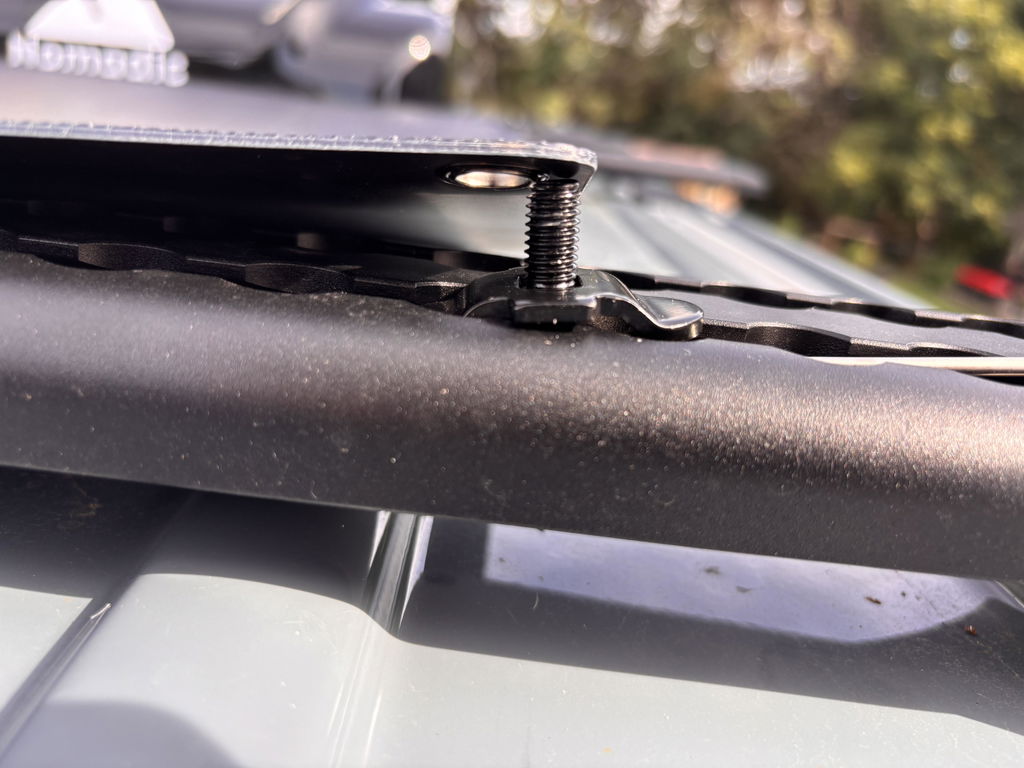
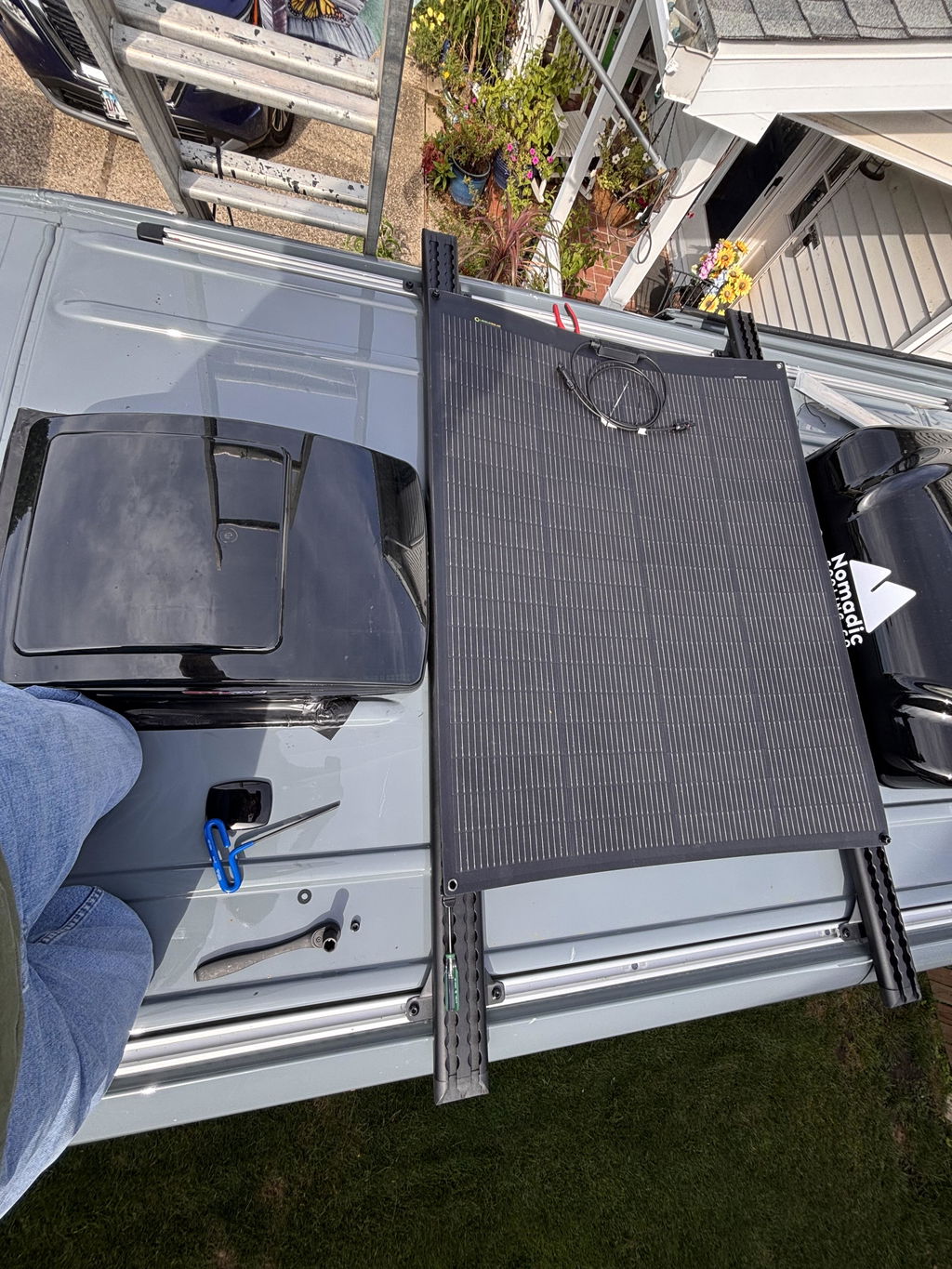
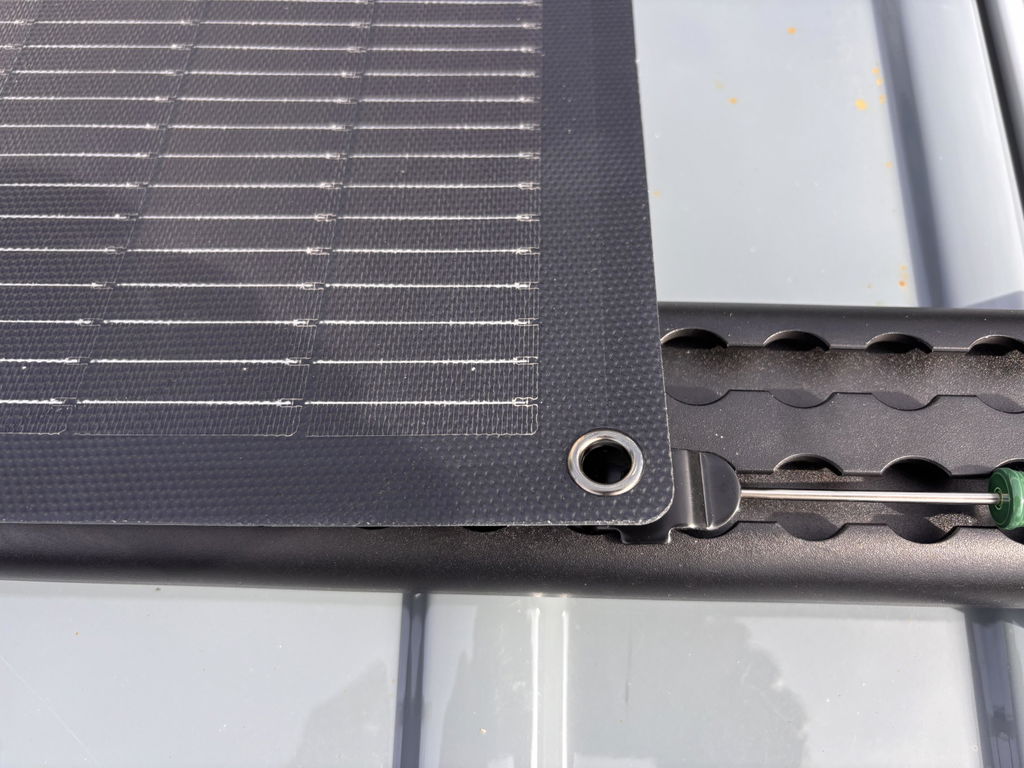
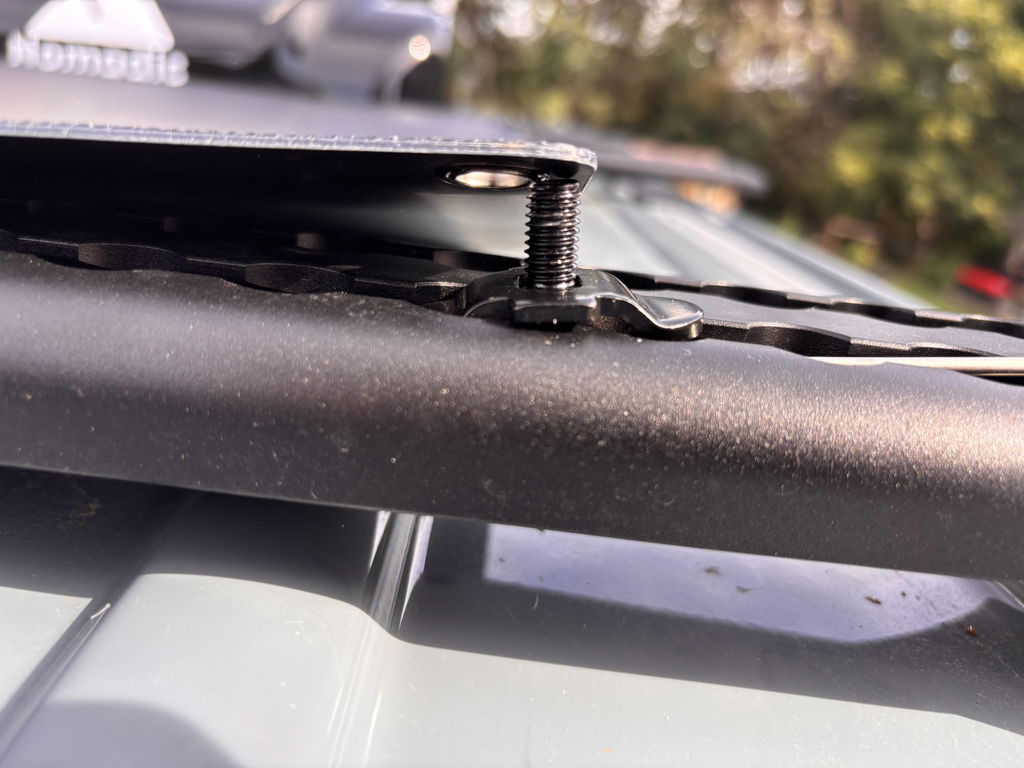
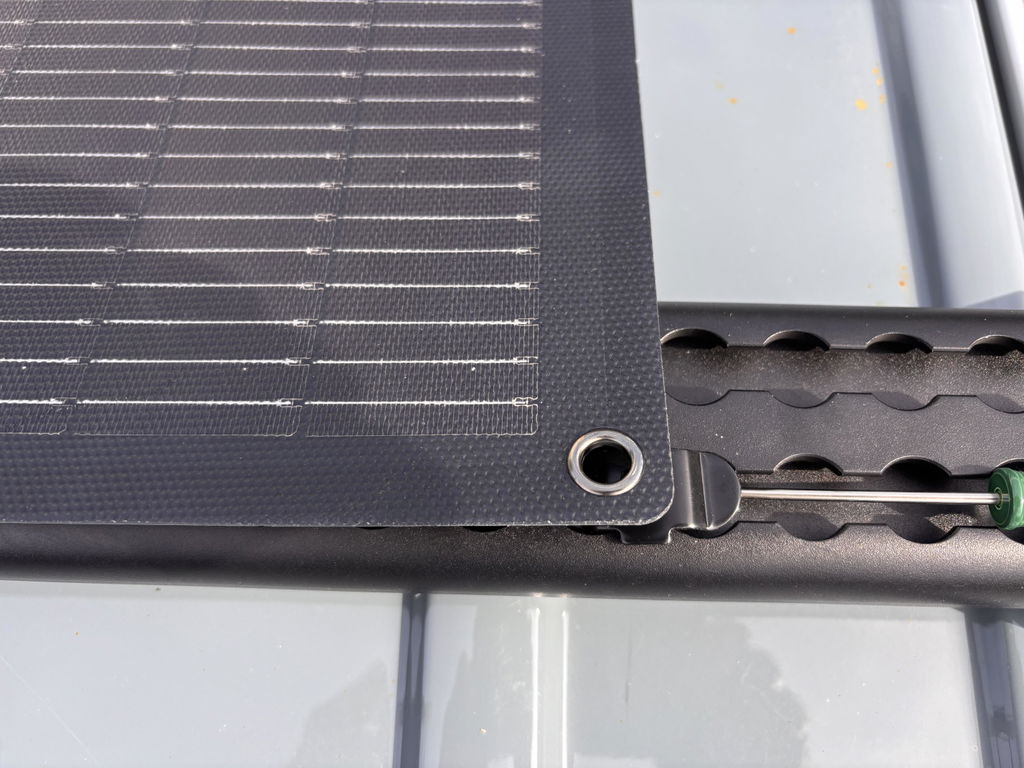
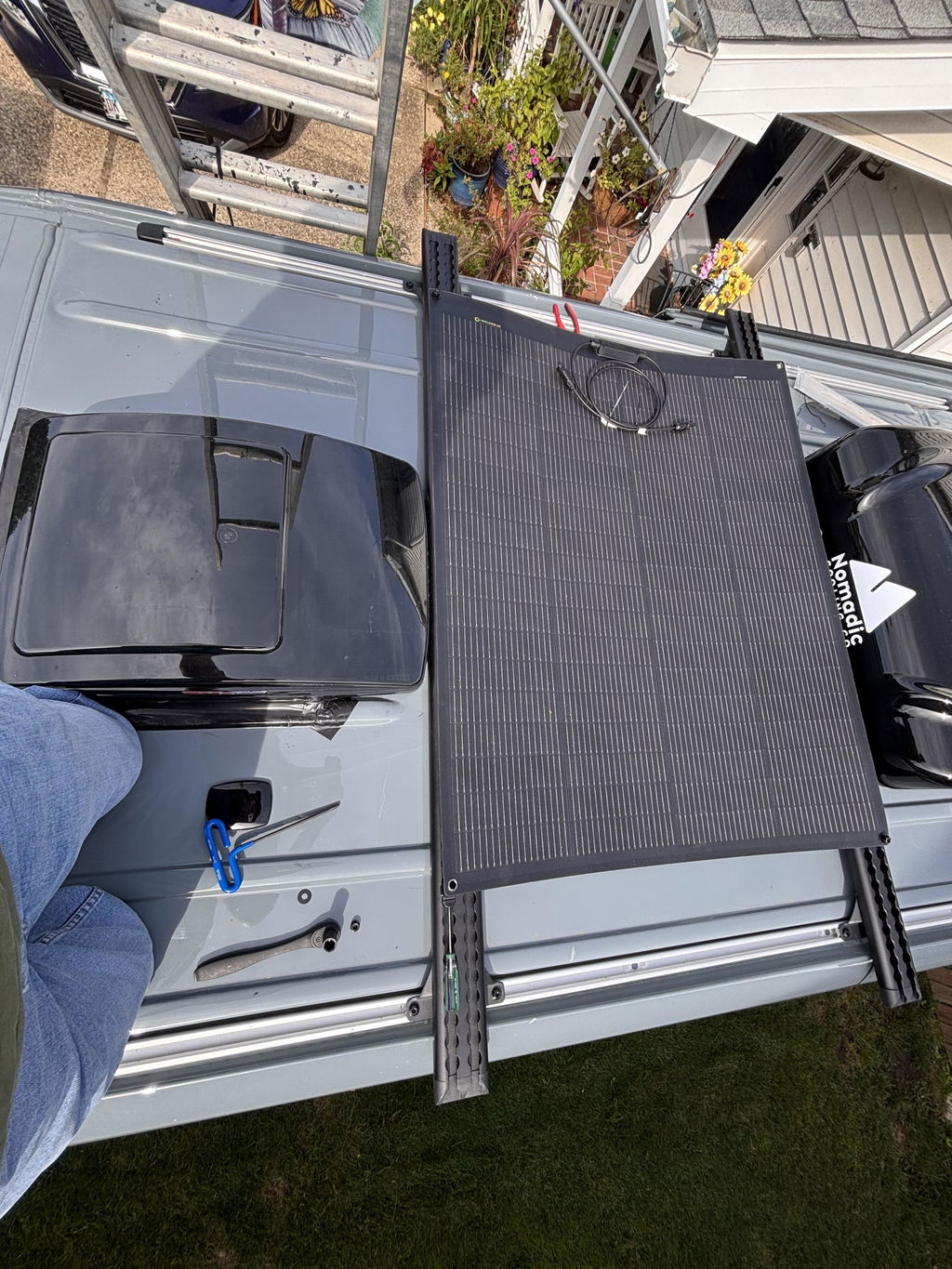
Your cooktop gets the attention, but these three elements determine whether your kitchen actually functions day to day. And all of them add weight — which is why builders obsess over material choices for everything from cabinetry to the roof rack holding solar panels above. DVA's LoadSpan-T™ roof rails and DualTrack-T™ crossbars are the mounting platform used by Sprinter kitchen builders to carry 200–400W of solar above the galley without overloading the 330 lb dynamic roof limit.
Refrigerator placement drives the rest of your galley dimensions. The fridge goes in first during planning — its depth sets your minimum counter depth, its height sets your counter height, and its door swing determines your minimum aisle width. As one experienced builder put it: "Height and depth are usually defined by the sink, fridge, stove, or other stuff you want in, under or on your counters."
Sink size is a common regret. Builders who went small almost always wish they'd gone bigger. A 15" x 15" single basin is the sweet spot for van life — big enough to wash a pot, small enough to leave usable counter space on either side. Under-mount sinks save counter space; drop-in sinks are easier to install and replace.
Drawer storage beats cabinet doors in a moving vehicle. Drawers let you access everything without kneeling on the floor, and items don't fly out when you open the door at an angle. Use heavy-duty ball-bearing slides rated for the weight, and add latches that hold drawers closed during transit.
Premium aluminum cabinet systems are popular on Sprinter-Source for their weight savings and durability, though they carry a premium price tag. Wood cabinets can be built for a fraction of the cost — plywood with pocket joints is the most common DIY approach. "I was new to woodworking when I started. The two 8 ft upper cabinets can be made with about $150 worth of plywood, brackets, glue, paint and hinges," one builder reported. For countertop surfaces, Corian or similar solid surface materials are favored over granite or butcher block for their weight, durability, and ease of fabrication.
Five Common Kitchen Mistakes (and How to Avoid Them)
Not accounting for ventilation
Every cooktop produces moisture, and propane produces carbon monoxide. Your roof vent fan isn't optional — it's safety equipment. Position your galley so the cooktop is near or under the vent fan, and always crack a window or door when cooking. Even induction cooktops need ventilation for steam.
Building the kitchen before the electrical system
Your cooktop choice, refrigerator, water pump, and lighting all draw power. If you build the galley first and plan the electrical second, you'll end up routing wires through spaces that are already closed up. Plan electrical, water, and gas lines before you build any cabinetry.
Ignoring vibration and movement
Everything in a van shakes. Cabinet doors without latches will open on bumpy roads. Drawers without locks will slide out on hills. Glass spice jars will shatter. Build for a moving vehicle, not a stationary kitchen. Use marine-grade latches, rubber shelf liner, and consider spice jars with screw tops.
Skipping the aisle width calculation
25" minimum aisle width is the consensus for couples. Below that, two people can't pass each other, and you can't open the refrigerator door fully. Measure your fridge door swing before finalizing counter depth on the opposite wall.
Overbuilding for the space
The most common regret from experienced builders isn't "I wish I had more kitchen." It's "I wish I had more open space." A smaller, well-organized galley with 44" of counter and a single-burner cooktop will outperform a massive kitchen that makes the van feel like a tunnel. Every pound of kitchen cabinetry competes with your payload budget — which is why weight-conscious builders choose extruded aluminum for structural components like roof racks and crossbars, saving those pounds for the interior systems that matter. When in doubt, build smaller and add later.
The Kitchen Build Sequence That Works
- Decide cooktop type first — it determines your electrical, ventilation, and gas requirements
- Place the refrigerator — its dimensions drive counter depth, height, and aisle width
- Mock up with cardboard — spend two hours now to avoid weeks of regret later
- Run electrical and plumbing — before any cabinetry closes up wall or floor access
- Build cabinetry — around the fixed components, not the other way around
- Install countertop — last, so sink and cooktop cutouts align with everything below
- Weigh everything — a full kitchen build adds 150–300 lb; know your remaining payload before you start