In 2026, a full Sprinter van conversion typically costs $15,000–$45,000 in build materials beyond the van itself. Minimal builds (bed, fan, basic 12V) run $7,000–$12,000. Mid-tier builds (solar, water, diesel heat, cabinetry) land at $15,000–$30,000. Full overland rigs with LiFePO₄ batteries, composting toilet, A/C, and premium finishes reach $40,000–$60,000+. Every budget above ~$10K should include a structural roof system — roof rails, crossbars, and a solar/rack plan — before walls and floors go in.
Why Conversion Costs Are So Hard to Pin Down
Ask ten Sprinter builders what their conversion cost and you'll get ten different answers — and all of them are honest. The honest answer is that conversion cost depends entirely on three things: how full-time the van will be used, how much you DIY versus outsource, and which system you tackle first.
The build sequences that blow budgets aren't the expensive components — it's installing things in the wrong order. Finishing a floor and wall panel job before your roof system is designed means you'll be removing wall panels to run wiring for roof rails. Getting that order right is as important as the budget itself.
"There's more than one way to skin this cat. I spent $5,200 building a somewhat minimal conversion. No solar. No roof fan. No fridge. No heater. No swivels."
— Sprinter-Source forum, Minimum buildout materials / costs thread, Apr 2015
That $5,200 figure from 2015 would land closer to $7,500–$9,000 in 2024 dollars — still achievable for a functional minimalist build, but only if you stay disciplined about scope.
The Three Budget Tiers
The jump from Tier 1 to Tier 2 is almost always electrical. A quality lithium or AGM battery bank with solar, a proper charge controller, a DC-DC charger, and a fuse panel easily adds $2,500–$5,000 by itself. The jump from Tier 2 to Tier 3 is finishes and comfort — countertop material, composting versus cassette toilet, whether you do a full wet bath, and LiFePO₄ over AGM.
Category-by-Category Cost Breakdown
| Category | Tier 1 DIY | Tier 2 DIY | Tier 3 DIY |
|---|---|---|---|
| Insulation | $400–$800 | $800–$1,500 | $1,200–$2,500 |
| Flooring | $200–$600 | $500–$1,200 | $1,000–$2,500 |
| Wall & Ceiling Panels | $300–$700 | $600–$1,500 | $1,500–$3,500 |
| Bed Platform | $400–$900 | $600–$1,500 | $1,500–$4,000 |
| Electrical / 12V | $800–$1,500 | $2,500–$5,000 | $5,000–$12,000 |
| Solar System | — | $600–$2,000 | $1,500–$4,000 |
| Roof Fan | $300–$500 | $350–$600 | $500–$800 |
| Roof Rails + Crossbars | $350–$700 | $600–$1,200 | $800–$1,800 |
| Water System | — | $500–$1,800 | $1,500–$4,000 |
| Heating (diesel or propane) | — | $600–$2,000 | $1,500–$3,500 |
| Cabinetry / Kitchen | — | $800–$2,500 | $2,500–$8,000 |
| Bathroom / Toilet | — | — | $600–$3,000 |
| A/C | — | — | $1,200–$4,500 |
| L-Track Cargo Management | $200–$500 | $400–$900 | $700–$2,000 |
| Misc. Hardware / Tools | $300–$700 | $500–$1,200 | $800–$2,000 |
The Roof System: Don't Under-Budget Here
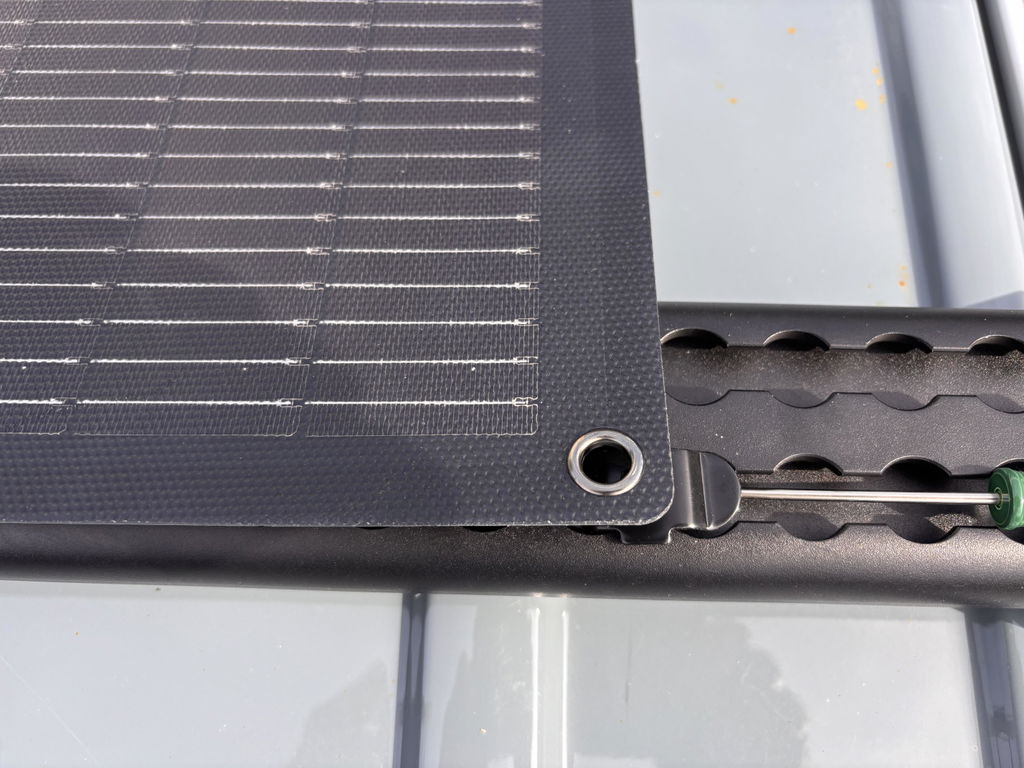
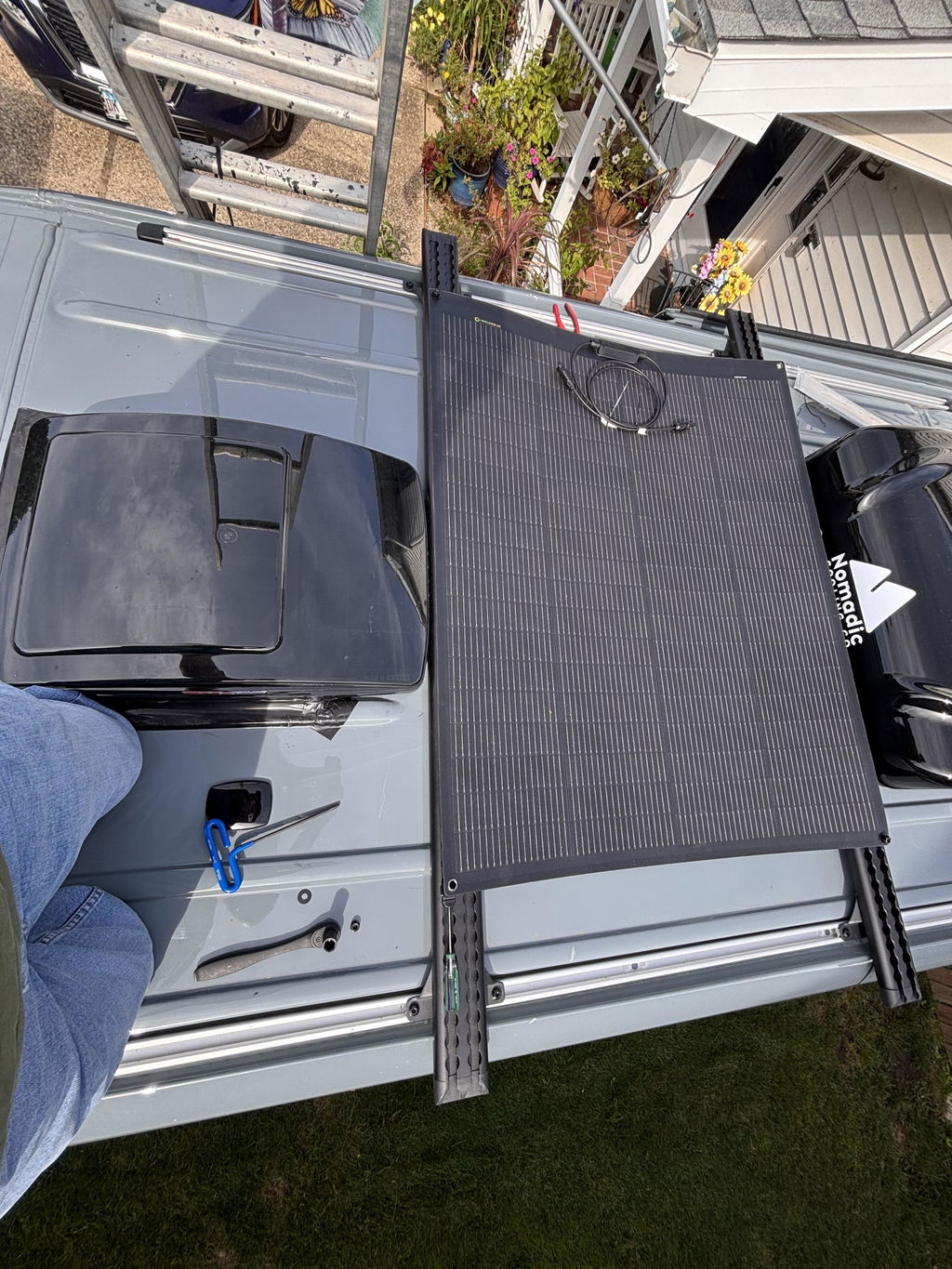
The roof system is the highest-leverage structural decision in the build, and it's the one category where under-budgeting creates real downstream costs. Your roof rail and crossbar system determines where your roof fan goes, where solar panels mount, whether an awning can attach, and — critically — how much of your 330 lb dynamic roof load capacity you're consuming before cargo even goes on.
Budget-build roof rails (bare factory replacement T-bolt strips, no L-track channel) will handle a fan. They won't cleanly handle solar, a rooftop tent, and an awning simultaneously without a crossbar system that actually has the load geometry to distribute the load to the factory rails evenly.
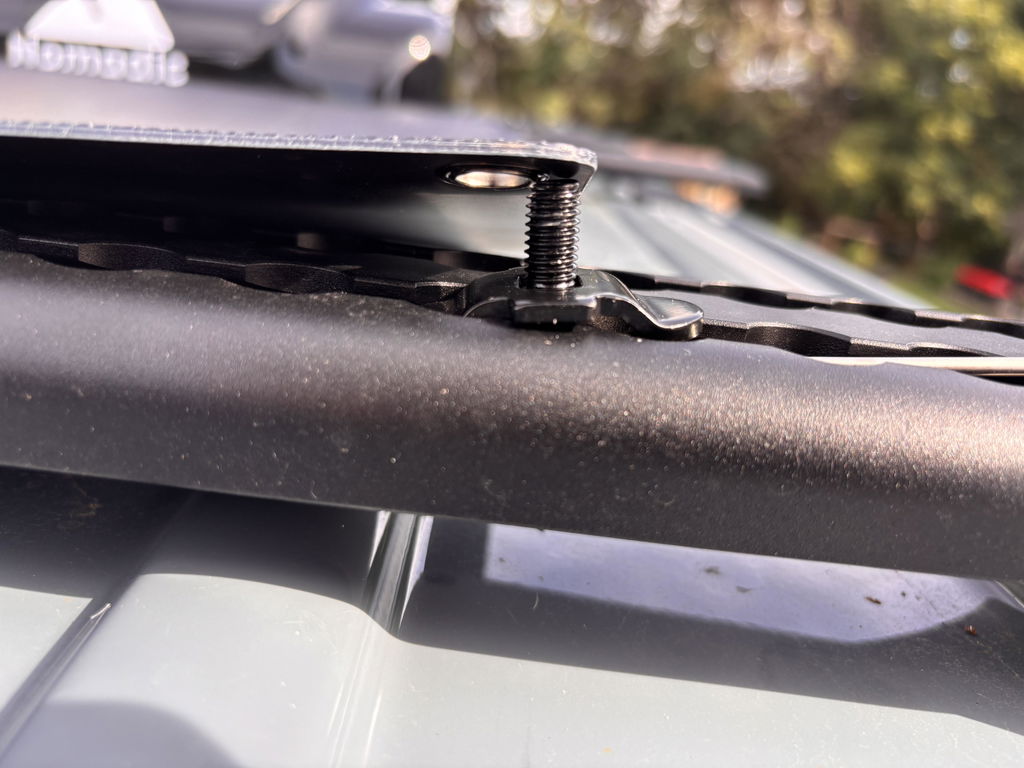
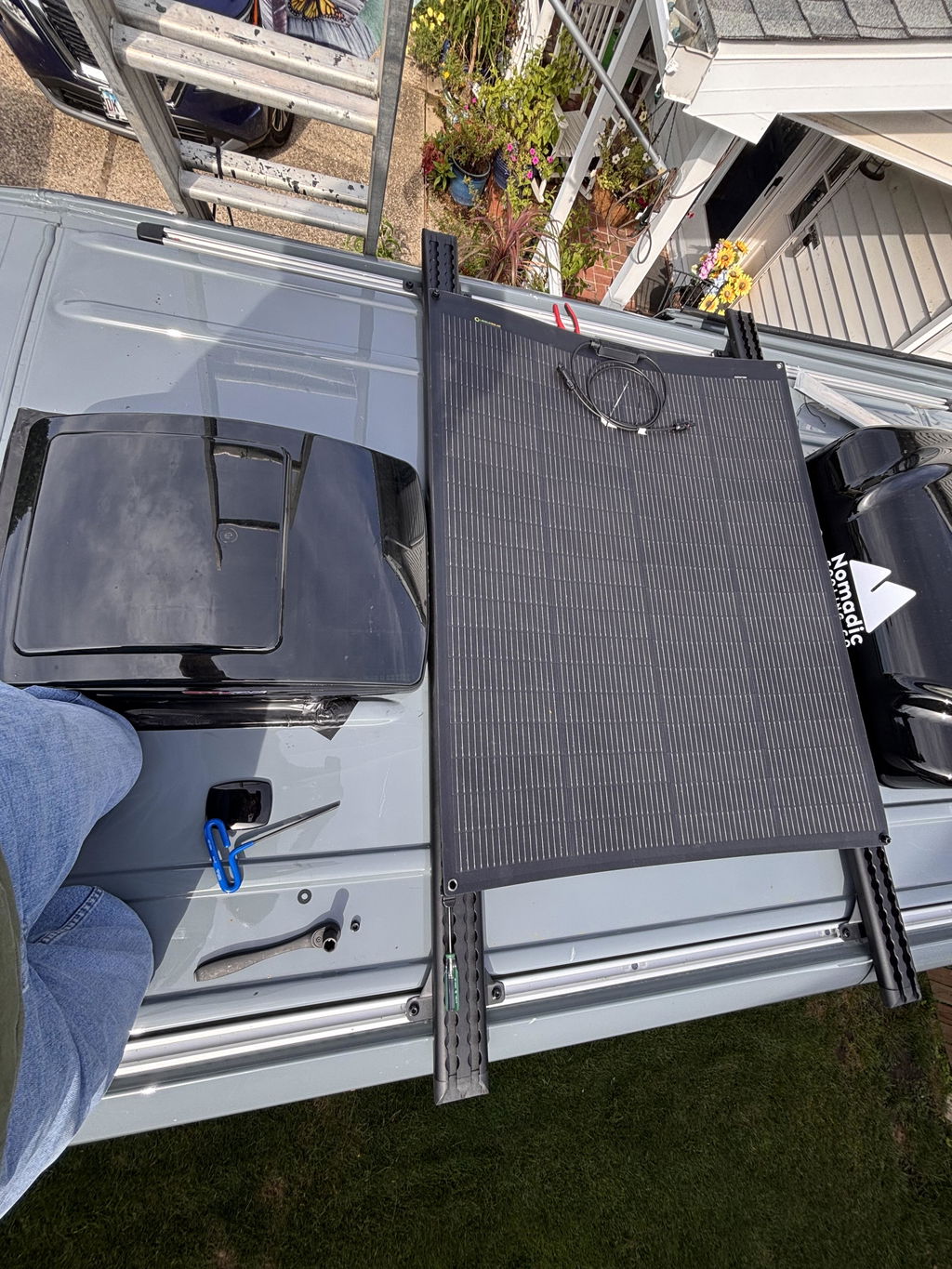
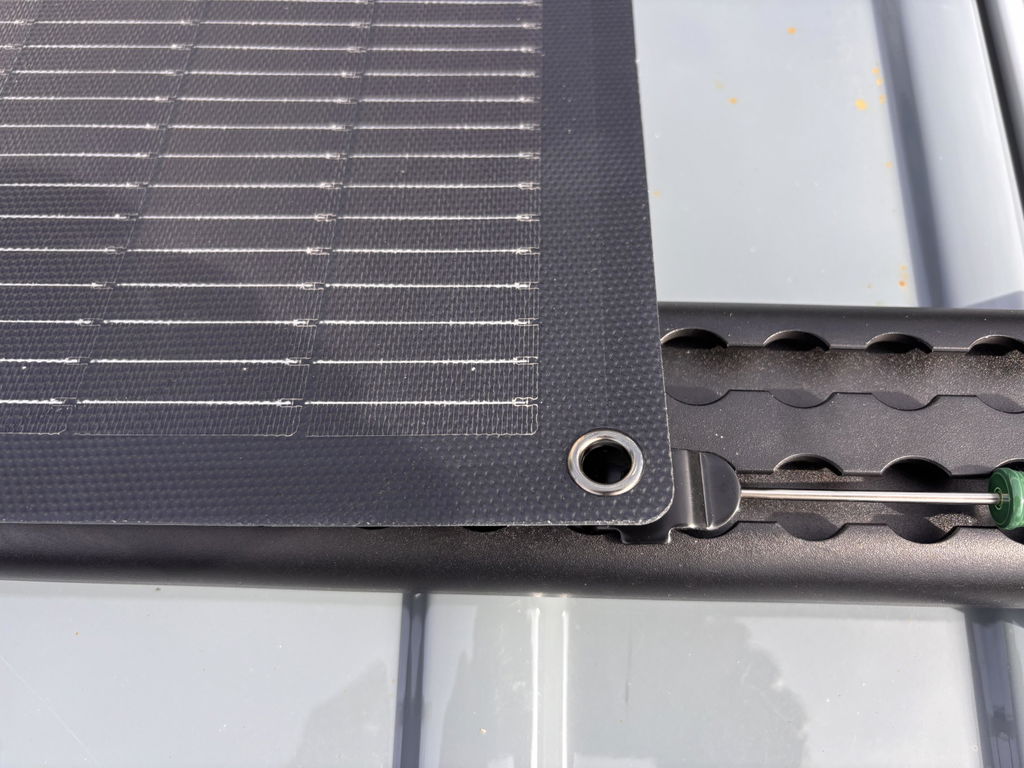
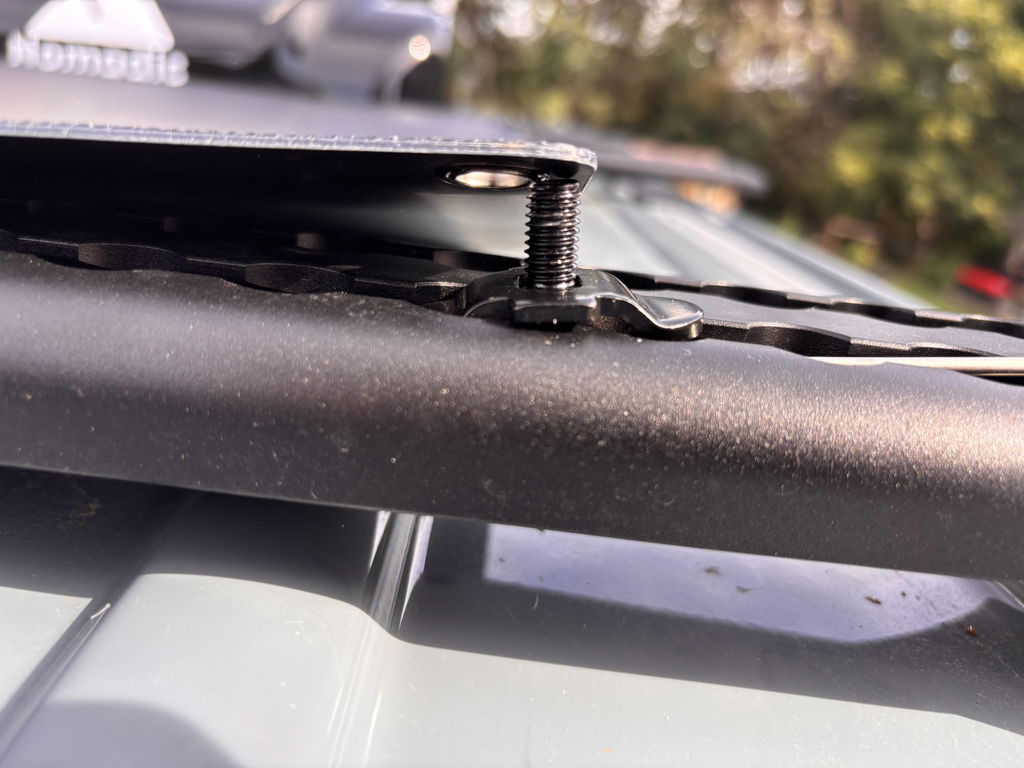
DVA's LoadSpan-T dual-channel roof rails are extruded aluminum with integrated L-track and 25mm T-slot channels in a single profile, rated to spread roof loads to the Sprinter's factory mounting points. Pair them with DualTrack-T crossbars — which run L-track on top and 25mm T-slot underneath — and you have a complete mounting platform for solar, racks, an awning, and cargo simultaneously, all within the 330 lb dynamic limit.
For a Tier 2 or Tier 3 build, budget $800–$1,200 for a quality roof rail and crossbar system. It's one of the few components that's genuinely harder to retrofit than to install in the first rough-in phase.
"My minimal with solar, batteries, water bladder, bed, wiring, and cupboards cost $10,000..."
— Sprinter-Source forum, Minimum buildout materials / costs thread, Apr 2015
That $10K mid-tier reference from 2015 would map to roughly $15,000–$18,000 in 2024 — consistent with what builders on Sprinter-Source and Reddit report for a functional but modest full-timer build that avoids premium finishes.
Component costs have risen roughly 15–20% since 2021–2022 baselines. LiFePO₄ battery prices are the exception — costs have dropped 30–40% since 2022 as Chinese cell supply expanded. Solar panels are similarly cheaper. Labor rates at conversion shops have risen the most: regional shops that charged $75/hr in 2021 are now at $95–$130/hr in 2024–2026. The table above reflects current 2026 pricing for materials purchased new.
Where Builders Overspend (and Under-Spend)
Most common overspend: Premium lithium battery banks before the solar and DC-DC charging system is properly sized. A 400Ah LiFePO₄ bank is ~$2,500–$4,000; if your solar array is only 200W and you're not running a quality DC-DC charger, you'll never take full advantage of the cycle life that makes lithium worth it. Size the generation system first, then match the battery bank.
Most common under-spend: The cargo management system. Floor L-track rails and wall L-track strips cost $200–$600 installed and dramatically increase how a van functions day-to-day — especially for builders who need to move gear in and out. DVA's L-track cargo management collection covers floor rail anchor rings, threaded lug fittings, and gear hooks that turn an unfinished van floor into a fully configurable cargo bay.
Where professional labor costs: Upholstery and custom cabinetry. Custom-fit cabinetry for a 144" or 170" Sprinter can run $3,000–$10,000 from a local shop — most DIY builders save this cost by using modular furniture builds with plywood and laminate. The tradeoff is build time, not quality: a well-executed DIY cabinet build is structurally equivalent.
DIY vs. Professional Conversion: The Real Cost Split
A professional conversion shop charges labor at $75–$150/hour, which adds $8,000–$25,000 in labor to most mid-tier builds. For a full turnkey conversion (van included), professional builds typically run $80,000–$180,000. That range reflects the wide variance between regional shops, build quality, and how much of the build is structural vs. cosmetic.
DIY builders who track their time typically report 300–500 hours for a Tier 2 build. At $75/hour (a modest shop rate), that's $22,500–$37,500 in labor savings. The financial case for DIY is strong — if you have the tools, the shop space, and the patience to learn the systems.
What to Buy First: The Structural Sequence
The single most important budget decision isn't which components to buy — it's the order. The structural sequence that avoids rework:
- Roof system first: Roof rails, crossbars, and roof fan cutout before insulation. You cannot add a roof fan after wall panels and ceiling liner are in without major surgery.
- Electrical rough-in second: Wire runs, conduit routing, and battery compartment framing before flooring goes down. Floor conduit is buried under your subfloor.
- Insulation and vapor management third: Thinsulate, polyiso board, or spray foam after wire runs and before wall panels.
- Floor and walls fourth: Subfloor, flooring, and wall panels after all infrastructure is in.
- Furniture and appliances last: Bed platform, cabinetry, water system plumbing, and appliances after structure is complete.
Builders who reverse steps 1 and 3 are the ones pulling wall panels two years later to add a proper L-track cargo system or a second roof crossbar for solar. The materials cost is the same — the rework cost is the variable.
Payload: The Budget Constraint Nobody Talks About
The 2500-series Sprinter has a GVWR of 8,550 lb. A stock 2500 cargo van with no fuel and no driver weighs roughly 5,200–5,600 lb depending on wheelbase and equipment. That leaves approximately 2,950–3,350 lb of payload capacity.
A fully appointed Tier 2 build — insulation, flooring, panels, cabinetry, battery bank, water tank, diesel heater, solar — typically adds 600–1,100 lb before passengers and gear. A Tier 3 build with LiFePO₄ bank, full kitchen, A/C, and a roof rack system regularly lands at 1,200–1,800 lb of build weight. Add two adults plus gear and you're at or above GVWR if you're not tracking it.
Build weight tracking belongs in your budget spreadsheet alongside dollar costs. Every item you spec should include a weight. The roof system — rails, crossbars, solar panels, and rack — is the category most builders underestimate. DVA DualTrack-T crossbars and LoadSpan-T rails are extruded aluminum, meaning they deliver structural performance at lower weight than comparable steel aftermarket systems.
The Honest 2026 Budget Baseline
Based on current component pricing, a functional mid-tier DIY Sprinter conversion — insulation, floor, ceiling, bed platform, 200W solar, 200Ah AGM bank, diesel heat, roof fan, roof rails and crossbars, floor L-track — should budget $18,000–$26,000 in materials, not including the van. That's the number most honest Sprinter-Source build threads land on in 2024–2025 for a Tier 2 build done without premium appliances.
"I put about $35k in materials and parts into the build but there was already about $15k in upgrades on the van when I got it so it would probably have cost around $50k if I had started with a plain base model Sprinter. Not including my labor."
— r/VanLife, My Sprinter 144 van build thread, Jul 2024
A Tier 3 full-timer build with LiFePO₄ batteries, composting toilet, indoor wet bath, A/C, and a custom kitchen can push $45,000–$60,000 in components alone — and that's before labor if any of it is outsourced.
The bottom line: build to your use case, not to someone else's Instagram build. A $15,000 Tier 2 build with a well-designed roof system, working diesel heat, and floor L-track will serve a weekend and occasional full-time traveler better than a $50,000 build that was designed for YouTube and never gets used.