⚡ Sprinter Electrical Quick Answer
No-start (click, no crank): Test three groups in order — (1) Battery & charging, (2) Security relays & SKREEM, (3) Starter circuit. If the interior light dims when you turn the key, the battery is the issue. If the light stays bright, suspect a relay or security fault.
Battery drain: Normal Sprinter key-off draw is 30–50 mA (T1N) and under 100 mA across all generations. Anything over 100 mA points to a stuck relay, dome light, or aftermarket accessory not going to sleep.
Warning lights flooding: Multiple simultaneous dash lights (ABS, ESP, BRAKE) almost always point to a ground cable fault or a PDC (power distribution center) connection — not individual component failures.
The Three-Group Diagnosis Framework
Sprinter no-start faults divide cleanly into three groups. Identifying which group you're in before touching anything saves hours of chasing the wrong circuit. This framework comes directly from the Sprinter-Source community's most-referenced diagnostic thread, Click no start — and other no start — tips (thread #58993):
- Group 1: Battery & Charging System — battery is discharged, bad connection, or failing alternator
- Group 2: Security & Relays — SKREEM immobilizer, ECU relay, steering column fuse box
- Group 3: Starter & Solenoid — starter motor failure, solenoid, or crank signal wiring
Initial Sort Test
Turn on the interior dome light, then turn the key to crank:
- Light goes out or dims severely → Group 1 (battery/charging). The battery doesn't have enough voltage to run both the crank request and the lights.
- Light stays bright, no crank → Group 2 or 3. Battery is fine — the problem is upstream of the starter.
"Most electrical problems are caused by poor electrical connections... All metals except gold oxidize when exposed to moisture. Oxides are good insulators. If something is not working there is a good chance it is not properly connected to the loom. If you have a bad connection the ECU cannot see the device and chucks a code."
— Sprinter-Source member, Click no start — tips (thread #58993)
Group 1: Battery & Charging System
Battery and charging diagnosis must account for battery type, temperature, state of charge, model year, engine, and energy-management strategy. Use the battery manufacturer’s test procedure and Mercedes-compatible scan data. A single open-circuit voltage or generic alternator threshold does not diagnose a battery, starter, regulator, or control fault.
Safe first checks
- Record the complaint, warning messages, and freeze-frame data before disconnecting power.
- Inspect approved battery, fuse, cable, and ground connections for damage or voltage drop under load.
- Confirm installed battery type and coding requirements.
- Escalate recurrent no-start, charging, or multi-module faults to a qualified technician.
Group 2: Security, Relays & the Steering Column Fuse Box
If your battery is good but the van still won't crank, the problem is almost always in the relay or security circuit — specifically the steering column fuse box or the ECU relay inside it.
"No start, no crank, battery is good: If the electric fan in front of the engine goes on when you turn the key to the 'on' position, it's very likely that you have a bad connection in your steering column fuse box, or with the ECU relay in it. Some have been able to start by wiggling the ECU relay."
— Sprinter-Source member, No Start No Crank Minneapolis (thread #55599)
Where to look:
- ECU relay — in the steering column fuse box behind the dash. Remove and inspect for corrosion on the pins. Swap with an identical relay from the same box to test.
- SKREEM (immobilizer) — if the key chip isn't reading, you'll get "Start Error" on the display. Try the spare key. If the spare works, the original key's chip is failing.
- Ground jumper from B+ to starter solenoid terminal — run a test lead from B+ to the small signal terminal on the starter. If the starter cranks with this jumper, the problem is definitively in the signal path between the ECU relay and the starter, not in the starter itself.
Group 3: Starter & Solenoid
By the time you've ruled out Groups 1 and 2, Group 3 is usually straightforward. A single loud click when you turn the key typically means the solenoid is engaging but the motor isn't spinning — either the starter is mechanically seized or the solenoid contacts are burned.
A rapid click-click-click pattern almost always means the battery is too discharged to hold voltage through the solenoid engagement, even if it reads 12.1–12.3 V at rest. The Sprinter starter draws a large inrush current and a marginal battery collapses under it.
Quick bench test: touch a 12 V test light probe to the large nut on the starter solenoid — power should be there constantly. Then touch the probe to the small nut and have a helper turn the key. If the test light illuminates during the crank attempt but the starter doesn't turn, the starter motor is the culprit.
Parasitic Battery Drain (Key-Off Draw)
Key-off current depends on vehicle generation, installed equipment, network sleep state, and measurement method. Do not apply one threshold to every Sprinter. Mercedes’ current BM907 guideline limits quiescent load on EK1 terminal 30T to less than 1 mA when the engine is stopped; that is an interface requirement, not a whole-vehicle parasitic-draw specification.
Use a fused, non-disruptive current-measurement method and allow the exact vehicle to reach its documented sleep state. Pulling fuses or opening doors can wake modules and invalidate the result.
Warning Light Floods: Multiple Simultaneous Alerts
When multiple dash lights come on simultaneously — ABS, ESP, BRAKE, traction control, plus no speedometer reading — resist the urge to diagnose each code individually. Multiple simultaneous faults on unrelated systems almost always share a single root cause:
- Failed ground cable or ground strap — the most common cause. Inspect the Mercedes-designated ground straps and studs identified for the specific model and fault path. A high-resistance ground creates floating reference voltages that trigger false fault codes across every ECU on the CAN bus.
- CAN bus communication fault (B1040, P1926) — if the ECM loses CAN communication, every module that depends on it may simultaneously fault. Re-seating the ECM connector or checking the ECM power/ground first costs nothing.
- Battery voltage too low — during a weak-battery crank attempt, voltage can sag enough to confuse multiple ECUs simultaneously. They set fault codes during the sag, and the codes persist even after the battery is charged.
First step for any warning light flood: disconnect the battery for 5–10 minutes. Many ECUs will clear false codes once they power-cycle with stable voltage. If the lights return immediately after a reset, you have a real fault. If they don't return, suspect a momentary voltage sag — check battery condition and all ground connections before clearing codes again.
The PDC: What It Is and Why It Matters
The PDC (power distribution center) is the fuse block bolted to the positive battery terminal. It contains 70 A, 100 A, 125 A, and 200 A mega-fuses that protect the main sub-circuits feeding the rest of the van's fuse boxes. Every circuit except the starter motor passes through it.
PDC failures are uncommon but not rare on high-mileage vans. Inspection points:
- Corrosion at the PDC stud connection (where the battery cable bolts to it)
- Heat damage to the housing — discoloration or melted plastic indicates a prior overload
- Loose stud nuts — over time, vibration backs them off; any looseness creates resistance and heat
Ground Cable Failures: The Silent Cause of Most Intermittent Faults
Sprinter ground cables deserve dedicated attention because the van's CAN-bus architecture is uniquely sensitive to ground-reference variations. All ECUs share a common ground reference; any corrosion or loose connection in the ground path raises that reference, which the ECU interprets as a voltage change on every sensor simultaneously.
Critical ground points to inspect and clean on any Sprinter:
- Factory ground path: inspect the designated Mercedes ground connection for looseness, corrosion, or voltage drop under load.
- Engine block ground strap — from the engine block to chassis; often routes to the same chassis point as the battery negative
- Transmission ground strap — a separate braided strap between the transmission case and chassis; often overlooked
- Body-to-chassis grounds — behind the dash and under the B-pillar on cargo vans; prone to corrosion on vehicles that see wet cargo or are washed frequently
Service method: follow the Mercedes procedure for the identified ground point. Disconnect power safely, clean and protect the interface only as specified, and tighten it to the documented requirement.
Planning a Conversion After You've Fixed the Electrical?
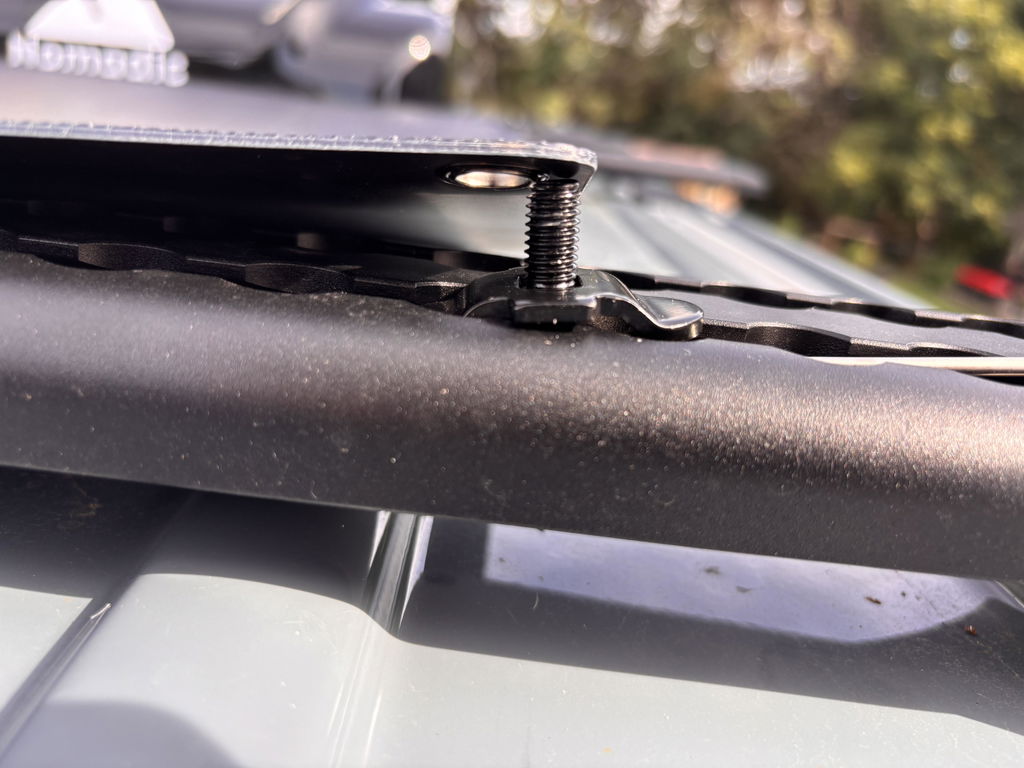
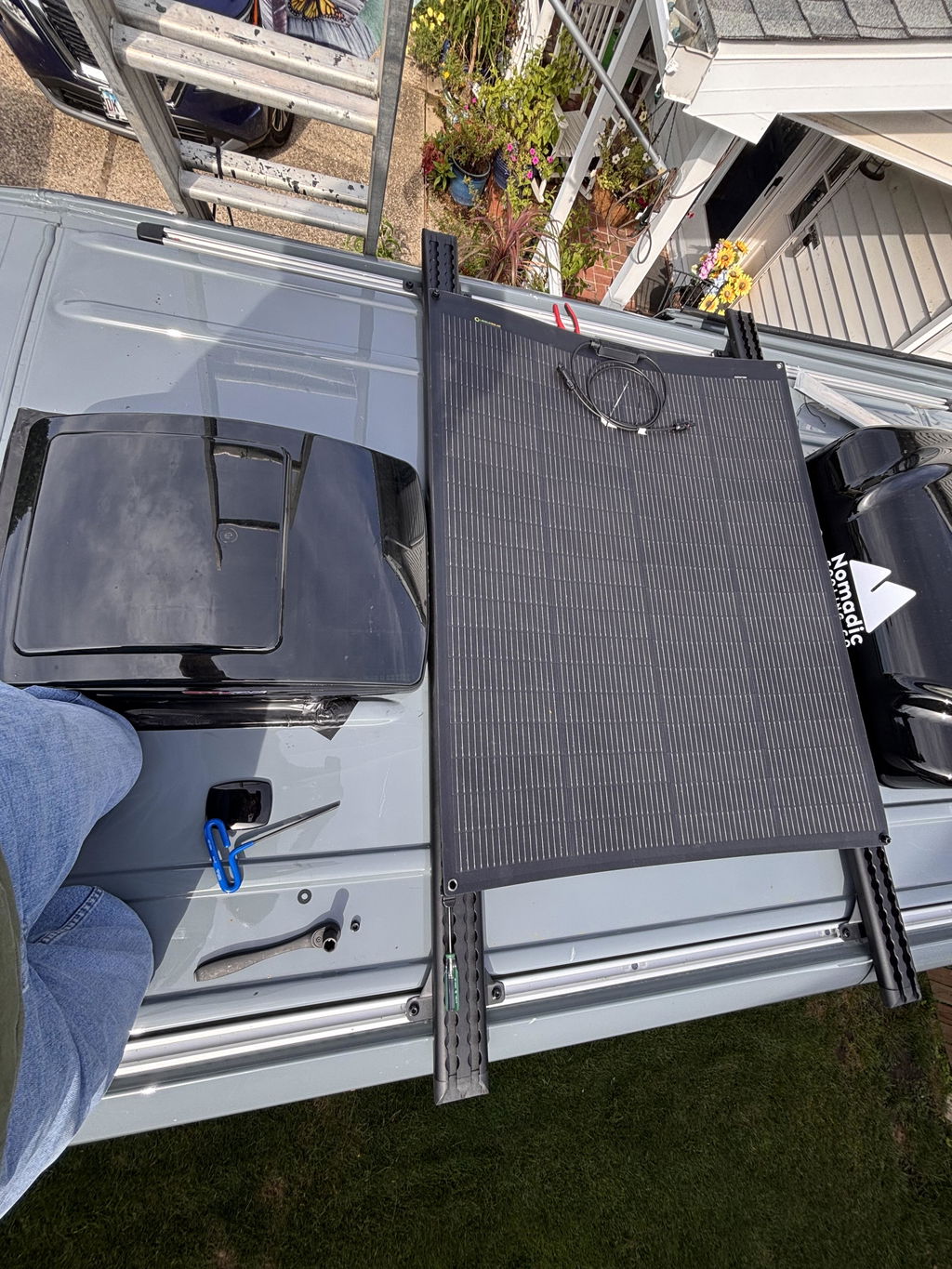
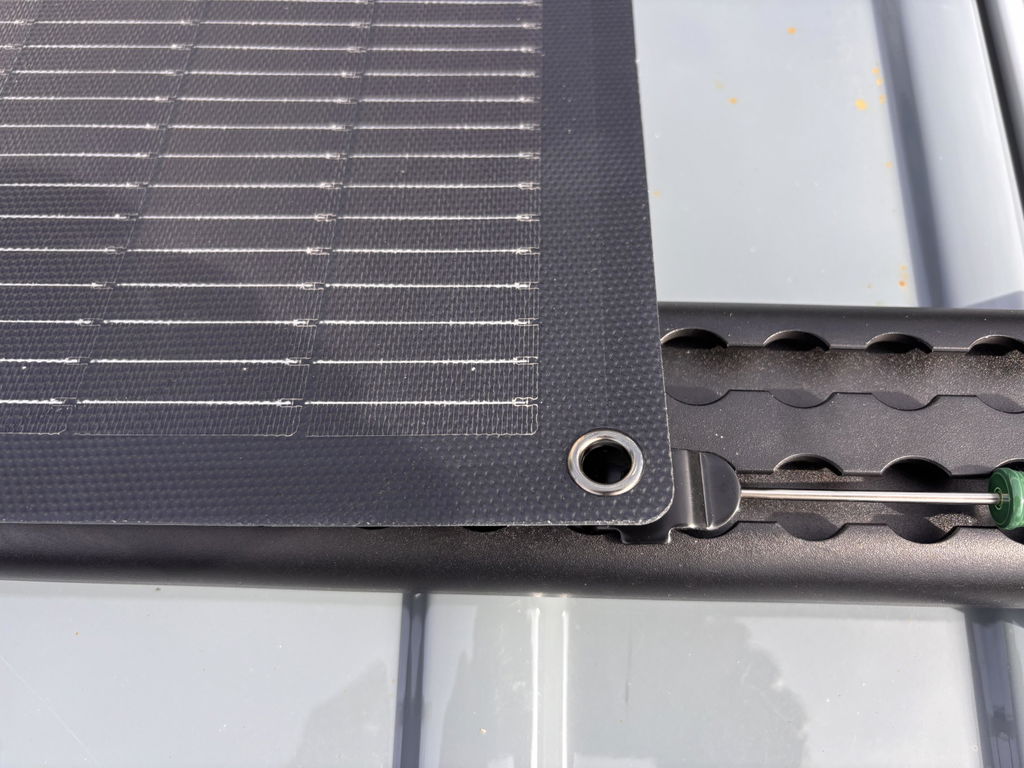
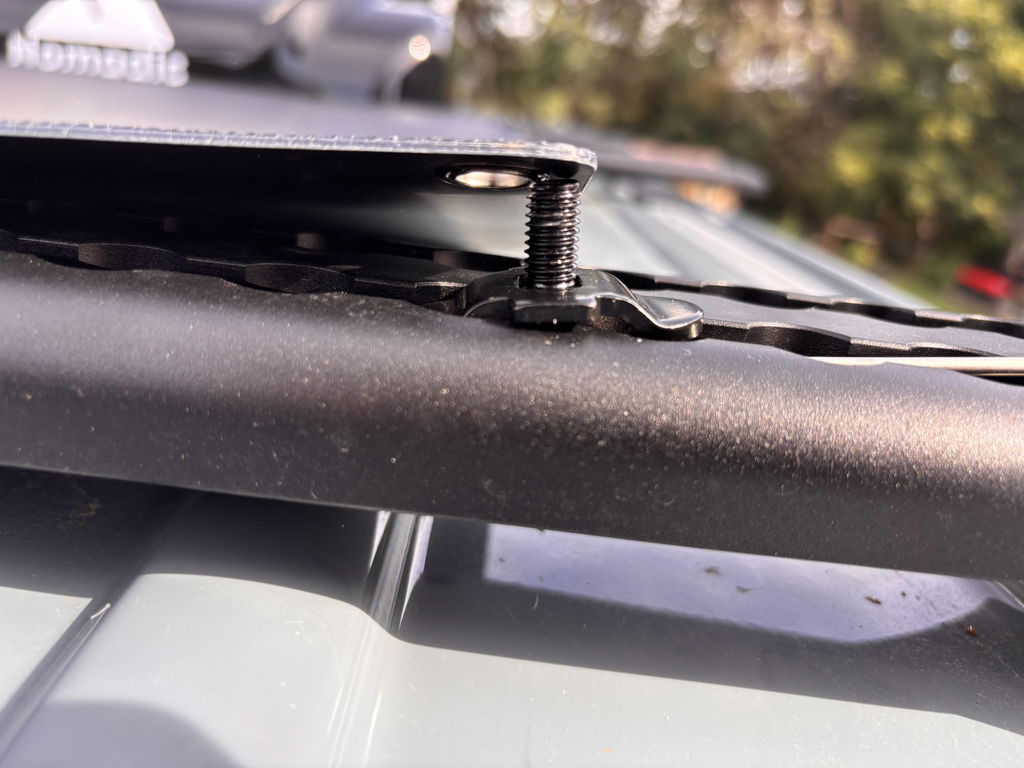
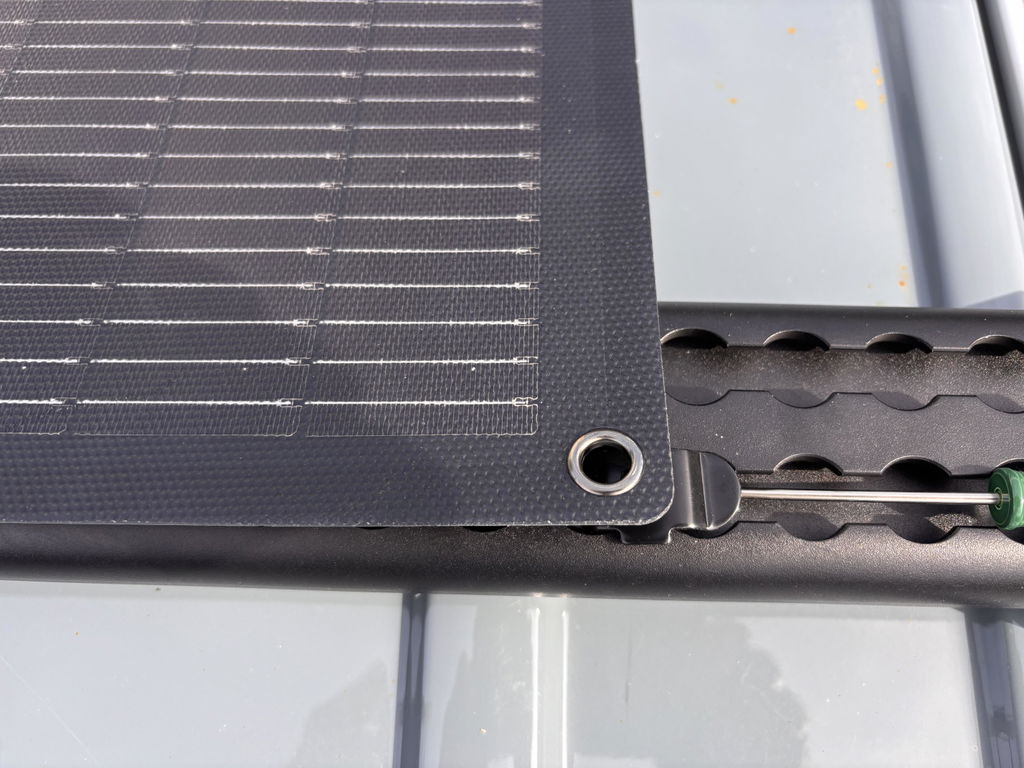
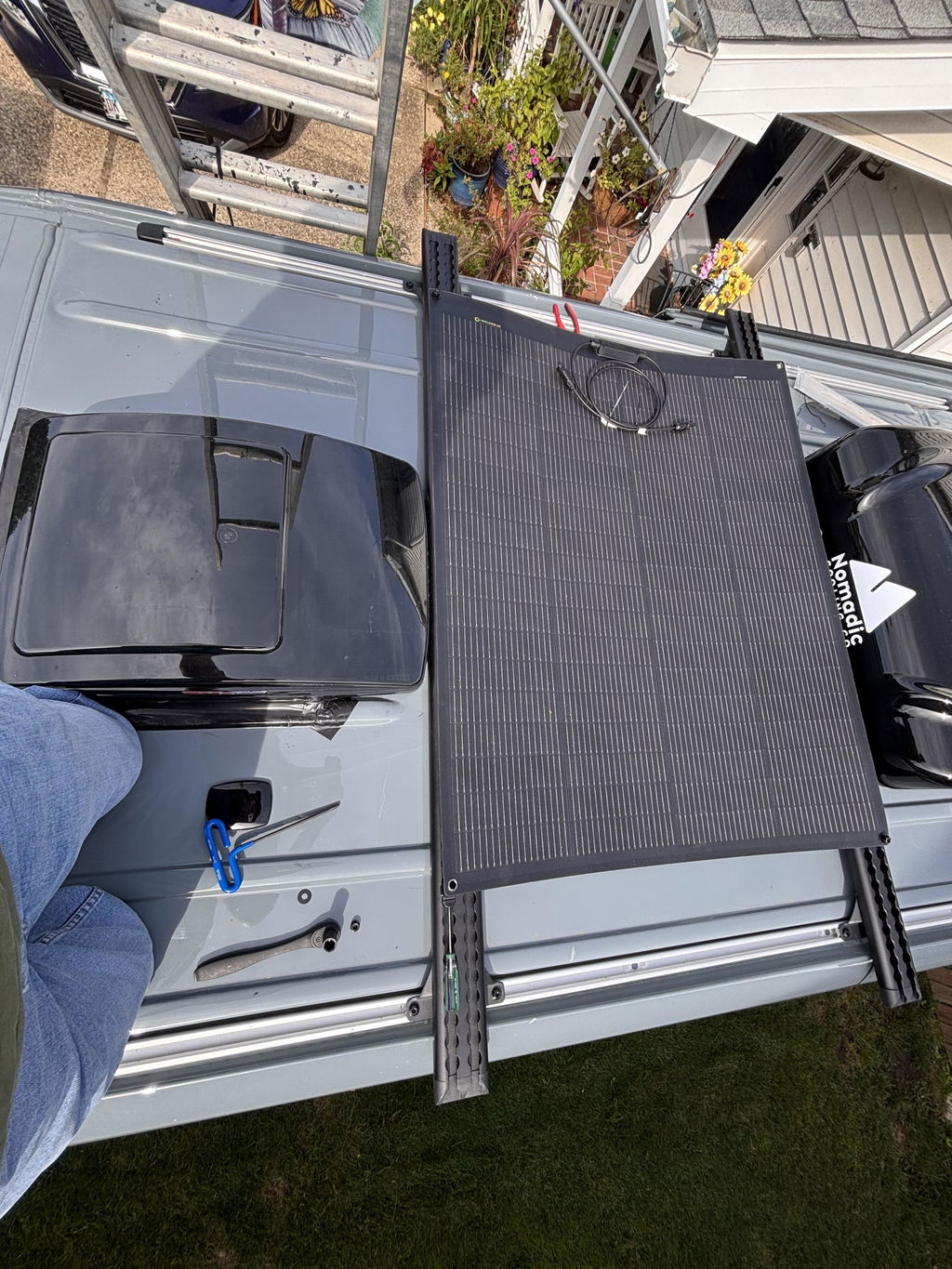
Once your Sprinter's factory electrical system is sorted, a conversion build starts with the roof. DVA's LoadSpan-T™ Dual-Channel Roof Rails bolt to the factory mounting points with no drilling and carry the weight of solar panels, a rooftop tent, or a roof load allowed by the vehicle handbook and the lowest-rated component. Pair them with the DualTrack-T™ Cross Bar Kit for a complete roof rack system, or add interior L-track cargo rails to organize tools and gear inside the van.
Common Sprinter Electrical Fault Codes Explained
| Code | Description | First Check |
|---|---|---|
| B1040 | CAN communication of ECM faulty | ECM connector pins, battery voltage during crank |
| P1926 | CAN communication fault | Same as B1040 — ground cables first |
| P0562 | System voltage low | Battery condition, alternator output |
| U0100 | Lost communication with ECM/PCM | ECM power and ground (fuse 15 in SAM) |
| C2101 | ABS module supply voltage fault | ABS fuse, chassis ground strap |
Quick Diagnostic Checklist
- Measure battery voltage at posts: should be ≥12.4 V at rest
- Interior light test: does it dim on key turn? → Group 1 (battery)
- Check alternator output: 13.8–14.5 V with engine running and loads on
- Inspect battery terminals and PDC stud connections for corrosion
- Check all ground straps: chassis, engine block, transmission
- Measure parasitic draw after 10-min sleep: should be <100 mA
- Pull fuses one at a time at the PDC if draw >100 mA
- If multiple simultaneous dash lights: battery-disconnect reset first, then diagnose individual codes
- No-start with good battery: test ECU relay in steering column fuse box
- Starter cranks but engine won't start: switch to fuel, injector, or CDI territory
Electrical Upgrade Integration for Conversion Vans
Once the factory electrical system is reliable, most conversion builds add a house battery bank wired in parallel (never directly) with the chassis battery. The Sprinter's smart alternator in VS30 models throttles charging output dynamically — a DC-DC (B2B) charger between the chassis and house battery is required to properly charge lithium house batteries without confusing the EMS.
For more on the factory architecture, dual-battery wiring, and why standard isolators don't work on smart-alternator Sprinters, see the Sprinter Electrical System Architecture guide.
DVA Mechanics Sprinter Build Products
After your electrical foundation is solid, build out the platform:
- LoadSpan-T™ Dual-Channel Roof Rails — no-drill, bolt-to-factory-points, capacity governed by the vehicle handbook and the lowest-rated component
- DualTrack-T™ Cross Bar Kit — low-profile aluminum cross bars for Sprinter roof rack systems
- L-Track Cargo Rails & Fittings — modular cargo management for tools, recovery gear, and van life loads
- All Sprinter Roof Rails & Systems — browse the full collection

Sources
- Mercedes-Benz Sprinter Body and Equipment Guideline (BM907, 2025-6)
- Click no start — and other no start — tips (thread #58993)
- No Start No Crank Minneapolis (thread #55599)
- Battery Drain? (thread #53759)
- Battery, alternator, parasitic draw... or nothing to worry about? (thread #94015)
- Parasitic draw (thread #68759)
- Fuse box attached to battery causing power drain (thread #35654)
The DVA Setup for This
Build from verified fitment and documented limits.
Use the live product page and vehicle documentation together. The lowest applicable vehicle, mounting-system, or accessory limit governs.
Shop Sprinter Roof Systems →