The best roof flood lights for a Sprinter van are 2–4 IP67-rated LED flood pods mounted to roof rack crossbars, angled 30–45° downward, wired through a single sealed roof penetration to your house battery. Budget pods ($30–$60/pair) handle intermittent campsite use. Mid-range USA-made pods earn their price for daily-use builds. This guide covers which light type fits your use case, how to mount without creating water intrusion, the single-penetration wiring approach experienced builders use, and what to expect at each budget level.
You pulled into a dispersed campsite after dark. The headlights carved two narrow cones into the brush, and beyond that — nothing. Setting up camp meant fumbling with a headlamp, tripping over guy lines, and wondering what that rustling sound was twenty feet to the left. The next morning you noticed the fire ring, the flat ground you missed, and the perfect spot you drove right past.
That scenario is exactly why roof flood lights have become one of the most popular Sprinter van upgrades. Not for off-road racing or highway bombing, but for the simple, practical need to see what's around your van when you stop for the night. Scene lighting. Area illumination. Campsite flood lights. Whatever you call them, they solve a problem every van owner encounters within the first week of ownership.
But the market for LED pods and light bars has exploded, and the gap between a $30 Amazon special and a premium $250–$350 off-road pod is enormous — in build quality, beam pattern, thermal management, and longevity. The forum threads are full of owners who bought cheap, mounted wrong, wired poorly, and ended up with leaking roofs or lights that died within a year.
This guide covers everything: the types of roof flood lights that actually make sense for a Sprinter, how to mount them without creating water intrusion nightmares, the wiring approach that experienced builders use, and the brands worth considering at every budget level.
For campsite scene lighting: mount 2–4 IP67-rated flood pods to your roof rack crossbars (angled 30–45° downward), wire through a single sealed roof penetration using a watertight junction box, and power from your house battery — not the starter battery. Budget pods ($30–$60/pair) work well for intermittent campsite use. Mid-range USA-made pods earn their price for daily-use vans. The mounting and wiring matter more than the brand. DVA's LoadSpan-T™ and DualTrack-T™ roof rails have integrated T-slot channels sized for standard LED pod mounts — no drilling into rack or roof skin.
Understanding Flood Light Types: Not All Roof Lights Serve the Same Purpose
Before you start shopping, you need to understand that "roof flood lights" actually describes three distinct categories of lighting, and mixing them up is the most common mistake new builders make.
Scene / Area Lights — What most van owners actually need
Scene lights mount to the sides or rear of your roof rack and aim downward and outward. They illuminate the ground around your van — the area where you're cooking, setting up chairs, or connecting shore power. Think of them as exterior porch lights. They use a flood beam pattern with a wide, even spread and relatively low intensity to avoid blinding everyone in the campsite.
This is what most Sprinter owners mean when they say "roof flood lights," and it's what this guide focuses on.
Driving / Spot Lights — Forward-facing, high intensity
These mount to the front of your roof rack or bumper and project a concentrated beam far down the road. They're designed for off-road driving at speed — illuminating obstacles, wildlife, and terrain hundreds of feet ahead. They're illegal for on-road use in most states when mounted above the headlights.
Light Bars — Combination driving + flood
Light bars combine spot and flood optics in a single housing. They're popular on overlanding rigs, but on a Sprinter van they come with significant considerations — wind noise, added drag, and the fact that most quality light bars cost $500–$1,500 before mounting hardware. For pure scene lighting, individual LED pods are more versatile and typically more cost-effective.
If your primary goal is illuminating the area around your van at camp, you want flood-pattern LED pods mounted to your roof rack sides and rear — not a forward-facing light bar. This changes everything about your product selection, mounting approach, and budget.
The Brand Landscape: Budget to Premium
The LED auxiliary lighting market breaks into three clear tiers. Forum discussions consistently land on the same conclusions about what's worth the money.
| Tier | Brands | Price Per Pod | Best For |
|---|---|---|---|
| Premium | Premium off-road LED brands | $150–$350 | Maximum durability, precise beam patterns, lifetime warranty |
| Mid-Range | Mid-range performance brands | $80–$200 | Best value for quality optics, USA-based support |
| Budget | Entry-level pods from major online retailers | $20–$60 | Low-stakes scene lighting, testing positions before committing |
Premium Tier: The Top Off-Road LED Brands
These are the brands that professional overland builders and race teams use. The top-tier off-road LED brands set the benchmarks against which everything else is measured. You're paying for precision-engineered optics that produce exactly the beam pattern advertised, aluminum housings with genuine IP69K ratings, and thermal management systems that prevent LED degradation over thousands of hours.
The premium off-road lighting brands are the best of the best, with mid-range performance brands not far behind. Budget pods from major online retailers are a great entry point for testing positions before committing to premium gear.
— Van owner forum discussion, r/vandwellers, camp lighting thread
For a Sprinter van owner who plans to keep the van for years and use the lights regularly, premium pods are a one-time purchase. Premium-tier off-road pods from established brands are virtually indestructible and often carry lifetime warranties. The real question is whether you need that level of performance for scene lighting.
Mid-Range: The Sweet Spot for Most Van Owners
Mid-range USA-made brands have earned a strong reputation in the van community for tight quality control and excellent customer support. One Sprinter-Source member noted the appeal after researching options for their 2019 Sprinter headlight upgrade:
I found a USA-made mid-range brand with excellent quality control and engineering. Intensely well designed, tested for longevity. I bought some for about half the price of the premium brands. They worked great with the floating bracket. They have several optic options — flood, spot, and combo.
— Sprinter owner, r/vandwellers, Sprinter build thread
Some mid-range lighting brands offer Sprinter-specific mounting solutions, including A-pillar and bumper brackets that require no drilling. Compact pod designs with adjustable mounting systems have become popular for roof rack-mounted scene lighting.
Budget Tier: When Cheap Actually Makes Sense
Here's something the premium brands won't tell you: for campsite scene lighting that runs maybe 2–3 hours per use, a couple of times a week, budget LED pods can work perfectly well. Entry-level pods in the $30–$50 range are frequently recommended on Sprinter-Source for owners who want basic area illumination without a $600 lighting bill.
The tradeoffs are real, though: inconsistent beam patterns between units, cheaper sealing that may degrade after 2–3 years of UV exposure, and thermal management that relies on the housing acting as a heatsink rather than an engineered system. For rear-facing scene lights that run intermittently, these compromises are acceptable. For forward-facing driving lights you'll rely on in bad conditions, they're not.
Buy one pair of budget flood pods first to test mounting positions and angles before committing to premium lights. Once you know exactly where you want them, upgrade if the budget pods don't meet your needs. Many owners find they never bother upgrading because the budget floods work fine for campsite use.
Mounting: The Decision That Matters More Than the Lights
Mounting LED Pods to L-Track Rails
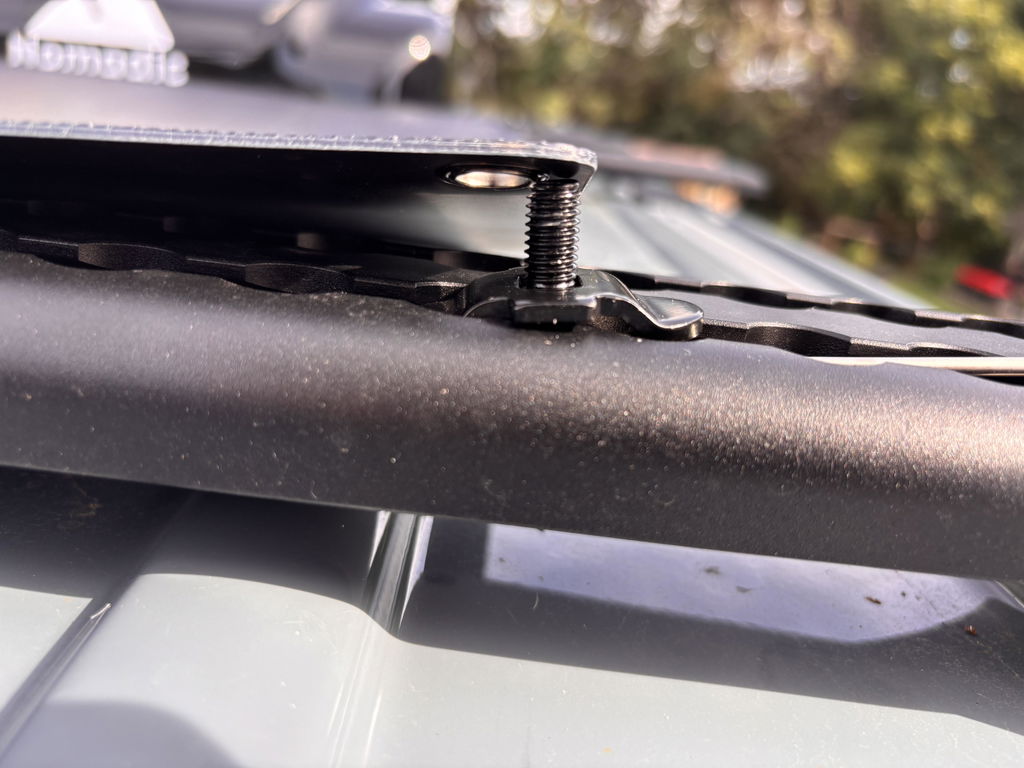
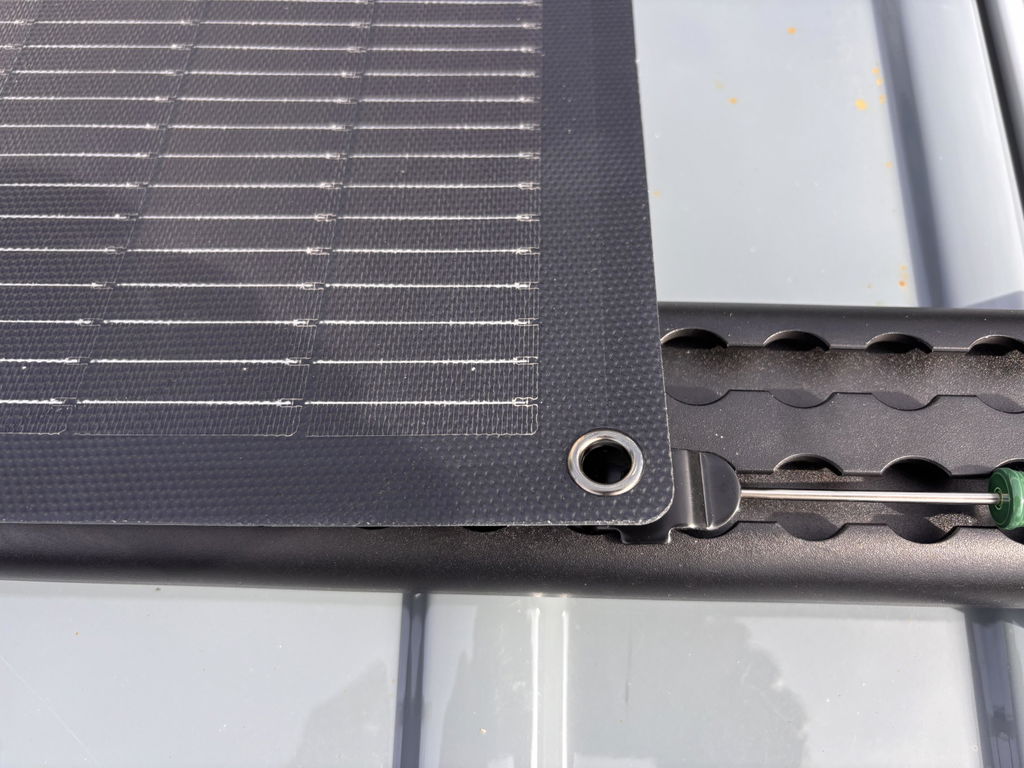
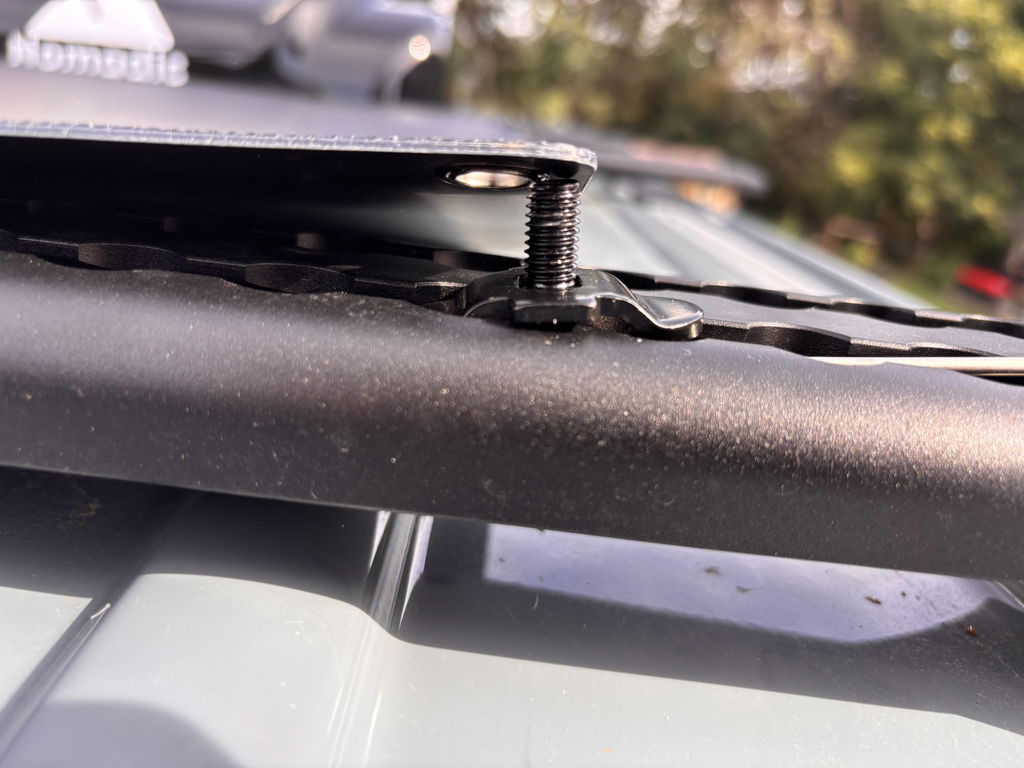
If your Sprinter runs LoadSpan-T™ or DualTrack-T™ roof rails, you already have the ideal mounting platform for LED flood pods. L-Track channels accept standard single-stud fittings, and the 25mm T-Slot on LoadSpan-T™ rails lets you slide pod brackets to any position along the rail and lock them down — no drilling into the rack or the roof. Reposition lights as your camp setup evolves.
The single biggest source of problems with Sprinter roof flood lights isn't the lights themselves — it's how they're mounted. Get this wrong and you'll deal with water leaks, vibration damage, and lights that shake loose on rough roads.
Option 1: Roof Rack Mounting (Strongly Recommended)
The overwhelming consensus among experienced Sprinter builders is clear: mount your flood lights to your roof rack, not directly to the van body. This approach uses the rack's existing structure and crossbars as mounting points, requires zero holes in the van's sheet metal, and allows easy repositioning or replacement.
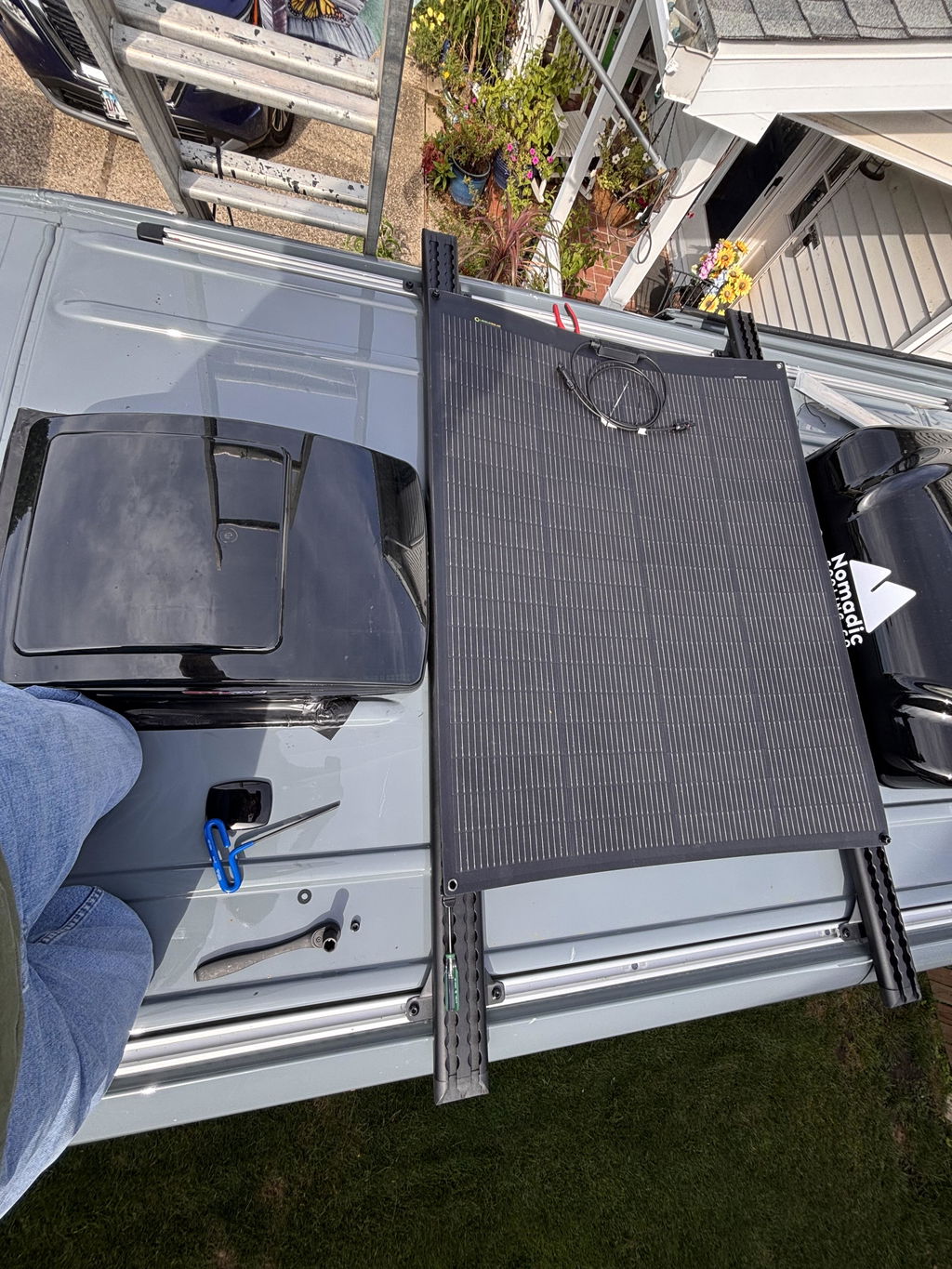
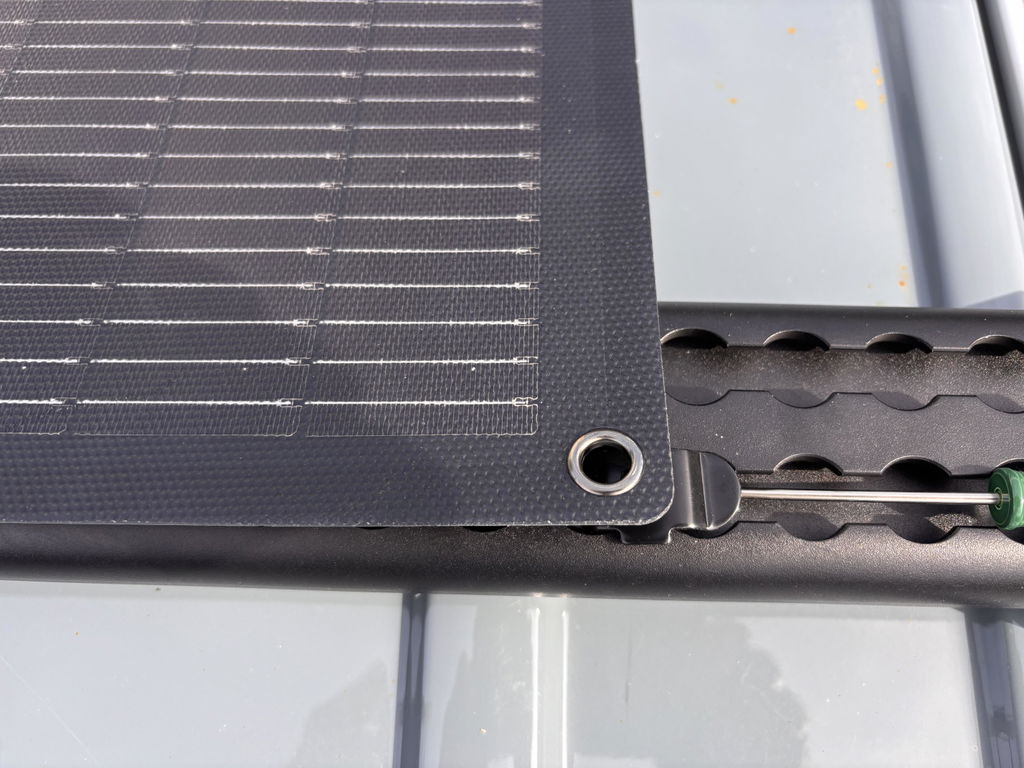
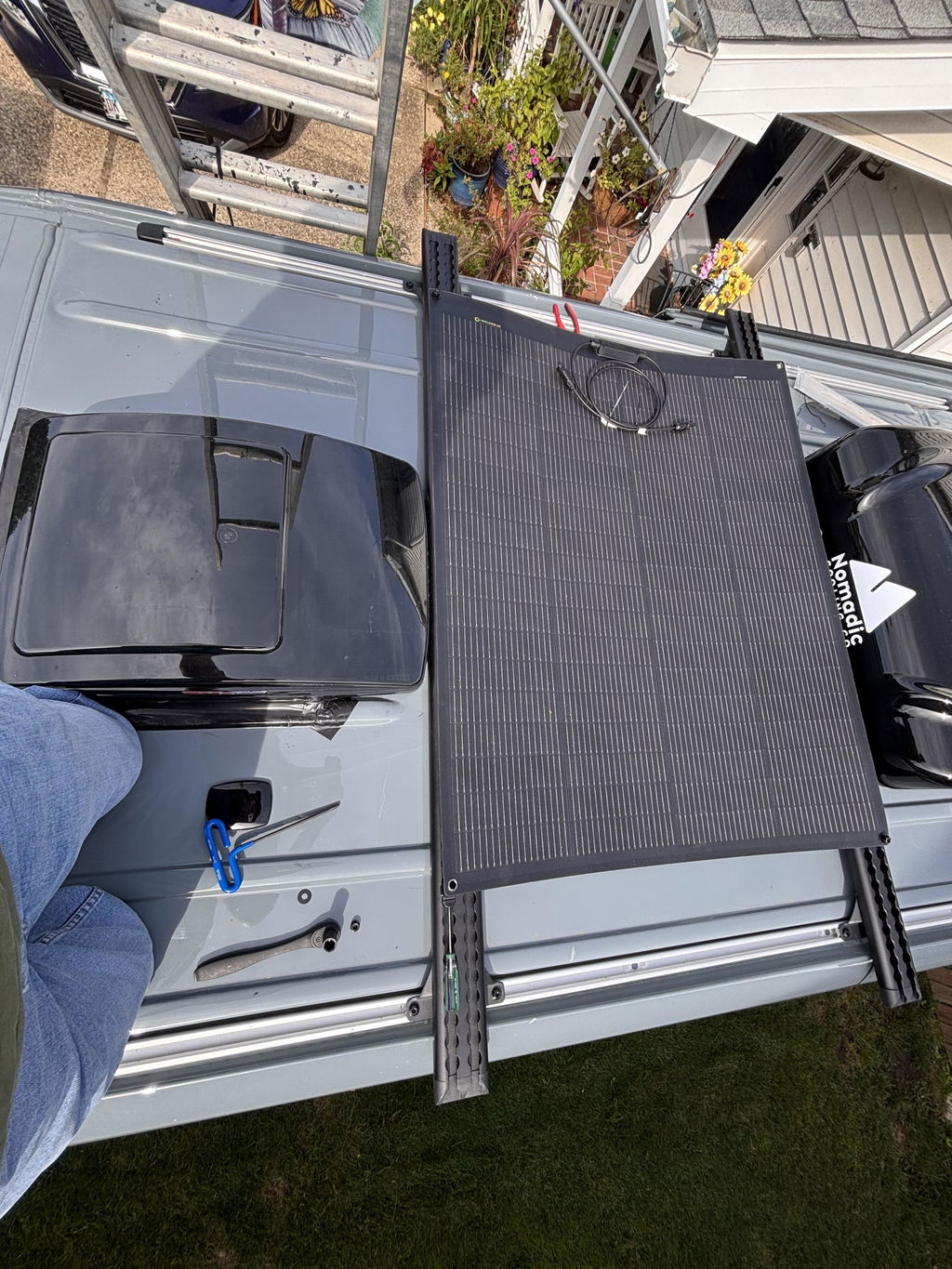
I suggest avoiding putting holes in your body skin. Lights break, and you can't always find an exact replacement, which can leave you with holes to patch or fill. Better to mount to a solar panel or roof rack, and have a pass through box on the roof for all your wiring.
— Midwestdrifter (Engineer In Residence), Roof rack LED light install without drilling hole, Sprinter-Source.com
Most LED pods come with universal L-brackets or U-bolt mounts that clamp directly to roof rack crossbars. The standard configuration for scene lighting on a Sprinter looks like this:
- Rear-facing pair: Mounted to the rear crossbar, angled down at 30–45°, illuminating the area behind the van and around the rear doors
- Side-facing pair (passenger side): Mounted to a mid-rack crossbar above the sliding door, angled down to light the main entry and living area
- Side-facing pair (driver side): Optional — useful for urban stealth camping when you want to light the less-visible side
- Forward-facing: Optional driving lights on the front crossbar — only if you frequently drive unlit forest roads or remote tracks
If you're running a DVA extruded aluminum roof rack system, the T-slot channels provide convenient mounting points for standard light brackets. The extruded aluminum profile accepts standard M8 T-nuts, which means you can slide light mounts into any position along any crossbar and lock them in place without drilling.
Option 2: Body-Mounted Lights (Proceed with Caution)
Some owners want side-mounted lights without a roof rack, or want to supplement rack-mounted lights with lower-position scene lighting. This means drilling into the van body, which introduces the risk of water intrusion into the double-wall cavity.
I have some friends with Winnebago Travatos which have side wall mounted marine speakers. I think all of them have had those speaker holes leak water into the van cavity. I think any side wall lighting would be a risk for leaking water into the water cavity and a challenge to repair so I'd avoid it.
— kcshoots (VanTripping.com), Exterior wall mount lights — good or bad idea?, Sprinter-Source.com
If you must body-mount, use the existing OEM roof rail mounting points where possible, apply marine-grade butyl sealant (not silicone), and test with a hose before your first rain trip.
Option 3: Magnetic / Portable Lights (The Stealth Solution)
There's a third approach that doesn't get enough attention: portable magnetic lights that require zero installation. Several Sprinter-Source members have adopted this method with excellent results.
I went with solar powered, motion detecting LEDs and magnets. This way I didn't need to wire anything and can move them to wherever most useful based on my location. I just have to remember to bring them back inside before I drive off.
— Twindaddy, Exterior wall mount lights discussion, Sprinter-Source.com
This approach won't work for everyone — the lights need to be placed and retrieved every time — but for weekend warriors who don't want permanent installations, it's a zero-risk solution. Modern solar-charged LED pods with magnetic bases produce enough light for basic campsite illumination and cost under $30 for a set.
Wiring: The Part Everyone Gets Wrong
If you're mounting permanent flood lights to your roof rack, you need to get power from inside the van to the roof. This is where the real engineering happens, and where most DIY builds create problems that don't show up for months.
The Single-Penetration Approach
The proven method, used by professional builders and experienced DIYers alike, is to create one carefully sealed penetration through the roof for all your rooftop electrical needs — lights, solar panels, powered awnings, antennas, everything.
I have six lighting circuits on the roof, plus powered awning and solar panel, so a single watertight passthru was essential, and also compact. So I installed one Uxcell watertight distribution box with a dedicated wire gland for each of the almost 10 wires, with a common negative bus within that box sized to support all loads to reduce wires passing thru.
— kcshoots, Best option for roof holes to pass wires through, Sprinter-Source.com
The components for this approach are straightforward:
- Watertight junction box (IP65 rated minimum) mounted on the roof, under your solar panel or rack for weather protection
- Cable glands (PG7 or PG9 size for 12V lighting wire) threaded into the junction box walls
- Single conduit sleeve (1" or 1.25" aluminum) passing through a drilled hole in the roof
- Sikaflex or Dicor lap sealant around the base of the junction box for waterproofing and adhesion
- Anti-corrosion treatment on any cut/drilled metal before sealing
Drill your roof penetration on a flat section of the roof panel, not on a rib or curved section. The Sprinter roof has distinct flat areas between the stamped ribs. A flat surface provides a better seal and more material for the sealant to grip. RVBarry on Sprinter-Source puts it simply: "You'll need a hole; better to do it on the flatter part of the roof, and use a cable gland."
Wire Routing Inside the Van
Below the roof penetration, install a weatherproof bell housing or 90° conduit fitting to redirect wires horizontally. The ideal location is above your electrical panel — typically in an upper kitchen cabinet for camper vans, or near the driver's side B-pillar for cargo vans. This keeps all your switch gear, bus bars, fuses, and control circuits in one accessible location.
Switch Configuration
For scene lighting, a simple rocker switch panel mounted near your sliding door is the standard approach. Each lighting zone (rear, passenger side, driver side, forward) gets its own switch. Wire each circuit through an inline fuse (10A is typical for a pair of LED pods drawing 2–4A total) and use a relay if you're running higher-draw light bars.
The Sprinter-Source forums had an extensive discussion about tying auxiliary lights to the high beam circuit. The consensus was practical:
How you wire up your light bar depends very much upon your state's DOT regulations on auxiliary lighting. Roof bars are generally illegal for road use so a switch independent of the high beams is all that's necessary.
— ptheland, Night time driving light discussion, Sprinter-Source.com
For campsite flood lights specifically, you want independent switching — not tied to any vehicle lighting circuit. These lights are used when the van is parked, often with the engine off, running from your house battery system.
Legal Considerations You Can't Ignore
Roof-mounted auxiliary lights exist in a legal gray area that varies by state. The key rules that apply almost everywhere in the US:
- Roof-mounted lights are illegal for on-road driving in most states. They must be covered or switched off on public roads.
- Scene / area lights aimed downward are generally unregulated when the vehicle is parked, as they function like exterior building lights.
- Forward-facing auxiliary lights may be legal if mounted at or below headlight height and wired to activate only with high beams, but this varies significantly by state.
- White or amber only. Red and blue forward-facing lights are universally illegal for civilian vehicles.
- Light covers satisfy legal requirements in most jurisdictions for lights that are technically "installed" but not in use.
For Sprinter van owners using flood lights purely as campsite scene lighting, the legal risk is minimal — you're lighting the ground around a parked vehicle. The issues arise when forward-facing driving lights are used on public roads.
Installation Checklist: Doing It Right the First Time
Scene Lighting Installation — Step by Step
- Plan your zones. Decide how many sides of the van need illumination. Most owners start with rear + passenger side (sliding door area).
- Choose your mounting positions. Test with temporary clamp mounts or zip ties before committing. Run the lights at night to check coverage and angle.
- Install the roof penetration. Use the single-junction-box method. Drill on a flat panel section, treat cut metal with anti-corrosion coating, seal with Sikaflex or Dicor.
- Run wiring on the roof. Use UV-resistant wire loom or conduit. Route along the roof rack channels where possible to protect from abrasion and UV degradation.
- Connect inside the van. Route from the roof penetration to your electrical panel. Install inline fuses for each circuit. Mount your switch panel in an accessible location.
- Wire to your house battery system (not the starter battery). This ensures you can run lights with the engine off without draining your starting power.
- Test everything. Run all circuits simultaneously to check for voltage drop. Test the roof seal with a hose. Verify all lights aim where you intended.
- Drive and re-check. After your first rough road trip, inspect all mounting hardware for looseness and check the roof seal for any signs of water intrusion.
Grenadier Owners
If you're here from the Grenadier side, DVA builds a purpose-designed roof LED light bar and LED Side Flood Lights that mount directly to DVA's DualTrack roof rails and plug into the Grenadier's factory DTP rooftop power circuits — no wiring, no drilling. See the full Grenadier LED lighting lineup.
What Most Owners Actually Buy
After hundreds of forum threads and build journals, a clear pattern emerges for the typical Sprinter van flood light setup:
- 4 LED flood pods (2 rear, 2 passenger side) in the $40–$100 per pod range
- Mounted to the roof rack via standard L-brackets or T-slot hardware
- Wired through a single roof penetration to a 2–4 switch panel near the sliding door
- Powered by the house battery system through a fuse block
- Total project cost: $200–$600 depending on brand selection
The premium brands deliver measurably better beam patterns and longer lifespans, but for the intermittent use case of campsite scene lighting, mid-range USA-made options represent the best balance of quality, warranty, and price. Entry-level pods from major online retailers are worth considering if you're testing positions and concepts before committing to a permanent setup.
Whatever you choose, the mounting and wiring matter more than the brand name on the light. A $300 premium pod mounted with self-tapping screws through the roof skin will cause more problems than a $40 entry-level pod properly clamped to a roof rack crossbar with sealed wiring. Get the installation right, and the lights will take care of themselves.