How to prevent a Sprinter build weight crisis:
- Establish your true payload budget first. Drive to a truck scale with full fuel, weigh the empty van, subtract from door-placard GVWR. Do not use configurator estimates — actual empty weight varies by 300–500 lbs depending on options.
- Make the five big weight decisions before purchasing anything. Battery chemistry (LiFePO4 vs AGM: 140+ lb difference), roof rack system (aluminum vs steel: 100+ lb difference), cabinet material (extrusion vs hardwood: 150+ lb difference), water capacity (8.34 lbs/gallon), insulation approach (single-layer vs multi-layer: up to 325 lb difference).
- Track weight in a build spreadsheet from day one. Assign weight targets to each system before sourcing. Update with actual weights when products are ordered. Check van weight at: pre-build baseline, mid-build (major systems in), and completion.
These three steps prevent 80% of Sprinter weight crises — which almost always result from planning decisions, not build execution.
01The weight crisis prevention blueprint: start with your actual payload budget
The weight crisis starts before you buy a single board or battery. It starts when you plan a build based on the payload estimate from a configurator instead of the actual weight of your specific van. Every Sprinter has a door placard GVWR — the maximum total loaded weight — but the actual empty weight varies by hundreds of pounds depending on options.
Your real payload calculation
Step 1: Drive to a truck scale with a full fuel tank. Weigh the empty van. Step 2: Subtract that weight from your door placard GVWR. Step 3: That difference is your TRUE payload budget — for build + passengers + water + gear. Example: 2019 Sprinter 2500 170″ 4×4 Door placard GVWR: 9,050 lbs Actual empty weight (scaled): 6,200 lbs True payload remaining: 2,850 lbs
The van configurator doesn't know about your specific options, and some options are heavy. 4×4 drivetrain: 250–300 lbs. High roof vs standard roof: 150–200 lbs. Crew van rear bench: 200–250 lbs. These penalties stack up before you've installed anything, and most builders never account for them.
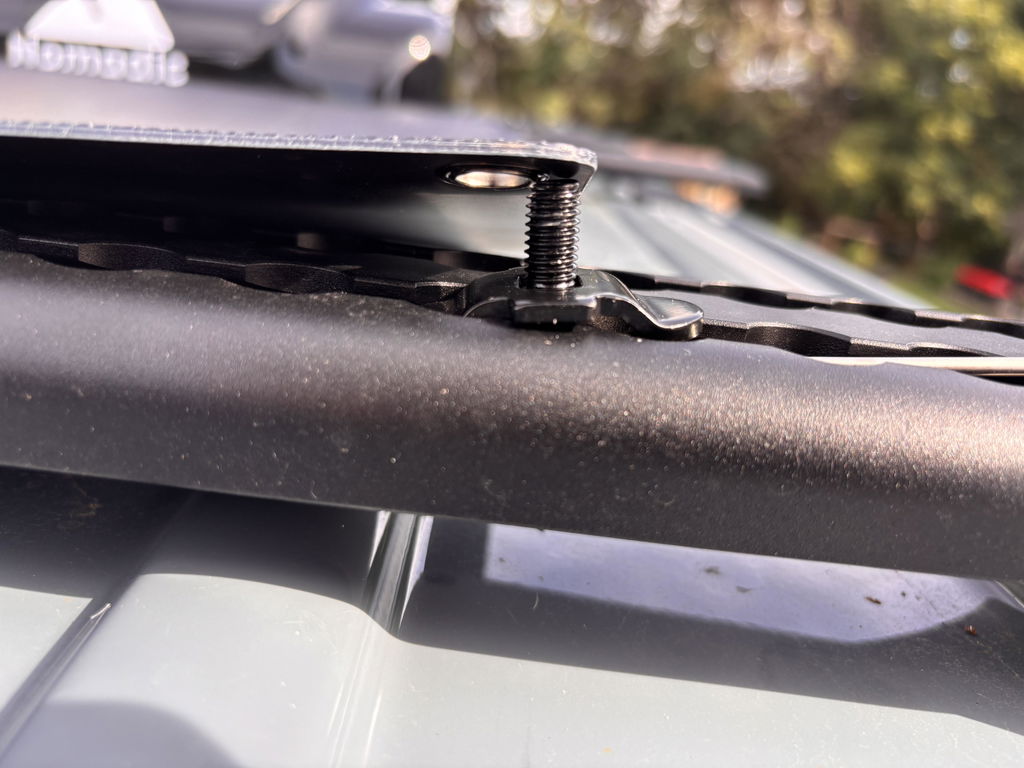
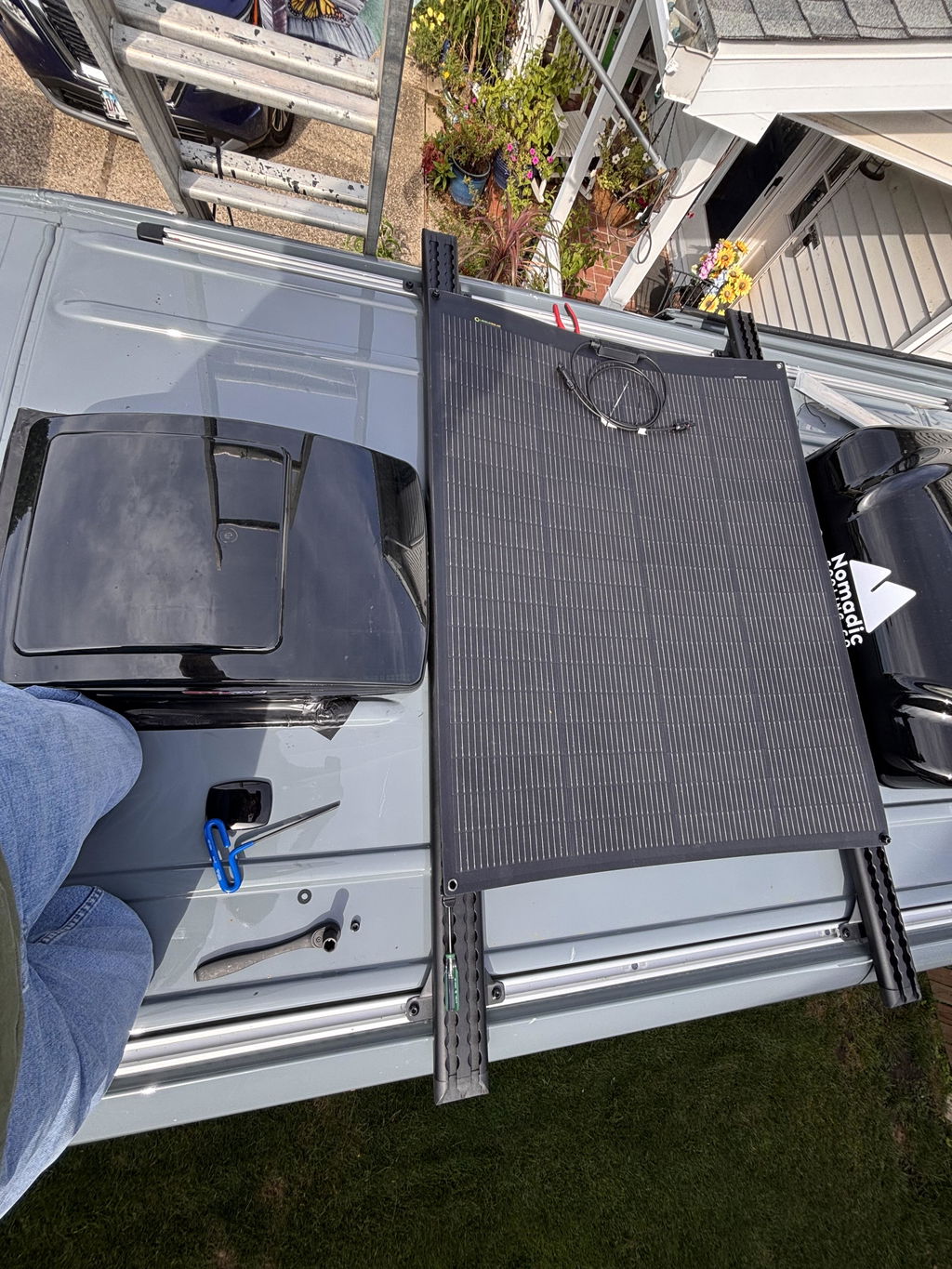
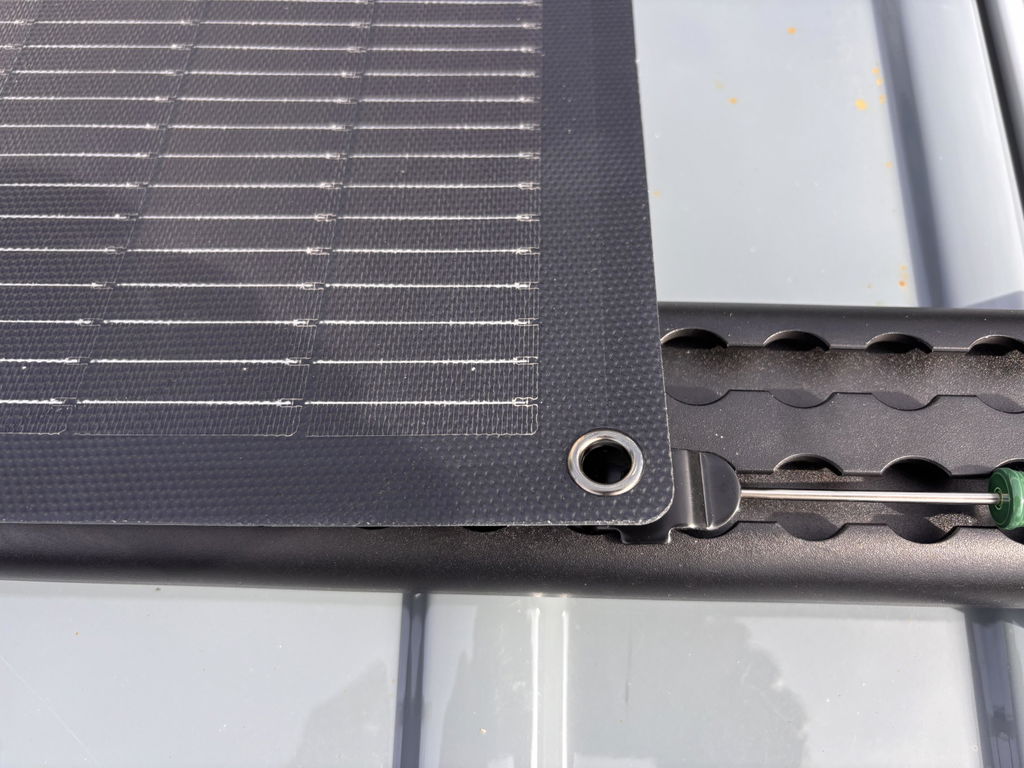
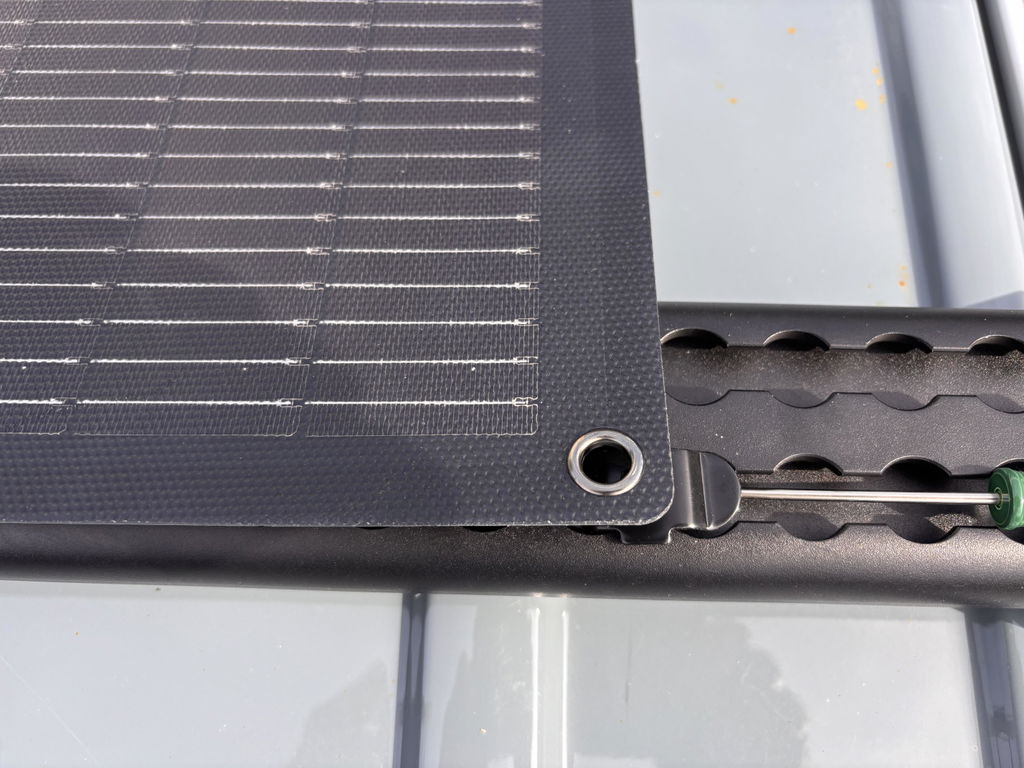
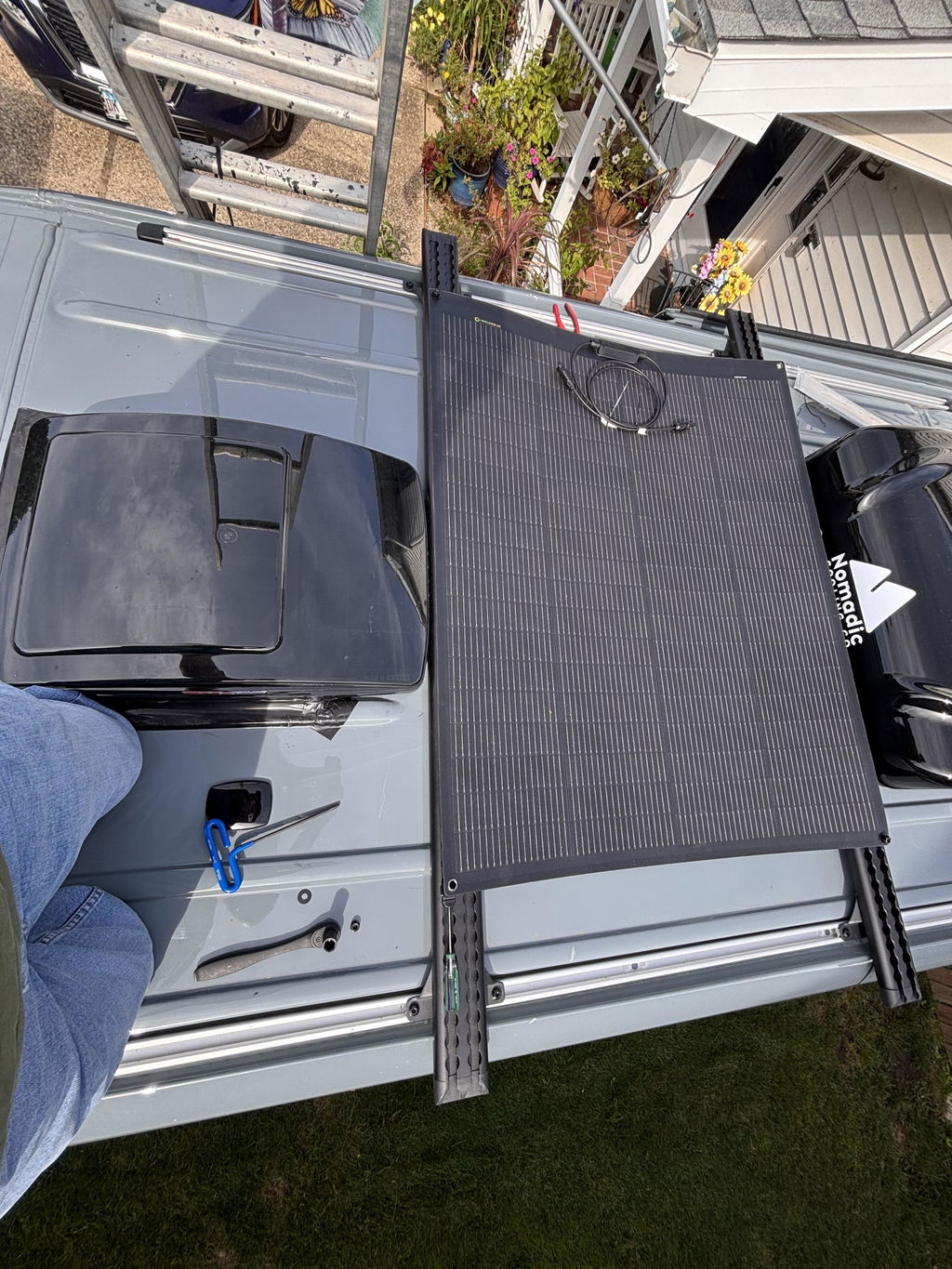
Crisis prevention means knowing your actual starting point. The DVA LoadSpan roof rail system is engineered specifically for weight-conscious builds — 8-12 lbs total vs 120-180 lbs for steel platform racks.
Why most Sprinter configurations are weight-critical from the start
| Configuration | Typical Empty Weight | True Payload | Crisis Risk |
|---|---|---|---|
| 144″ WB 2500 RWD | ~4,800 lbs | ~4,200 lbs | Low — generous payload |
| 170″ WB 2500 RWD | ~5,400 lbs | ~3,650 lbs | Moderate — needs planning |
| 170″ WB 2500 4×4 | ~5,900 lbs | ~3,150 lbs | High — requires discipline |
| 170″ WB 2500 Crew 4×4 | ~6,300 lbs | ~2,750 lbs | Critical — lightweight-only builds |
Look at the crew van 4×4. With only 2,750 lbs of payload, a typical "Instagram build" (1,500–2,200 lbs) leaves 550–1,250 lbs for two adults, water, food, and gear. That's barely enough for a week-long trip, and zero margin for error.
02The five decisions that prevent or cause weight crisis
Weight crisis prevention isn't about optimizing a hundred small details. Five big decisions account for 60–80% of total build weight variation. Get these right during planning and you'll stay within limits. Get them wrong and no amount of micro-optimization saves you.
Decision 1: Battery chemistry — 140+ lb difference
Your battery bank choice is often the single biggest weight decision in the entire build.
| Chemistry | 400Ah Bank Weight | Usable Energy | Weight per kWh |
|---|---|---|---|
| AGM lead-acid | 240–280 lbs | ~2.4 kWh (50% DoD) | 100–117 lbs/kWh |
| LiFePO4 (lithium) | 100–120 lbs | ~4.9 kWh (95% DoD) | 20–24 lbs/kWh |
Crisis prevention strategy: If weight is critical (crew van 4×4), LiFePO4 is mandatory. The 140+ lb savings from switching to lithium gets you 17 gallons of water capacity back, or space for heavier cabinetry, or margin for gear and passengers.
Decision 2: Roof rack system — 100+ lb difference
Every pound at roof height affects vehicle dynamics more than a pound at floor level. Roof rack choice determines both weight penalty and center-of-gravity impact.
Crisis prevention strategy: Choose aluminum rail systems over steel platform racks. The weight savings happens at the worst possible location for vehicle dynamics, and you still get full mounting capability. The DVA L-Track system provides aviation-grade cargo management without the weight penalty of steel racks.
Decision 3: Cabinet material and framing — 150+ lb difference
Cabinet weight varies more than any other system because material density spreads across large volumes.
| Approach | Galley Kitchen Weight | Trade-offs |
|---|---|---|
| Hardwood + traditional framing | 350–500+ lbs | Beautiful, extremely heavy |
| 3/4″ Baltic birch plywood | 250–400 lbs | Most common, still heavy |
| Industrial extrusion frame + thin panels | 90–150 lbs | Lightest, modular, repairable |
Crisis prevention strategy: Plan around industrial framing systems (aluminum extrusion + thin panel skins) rather than all-wood construction. If you must use wood, 1/2″ plywood instead of 3/4″ saves 20–30% with minimal strength penalty in typical van applications.
Decision 4: Water system capacity — 8.34 lbs per gallon
Water is the densest thing in most van builds. Capacity planning directly controls one of the largest weight contributors.
30 gallons fresh + 16 gallons grey = 384 lbs of water when full, plus 35–55 lbs for tanks and plumbing. Total system weight: 420–440 lbs. That's 15% of total payload on a 2500 Sprinter, and it's all low-mounted weight that helps with stability.
Crisis prevention strategy: Size your water system to real usage patterns, not theoretical maximums. If you're doing weekend trips with occasional week-long adventures, 20–25 gallons may be more practical than 40+. You can always refill more frequently.
Decision 5: Insulation approach — 50–325 lb difference
Insulation weight varies dramatically based on material choice and installation approach. A 170″ Sprinter has 250–350 sq ft of surface area to insulate.
| Material/Approach | 170″ WB Weight | R-Value Notes |
|---|---|---|
| 3M Thinsulate only | 20–35 lbs | Lightest, easy install, moderate R-value |
| Polyiso rigid foam | 30–50 lbs | Best R-value per inch and per pound |
| Havelock Wool batts | 80–120 lbs | Good moisture management, heavier |
| Sound deadener + ceramic + wool combo | 200–325 lbs | Comprehensive insulation/sound, very heavy |
Crisis prevention strategy: Avoid multi-layer insulation systems unless weight isn't critical. Polyiso rigid foam gives the best R-value per pound. Sound deadening systems can add 100+ lbs for marginal improvement over simpler approaches.
03Build weight tracking: the spreadsheet that prevents crisis
Crisis prevention requires tracking weight during the planning phase, not after installation. Most builders who stay within GVWR maintain a build weight spreadsheet from day one. Builders who exceed limits typically track nothing until it's too late to change course.
Essential weight tracking categories
Your build spreadsheet should track these major categories with target weights assigned during planning:
| Category | Typical Weight Range | Crisis Prevention Targets |
|---|---|---|
| Battery bank (chemistry + capacity) | 100–280 lbs | ≤120 lbs (lithium preferred) |
| Cabinetry and structure | 200–600 lbs | ≤250 lbs (lightweight framing) |
| Water system (tanks + plumbing + water) | 150–500 lbs | ≤350 lbs (realistic capacity) |
| Roof rack and roof-mounted accessories | 50–250 lbs | ≤100 lbs (aluminum rails) |
| Insulation | 50–325 lbs | ≤80 lbs (single-layer approach) |
| Flooring and subfloor | 50–200 lbs | ≤120 lbs (composite or thin subfloor) |
| Electrical (inverter, charger, wiring) | 60–120 lbs | ≤90 lbs |
| Appliances (fridge, heater, fans) | 80–150 lbs | ≤120 lbs |
| Wall/ceiling paneling | 75–250 lbs | ≤150 lbs (lightweight panels) |
| Miscellaneous and margin | 100–300 lbs | ≤200 lbs |
Crisis prevention targets total: ~1,400 lbs for a complete build. This leaves 1,000+ lbs for passengers, gear, and water on most 2500 configurations — barely adequate but workable. "Instagram-worthy" builds typically exceed 1,800–2,200 lbs, which works fine on cargo vans but causes crises on crew van 4×4s.
Key tracking milestones during planning
- Pre-build baseline: Weigh empty van, establish true payload budget
- Design phase: Assign weight targets to each major system based on materials chosen
- Material sourcing: Update targets with actual weights of specific products purchased
- Mid-build check: Weigh van with major systems installed, verify you're on track
- Completion verification: Final weigh with typical load to confirm you're within limits
The builders who avoid weight crises are religious about updating their spreadsheet every time they make a material decision. They know their battery bank weighs 105 lbs (not "around 100"), their cabinet framing weighs 87 lbs (not "pretty light"), and their roof rack system weighs 23 lbs (not "aluminum so probably fine").
"I have also weighed the van as I progress. Doing a full build on a 170 2500 and staying close to the 8,550 GCW is a challenge... Empty the van weighed 6,500 lbs with a 170 lb driver and full fuel tank. My most recent weight was 8,400 lbs with full fuel tank, driver, and water/propane at 50%."
— Sprinter-Source member, Weight of conversion thread (thread #67098)
That builder's discipline — weighing at multiple milestones — is why they could see the trend and plan accordingly. Builders who discover they're over GVWR at completion have no good options left.
04Weight distribution planning: preventing axle overload before you build
Most builders focus only on total GVWR and ignore axle weight distribution. This creates builds that are under total weight but over the rear axle limit — especially dangerous because that's where tire blowouts and suspension failures occur first.
Understanding the three weight limits
- GVWR: Maximum total vehicle weight (enforced by brakes, frame, drivetrain)
- GAWR Front: Maximum front axle weight (steering, braking performance)
- GAWR Rear: Maximum rear axle weight (tires, suspension, traction)
Van conversions concentrate weight behind the front axle. Bed, kitchen, battery bank, water tank, most storage — it all sits in the rear two-thirds of the vehicle. This creates rear-heavy builds that can exceed GAWR rear while staying under GVWR total.
Crisis prevention weight distribution strategy
Plan heavy items forward when possible: Battery bank: Under front passenger seat or behind cab (not rear cargo area) Water tank: Centrally located, not at the rear doors Kitchen: Forward of the rear axle when space allows Avoid: Heavy rear door accessories (spare tire carriers, bike racks, cargo boxes) Target: 40-45% of build weight forward of rear axle centerline
Why tire load ratings fail first
Each tire has a maximum load rating printed on the sidewall. On rear-heavy builds, rear tires hit their limit before axle or total vehicle limits. Overloaded tires generate heat, especially at highway speed, leading to blowouts.
Crisis prevention check: Calculate per-tire load (rear axle weight ÷ 2) and verify it's under the tire load rating at your inflation pressure. This is often the constraint that fails first on van builds.
05Common crisis patterns and how to avoid them
After tracking dozens of builds, certain weight crisis patterns appear repeatedly. Recognizing these patterns during planning helps avoid them.
Crisis Pattern 1: The "Options Trap"
Builder starts with crew van 4×4 for capability, then plans a full-size build without accounting for the reduced payload. The 4×4 drivetrain and crew cab configuration already consumed 450–500 lbs of payload before any modifications.
If you chose crew van 4×4 for the capability, plan a lightweight build. LiFePO4 batteries, aluminum framing, minimal water capacity, lightweight roof system. The off-road capability comes at a weight cost that affects everything else.
Crisis Pattern 2: The "Upgrade Cascade"
Builder chooses premium materials for one system, which creates a weight problem, leading to "compensating" upgrades that make the problem worse. Heavy hardwood cabinets require upgraded suspension, which requires bigger batteries for air compressor, which requires more solar to charge them.
Choose lightweight materials from the start. Every pound saved early prevents the need for compensating upgrades later. Suspension upgrades don't increase GVWR — they just improve ride quality at illegal weights.
Crisis Pattern 3: The "It's Just" Accumulation
Builder makes dozens of individually reasonable decisions that accumulate into a weight crisis. "It's just 20 lbs for the spare tire." "It's just 15 lbs for better speakers." "It's just 30 lbs for the slide-out kitchen drawer." The crisis is death by a thousand small cuts.
Set a miscellaneous weight budget and stick to it. Allocate 150–200 lbs for "everything else" and track every addition. When the budget is spent, no more "it's just" additions.
06Crisis prevention for high-roof Sprinters: roof load planning
High-roof Sprinters have a center of gravity problem that lightweight builds can't completely solve. Every pound at roof height affects vehicle dynamics more than floor-level weight, and Mercedes limits roof load to 330 lbs total for H2 (high-roof) models.
Roof weight budget allocation
Your 330 lb roof budget must cover everything mounted above the roof line:
| Component | Weight Range | Crisis Prevention Choice |
|---|---|---|
| Rack system | 15–180 lbs | Aluminum rails (15–30 lbs) |
| Solar panels (400W) | 40–90 lbs | Lightweight/flexible panels (40–60 lbs) |
| Roof fans (2x) | 30–40 lbs | Standard weight, plan for it |
| Accessories and margin | 20–50 lbs | Antennas, lights, misc |
Steel platform racks at 150+ lbs leave only 180 lbs for everything else — barely enough for solar and fans, with no margin for accessories or cargo. Aluminum rails at 25 lbs leave 305 lbs for actual payload.
Center of gravity impact calculation
Roof-level load moment arm: ~8 ft above roll axis Floor-level load moment arm: ~1 ft above roll axis 50 lbs on roof = 8x the overturning moment of 50 lbs on floor 100 lb roof weight reduction = same stability improvement as 800 lbs removed from floor Every pound at roof height matters 8x more for vehicle dynamics.
Crisis prevention strategy: Save roof weight first and most aggressively. The DVA DualTrack-T™ crossbars give you full crossbar and cargo capability at 8–12 lbs total system weight vs 120–180 lbs for steel alternatives — the right choice for any weight-critical Sprinter build.
07Legal and insurance crisis prevention
Operating an overweight vehicle creates legal exposure that most builders never consider until something goes wrong. Crisis prevention includes understanding the legal consequences of exceeding GVWR.
Insurance implications
Your insurance policy requires operation within manufacturer specifications. In an accident while overweight, your insurer may dispute coverage. The risk scales with claim size — minor claims rarely trigger investigation, but serious accidents with injuries become legal proceedings where vehicle weight becomes evidence.
Document your weight compliance. Keep scale receipts showing your van within GVWR with typical load. If you're ever in an accident, proof of legal operation supports your insurance claim and liability defense.
DOT and enforcement
While most Sprinters under 10,000 lbs GVWR aren't required to stop at weigh stations, any officer can require a weight check if they suspect overloading. Overweight citations create a permanent record discoverable in future legal proceedings.
Crisis prevention strategy: Stay genuinely within limits, not "close enough." A 200 lb margin accounts for measurement variations, seasonal gear changes, and the natural weight growth that happens over months of van life.
08Weight crisis recovery: what to do if you're already overweight
If you've already built and discovered you're overweight, crisis recovery is still possible. The key is targeting the heaviest removable items first, especially those at roof height.
High-impact weight removal
| Modification | Weight Savings | Effort Level |
|---|---|---|
| Switch from steel rack to aluminum rails | 100–150 lbs | Moderate — roof work required |
| Replace AGM battery bank with LiFePO4 | 140–160 lbs | High — electrical system changes |
| Reduce water tank capacity | 83 lbs per 10 gallons | High — plumbing modifications |
| Remove/replace heaviest cabinet sections | 50–200 lbs | High — interior rebuild |
Recovery priority: roof first. Roof weight affects both total GVWR compliance and vehicle dynamics. 100 lbs removed from roof height improves handling more than 100 lbs removed from anywhere else.
Crisis prevention bottom line
Weight crises are preventable through planning, not luck. The builds that stay within GVWR treat weight like a budget from day one — they know their true payload starting point, plan around the five big weight decisions, and track everything in a spreadsheet.
Battery chemistry, roof rack system, cabinet material, water capacity, and insulation approach account for most build weight variation. Choose LiFePO4 batteries, aluminum roof rails, lightweight framing, realistic water capacity, and single-layer insulation. These five decisions alone prevent most weight crises.
Track weight during planning, not after installation. Update your spreadsheet every time you make a material choice. The difference between a van that handles safely and one that's a liability comes down to whether someone did the weight math before they started building.
For weight-critical configurations like crew van 4×4, there's no margin for error. Every system must be planned for minimum weight while maintaining functionality. The off-road capability comes at a weight cost that affects every other decision in the build.
DVA Mechanics designs weight-conscious Sprinter systems. Our LoadSpan aluminum roof rails weigh 8–12 lbs vs 120–180 lbs for steel platform racks. Our L-Track cargo management system provides aviation-grade strength without the weight penalty. Built for builders who track every pound.
Weight-Conscious Sprinter Engineering
DVA Mechanics designs systems for builders who track every pound. Built light, built right.
Browse Weight-Conscious Engineering →Related DVA Weight Engineering
- Sprinter Suspension Overload: When Weight Exceeds Design Limits
- Roof Load Distribution Engineering for Weight-Critical Builds
- Mercedes Sprinter Van Upfitting Planning Guide
- Sprinter L-Track Mounting Systems: Load Ratings for Weight Management
- Installing Roof Rails After Conversion: Weight Considerations