For camping gear, mount L-track horizontally on the lower side wall using rivet nuts (¼×20) for any load over 50 lbs — sheet metal screws work for light bags but slip over time. Use gear hooks for hanging bags and soft goods; use tie-down rings with anchor mounts for straps securing hard cases or heavy bins. The OEM Sprinter lower side wall L-track is rated to 562 lbf (2,500 N) per the owner's manual; the floor track holds 1,124 lbf. Two rows — one at hip height, one at shoulder — covers every bag-and-bin setup without adding cabinetry.
Why L-Track for Camping Gear?
Fixed cabinet hooks and bungee nets work until the trip when they don't. A sudden lane change or one sharp brake can send a duffel full of wet clothes into your passenger's head. L-track's distributed load design changes the physics: a single fitting shares force with every fastener in the track, so the system bends before it releases the load.
The practical advantage for camping rigs is flexibility. You can run two horizontal rails on a side wall and carry four people's gear in hanging duffel bags on a weekend trip, then strip all the fittings and haul mountain bikes the next week. No permanent fixtures, no screws into the wall every time you change the plan.
Sprinter van builders have used L-track for this since at least 2013 — and Mercedes took notice. The current Sprinter ships with OEM L-track as a factory option, using the same load rail standard. The real question isn't whether to use it; it's which fasteners, which profile, and which fittings actually hold camping gear without rattle.
Load Ratings: What the Track Can Actually Hold
The numbers that matter come from the Sprinter owner's manual, surfaced in the Sprinter-Source community by user Vic, who dug through the factory specs:
Load rails in the load compartment floor: 1,124 lbf (5,000 N). Lower load rail on the side wall: 562 lbf (2,500 N). Upper load rail on the side wall: 337 lbf (1,500 N).
— Vic, Sprinter-Source #28138: Mounting L-track to walls (citing Sprinter Wiki, owner's manual p. 629)
Those are OEM ratings for factory-installed track. Aftermarket aluminum L-track capacity depends on the profile grade:
| Track Grade | Working Load Limit | Typical Use |
|---|---|---|
| Light duty | 1,000 lbs WLL | Bags, soft goods, gear loops |
| Heavy duty (occupant restraint grade) | 2,000 lbs WLL | Bike mounts, heavy bins, bed platform legs |
| Steel L-track | ~4,000 lbs WLL | Commercial cargo, motorcycle chocks |
A supplier contributing to Sprinter-Source thread #51831 put it directly: "We sell a lighter duty track that has a capacity of 1,000 lbs working load limit and we also sell the heavier duty track found in the occupant restraint systems which have a working load limit of 2,000 lbs. Working load limits are typically 1/3 the breaking strength."
For camping gear — bags, tool rolls, kitchen kits, dry bags — the 1,000 lbs WLL light-duty aluminum track is more than sufficient. The 2,000 lbs grade matters when you're hanging a folding table, mounting a bike cradle, or building a bed platform that floats on L-track legs.
OEM L-track rating
OEM rating
working load limit
Fastener Selection: Sheet Metal Screws vs. Rivet Nuts
This is where most DIY installs go wrong. Sheet metal screws work — until load, vibration, or years of use cause them to back out or strip the sheet metal. The rule of thumb:
- Sheet metal screws + Loctite: Acceptable for light gear (bags, tool rolls under 30 lbs total). Works on wall ribs. Not for ceiling or floor.
- Rivet nuts (rivnuts/nutserts) + ¼×20 flat head machine screws: Correct solution for any wall-mounted camping gear setup. Creates a permanent threaded anchor in the sheet metal that the track bolts into cleanly.
- Rivet nuts + silicone adhesive: Use this for heavier loads. The adhesive distributes stress between fasteners and prevents vibration rattle.
A professional van outfitter explains the method in Sprinter-Source thread #34694 (L-track install in Sprinter):
We will mount using rivet nuts and flat head machine screws. If the customer specifies a large load to be held down, we will also use a heavy duty silicone adhesive alongside the machine screws.
— Professional van builder, Sprinter-Source #34694
One important note on ceiling installs: the same thread warns that Sprinter ceiling ribs are glued — not bolted — to the ceiling skin. If you're mounting track overhead, keep it near the sidewalls where there's structural backing, and don't hang anything heavy. For camping gear, ceiling track works well for lightweight items: a net bag of dry goods, a hat/glove rack, a light cord organizer.
Three Mounting Configurations for Camping Gear
Horizontal Wall Rails (Most Common)
Two horizontal rails on the passenger side wall — one at hip height (24–30"), one at shoulder height (48–54") — gives you two independent tie-down planes for gear. Upper rail handles soft goods: duffel bags hanging from gear hooks, mesh bags, a jacket. Lower rail handles harder loads: a toolbox strap-down, a cooler tether, a water jug anchor. Running both rails across the full wall width maximizes the number of attachment points and distributes load evenly across all fasteners.
Floor Track (Heaviest Loads)
Floor-mounted L-track is for cargo that needs to stay put during aggressive driving. Rated at 1,124 lbf OEM, floor track handles a generator tie-down, a full cooler secured with ratchet straps, or a folding table bungee. Recessed floor track (countersunk into the floor panel) sits flush so it doesn't create trip hazards, but it requires cutting the floor panel and backing it properly — a bigger installation job than wall track.
Ceiling Track (Lightweight Organization)
Ceiling track installed as crown molding — running fore-aft along the upper wall transition — is a popular spot for hanging organizational bags. One Sprinter-Source member reported using this for Campo-style hanging bags storing a week's worth of gear: "I splurged and purchased the Campo bags. Two large ones, they hang along the l-track installed as crown molding. We returned from first trip with them last night, I am really happy with the additional layer of organization." — Sprinter-Source #75910: Hanging Clothing Storage?
Gear Hook vs. Tie-Down Ring: Picking the Right Fitting
The fitting is what connects your gear to the track. Two fittings cover most camping applications:
- Gear hook (adjustable): Slides anywhere along the track, locks with a quarter-turn. Best for hanging bags, stuff sacks, and any item with a loop or handle. The stud stays flush when nothing's loaded; nothing to snag or rattle when unloaded.
- Tie-down ring with anchor mount: Provides a hard anchor point for ratchet straps, carabiner loops, or rope. Best for securing bins, coolers, or cases that sit on the floor but need a tether point above. Mounts to the track with the anchor plate spread across two slots for added shear resistance.
DVA makes both fittings ready to use with any standard L-track profile: the L-Track Adjustable Gear Hook (4-Pack) and the L-Track Tie-Down Ring with Anchor Mount (4-Pack) work in the same track system — swap fittings based on what you're loading that trip. See the full DVA L-Track collection for bolts, threaded lugs, and O-ring stud fittings.
What Sprinter Owners Actually Do With Their L-Track
The forum record shows consistent patterns for camping-specific setups. One owner of a 144" crew van — four people traveling together — describes the wall-hung bag system they settled on:
Currently we use the passenger side wall to hang our duffel bags from hooks installed on l-track rails. (4 of us in the van). I have an upper and lower l-track.
— Sprinter-Source user, Sprinter-Source #75910: Hanging Clothing Storage?
The same thread has a practical modification for when standard bags don't hang well: cutting scrap wall panel to size and using a grommet kit to stiffen a soft bag's hanging point. DIY-effective and free from leftover build materials.
I modified some REI bags, Big Haul 90, using a $6 grommet kit and the scrap wall panels from my van. The plastic wall panels add rigidity to the bag. A center strap provides support. The trick to getting the L Track studs to stay upside down is to slide an O-ring over the stud.
— Sprinter-Source user, Sprinter-Source #75910
The O-ring tip is real and useful: when a stud fitting is inverted (hanging upside down from a hook slot), it can work loose. Sliding a small O-ring over the stud — before loading — keeps it captive in the track.
Connecting Roof L-Track to Your Interior System
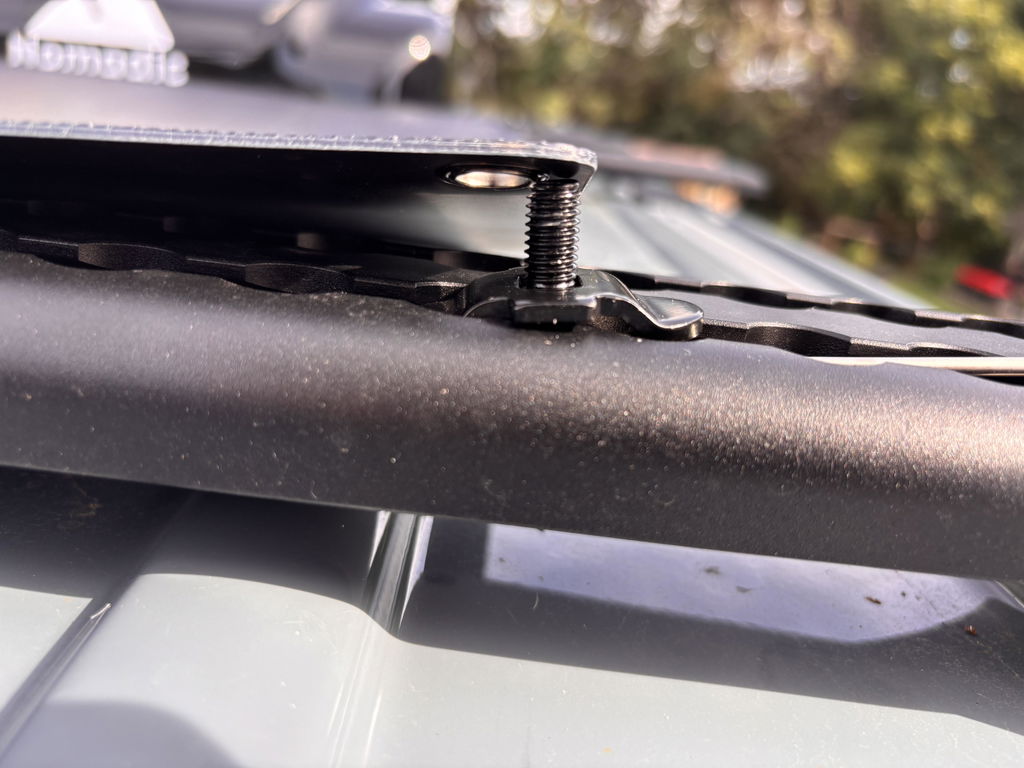
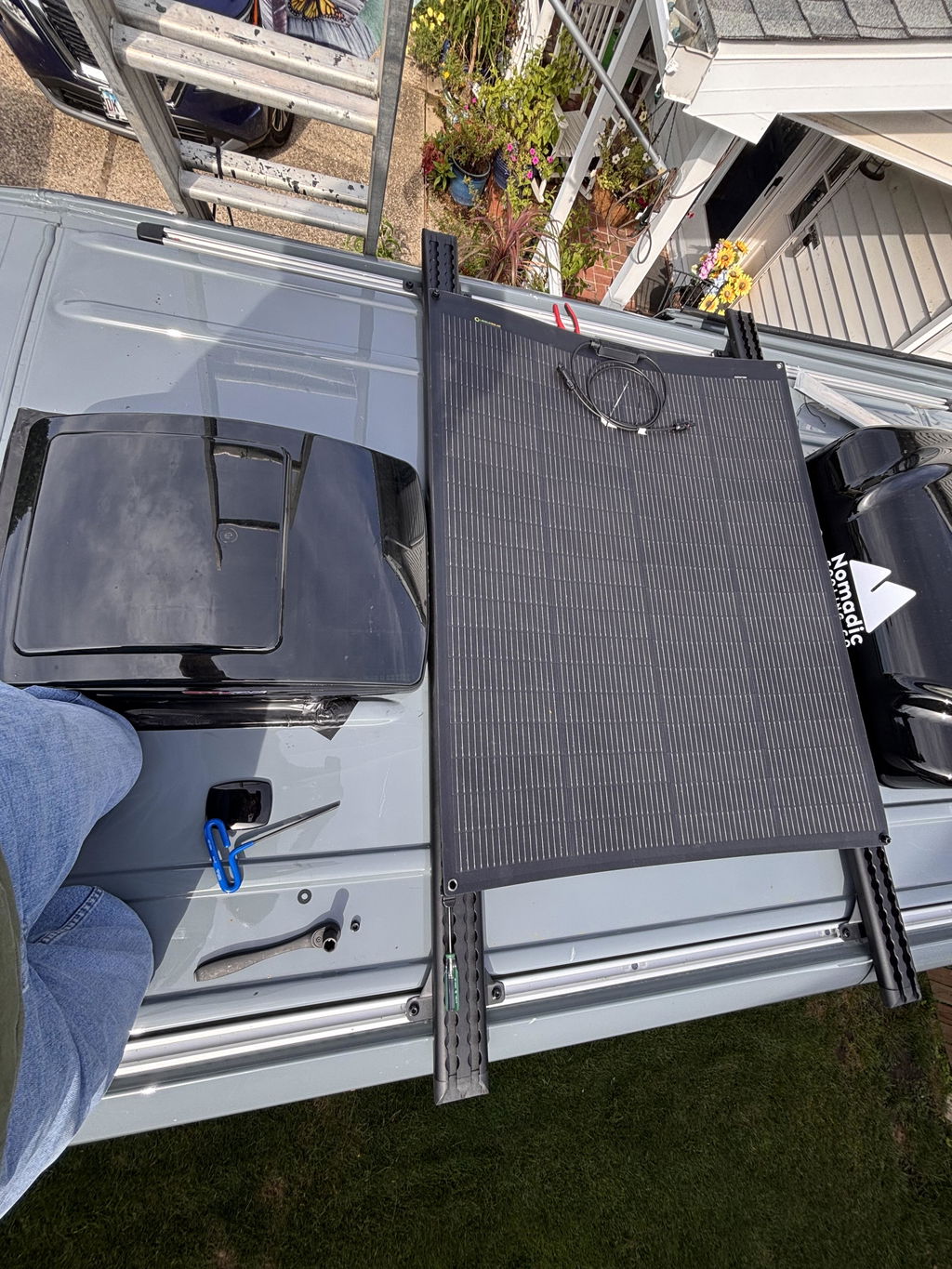
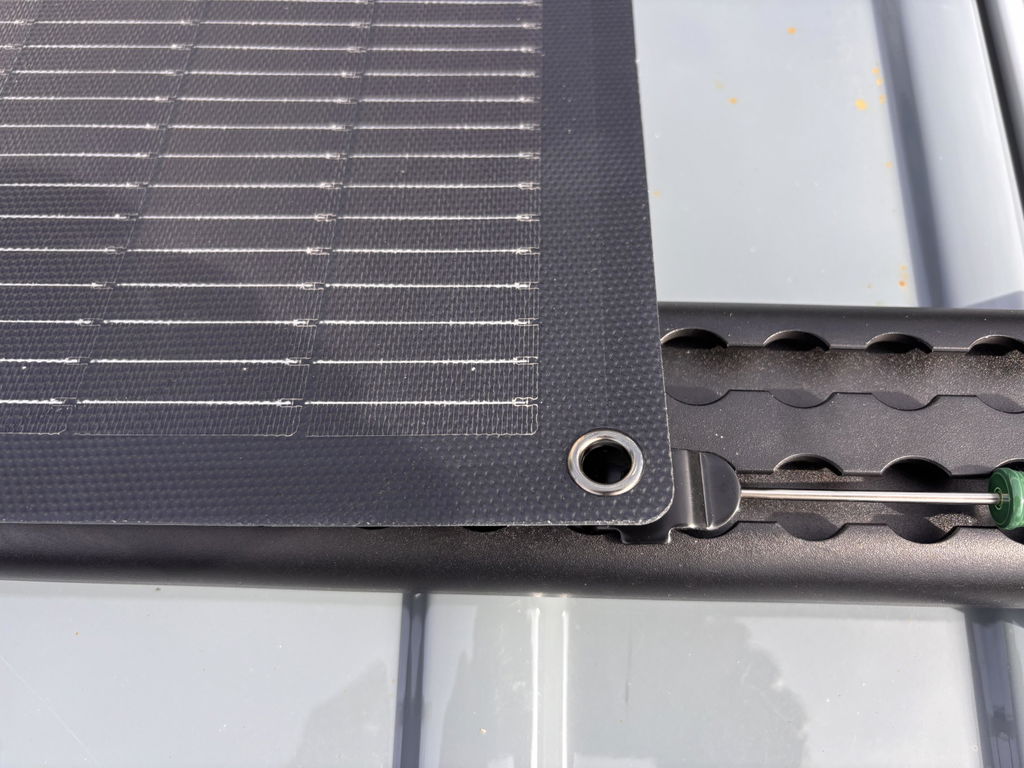
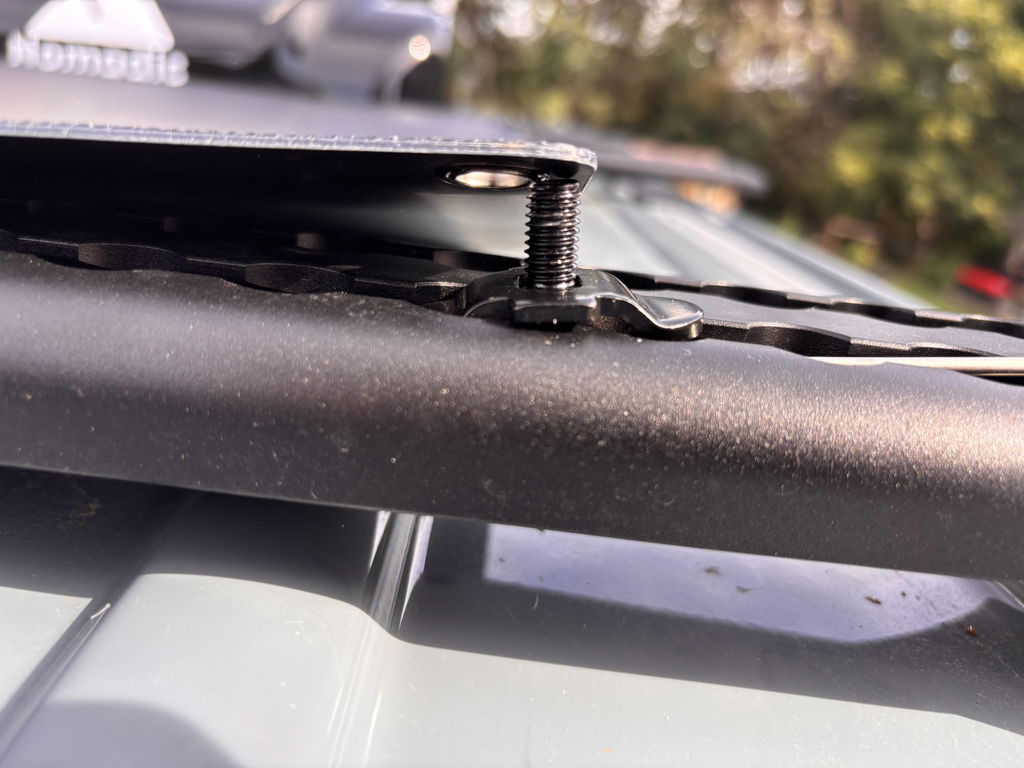
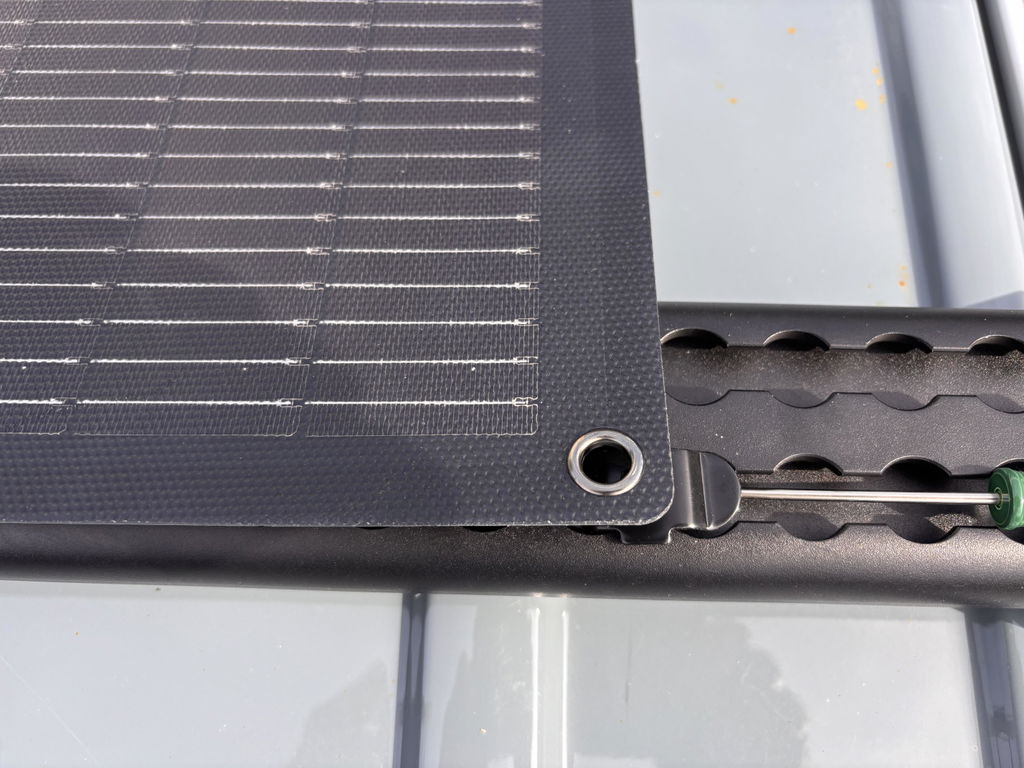
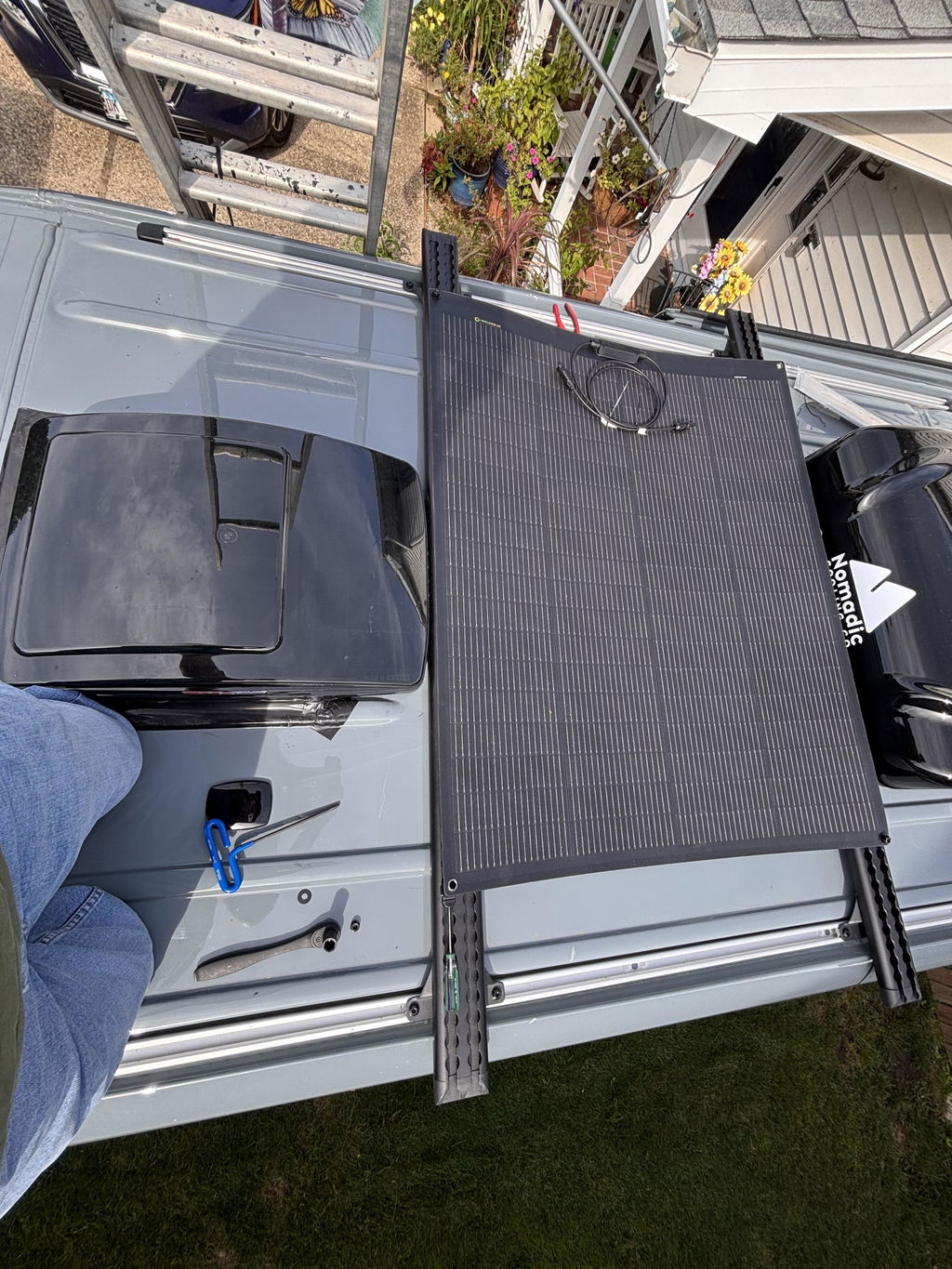
L-track isn't just an interior feature. DVA's roof rail systems for Sprinter integrate L-track into the exterior roofline — so the same adjustable mounting logic applies outside the van for awnings, roof cargo, bike mounts, and crossbar accessories.
The LoadSpan-T™ Dual Channel Roof Rails and DualTrack-T™ Cross Bar Kit each feature integrated L-track channels, letting you use the same DVA stud fittings both inside the van (wall/floor) and on the exterior roof without switching hardware systems. If you're already running interior L-track for camping gear, the roof rails extend that logic upward — one system, inside and out.
Installation Checklist
- Choose track location: lower side wall (562 lbf) for bags, floor (1,124 lbf) for heavy cargo, ceiling crown for light items only
- Pre-drill holes in track at 4" or 5" spacing — or buy pre-drilled track
- Install rivet nuts (rivnuts) in sheet metal at each track hole — ¼×20 is standard
- Bolt track with flat head machine screws; add silicone adhesive for loads over 50 lbs
- For ceiling install: mount near sidewalls only, confirm you're into structural backing
- Load fittings: gear hooks for hanging items, tie-down rings for strap anchoring
- Add O-rings to inverted studs to prevent backing out under vibration
All DVA L-track fittings — hooks, tie-down rings, threaded lugs, bolts, and O-ring stud fittings — are available in the DVA L-Track collection. The same fittings work in wall-mounted track and in DVA's integrated-L-track roof rails (LoadSpan-T™ and DualTrack-T™), so interior and exterior hardware stays consistent across your build.