- Interior height: ~78" (6'6") — full standing room
- Cargo length: ~170" (standard body); ~200" on 170" Extended
- Interior width at floor: ~70"
- Dynamic roof load limit: 330 lb (150 kg)
- Factory roof rail spacing: 51.875" (OEM VS30)
- Attachment points per side: 4 (VS30 generation)
- GVWR (2500 series): 8,550 lb
- Engine (2022 US): 2.0L OM654 4-cylinder diesel (168 hp)
- Generation: VS30 — identical to 2019–2024 for build purposes
If you're planning a full van build—bed, kitchen, bathroom, solar—the 2022 Mercedes Sprinter 170" High Roof is one of the most capable conversion platforms available. The 78" standing headroom eliminates the crouching that makes 144" low-roof builds tiring to live in, and the ~170" cargo floor gives you enough length for a fixed queen bed and a full galley without sacrificing the rear garage.
This guide covers every dimension that matters for a build, the one roof load number that governs every solar and rack decision, and how DVA's LoadSpan-T roof rails bolt directly to the VS30 factory attachment points without drilling.
What Changed for the 2022 Model Year?
The short answer: almost nothing that affects a conversion build.
The 2022 Sprinter is part of the VS30 generation launched in 2019. Mercedes didn't change the chassis geometry, roof structure, or VS30 attachment-point pattern between 2019 and 2024. The 2022 model year in the U.S. standardized on the 2.0L OM654 four-cylinder diesel (168 hp / 295 lb-ft torque), which replaced the outgoing 3.0L V6 (OM642). That engine swap matters if you care about DEF fill intervals and emissions compliance—it doesn't matter at all for a roof rack, L-track floor install, or cabinetry layout.
One 2022-specific note worth tracking: mid-year 2022 production saw minor supply-chain substitutions in interior trim clips and USB port specs. None of those affect build compatibility.
Bottom line: if you're buying a used 2022 170" HR and comparing it against a 2020 or 2023 of the same configuration, the build platform is essentially identical.
Why the 170" High Roof? Five Builds Where It Wins
The 170" HR isn't the right van for everyone—it's larger, harder to park in dense cities, and burns more fuel than the 144". But for these five build types, it's the only choice that doesn't require compromise:
- Full-time live-in conversion. A fixed queen bed (60" × 80"), full-height kitchen, indoor shower, and composting toilet all fit in the 170" HR without stacking. You're not choosing between a bathroom or a bed—you get both.
- Tall builders (>6'). At 78" interior height, someone 6'3" can stand fully upright. The 144" low roof's 59" ceiling is usable work space only; the 170" HR is livable space.
- Family adventure van. Two adults plus two kids need zones—sleeping, eating, storage, and a place to change clothes. The 170" HR's floor plan is the only wheelbase/roof combo that handles this without bunk conflicts.
- Mobile studio or trade build. Photography, HVAC, plumbing, or electrical contractors using the van as a rolling workshop need vertical tool storage that only the high roof enables.
- Overlanding base camp. The additional cargo floor (roughly 38" more than the 144") means a full-size ARB refrigerator, water tank, and gear storage can coexist with sleeping space—nothing gets removed at camp.
2022 Sprinter 170" High Roof Interior Dimensions
| Measurement | Spec | Build Notes |
|---|---|---|
| Interior height (high roof) | ~78" (6'6") | Full standing room; headliner adds ~1", so rough ceiling is ~79" |
| Cargo length (std 170" WB) | ~170" (14'2") | Measured to rear door; usable floor from partition to door ~162–165" |
| Cargo length (170" Ext WB) | ~200"+ | Extended variant only; different roof rail length requirement |
| Interior width at floor | ~70" | Widest at mid-floor; wheel well intrudes ~4" each side |
| Interior width at shoulder | ~68" | Usable for upper cabinet width planning |
| Exterior height (high roof) | ~107–109" | Roof rack adds 2–4" more; many parking structures clear at 108" |
| Exterior length | 22'10" | Bumper to bumper; fits standard U.S. parking stalls with 1" to spare |
| GVWR (2500 series) | 8,550 lb | 3500 HD available at 11,030 lb for heavy conversions |
| Payload (2500 2WD) | ~3,900–4,100 lb | Subtract curb weight from GVWR; check your sticker—varies by spec |
| Payload (2500 4×4) | ~3,395 lb | 4×4 drivetrain adds ~350 lb curb weight vs 2WD |
“I'm trying to continue planning my upcoming Sprinter 170 conversion while working overseas temporarily... I would love to know what you have for internal cargo floor length, width at floor level and width at ceiling level, height of the cargo area, and length and width of the roof between the rails. The online measurements are so varied that I don't want to trust any of them.”
— Lance, Sprinter-Source thread #90506 (Oct 2020) — a common planning problem; this guide exists to solve it.
Lance's frustration is shared by nearly every 170" HR buyer. The online specs are inconsistent because Mercedes' measurement methodology (floor-to-metal vs. floor-to-headliner, usable length vs. technical cargo length) differs from what builders actually measure when planning a build. The dimensions in the table above are builder-oriented: they describe the space you can actually use.
Roof Specs and Load Limits
The number that governs every roof decision on the 2022 Sprinter High Roof is 330 lb (150 kg) dynamic roof load. This is the Mercedes-Benz specified maximum for the VS30 high-roof platform. It applies to the roof structure in motion—bouncing over washboard, highway speed vibration, and emergency braking.
What fits under 330 lb:
- DVA LoadSpan-T rails + DualTrack-T cross bars: ~28–32 lb
- Two 200W rigid solar panels: ~40 lb
- Fan/skylight (e.g., Maxxfan equivalent): ~12 lb
- Rooftop awning bracket: ~15 lb
- Budget remaining for cargo and gear: ~231–235 lb
That's a comfortable margin for a van with kayaks or a rooftop cargo bag strapped to the cross bars, but it leaves no room for a rooftop tent (which alone runs 120–180 lb). Plan your roof before you order accessories.
The factory VS30 roof rail attachment points are:
- Spacing: 51.875" rail-to-rail (center to center)
- Points per side: 4 (VS30 generation, 2019–2024 unchanged)
- Usable roof length: ~150–165" on the standard 170" WB body
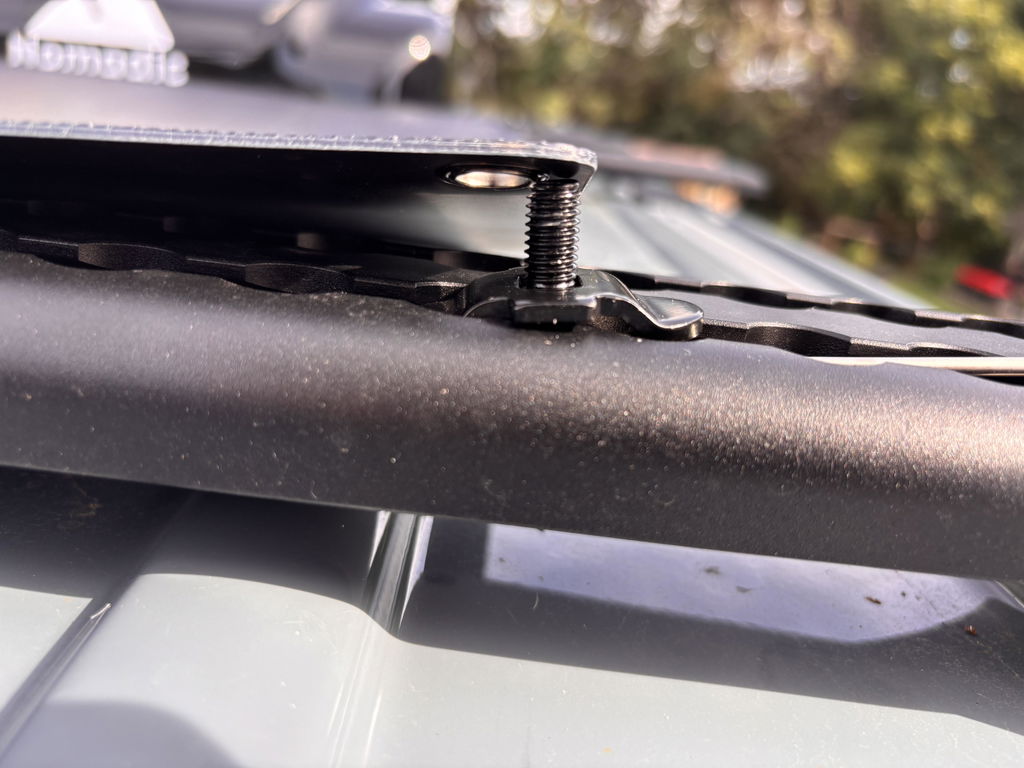
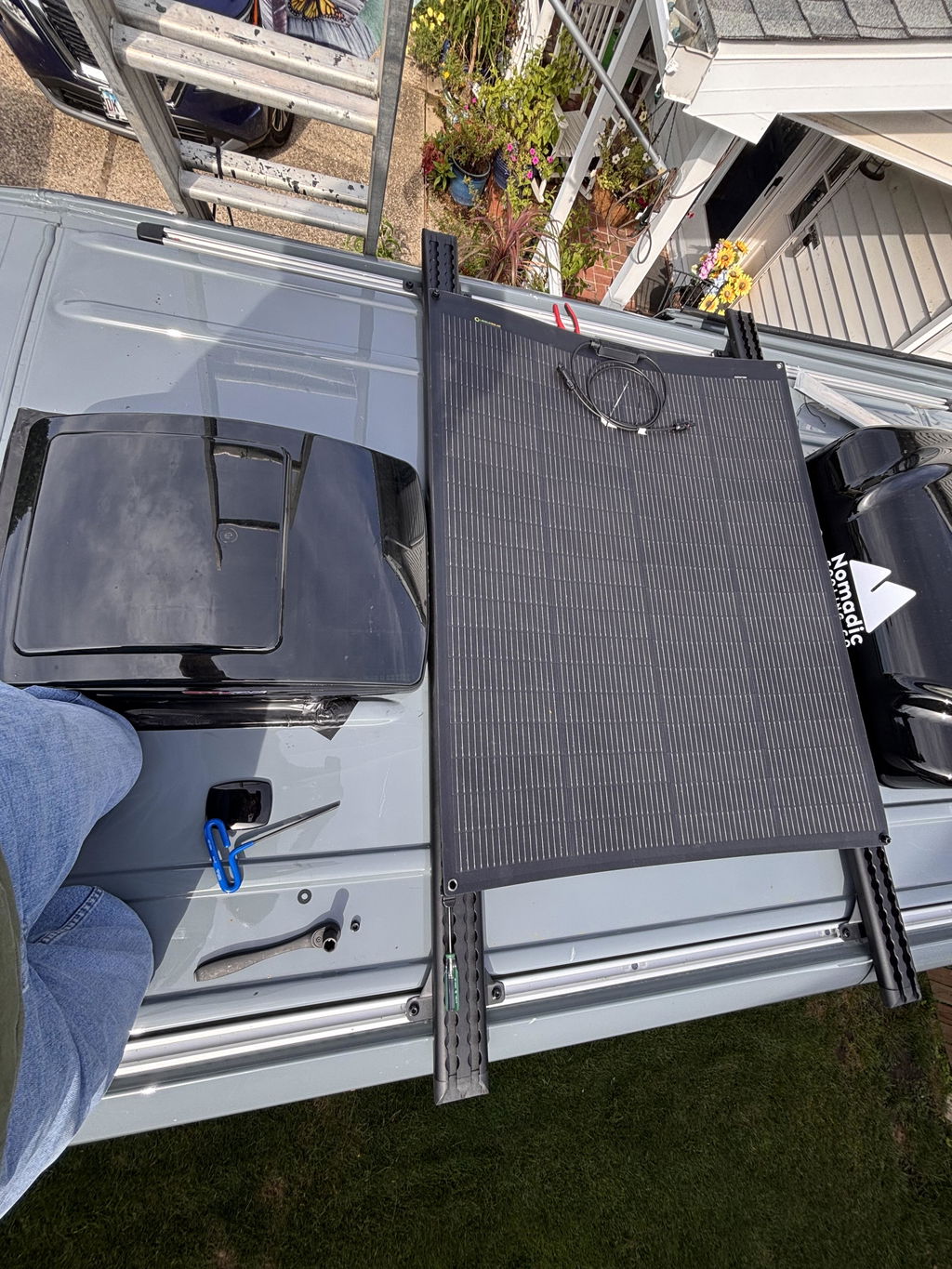
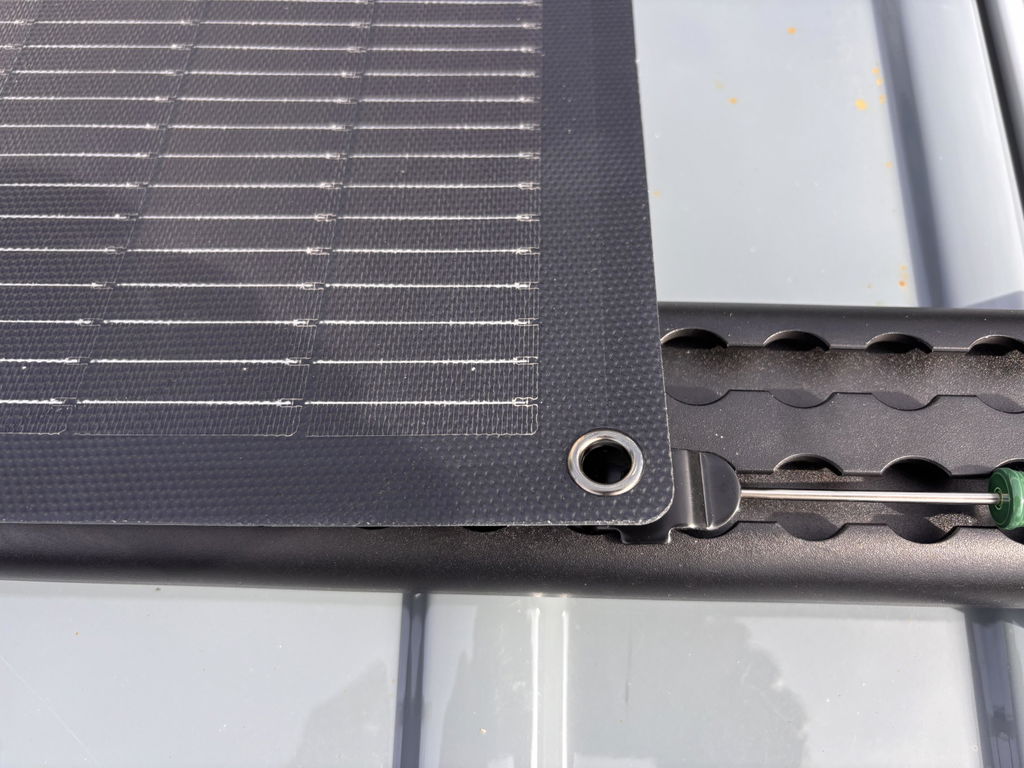
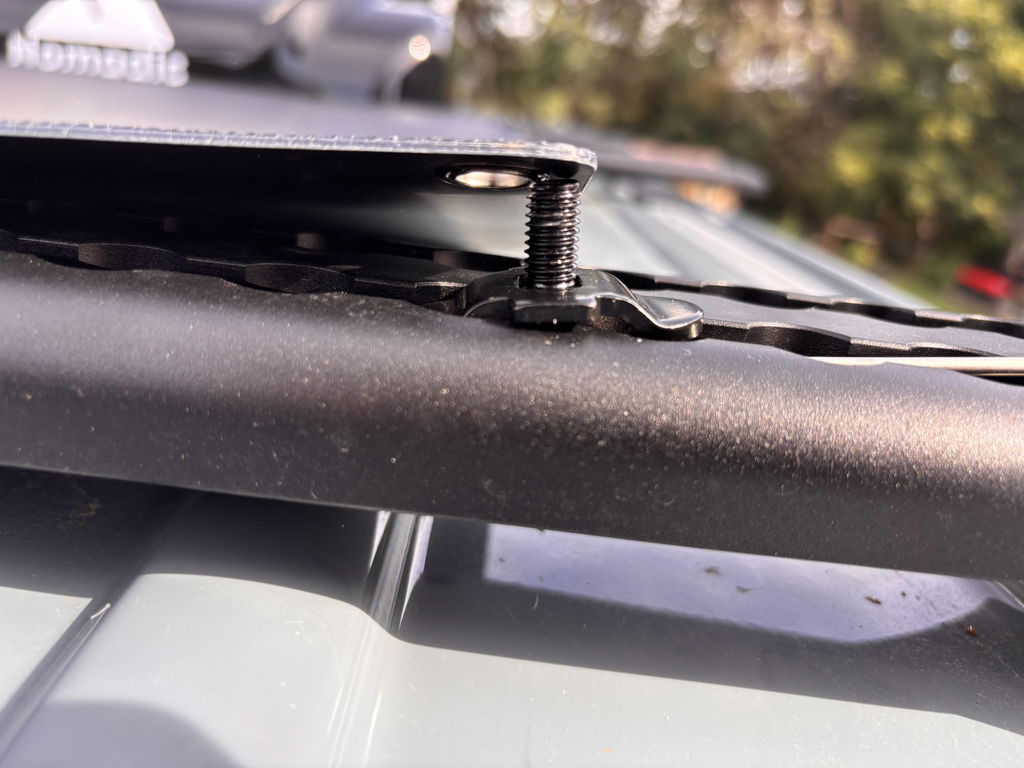
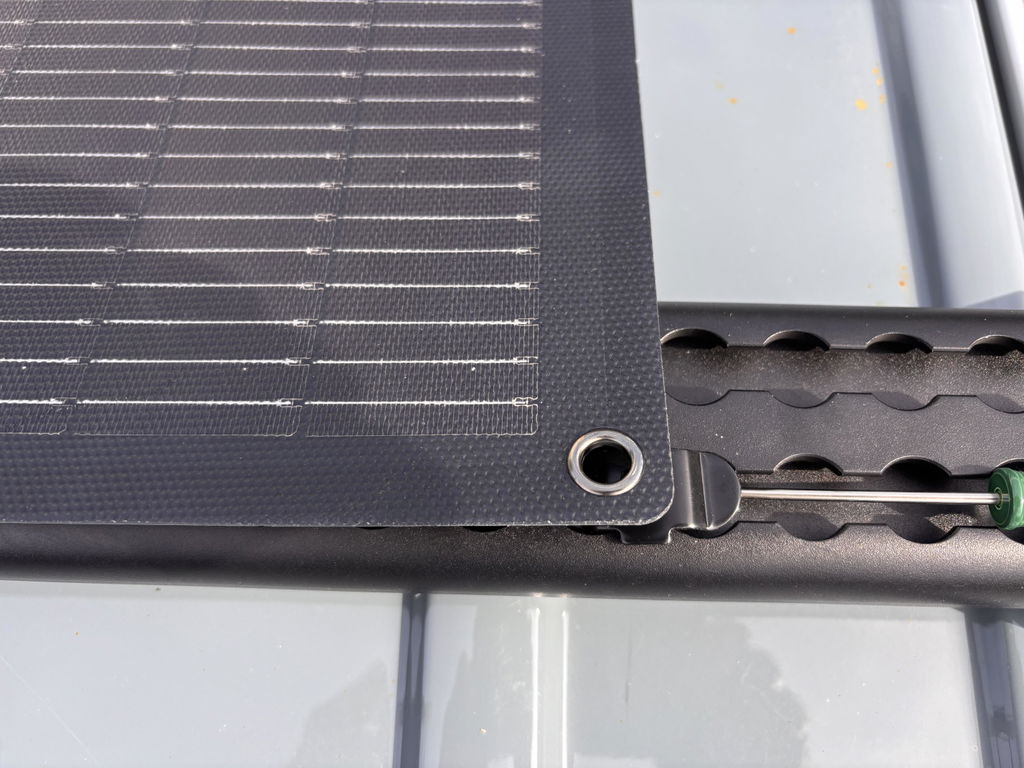
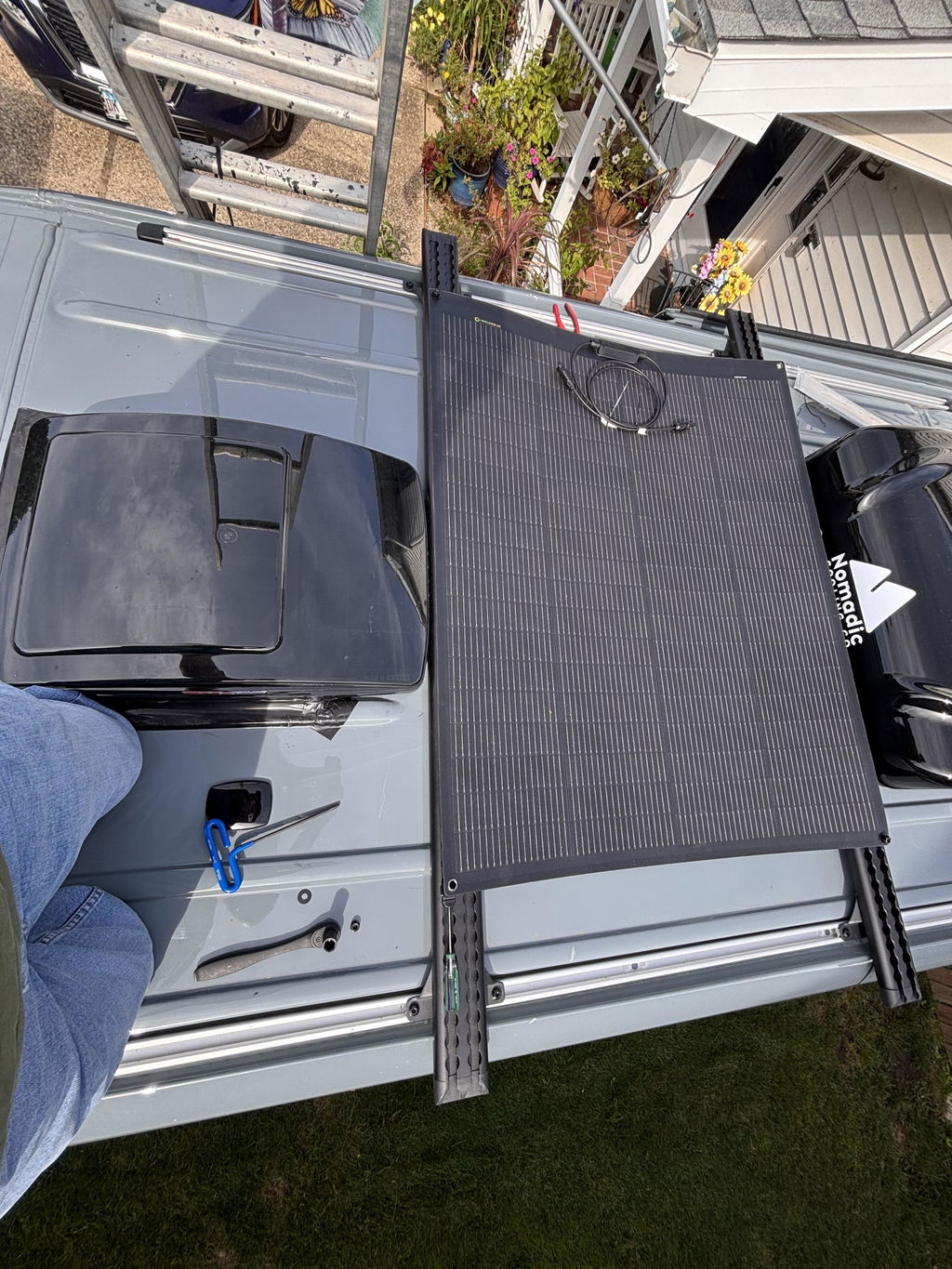
The LoadSpan-T dual-channel roof rails bolt directly to VS30 factory attachment points using hardware that's already in the roof—no drilling, no sealant risk, no warranty concerns. Pair with the DualTrack-T cross bar kit for a full-length rail-and-bar system that holds up to the 330 lb roof limit and accepts solar panels, awning mounts, and L-track accessories.
Payload Math: What a Full 170" HR Conversion Actually Weighs
The 2022 Sprinter 2500 2WD 170" HR has a payload allowance of approximately 3,900–4,100 lb (check your door sticker—it varies by factory options). The 4×4 version runs ~3,395 lb. Here's a realistic build-weight budget:
| Component | Est. Weight |
|---|---|
| DVA LoadSpan-T rails + DualTrack-T bars | 30 lb |
| 400W solar (2 panels + wiring) | 50 lb |
| 200Ah lithium battery bank | 65 lb |
| Cabinet + countertop (hardwood + ply) | 200 lb |
| Bed platform + mattress (queen) | 180 lb |
| Insulation (foam + Thinsulate) | 45 lb |
| Wall + ceiling panels (FRP or wood) | 120 lb |
| Water tank (20 gal full) | 170 lb |
| Propane, appliances, misc fixtures | 100 lb |
| Subtotal (empty build) | ~960 lb |
| Remaining payload (2WD 2500) | ~2,940–3,140 lb (occupants + gear) |
| Remaining payload (4×4 2500) | ~2,435 lb (occupants + gear) |
Both variants carry a full conversion build comfortably. The 4×4 version still has ~2,400 lb left for passengers, food, water, and trip gear—generous for a two-person expedition.
Build Strategies for the 2022 Sprinter 170" High Roof
Full-Time Live-In Layout
The benchmark layout for the 170" HR: fixed queen bed over a rear garage, galley kitchen at driver-side mid-van, wet bath/dry bath at passenger side, and seating dinette at the front of the cargo area behind the partition. This layout requires roughly 155" of usable floor—the standard 170" HR provides ~162–165" to work with. You're not cutting it close.
Roof: DVA LoadSpan-T rails + DualTrack-T cross bars span the full working length. Run 400W of solar (2 panels) on the cross bars, vent fan at the longitudinal midpoint, and an awning mount at the driver-side rear bar. That's ~115–125 lb of roof-mounted hardware against your 330 lb limit—you're 200+ lb under limit with nothing on the bars.
Weekend Warrior / Dual-Use Work Build
If the van also serves as a work or cargo vehicle on weekdays, a modular build makes more sense. L-track floor systems let you remove and reinstall sleeping platforms, seating modules, and storage bins without tools. The 170" HR's floor length gives you enough space to run dual L-track channels full-length and still have a fixed kitchen/counter at the front of the cargo area. See DVA's L-track tie-down and mounting hardware for the floor anchor system.
Family + Pets: 4-Person Build
Two adults, two kids, two dogs. The 170" HR is the only wheelbase that solves the sleeping zone problem: bunk beds for kids over the rear garage, adult sleeping platform forward, galley at the side door, and a zone behind the cab seats for dogs. The 78" ceiling height means adults can actually stand and move through the van without crouching—critical for a two-week family trip.
2022 vs. 2023 Sprinter 170" High Roof: What Actually Differs for a Build
| Feature | 2022 | 2023 | Matters for Build? |
|---|---|---|---|
| Chassis / VS30 generation | VS30 | VS30 | No — identical |
| Roof attachment points | 4 per side / 51.875" | 4 per side / 51.875" | No — same pattern |
| Interior dimensions | 78" H / ~170" L | 78" H / ~170" L | No — unchanged |
| Engine | OM654 2.0L 4-cyl diesel | OM654 2.0L 4-cyl diesel | No — same engine |
| MBUX infotainment | MBUX Gen 1 standard | MBUX Gen 2 option | No — build irrelevant |
| USB-C cabin ports | Limited availability | More standard | Minor — add USB-A/C hub |
| Price (new MSRP, 2500 HR) | ~$55–60k | ~$58–65k | Yes — 2022 used is better value |
For anyone shopping the used market: a well-maintained 2022 170" HR is functionally equivalent to a 2023 for build purposes. The VS30 attachment point pattern, interior volume, and 330 lb roof limit are unchanged. Buy on condition and price, not model year.
Factory Roof Rails and VS30 Attachment Points
Every VS30 Sprinter (2019–2024) comes with factory-drilled attachment points for an optional OEM roof rack—four per side, with a fixed 51.875" center-to-center spacing. These points accept M8 hardware and provide a solid, waterproof anchor that doesn't require cutting into the roof skin.
The DVA LoadSpan-T dual-channel roof rails are designed specifically for these VS30 points. Installation sequence:
- Remove the factory plastic caps from the four attachment points per side
- Thread the LoadSpan-T rail hardware into the existing threaded inserts
- Torque to spec (no thread sealant required—the factory inserts are sealed from below)
- Slide DualTrack-T cross bars onto the rail channels at desired positions
No drilling. No roof penetrations. No voided structural warranty.
“I'm planning a full van build on a used 2022 170 HR I just picked up. The one thing that's been frustrating is how much conflicting info there is online about roof rack fitment—some sources say you need to drill, others say the factory points work. What's the definitive answer for VS30?”
— Common question pattern in Sprinter-Source dimension/fitment threads. Answer: VS30 factory points accept M8 hardware directly—no drilling.
2022 Sprinter 170" HR vs. 170" Low Roof: Should You Go High?
| 170" High Roof | 170" Standard Roof | |
|---|---|---|
| Interior height | ~78" (stand up) | ~59" (crouch required) |
| Full-time livability | ✅ Excellent | ⚠️ Difficult for tall occupants |
| Parking structure clearance | ⚠️ ~107–109" exterior — some structures | ✅ ~96" — most structures |
| Dynamic roof load | 330 lb | Lower (less roof-rack clearance) |
| Wind/fuel impact | ⚠️ Higher profile | ✅ Lower drag |
| Best for | Full conversions, families, live-in | Stealth, trade, cargo use |
For the overwhelming majority of van conversion buyers, the High Roof is the correct choice. The 19" additional headroom transforms daily livability. Only buy the standard roof if stealth or low-clearance parking is a hard requirement.
Summary
The 2022 Mercedes Sprinter 170" High Roof is the same VS30 build platform as the 2019–2024 generation—78" standing headroom, ~170" cargo floor, 330 lb dynamic roof limit, and four VS30 attachment points per side at 51.875" spacing. The 2022 OM654 engine change doesn't affect any build parameter.
For roof rail fitment: DVA's LoadSpan-T rails bolt directly to those factory points. Add the DualTrack-T cross bars and you have a full roof system under 35 lb with solar-ready channels and L-track accessory compatibility. L-track tie-down rings handle awning mounts, cargo straps, and roof-bar accessories without drilling.
For floor systems on the same 170" HR platform, see the DVA L-track collection—the same anchor logic applies inside the cargo floor.