Seven factory-wired auxiliary circuits — five exterior, two interior. Roof-mounted switches. Up to 300 watts of dedicated lighting power and a 500-amp winch circuit. The most capable factory auxiliary power architecture on any production 4x4.
Most vehicles give you a cigarette lighter and call it a day. The INEOS Grenadier gives you seven independently switched auxiliary power circuits — five exterior (EXT1–5) and two interior (INT1–2) — with factory-routed wiring harnesses from the engine bay to the roofline, Deutsch DTP connectors rated for conditions that would destroy a standard 12V socket, and a dedicated 500-amp winch circuit. This is power infrastructure designed by people who actually use their trucks.
Quick Answer
The INEOS Grenadier's EXT & INT auxiliary system:
3 circuits standard on every Grenadier: EXT1 (10A, engine bay), INT1 (10A, driver A-pillar), INT2 (10A, passenger footwell)
EXT2 is the primary lighting circuit: dedicated 25A, Deutsch DTP connector, 300W capacity — use it for your main light bar
EXT4 handles any production winch: 500A dedicated circuit, separate switch, isolated from lighting circuits
Voltage drop caveat: EXT/INT circuits lose power during engine crank — voltage-sensitive accessories (dashcams, Starlink) need a capacitor buffer or DC-DC converter
The Grenadier's auxiliary system is a network of pre-wired power circuits controlled by dedicated roof-mounted switches in the overhead console. Three circuits come standard on every Grenadier — EXT1, INT1, and INT2 — while EXT2 through EXT5 are available as factory options. Each circuit is purpose-built for a specific zone of the vehicle, with amperage ratings matched to real-world accessory demands. The system eliminates the single biggest friction point in overlanding builds: running wire.
Where a typical aftermarket auxiliary wiring project requires hours of routing cables through firewalls, grommets, and body panels, the Grenadier delivers factory-routed harnesses already in place. Terminate a connector, flip a switch, and you're live. That's the engineering thesis — and it works.
The Seven Circuits
Each circuit occupies a distinct zone of the vehicle, with connector type and amperage calibrated to its intended purpose. EXT1, INT1, and INT2 come standard; EXT2–5 are factory options. Here's the full map.
EXT1
Engine Bay — Front Auxiliary
Under Hood · 10A Circuit
A 10-amp circuit under the hood, EXT1 provides an unterminated pigtail — bare wire leads ready for whatever connector you choose. This is the go-to circuit for front bumper-mounted driving lights, grille-mounted LED pods, or any forward-facing auxiliary lighting drawing under 120 watts.
The unterminated design gives you complete freedom: solder on Deutsch DT connectors, crimp ring terminals, or wire directly to your lights. No adapters, no proprietary fittings.
"Installed a Starlink Mini on load bars powered through EXT3 — every time the engine starts, power is interrupted long enough for the Starlink to reboot. The supply to INT/EXT auxiliary circuits gets interrupted or goes unstable during engine start when the battery voltage dips."
Above Front Passenger Door · 25A Dedicated Circuit
This is the circuit that matters most for serious lighting. EXT2 is positioned above the front passenger door and runs on a dedicated 25-amp circuit — meaning it shares power with nothing else. That's 300 watts of clean, unshared power at the roofline, purpose-built for a high-output light bar.
It terminates in a weatherproof Deutsch DTP connector, the industrial standard for high-vibration, high-moisture environments. Plug in a 40-inch light bar, a pair of scene lights, or any rooftop accessory up to 300W and control it all from the overhead switch panel without ever opening the hood.
For rooftop lighting, the most effective mounting solution is the DVA DualTrack™ Low-Profile Crossbar System — it spans the full roof width, integrates the EXT2 and EXT3 DTP connectors into the rail structure, and accepts L-Track accessories at any position. No drilling into the Grenadier's roof. The crossbar system is the load-distribution foundation that makes EXT2-powered roof lighting practical without structural compromise.
"The supply to the INT/EXT auxiliary circuits is interrupted or unstable during and after engine start when the battery voltage dips, so voltage-sensitive accessories get kicked offline. My Wolfbox occasionally doesn't power up after engine start, or it will power up but shut down again five seconds later."
EXT3 delivers three DTP access points from a single shared 25-amp circuit. The ports are positioned above the driver's side front and rear doors, and above the passenger-side rear door — giving you power access at three points along the roofline with a single switch.
This is ideal for distributed work lighting, camp scene illumination, or awning lights. Run a pair of flood lights on the driver's side and a scene light on the passenger rear — all controlled from one switch. Just keep total draw under 300W across all three ports combined.
DTP Connector ×3Lighting300W SharedOption
EXT4
Front Right Wheel Well — Winch Power
Front Right Wheel Well (behind cover) · 500A Dedicated Circuit
EXT4 is the brute-force circuit in the system — a dedicated 500-amp circuit purpose-built for powering a winch. The wiring is accessed by removing the wheel well cover on the front right (passenger side) wheel, where you'll find the unterminated pigtail ready for connection to your winch of choice.
500 amps at 12 volts is 6,000 watts of capacity — enough to drive any production winch on the market without hesitation. This is a dedicated circuit with its own switch, meaning winch operation is completely isolated from the rest of the vehicle's auxiliary power system. No shared loads, no risk of starving other circuits under heavy draw.
"I'm looking for someone to sanity-check my wiring plan. My Quartermaster does NOT have the high-load auxiliary switch panel. I installed the crossbar light bar which needs a 25-amp circuit. My idea is to use Aux Switch 1 rated for 10 amps only to trigger a 30-amp relay, then run a dedicated power feed."
EXT5 is the heavy-duty companion to EXT1, sharing the under-hood location but delivering a full 25-amp circuit — 300 watts of capacity. Like EXT1, it provides an unterminated pigtail, giving you the same connector freedom but with significantly more power.
This circuit handles the accessories that exceed EXT1's 10-amp limit: high-output LED light bars, onboard air compressors, auxiliary cooling fans, or any forward-mounted accessory that demands real current.
Unterminated PigtailLighting300W MaxOption
Interior Circuits
INT1
Driver's Side A-Pillar
Driver's Side A-Pillar (LHD) · 10A Circuit
INT1 is one of three circuits that come standard on every Grenadier. Located in the driver's side A-pillar, it provides a 10-amp interior circuit for accessories that need power on the driver's side of the cabin — dashcams, GPS units, communications equipment, or interior lighting.
Like the exterior pigtail circuits, INT1 gives you bare wire leads to terminate however you choose, keeping the installation clean and hidden within the A-pillar trim.
Unterminated PigtailInterior120W MaxStandard
INT2
Passenger Side Footwell
Behind Passenger Footwell Panel · 10A Circuit
INT2 mirrors INT1's 10-amp capacity on the passenger side. The exposed pigtail sits behind the panel in the passenger-side footwell — remove the trim panel and you'll find the leads ready for connection. This location is ideal for powering a fridge in the passenger footwell, a secondary USB hub, interior LED strips, or any cabin accessory on the passenger side.
With both INT1 and INT2 included as standard equipment, every Grenadier leaves the factory with 240 watts of switchable interior accessory power before you even get to the optional EXT circuits.
Exposed PigtailInterior120W MaxStandard
Front bumper-mounted LED pods powered through the EXT1 or EXT5 under-hood circuits. The unterminated pigtails allow direct wiring to any 12V light without adapters.
Two Connector Standards, Maximum Flexibility
The EXT system uses two distinct termination strategies, each matched to its circuit's location and intended use case.
Unterminated Pigtail
EXT 1 · EXT 4 · EXT 5 · INT 1 · INT 2
Bare wire leads. You choose the connector. Maximum flexibility for custom installations — solder, crimp, or terminate to any 12V standard.
Deutsch DTP
EXT 2 · EXT 3
Industrial-grade Deutsch DTP 2-pin connectors. Weatherproof, vibration-resistant, rated for 25 amps. The standard for off-road lighting harnesses.
The Deutsch DTP connector is not a consumer-grade plug. It's the same connector family used in heavy equipment, agricultural machinery, and military vehicles. The DTP series uses size 12 pins rated for 25 amps and accepts 12–14 AWG wire — perfectly matched to the 25-amp circuits on EXT2 and EXT3. The sealed housing and positive-lock retention mechanism mean these connectors stay connected through sustained vibration, water crossings, and temperature extremes.
For the unterminated pigtails on EXT1, EXT4, EXT5, INT1, and INT2, most owners terminate with Deutsch DT or DTP connectors for consistency across the vehicle. But the beauty of bare leads is optionality — Anderson connectors, XT60 plugs, ring terminals, or direct solder joints all work. The circuit doesn't care how you connect to it.
Power Capacity at a Glance
Understanding how much power each circuit can deliver — and how they compare — is critical for planning your build. Here's the maximum wattage capacity of each lighting-capable EXT circuit at 12V.
Maximum Wattage Output (at 12V)
EXT 1
120W
EXT 2
300W
EXT 3 (shared)
300W
EXT 5
300W
EXT2 — The Lighting Circuit
EXT2's dedicated 25-amp circuit is the standout for rooftop lighting. Unlike EXT3, which shares its 25 amps across three ports, EXT2 delivers its full 300W capacity to a single connection point above the front passenger door. This makes it the ideal — and arguably the only correct — circuit for a high-output rooftop light bar. A 40–50 inch LED bar drawing 250W gets clean, dedicated power with headroom to spare.
Roof-mounted LED pods powered by the EXT2 or EXT3 DTP circuits — plug-and-play installation at the roofline with no wire routing required.
Complete Specifications
Circuit
Amperage
Location
Connector
Type
Availability
EXT 1
10A
Under hood
Unterminated pigtail
Independent
Standard
EXT 2
25A
Above front passenger door
Deutsch DTP
Dedicated
Option
EXT 3
25A
Driver front/rear + passenger rear doors
Deutsch DTP ×3
Shared (3 ports)
Option
EXT 4
500A
Front right wheel well (behind cover)
Unterminated pigtail
Dedicated (Winch)
Option
EXT 5
25A
Under hood
Unterminated pigtail
Independent
Option
INT 1
10A
Driver's side A-pillar
Unterminated pigtail
Interior
Standard
INT 2
10A
Passenger footwell (behind panel)
Exposed pigtail
Interior
Standard
Lighting Strategy: Putting the Circuits to Work
The Grenadier's EXT system doesn't just supply power — it supplies the right power in the right locations for a complete exterior lighting build. Four of the five exterior circuits (EXT1, 2, 3, and 5) are positioned and rated specifically for lighting applications. Here's how a well-planned build maps across the system.
Forward Lighting — EXT1 & EXT5
Both under-hood circuits serve the front of the vehicle. EXT1's 10-amp circuit handles a pair of small LED pods or ditch lights comfortably — accessories drawing 6–8 amps total. For higher-output forward lighting — a triple-pod bumper bar kit, high-powered driving lights, or anything above 120W — move to EXT5's 25-amp circuit. The two circuits give you independent switching for layered forward lighting: low-power spots on EXT1 for daily use, high-output floods on EXT5 for trail work.
Rooftop Light Bar — EXT2
EXT2 exists for one primary purpose: powering a rooftop light bar with a dedicated, unshared 25-amp circuit. A high-output 40–50 inch LED bar typically draws 15–22 amps. On EXT2, that load runs on its own fused circuit with no competition from other accessories, no voltage drop from shared wiring, and no risk of overloading a multi-device circuit. The DTP connector at the roofline means the bar plugs directly into factory wiring — no penetrating the roof, no routing cable through the headliner, no aftermarket relay harness.
Scene & Work Lighting — EXT3
EXT3's three distributed DTP ports turn the Grenadier's roofline into a multi-zone scene lighting platform. Mount a pair of downward-facing flood lights above the driver's side doors for camp lighting, add a rear-facing work light above the passenger-side rear door for load area illumination, and switch all three on with a single rooftop toggle. The shared 25-amp circuit means you need to budget your total draw, but three 60W flood lights (180W total) leave room to spare.
Practical Build Example
EXT1 (10A): Pair of 40W ditch lights — ~7A draw EXT2 (25A): 42-inch rooftop LED bar — ~20A draw EXT3 (25A): Three 60W scene floods — ~15A total draw EXT5 (25A): Triple-pod bumper light bar — ~18A draw
Total exterior lighting: ~780W across four independent circuits, each individually switched from the roof console. No relays, no aftermarket wiring looms, no dashboard toggle bars.
Why This System Matters
Every serious overlanding build starts with the same problem: getting power from the battery to wherever you need it. On most vehicles, that means hours of routing wire through grommets, firewall penetrations, and body panels — work that's tedious, error-prone, and often ugly. Aftermarket relay harnesses solve part of the problem, but they still require custom routing and fuse panel installations.
The Grenadier's EXT system eliminates this entire category of work. The wiring is already routed. The fusing is already done. The switching is already installed in the overhead console. What would be a full weekend of wiring on a Land Cruiser or Wrangler becomes a plug-and-play installation on the Grenadier — often measurable in minutes rather than hours.
"Put a big capacitor parallel with the relay output for the Starlink circuit. Something large enough to overcome any transients. The Starlink Mini only just runs on 12 V and will cut out below around 12.5 V which would be the case when the engine is cranking. Easiest fix is a DC-DC converter to convert the 12 V EXT3 output to 24 V."
The use of Deutsch DTP connectors on the roofline ports is a deliberate engineering decision, not a cost-saving one. DTP connectors cost more than commodity 12V sockets, but they're rated for the vibration, moisture, and thermal cycling that rooftop-mounted accessories actually experience. A standard SAE or cigarette-lighter connector at the roofline would be a reliability problem within months. DTP connectors are a solve-it-once decision.
The mix of unterminated pigtails and DTP ports reflects a clear design philosophy: give structured, plug-and-play power where plug-and-play makes sense (the roofline), and give open-ended flexibility where customization is expected (the engine bay, the wheel well). It's the kind of decision-making that suggests the engineers actually bolt accessories onto trucks — and have opinions about how it should work.
System Architecture
Roof Switch Integration
Every EXT circuit is controlled from the overhead switch panel — the same aircraft-inspired control surface that manages the Grenadier's differential locks, center locking, and interior lighting. The switches are large, clearly labeled, and designed to be operated with gloved hands. There's no fumbling for a hidden toggle under the dash or reaching for an aftermarket switch pod bolted to the A-pillar.
The switching architecture is simple and deliberate: one switch per circuit. EXT2 gets its own switch. EXT3 gets its own switch — and that single switch controls all three of its distributed DTP ports simultaneously. This is camp-lighting logic: one flip illuminates your entire perimeter. For layered lighting control across all circuits, you have independent switches for each zone of the vehicle, all within reach without taking your eyes off the trail or leaving the driver's seat.
The integration with the roof-mounted switch panel also means these circuits are visually and operationally consistent with the rest of the vehicle's controls. There's no jarring aftermarket aesthetic — no toggle panels zip-tied to the center console, no loose switches velcroed to the dash. The EXT switches look and feel like they belong, because they do.
What Owners Actually Plug In: Real-World Circuit Usage
Forum discussions and owner builds reveal clear patterns in how the EXT and INT circuits get used in practice. Here's what the community has settled on after thousands of collective kilometres:
EXT1 (Engine Bay, 10A) — The Light Pod Circuit
The most common use: a pair of small LED pods mounted to the front bumper or A-pillars. At 10 amps, this circuit handles most LED pods comfortably — a typical pair of 20W pods draws under 4 amps total. DVA's front bumper light mounts use this circuit for forward-facing spot or flood pods, keeping the wiring clean and factory-integrated. Some owners use EXT1 for a single ditch light or a small compressor, but lighting dominates.
EXT2 (Roof, 25A) — The Light Bar Circuit
Almost universally dedicated to a roof-mounted light bar. The 25-amp capacity handles anything up to a 40-inch LED bar. DVA's LED Roof Light Bar is designed specifically for this circuit, drawing well within the 25A budget while delivering serious forward illumination. A few owners split this circuit to run a light bar plus a small Starlink dish power feed, but that requires careful amperage math.
EXT3 (Roof, 25A) — Scene Lighting and Side Lights
The versatile circuit. Forum owners most commonly use EXT3 for side-mounted scene lights — illuminating the campsite, the work area beside the truck, or reverse lighting for trailer hookup. DVA's side-mount LED pods (available in spot or flood) connect here via DTP connectors. Some owners run four side lights (two per side) on this single 25A circuit without issues, as LED pods are remarkably efficient.
EXT4 (Wheel Well, 500A) — Winch Only
This is the winch circuit. 500 amps. Nothing else should connect here unless you're deliberately running a high-draw accessory through the factory winch relay system. Forum consensus: leave this alone unless you have a winch.
EXT5 (Engine Bay, 25A) — The High-Power Forward Circuit
Owners who need more forward lighting power than EXT1's 10 amps use EXT5 for larger LED bars, driving lights, or onboard air compressors. DVA's front bumper light system can also wire to EXT5 when running higher-output pods. This is also the circuit of choice for owners adding a secondary horn, high-output fog lights, or an underhood compressor for onboard air.
Phone chargers, dash cameras, ham radios, and interior LED strips. INT2 is popular for powering a fridge in the rear cargo area, though owners running large 12V fridges should verify the draw stays under 10 amps (most do, but dual-zone units at startup can spike). Some owners use INT1 for a CB/ham radio and INT2 for a rear dashcam and interior lighting.
Common Mistakes with the EXT/INT System
The forum community has documented these errors repeatedly. Learn from their experience:
Overloading EXT1
EXT1 is rated at 10 amps — not 25. Owners who wire a light bar to EXT1 because it's the "easiest to access" will trip the fuse or, worse, overheat the wiring harness. If your accessory draws more than 8 amps continuous, use EXT5 or EXT2 instead. A relay triggered by EXT1 feeding from a higher-capacity circuit is the correct approach for accessories that exceed 10A.
Using Wrong Connector Types
The Grenadier uses two connector standards: unterminated pigtails (for EXT1, INT1, INT2) and Deutsch DTP connectors (for EXT2, EXT3). Forum posts show owners trying to splice into these pigtails with butt connectors or scotch locks — both of which fail in engine bay environments due to heat and vibration. Use the correct mating connectors for reliable long-term connections.
Daisy-Chaining Accessories on One Circuit
Just because a circuit has capacity doesn't mean you should chain five accessories off it. Every splice is a potential failure point, and voltage drop across multiple connections degrades performance. One circuit, one primary accessory (or one properly wired distribution point) is the reliable approach.
Ignoring the High-Load Panel Requirement
EXT2 through EXT5 require the optional High-Load Auxiliary Switch Panel. Without it, you only have EXT1, INT1, and INT2. Owners who buy a 25A-rated light bar and then discover they don't have EXT2 face an expensive retrofit. Check your overhead switch panel before ordering accessories — if you see only one auxiliary switch, you have the base configuration and need the High-Load Panel upgrade.
DVA Products and Circuit Assignments
Here's how DVA's lighting and accessory products map to the factory circuits:
DVA LED Roof Light Bar → EXT2 (25A roof circuit) — pre-wired with Deutsch DTP connector, 300W capacity, fits EXT2's dedicated circuit
The EXT/INT system powers every accessory on your Grenadier. For the full ranked list of what to buy — from crossbars to lighting to recovery mounts — see our guide to the 12 best Grenadier accessories for 2026.
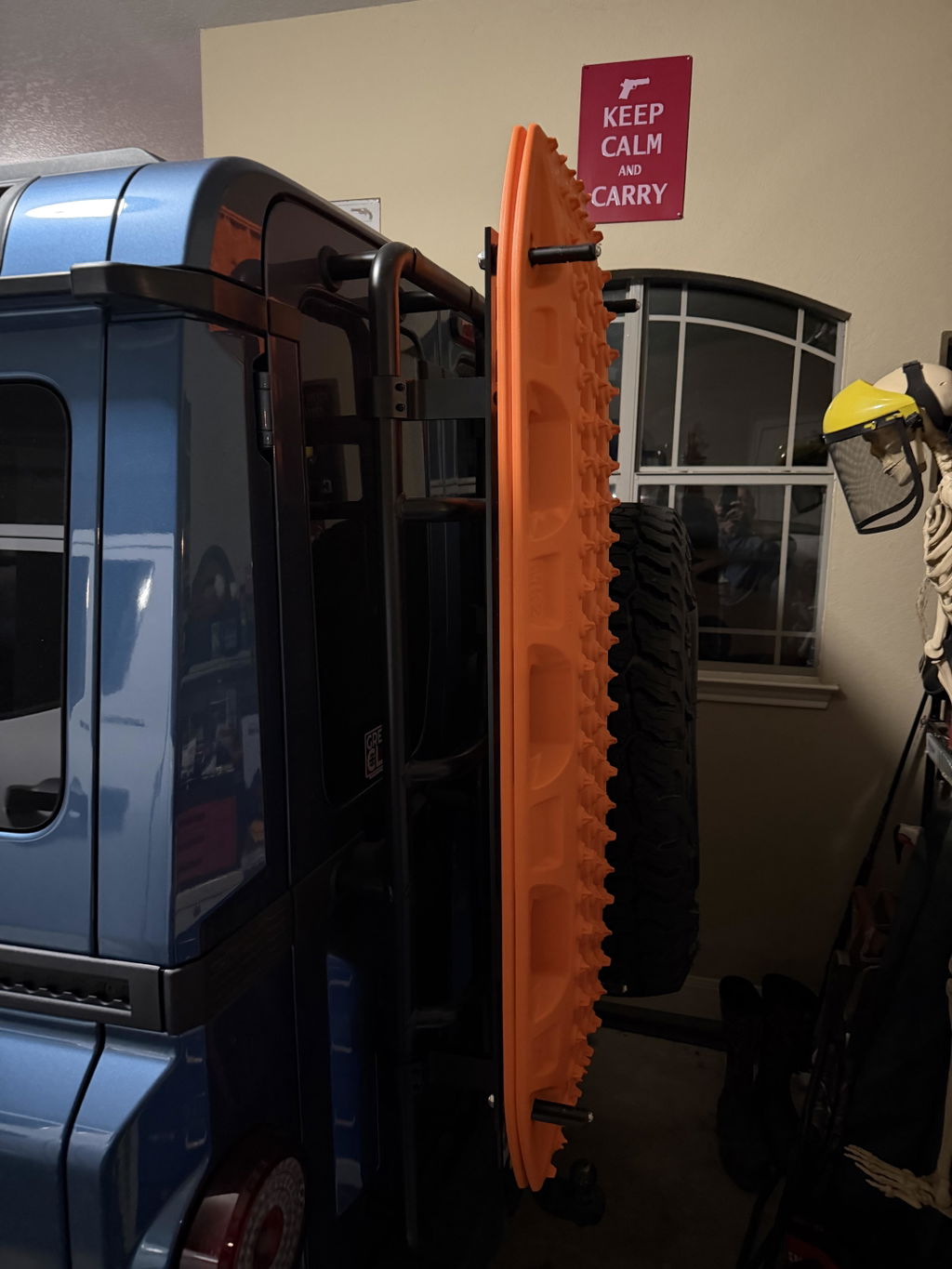
Excellent product. Easy install to secure my MaxTrax boards. Looks great and frees up extra space. DVA Mechanics process a great selection of products while providing superb customer service. I highly recommend giving them a try.