The short answer: the INEOS Grenadier has a GVWR of 3,500 kg / 7,716 lb across all current models (Station Wagon, Trialmaster, Fieldmaster, Quartermaster). Published curb weight runs 5,827–5,875 lb (2,643–2,665 kg) for the petrol Station Wagon and 5,992 lb (2,718 kg) for the diesel, giving a base payload of 1,841–1,889 lb petrol / 1,724 lb diesel.
Maximum braked towing is 7,716 lb (3,500 kg); Gross Combined Mass is 15,432 lb (7,000 kg). Roof load: 925 lb static / 330 lb dynamic. Always verify your door sticker — Australian-market vehicles run roughly 110 lb more payload than US/EU, and Trialmaster trims subtract ~150–300 lb from base payload depending on engine.
That's the spec sheet. The harder question — and the one this guide actually answers — is what happens to those numbers once you bolt on a winch, a roof rack, a rooftop tent, jerry cans, and a drawer system. Forum weighbridge receipts and the worked example below show why most accessorized Grenadiers run within 100–200 kg of GVWR before the first camping trip, and how material choice (alloy vs. steel) is the single biggest lever a builder controls.
This guide breaks down every official weight specification, explains the confusing terminology, shares real weighbridge data from owners, and gives you a practical framework for calculating how much capacity you actually have left.
The Official Numbers: GVWR, Curb Weight & Payload by Model
Before anything else, let's establish the factory specifications. These are the figures INEOS publishes and what appears on your door sticker.
Understanding the Terminology
Weight specifications use different terms across markets, and they do not all mean the same thing. Getting this wrong can lead to serious miscalculations:
- GVWR (Gross Vehicle Weight Rating): The maximum allowable total weight of the vehicle — body, fluids, passengers, cargo, accessories, everything. For the Grenadier, this is commonly listed at 3,500 kg (7,716 lbs). This is the number on your door sticker and the number that matters for legal weight limits — verify the plate on your specific vehicle.
- Curb Weight: The weight of the vehicle as delivered with all standard equipment and a full tank of fuel, but no passengers or cargo. Published figures range from 5,827–5,875 lbs depending on the source and trim.
- Mass in Running Order (EU/AU): Similar to curb weight but includes all fluids, a full tank, and a 75 kg (165 lb) allowance for the driver. This is the figure on the European Certificate of Conformity (CoC).
- Payload: GVWR minus curb weight. This is your theoretical maximum — the total weight of people, cargo, fuel above the measured curb weight, and any accessories you have added.
- GCM (Gross Combined Mass): The maximum total weight of the vehicle plus trailer. For the Grenadier, this is commonly listed at 7,000 kg (15,432 lbs) — the sum of 3,500 kg GVWR plus 3,500 kg braked trailer rating. Verify by market and VIN plate.
Every accessory you bolt onto the vehicle — winch, bull bar, roof rack, rock sliders, snorkel — reduces your available payload pound-for-pound. Factory-installed options like the Trialmaster package are already factored into that trim's published curb weight, but aftermarket additions are not.
Weight Breakdown by Trim and Engine
The Grenadier comes in multiple configurations, and curb weight varies meaningfully between them. The diesel engine is heavier than the petrol (gasoline) unit, and the Trialmaster adds significant equipment weight.
| Model / Trim | Engine | Approx. Curb Weight | Approx. Payload |
|---|---|---|---|
| Station Wagon Base | 3.0L Petrol I-6 | 5,827–5,875 lbs (2,643–2,665 kg) | 1,841–1,889 lbs (835–857 kg) |
| Station Wagon Base | 3.0L Diesel I-6 | 5,992 lbs (2,718 kg) | 1,724 lbs (782 kg) |
| Trialmaster | 3.0L Petrol I-6 | ~6,200 lbs (2,812 kg) | ~1,516 lbs (688 kg) |
| Trialmaster | 3.0L Diesel I-6 | ~6,340 lbs (2,876 kg) | ~1,376 lbs (624 kg) |
| Quartermaster (Pickup) | 3.0L Petrol I-6 | ~5,827–5,875 lbs (2,643–2,665 kg) | ~1,841–1,889 lbs (835–857 kg) |
| Fieldmaster | 3.0L Diesel I-6 | ~6,100 lbs (2,767 kg) | ~1,616 lbs (733 kg) |
Note: Published specifications vary slightly between model years and markets. Australian-market vehicles receive approximately 110 lbs (50 kg) additional payload allowance due to different regulatory frameworks. Always refer to the door sticker on your specific vehicle for the official payload rating.
What Owners Actually Weigh: Real Scales, Real Numbers
This is where the published specifications meet reality. Forum discussions on The INEOS Forum are filled with owners who have put their vehicles on calibrated scales — and the results consistently show the Grenadier weighing more than the published curb weight.
I checked the CoC papers and it says 2,930 kg empty. It's a Trialmaster, winch, 17-inch steels, BF Goodrich. I added some things and now my car weighs with half a tank without a driver 3,250 kg. So if I go camping I am always above 3.5 tonnes.
— zzeuzz, "Real weight of the INEOS", The INEOS Forum, December 2025
That owner's experience is not unusual. Another member broke down the math in response:
2,930 kg mass in service — assuming you weigh 75 kg and have a full fuel tank. Add 50 kg for the winch, 80 kg for a roof rack and tent... that's 3,120 kg total. That leaves 380 kg for your camping kit, offspring, and any other heavy accessories. You might go over 3,500 kg, but probably not.
— Karearea, "Real weight of the INEOS", The INEOS Forum, December 2025
The weight concern becomes more pointed when you look at verified weighbridge data:
Harry Metcalfe weighed a stock one with him on it and half a tank of diesel at a calibrated weighbridge: 2,940 kg. He said he's 80 kg, so 2,860 kg. It would be very easy to creep over 3.5 tonnes with some mods, a couple of big blokes, camping stuff, and a beer fridge.
— Tom109, "Real weight of the INEOS", The INEOS Forum, December 2025
An Australian Trialmaster owner reported even heavier numbers after minimal modifications:
Went to the dump scales and with me at 78 kg the vehicle was 3,020 kg. Trialmaster with bull bar and winch, three small exterior lights, brake controller, rear mirror, CTEK charger, UHF antenna, and a little bit of wiring. Not much left really for drawers, tools, fridge, awning... and the missus.
— Tazzieman, "AUS Diesel Trialmaster — Staying within weight limits", The INEOS Forum, September 2023
Multiple forum members report their base Grenadier weighing 30–50 kg (66–110 lbs) more than the official spec sheet tare weight. This appears consistent across diesel and petrol models, across multiple markets. The difference may come from production tolerances, optional equipment included at the factory, or differences in how "curb weight" is measured versus real-world conditions.
The Payload Math: What You Actually Have Left
Understanding payload on paper is one thing. Calculating what remains after a real-world build is where most owners get surprised. Let's walk through a typical accessorized Grenadier to see what happens to that payload figure.
Common Accessory Weights
| Accessory | Typical Weight | Notes |
|---|---|---|
| Winch (synthetic rope) | 75–100 lbs (34–45 kg) | Steel cable adds ~20 lbs more |
| Steel bull bar | 80–130 lbs (36–59 kg) | Alloy options save 30–40% |
| Roof rack (full-length) | 55–90 lbs (25–41 kg) | Rack alone, before cargo. DVA's extruded aluminum roof rails and DualTrack crossbars sit at the lighter end of this range. |
| Rooftop tent | 120–180 lbs (54–82 kg) | Hardshell tents run heavier |
| Rock sliders (pair) | 80–120 lbs (36–54 kg) | Steel; alloy saves ~30% |
| Rear ladder | 15–25 lbs (7–11 kg) | Alloy construction |
| Drawer system | 80–130 lbs (36–59 kg) | Before contents. L-track tie-down systems offer flexible cargo management at a fraction of the weight. |
| Dual battery system | 60–90 lbs (27–41 kg) | Lithium lighter than AGM |
| Awning | 30–55 lbs (14–25 kg) | 270° awnings run heavier |
| Jerry cans (pair, full) | 90–100 lbs (41–45 kg) | 20L NATO cans, diesel. DVA's side-mounted jerry can and recovery board carriers keep this weight off the roof and closer to the vehicle's center of gravity. |
Worked Example: Overlanding Trialmaster
Starting with a Diesel Trialmaster (published payload: ~689 kg / 1,519 lbs):
In the calculation above, the roof rack line uses 30 kg — achievable with DVA's extruded aluminum DualTrack system. A comparable steel rack platform typically runs 40–50 kg. That 10–20 kg savings alone buys you another full jerry can of fuel or 40 lbs of camping gear within the same GVWR limit.
That 424 kg (935 lbs) seems workable — until you add two adults (160 kg / 353 lbs combined), bringing your remaining cargo budget down to 264 kg (582 lbs). Now add a full set of recovery gear, a fridge with food, water, tools, and camping equipment. You can see how owners end up within striking distance of — or past — the 3,500 kg GVWR.
With the payload for the diesel Trialmaster stated in the manual at 689 kg, it is almost impossible to stay within limits if you want a roof rack, carry extra fuel, and have a drawer system, awning, 40 litres of water, and a fridge — plus tools — and a vehicle that can be used for touring with an off-road caravan.
— Korg, "AUS Diesel Trialmaster — Staying within weight limits", The INEOS Forum, September 2023
GVWR and the Section 179 Tax Deduction
One of the most common reasons American buyers search for the Grenadier's GVWR has nothing to do with payload — it is about taxes.
The Grenadier's 7,716 lb GVWR comfortably exceeds the IRS 6,000 lb threshold for "heavy vehicle" classification under Section 179. This may mean business owners who use the Grenadier more than 50% for business purposes can potentially deduct a significant portion of the purchase price in the year of acquisition.
GVWR: 7,716 lbs — exceeds the 6,000 lb threshold for all models (Station Wagon, Trialmaster, Fieldmaster, Quartermaster). The heavy SUV cap for tax year 2026 is $32,000 under Section 179, with the remaining balance potentially eligible for bonus depreciation. The Quartermaster, with its separate bed, may qualify for higher limits as a non-SUV. Eligibility depends on business use percentage, placed-in-service date, taxable income, vehicle classification, and state conformity. Consult a tax professional for your specific situation.
GVWR is what matters for this — it is 7,716 lbs, so yes, it qualifies.
— anand (Forum Moderator), "Has anyone taken a Section 179 IRS deduction on their Grenadier?", The INEOS Forum, February 2024
Towing Weight and Combined Limits
The Grenadier's weight specifications become even more important when towing. The key numbers:
Here is the critical constraint most people miss: your tow capacity is limited by both the GCM and your remaining payload. The tongue weight of your trailer counts against your vehicle's payload. For a typical 10% tongue weight on a 6,000 lb trailer, that is 600 lbs coming off your already-reduced payload budget.
As one forum member calculated:
If this payload rating is somewhat typical, then it seems difficult for a Grenadier to achieve its 7,716 lb tow capacity without exceeding its payload rating first.
— Forum member, "Towing and Payload: Gren vs. Others", The INEOS Forum, November 2023
This is a mathematical constraint, not a criticism. Every vehicle with a high tow rating relative to its GVWR faces the same challenge. The solution is knowing your actual loaded weight before hitching up.
How to Weigh Your Grenadier
Given the discrepancy between published specifications and real-world weights, every Grenadier owner who plans to load their vehicle seriously should know their actual weight. Here's how:
Find a Public Scale
In the US, CAT scales at truck stops are the most accessible option. They cost around $12–15 per weigh and provide individual axle weights plus total. In Australia and the UK, public weighbridges are available at landfills, quarries, and some service stations.
Weigh Multiple Configurations
Weigh empty (just you and a full tank), then weigh loaded for your typical use case — whether that is daily driving, overlanding, or towing. The difference tells you exactly what your gear weighs, regardless of what the manufacturer's specs say.
Check Axle Distribution
Individual axle weights matter as much as total weight. A heavy roof rack and rooftop tent shift weight upward and rearward. Low-profile mounting systems — like DVA's roof rail platform — keep the center of gravity lower than traditional full-height racks, which matters for both handling and axle loading. Front-heavy accessories like a winch and steel bull bar load the front axle. Uneven distribution affects handling, braking, and can exceed individual axle ratings even when total GVWR is within limits.
Record and Reference
Keep a record of your weigh results. When you add or remove accessories, weigh again. This is the only reliable way to know your actual payload budget at any given time.
Weight scales — like CAT scales in the US — are your friend. Everyone should know where their loaded vehicle rests from a GVW perspective. I regularly weighed in as I changed things or adjusted trailer loads.
— asnes, "AUS Diesel Trialmaster — Staying within weight limits", The INEOS Forum, July 2024
Payload Upgrade Possibilities
The payload conversation has not gone unnoticed by INEOS. Forum members report that the company has been exploring higher payload options, and the engineering may not require dramatic changes.
I have no doubt. Likely just needs +500 lb springs in the rear and perhaps higher load range tires. The frame is likely already engineered for such payload. When I had my 3/4-ton GMC, the only manufacturing difference between it and the 1-ton was two additional overload leaf springs in the rear and higher load range tires — that was it.
— asnes, "Towing and Payload: Gren vs. Others", The INEOS Forum, July 2024
In Australia, GVM (Gross Vehicle Mass) upgrades are a well-established aftermarket path. Several suspension specialists offer spring upgrades that can increase the rated GVM to 4,000 kg, adding approximately 500 kg (1,100 lbs) of usable payload. These upgrades require engineering certification and re-registration, but they are legal and commonly performed on touring vehicles.
In North America, however, you cannot legally change the GVWR on a vehicle's door sticker through aftermarket modifications. You can upgrade springs and tires to improve the vehicle's capability to handle weight, but the legal rating remains what was certified at the factory.
Exceeding your vehicle's GVWR — regardless of suspension upgrades — can affect insurance coverage, warranty claims, and legal liability in an accident. Always understand the regulations in your jurisdiction before operating above rated weight.
Weight Savings: Where to Find Them
If your payload math is tight, there are practical ways to claw back capacity without sacrificing functionality:
- Choose alloy over steel: Alloy bull bars, rock sliders, and roof racks save 30–40% of the weight compared to steel equivalents. DVA's DualTrack roof rails are a prime example: extruded 6000-series aluminum that delivers full load-bearing strength at roughly 40% less weight than a comparable steel rack system. When your payload budget is measured in single-digit kilograms, that kind of savings changes what you can carry.
- Alloy wheels vs. steel: Switching from 17-inch steel wheels to forged alloy can save 8–12 lbs per wheel — 32–48 lbs total.
- Lithium batteries: A lithium house battery weighs roughly half of an equivalent-capacity AGM battery, saving 30–50 lbs.
- Selective loading: Carry only the water, fuel, and recovery gear you actually need for each trip rather than permanently loading for the worst case.
- Shift weight to the trailer: If towing, move heavy items like extra fuel and water from the vehicle to the trailer. This does not change GCM, but it can keep your vehicle within GVWR.
DVA Accessories: Engineered for Payload-Conscious Builds
Every pound of accessory weight comes directly off your payload budget. That's why material choice matters — and it's the core engineering principle behind DVA's Grenadier accessory platform.
DVA's entire Grenadier lineup is built from extruded 6000-series aluminum — the same alloy family used in aerospace and marine structures. Compared to steel equivalents, aluminum extrusions deliver comparable strength at roughly 40% less weight. On a vehicle where owners are fighting for every kilogram of payload, that difference is not marginal — it's the difference between staying legal and creeping past 3,500 kg.
The Roof System: DualTrack Rails
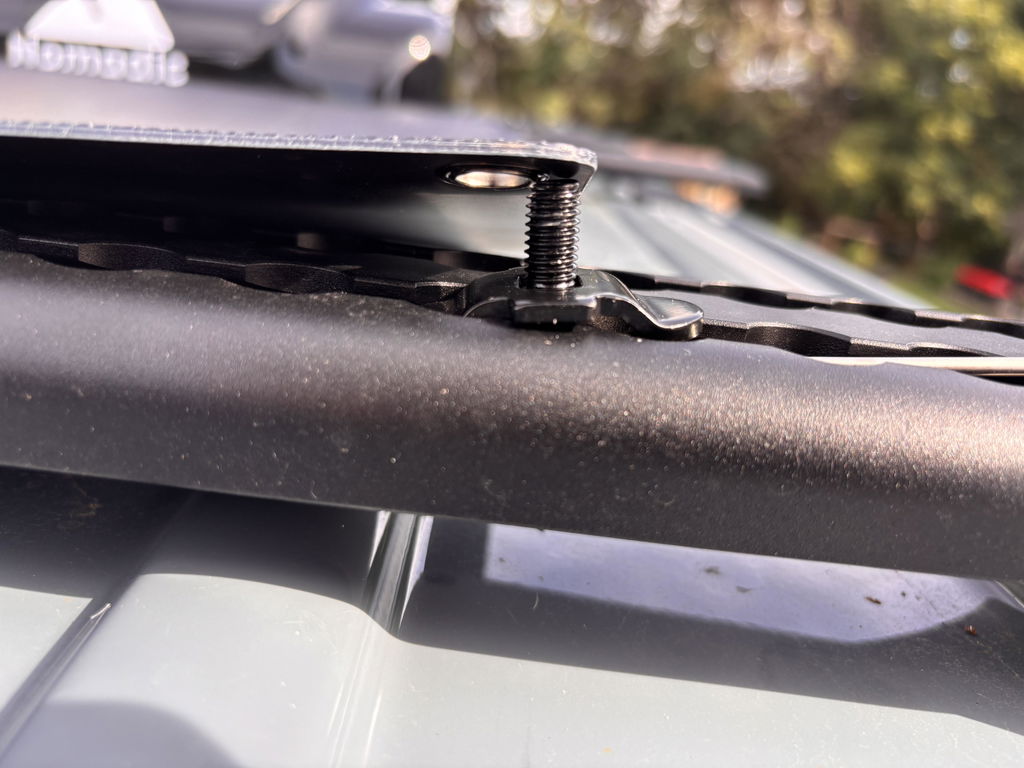
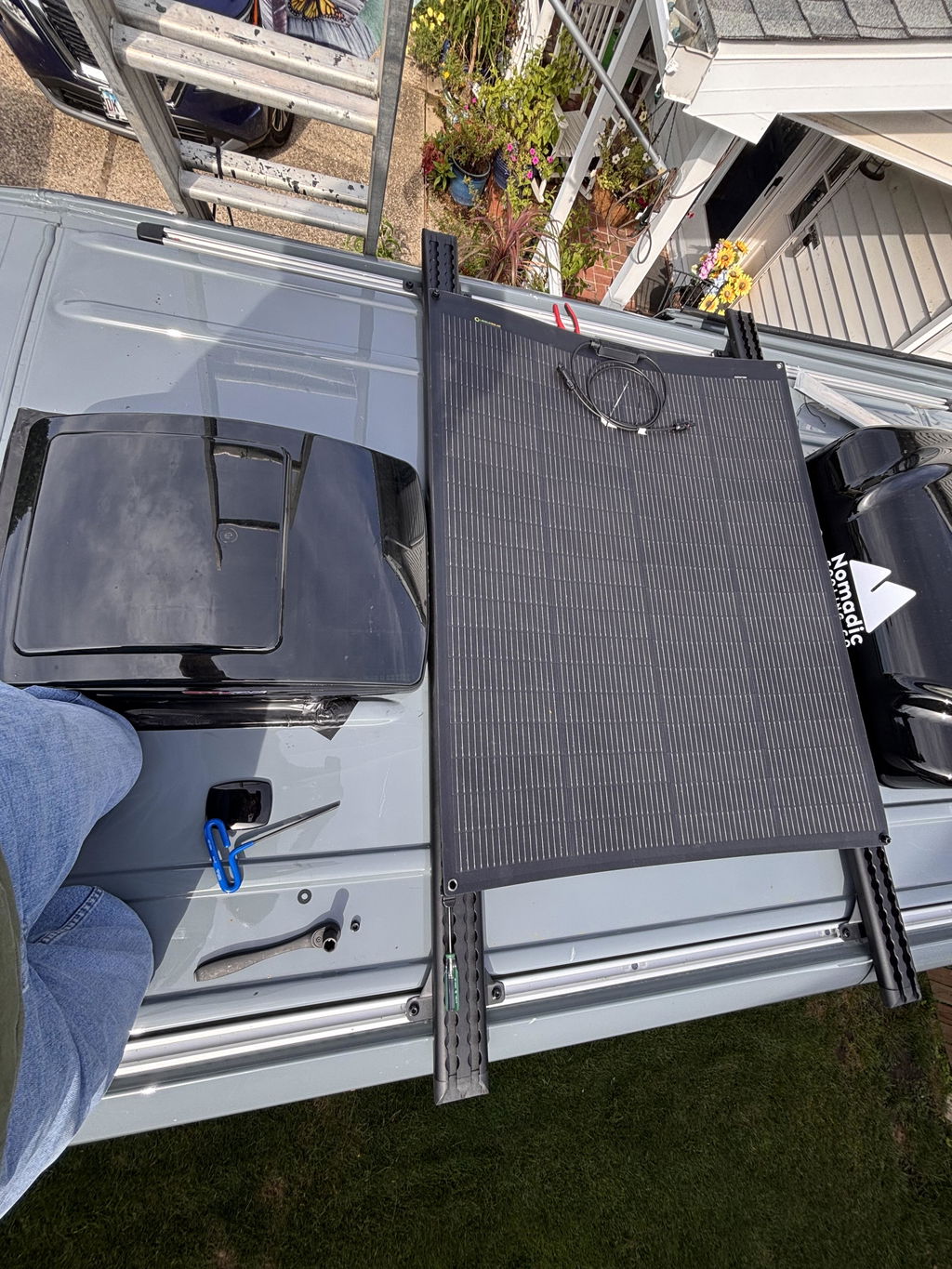
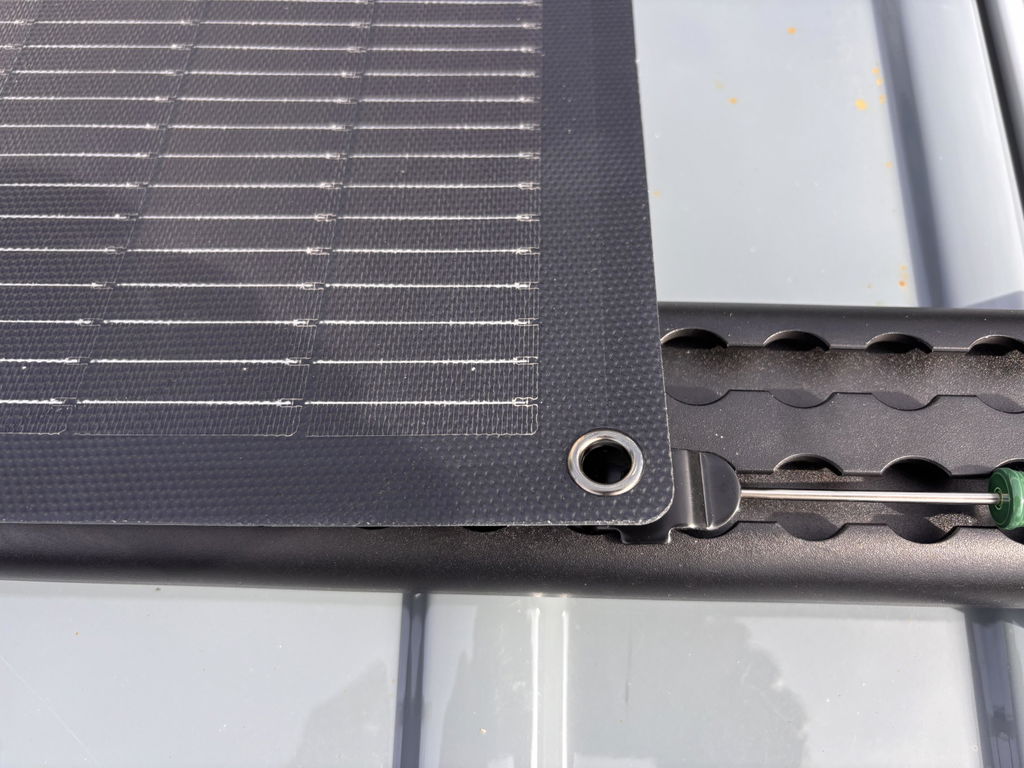
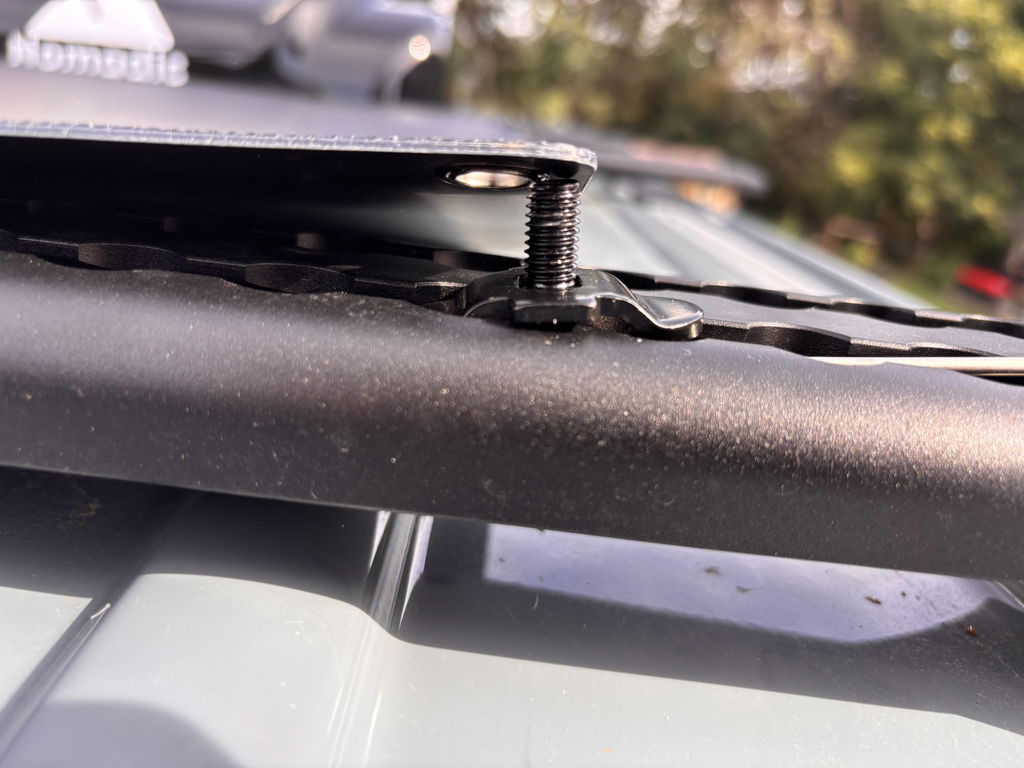
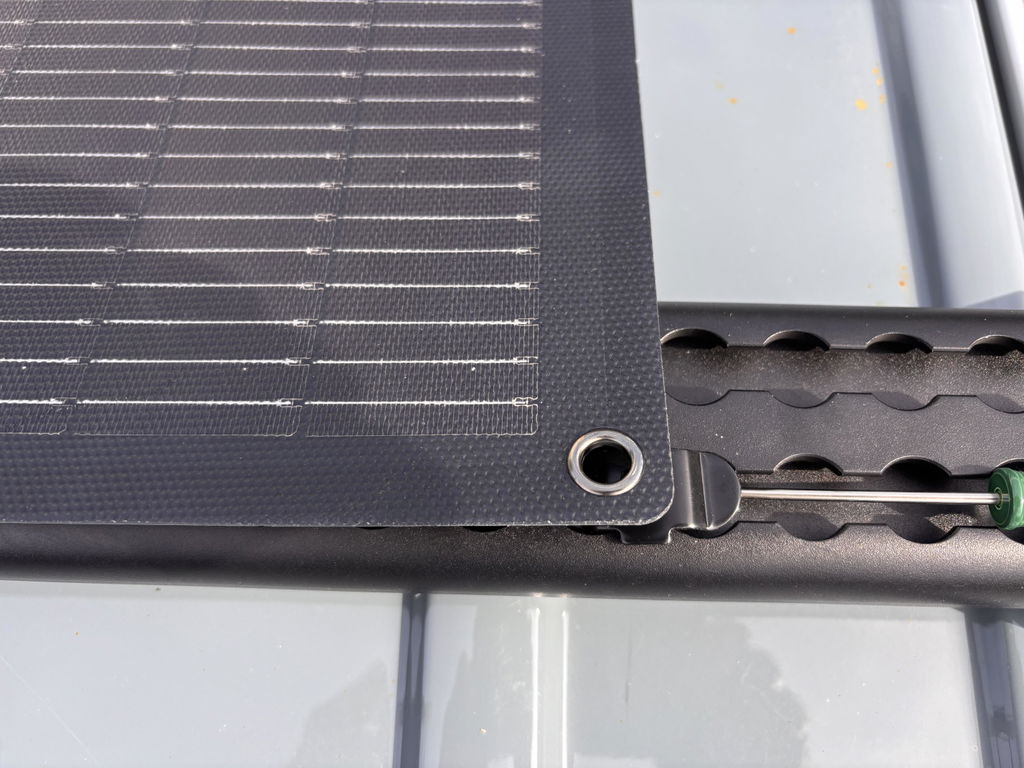
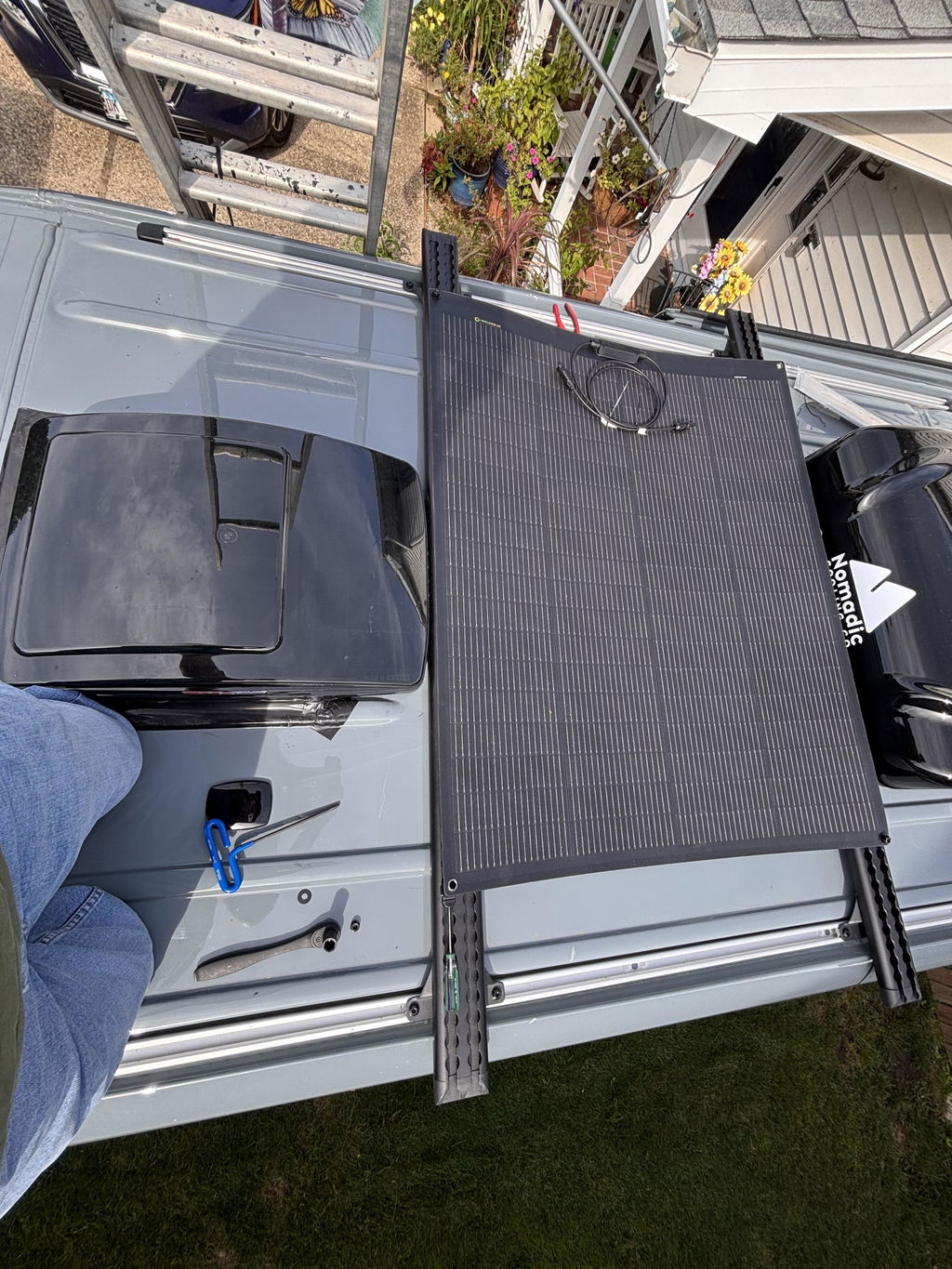
The DualTrack roof rail system mounts to the Grenadier's factory roof rail attachments and provides a dual-channel platform — L-track on one side, T-bolt on the other. Your awning mount, recovery board carriers, and cargo sliders all attach directly to the rails without additional brackets or adapters — saving both weight and complexity. The extruded aluminum construction keeps the roof system at the lighter end of the 25–41 kg range listed in the accessory table above, well below a comparable steel platform.
Side and Ladder Mounts: Weight Where It Belongs
One of the smartest weight management strategies is moving gear off the roof and onto the vehicle's sides, closer to the center of gravity. DVA's Gen 2 Side Accessory Carrier and 20L NATO Jerry Can Carrier mount fuel, water, and recovery boards at door height rather than on the roof. The ladder-mounted recovery board carrier and Hi-Lift jack mount use the rear ladder as a mounting point — keeping heavy recovery gear low without adding separate mounting hardware.
This matters for axle distribution: roof-loaded Grenadiers with tents, racks, and jerry cans shift weight high and rearward. Moving even 30–40 kg of fuel and recovery gear from the roof to side carriers materially improves handling and braking — and can bring you back under individual axle ratings that might otherwise be exceeded.
Cargo Management: L-Track Instead of Heavy Drawer Systems
Heavy drawer systems (36–59 kg before you put anything in them) are one of the biggest single payload hits on a touring build. DVA's L-track tie-down system — including tie-down anchor mounts and stainless steel stud fittings — provides flexible cargo restraint at a fraction of the weight. L-track lets you secure pelican cases, storage bins, and gear bags without a dedicated drawer unit, saving 30–50 kg depending on the system you'd otherwise install.
The Exterior Utility Belt
The Exterior Utility Belt is a modular mounting system that runs along the Grenadier's body lines, providing L-track attachment points along the exterior without drilling, cutting, or permanent modification. It's a platform for mounting lights, antennas, gear, and accessories exactly where you need them — and because it's extruded aluminum, the weight penalty is minimal for the mounting flexibility it provides.
Quick Reference: Every Weight Number That Matters
INEOS Grenadier Weight Specifications at a Glance
- GVWR: 7,716 lbs (3,500 kg) — commonly listed across all models; verify your door sticker
- Curb Weight (Petrol SW): ~5,827–5,875 lbs (2,643–2,665 kg) depending on source
- Curb Weight (Diesel SW): ~5,992 lbs (2,718 kg)
- Max Payload (Base Petrol): ~1,841–1,889 lbs (835–857 kg) depending on source
- Max Payload (Base Diesel): ~1,724 lbs (782 kg)
- Max Tow Capacity: 7,716 lbs (3,500 kg)
- GCM: 15,432 lbs (7,000 kg) — verify by market and VIN plate
- Section 179 Eligible: Yes — exceeds 6,000 lb threshold
The Grenadier is a genuinely capable vehicle with more payload than most of its competitors in stock form. The challenge is not the vehicle itself — it's that the kind of buyer drawn to the Grenadier tends to load it with exactly the kind of heavy, overland-oriented equipment that erodes payload fastest. Know your numbers, weigh your vehicle, and build with a scale in mind.
Build Your Grenadier Right
If you're serious about your Grenadier, the utility platform is where owners start
Roof rails, crossbars, lighting, wiring — the builds that hold up on-trail start with the right mounting system. DVA designs every product to the Grenadier's specific architecture: bolt-on, no drilling, factory warranty intact.
Shop Grenadier Accessories → Accessories Guide