- Rock sliders ($1,200–$2,500): 100–150 lb per pair. Maximum sill protection for technical trail use. Install 2–4 hrs. Best for: owners who will put the vehicle on ledges and rocks.
- Bolt-on tube steps ($300–$600): 30–60 lb per pair. Easier entry, light off-road only. Install under 1 hr. Best for: family access + light dirt, daily drivers.
- OEM-style running boards ($200–$500): 10–20 lb per side. Daily convenience only — no rock protection. Install 20–30 min. Best for: on-road use, passenger accessibility.
If you trail-run seriously, full rock sliders are the correct choice — your sills will thank you on the first ledge crossing. If family entry is the primary need and you stay on-road or light dirt, bolt-on tube steps serve most owners well.
If you're shopping Grenadier side steps, here's the answer before the explanation: for technical trail use and rock protection, choose full rock sliders ($1,200–$2,500, 100–150 lb per pair); for family entry and light off-road, bolt-on tube steps ($300–$600, 30–60 lb per pair); for on-road daily convenience, OEM-style running boards ($200–$500, 10–20 lb per side). The Grenadier's sill height makes entry genuinely difficult — this isn't an optional comfort mod. The question is which type matches your actual use case, and that decision comes down to terrain, not price.
The 2025–2026 owner community has produced enough real-world selection data to draw clear patterns: trail runners choose sliders, accepting the weight penalty for sill protection; family-focused owners and overlanders choose tube steps; on-road daily drivers take running boards. Below is the breakdown — weights, prices, install times, payload math, and what forum owners actually chose.
The Three Categories of Grenadier Side Steps
1. Full Rock Sliders
Rock sliders are not side steps with extra protection — they are a structural sill protection system that incidentally functions as a step. The design intent is to let the vehicle "slide" laterally across a ledge or boulder without punching through the floor structure. The step function is secondary.
Construction is typically steel tube or plate steel with a welded step section. The angle of the outer rail on most designs is intentionally set inward and down at the front — maximizing the ability to slide over obstacles at the cost of step ergonomics. Expect to add 100–150 lb to the pair on most full-coverage designs. That weight contribution is real and goes directly into your Grenadier's payload calculation.
Full rock sliders typically reduce side clearance by 2–4 inches depending on design. The outer edge of most sliders sits lower than the factory sill plastic. Verify the claimed clearance from spec sheets — some "low-profile" slider designs maintain similar clearance to factory trim panels while others sacrifice 3+ inches of side clearance for maximum plate coverage.
2. Bolt-On Step Bars and Tube Steps
Bolt-on step bars are purpose-designed for assisted entry. They mount to the factory sill reinforcements using existing bolt points, add a grippy step tread at a convenient height, and weigh significantly less than sliders — typically 30–60 lb for the pair. Some designs include two step positions (front and rear) to assist both front and rear passengers.
The trade-off: a round or oval tube with no plate coverage offers essentially zero rock protection. A direct strike on a trail obstacle will deform a tube step, potentially transferring force to the mounting point and the sill. For strictly on-road, light gravel, or fire-road overlanding, that trade-off is fully acceptable. For technical rocky terrain, it is not.
3. OEM-Style Running Boards
Factory-adjacent running boards — typically aluminum or composite — sit flush against the rocker panel and provide a wide flat step for easy entry. These are the most ergonomic for daily use and minimize ground clearance loss, but they offer no trail protection and are not designed to absorb lateral rock contact. Weight: typically 10–20 lb per side. Some aftermarket options feature electric or semi-automatic deployment that folds the board up while driving to recover ground clearance.
Ground Clearance Trade-Offs
The Grenadier Station Wagon has a factory ground clearance of approximately 264 mm (10.4 in) unladen. Any add-on sill protection affects effective clearance on a side approach to an obstacle — the approach angle itself does not change, but the lowest lateral point of the vehicle changes.
For most rock slider systems: the outer edge of the slider sits 2–4 inches below the factory rocker panel trim. This means that on a side-hill traverse, rock sliders become the contact point before the frame does — which is exactly the point. On a normal trail approach, the effective side clearance is lower with sliders installed than without.
Running boards and tube steps typically mount tighter to the body and may sit at or slightly above the rocker trim edge. This has a smaller clearance impact on lateral obstacles, but it also means they offer less protection when that contact occurs.
The INEOS Grenadier Station Wagon has a payload of approximately 1,841–1,889 lb depending on variant. Adding 140 lb in rock sliders is 7–8% of total payload — meaningful if you are also building out an overland rig with roof gear, recovery equipment, fuel, and passengers. Factor this into your total build weight before purchasing.
What the 2025–2026 Owner Community Is Actually Choosing
The 2025–2026 Grenadier delivery wave produced the first large owner community with enough vehicles in the field to generate real-world selection data. Forum threads from TheIneosForumCom show owners splitting into two clear camps based on primary use case.
"My criteria are that they will function as sliders as I am a newbie and certain to make mistakes, but still need side steps to help my dad get in the vehicle."
— bluesurf, TheIneosForum, Oct 2024
This split — "I want slider protection AND easy passenger entry" — is the most common real-world need. The honest answer is that no single product is perfect at both. Full sliders lean toward protection, stepping up from a flat rail surface that's angled for sliding, not standing. Tube steps lean toward access, with no capacity to absorb a trail strike.
"[Rock sliders] are heavy (sliders this length will weigh between 100–150 pounds for the pair) and they aren't great as 'side steps' due to the angle at which they are mounted — which is intentional, as it maximizes ground clearance and the ability to slide over rocks."
— Forum contributor, TheIneosForum, Side Runners or Rock Sliders thread
Owners who trail-run regularly — particularly those with experience on technical terrain in other 4×4s — are consistently choosing full rock sliders, accepting the weight penalty and reduced step comfort in exchange for peace of mind on ledge crossings and off-camber terrain.
"For peace of mind, there's not an easier mod that will save so much money [than rock sliders]. A 3-ton vehicle dragging itself off a rock with nothing protecting the sills would have been catastrophic."
— Forum contributor (Pyrenees trail account), TheIneosForum, Side Runners or Rock Sliders thread
Owners primarily using their Grenadier as a daily driver with occasional light off-road use — or owners where passenger access is the driving need — are choosing bolt-on step bars or OEM-style running boards, often with a 20-minute installation and immediate improvement in daily usability.
Decision Matrix: Which Type Fits Your Build
| Factor | Rock Sliders | Tube Steps | Running Boards |
|---|---|---|---|
| Trail rock/ledge protection | High — primary design purpose | None to minimal | None |
| Daily entry ease | Moderate — angled rail not ideal for stepping | Good — purpose-designed step tread | Best — wide flat surface |
| Weight added (pair) | 100–150 lb | 30–60 lb | 20–40 lb |
| Ground clearance impact | −2 to −4 in side clearance | Minimal (mounts near sill) | Minimal to slight |
| Install complexity | 2–4 hours, two people | 20–45 min, one person possible | 20–45 min, one person possible |
| Typical price range | $1,200–$2,500 | $400–$900 | $600–$1,800 (electric higher) |
| Best for | Technical off-road, Rocky terrain | Mixed use, family access | Daily driver, light trails |
DVA INEOS Grenadier Side Steps
DVA's bolt-on Grenadier side step set — OEM-style aluminum construction, anti-slip tread surface, fits Station Wagon and Trailmaster. No drilling required, installs in under 30 minutes using factory mounting points.
DVA Build Team, 2025: Confirmed fitment on US-spec Station Wagon (2023–2025 MY). Uses factory sill reinforcement points — same bolt pattern as the OEM INEOS step bracket. Solo install: under 30 minutes. Anti-slip aluminum tread surface, no permanent modification to vehicle structure. Zero drilling required.
View Side Steps →Material Choices: Steel, Stainless, and Aluminum
Most rock slider systems are mild steel with powder coat. Stainless steel tube step variants exist and offer corrosion resistance without painting — meaningful for coastal or winter-salted road environments. Some owners specifically choose stainless for this reason, accepting slightly higher cost and somewhat different appearance.
Aluminum options — typically in the running board / OEM-style category — are lightest and corrosion-proof, but cannot absorb significant rock impact without deforming. They are appropriate for daily-driver use but not trail rock contact.
For owners in high-humidity, coastal, or snow-belt environments: stainless tube steps and aluminum running boards are worth the premium over powder-coated steel, which can chip and rust at mounting points after heavy trail use.
Mount Side Gear While You're At It
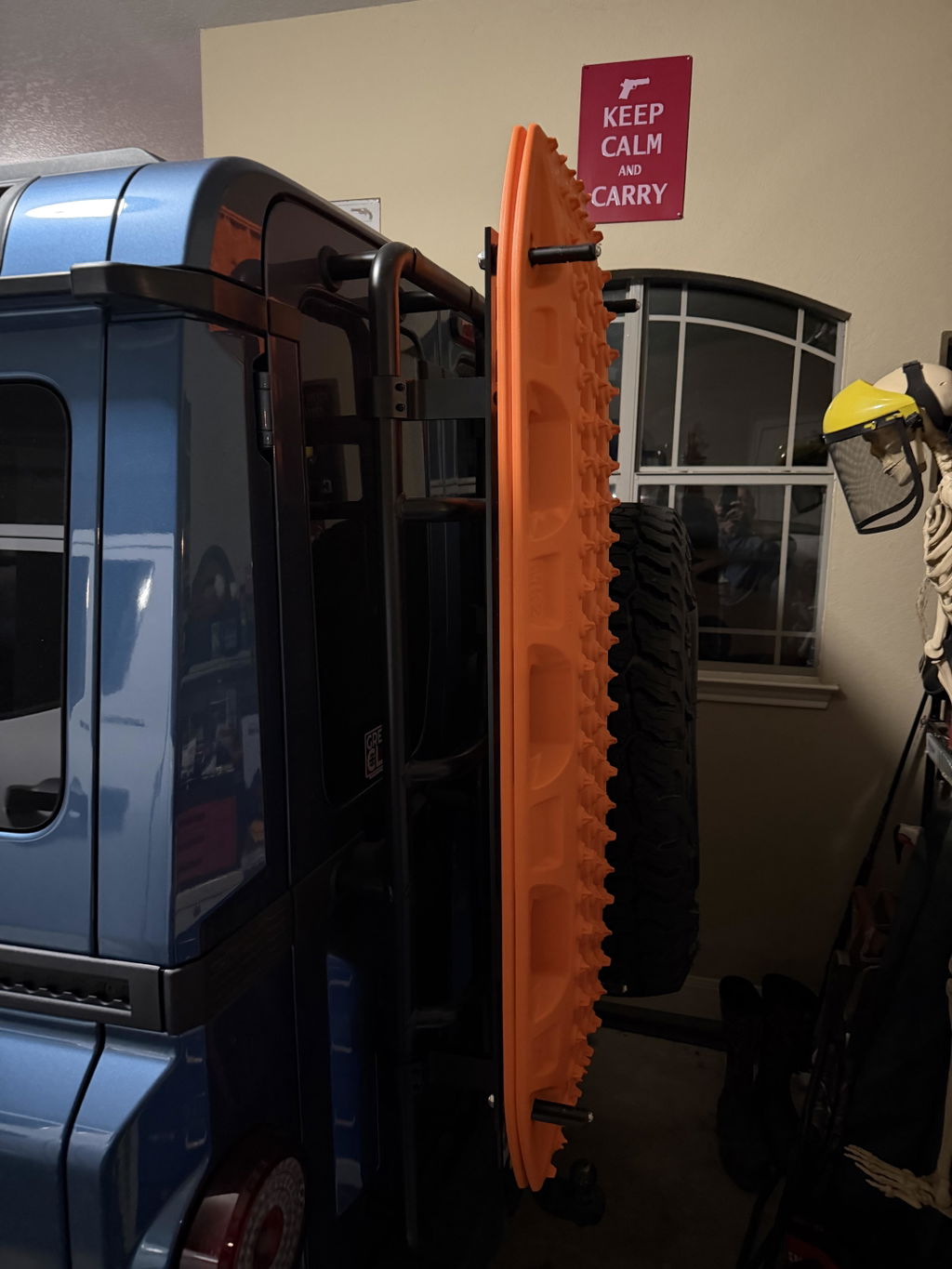
Adding a sill solution opens the natural next question: what do you mount on the sides? The DVA Side Accessory Carrier Gen 2 — bolt-on, zero drilling, 25 lb load rating per rail — turns your Grenadier's sides into organized gear storage. Recovery boards, jerry cans, Hi-Lift jacks, all within arm's reach on the trail.
View Side Carrier →What Goes Next: Side Gear Mounting After Your Sill Decision
Once you decide on your side step or slider configuration, the follow-on question is side gear mounting. Regardless of which sill option you choose, the Grenadier's sides — particularly the roof-to-sill run — have usable real estate for recovery gear, fuel, and trail tools.
Owners building serious overland rigs often prioritize:
- Recovery boards mounted within quick-release arm's reach
- Jerry cans for fuel or water reserve on multi-day routes
- Hi-Lift jacks — particularly valuable on ledge or recovery scenarios where your new rock sliders have done their job
- Fire extinguisher brackets on the exterior, accessible without opening doors
The DVA Side Accessory Carrier Gen 2 is a 6061 aluminum bolt-on rail that creates a mounting bridge from the roof rail system down to the factory L-Track utility belt. It's fully compatible with DVA's accessory carrier ecosystem — including jerry can mounts, recovery board carriers, and Hi-Lift brackets — using the same L-Track fitting system so gear positions are adjustable without tools.
Installation Overview by Type
Installation complexity varies significantly across the three categories.
Rock Slider Installation
Expect a 2–4 hour job requiring two people. Most systems attach to factory threaded holes in the sill reinforcement, but the weight of steel sliders (70–80 lb per side) makes positioning and holding difficult solo. Critical: torque specs are provided by the manufacturer and must be followed — under-torqued slider bolts have been known to walk in service. Thread-locker is typically recommended on mounting hardware.
Bolt-On Step Bar Installation
Most tube step systems are genuinely one- or two-person jobs in 20–45 minutes. Factory mounting points accept the bracket hardware, and the process is straightforward. Most owners report no surprises. Verify the step tread surface is rubber or grip-tape coated and that the tread height is appropriate for your passengers' leg length before purchase.
Running Board / Electric Board Installation
OEM-style fixed boards are similar to tube steps in installation time. Power-retractable electric boards add wiring complexity — typically tapping into a door or ignition signal to trigger deployment. Allow additional time for the wiring run and verify compatibility with the Grenadier's electrical architecture before purchasing electric options.
Multiple owners specifically call out the value of a second person for rock slider installation — not for safety, but for alignment. One person holds position while the other starts bolts. Attempting to hold a 70+ lb slider solo while threading hardware is difficult and risks cross-threading. Plan for a two-person session regardless of what the instructions say.
Evaluating Options: Community-Tracked Formats
The Grenadier forum community has produced detailed threads tracking known side step and slider options as the aftermarket has grown. The Comprehensive List of Known Grenadier Side Steps thread on TheIneosForum (Apr 2024 and updated) is the most complete community-maintained resource for option tracking across designs, materials, and countries of origin.
When evaluating options from that list or elsewhere, prioritize:
- Published weight per side — if not listed, ask before buying (payload awareness)
- Material + coating — powder coat durability varies; stainless is long-term lower maintenance
- Mounting point compatibility — confirm against your specific Grenadier trim and build date
- Step tread presence and grip material — smooth surface sliders are poor daily steps
- Shipping lead time — many slider manufacturers operate to-order with 6–14 week lead times
DVA Grenadier Exterior Mounts
Engineered bolt-on exterior gear for the INEOS Grenadier — side carriers, accessory mounts, L-Track utility rails, and more. All zero-drill, factory-mount, Station Wagon fitment.
Browse Exterior Mounts →