INEOS Grenadier roof rails, crossbars, and roof bars at a glance: Every Grenadier ships with plastic OEM roof rails and 4 factory attachment points per side. The DualTrack low-profile crossbar system mounts directly to those attachment points (not the plastic rails), sits ~1" above the roofline, and carries 330 lb (150 kg) dynamic load. Each crossbar has dual full-length L-Track rows for tools, lights, and roof-bar accessories. Grab-handle mounted roof bars bolt to the factory interior grab handle assemblies — no drilling, no gutter clamps, sits flush. Factory rail alternatives include gutter clamps and T-slot platforms — both work but add height. For roof height reference: Wagon is 80.7" (2,050mm) stock; DualTrack adds under 1.5".
The Grenadier Roof Problem
The INEOS Grenadier stands 80.7 inches tall (2,050mm). Add a conventional full-length roof rack platform and you're looking at 4–6 inches of additional height, 50–80 lbs of dead weight bolted to the roof permanently, and turbulence that turns highway driving into a wind tunnel experiment. For a vehicle that already sits close to a standard 7-foot garage door opening, those inches matter more than most owners realize until the first time they hear the crunch.
This is the fundamental tension with Grenadier roof rails. The vehicle was built for serious off-road work — body-on-frame construction, solid axles, a BMW B57/B58 powertrain — but the roof system it shipped with was designed for aesthetics, not utility. Understanding exactly what you're working with from the factory, and what your aftermarket options actually do at the engineering level, is the difference between a roof setup that performs and one that creates problems you didn't expect.
This guide breaks down the complete Grenadier roof rail ecosystem: factory anatomy, mounting approaches with their structural implications, load rating science, and the modular systems that are changing how owners think about rooftop utility on both the Wagon (5-door SUV) and the Quartermaster (pickup).
Factory Roof Rail Anatomy
Every Grenadier ships with two plastic roof rails running the length of the roofline and structural rain gutters along each side. These are the two mounting systems the entire aftermarket ecosystem is built around — understanding what each offers is step one for any roof modification.
The Rain Gutters
The structural rain gutters run the full length of the roofline on both sides. These are formed metal channels that provide a continuous clamping surface for gutter-mount rack systems. The gutter structure distributes load along its length, making it the go-to mounting zone for full-length platform racks and heavy static loads.
The Mounting Rails
The factory plastic rails are decorative — they clip onto the roof and serve no structural purpose. The Grenadier provides dedicated mounting rails along the roofline that aftermarket crossbar systems attach to directly. These rails run parallel to the gutters and are the foundation for low-profile crossbar systems.
The Roof Substructure
The Grenadier has a proper structural roof supported by the body-on-frame design — not a single-skin stamping like you'd find on a unibody crossover. This means the roof contributes to the overall structure in a meaningful way, and where you mount matters as much as what you mount. Gutters vs. mounting rails — each approach has structural trade-offs that affect load capacity, flex under load, and long-term durability.
Mounting Methods: Engineering Trade-offs
Two primary mounting philosophies have emerged in the Grenadier aftermarket. Each uses a different structural zone on the roof, and the choice has downstream effects on everything from load capacity to wind noise to garage clearance.
Method 1: Rain Gutter Clamps
Gutter-mount systems clamp onto the structural rain channel running along the roofline. This is the most common approach for full-length platform racks because the gutter provides continuous mounting surface along the entire length of the roof.
Advantages: Wide load distribution, long mounting span, compatible with full-length platform racks.
Trade-offs: Gutter clamping introduces point loads on what is structurally two layers of thin-gauge metal lapped together. Under heavy static loads — particularly roof-top tents with occupants — owners have reported measurable deformation.
Gutter systems also tend to sit higher, adding 3–6 inches to overall vehicle height depending on the platform design. That height creates aerodynamic drag and wind noise proportional to the profile.
Method 2: Mounting Rails
The second approach uses the Grenadier's mounting rails — the dedicated rail positions on the roof where aftermarket crossbar systems attach. No drilling required. No gutter clamps. The crossbars mount directly to the rails, and the result is the lowest possible profile since hardware sits flush along the roofline.
Advantages: No drilling, no permanent modification, lowest possible profile (~1 inch above roofline), maintains garage clearance, fully reversible.
Trade-offs: Crossbar span is limited to the available rail positions rather than the continuous gutter length. Not suited for full-length platform racks — this approach is optimized for crossbar systems with modular accessories.
This is the approach that yields the lowest-profile systems — crossbars that sit approximately one inch above the roofline, maintaining garage clearance while providing functional mounting surface.
Method 3: Grab Handle Mount
A third mounting method — less discussed but increasingly popular — uses the Grenadier's exterior grab handle hardware as anchor points for crossbars and load bars. Several aftermarket suppliers design Grenadier roof bars specifically to bolt to the factory grab handle assemblies: no gutter clamping, no rail hardware, no permanent modification.
Advantages: Dead-simple install (~30 minutes), no special tools, uses factory-engineered structural points, easy removal for track days or storage.
Trade-offs: Fewer mounting positions than a full gutter span, limited to bar-style configurations rather than full platform racks, load rating tied to grab handle bolt strength.
For owners who want roof bars without committing to a full rack system, grab-handle mount options represent the lowest-friction path — especially for kayaks, bikes, or light cargo that doesn't require a permanent platform.
Both mounting methods are compatible with the Grenadier Wagon (5-door SUV with swing-out rear door, safari windows, and rear ladder) and the Quartermaster (pickup variant). The roof structure is identical across both platforms. Quartermaster owners should note the absence of a swing-out rear door and rear ladder when planning cargo access from above.
Mounting Approach Comparison
| Factor | Rain Gutter Clamps | Mounting Rails | Grab Handle Mount |
|---|---|---|---|
| Drilling Required | No | No | No |
| Height Added | 3–6 inches | ~1 inch | ~2–3 inches |
| Reversible | Yes | Yes | Yes |
| Wind Noise Impact | Significant | Minimal | Low–Moderate |
| Load Path | Gutter → roof skin | Rail → roof structure | Grab handle → A-pillar structure |
| Best For | Full-length platform racks | Modular, low-profile crossbar setups | Kayaks, bikes, light cargo bars |
Understanding Load Ratings
Load capacity is the most misunderstood specification in the roof rack world. The numbers that matter are not the ones most owners look at first.
Dynamic vs. Static Load
Dynamic load is the maximum weight the roof system can carry while the vehicle is in motion. This includes all forces from acceleration, braking, cornering, and off-road impacts. Dynamic ratings are always lower than static ratings because they account for force multiplication from vehicle movement.
Static load is the maximum weight the system supports when the vehicle is parked and stationary. This is the number that matters for roof-top tent use — the tent, bedding, and occupants are all part of the static load calculation.
When evaluating roof rail systems for tent use, calculate: tent weight + bedding/accessories + occupant weight = total static load. A typical roof-top tent weighs 50–70 kg. Two adults add 150+ kg. Your rail system's static rating needs to cover the sum with margin.
The Grenadier's roof structure is built to handle substantial loads — the five cross-member design and body-on-frame construction provide a strong foundation. But the load rating of your roof rail system is always the bottleneck, not the vehicle's roof itself. A rail system rated for 75 kg dynamic doesn't get stronger because the Grenadier's roof can handle more.
Weight Distribution Matters
Evenly distributed load across four crossbar contact points behaves very differently than concentrated load at two points. Systems with four mounting bars spread force across more attachment points, reducing per-point stress and allowing higher total load capacity without exceeding individual fastener limits.
L-Track: The Modular Foundation
L-Track (also called airline track or logistic track) is an extruded aluminum channel used across aviation, marine, and ground transport for securing cargo with sliding tie-down points. The profile is standardized: a recessed channel with angled retention lips that accept spring-loaded fittings.
What makes L-Track significant for roof rail systems is modularity. Instead of fixed mounting points that accept only one specific accessory, L-Track provides a continuous channel where fittings slide into any position and lock. Need to swap awning mounts for crossbar brackets? Same track, different fitting. Want to reposition a Starlink mount? Slide it.
Why L-Track Changes the Equation
Traditional crossbar systems use fixed-position mounting clamps. Your accessories mount at whatever position the crossbar clamp allows, and repositioning means loosening, sliding, and re-tightening individual clamps. With L-Track integrated directly into the crossbar itself, every inch of rail becomes a potential mounting position.
This is the engineering principle behind dual-track crossbar systems: instead of a single row of mounting options, two parallel rows of L-Track on each bar double the available attachment surface. Run an awning mount on the outer track and a Starlink mount on the inner track simultaneously. No interference, no compromise on positioning.
The DualTrack Crossbar System

The DualTrack Low-Profile Roof Crossbar System was engineered to solve a specific frustration: single-track setups that force owners to choose between accessories instead of running them simultaneously.
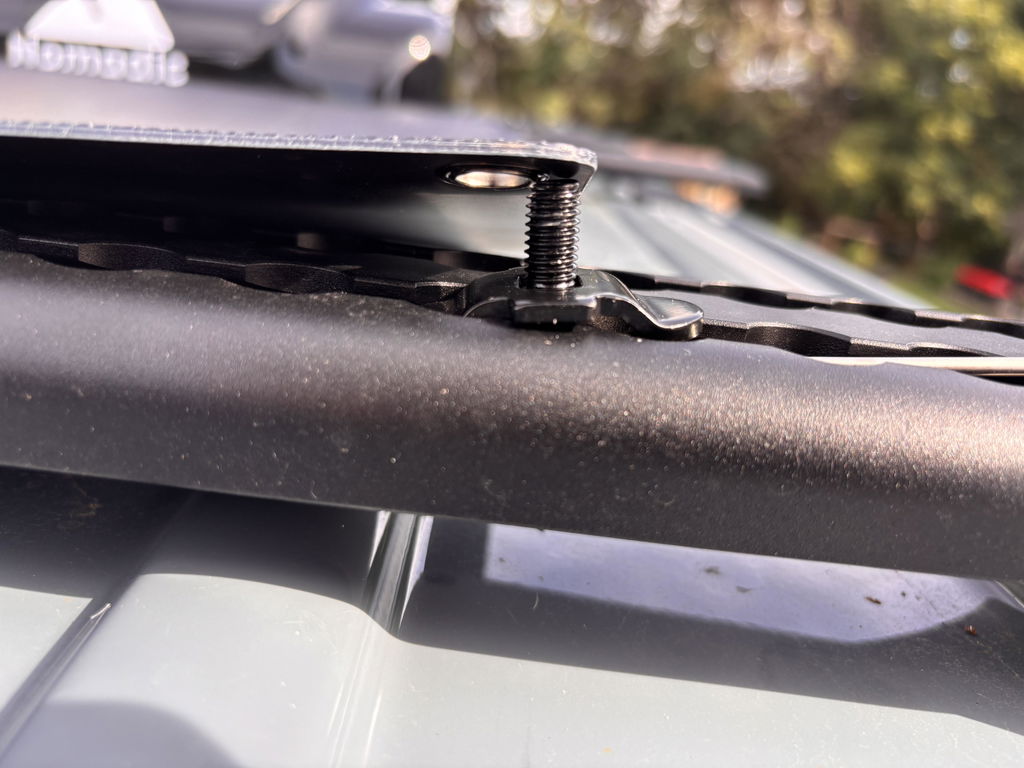
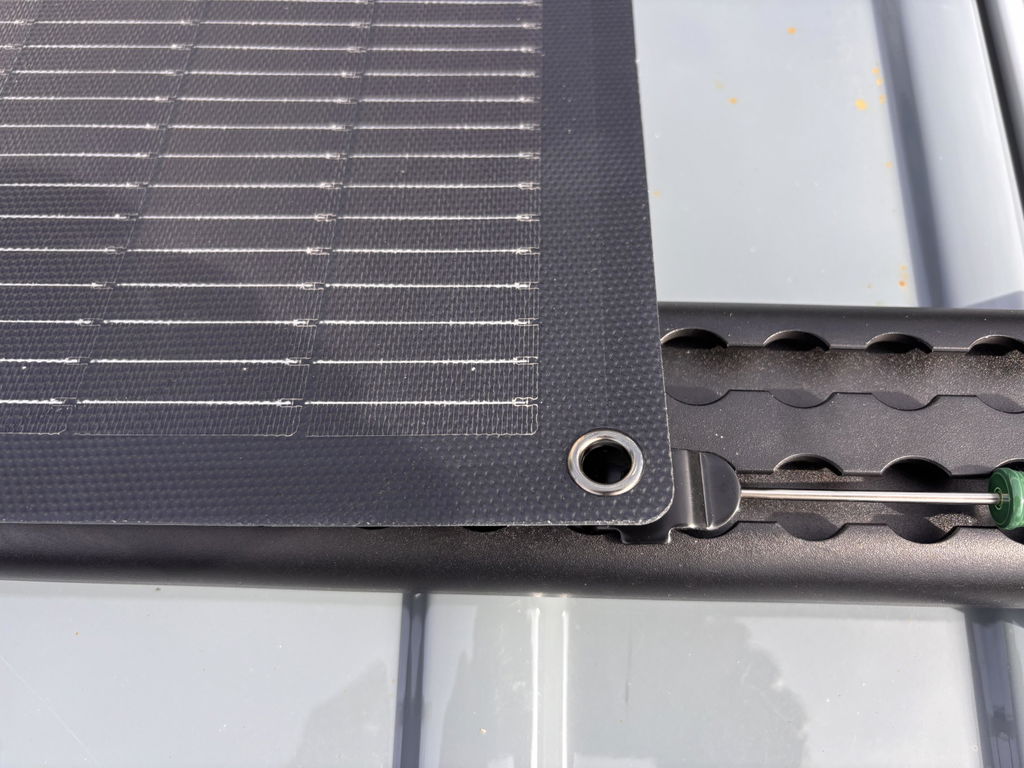
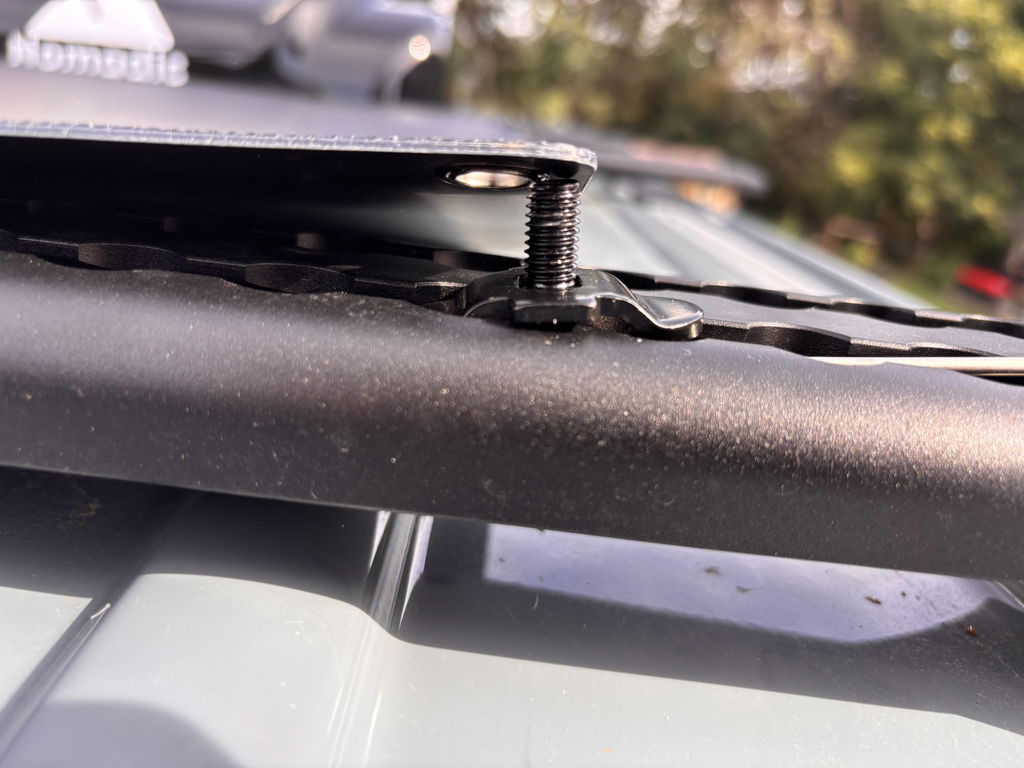
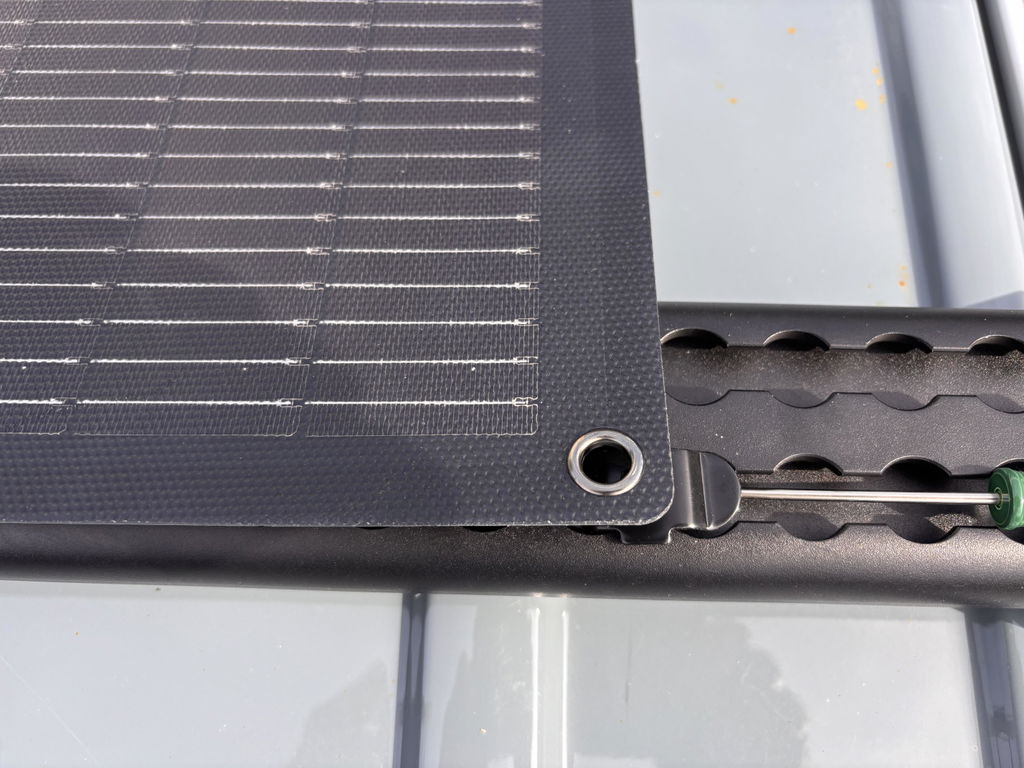
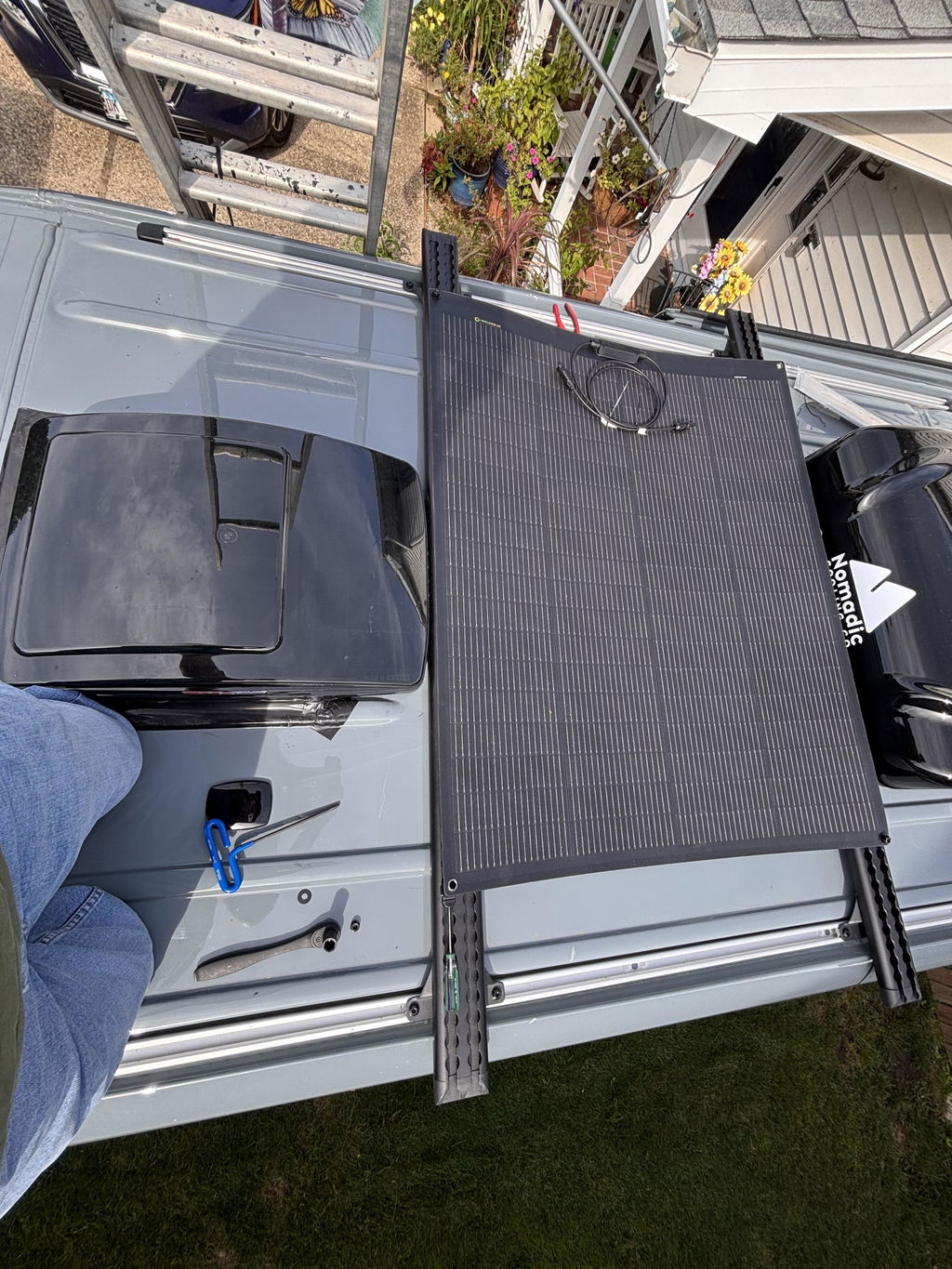
Each crossbar carries two full-length rows of L-Track — inner and outer channels running the complete span of the bar. The bars mount directly to the Grenadier's mounting rails using rubber-grommeted brackets that protect the vehicle's finish. No drilling, no adapters, no permanent modification.
Engineering Details
The crossbars are extruded aluminum — a manufacturing process that produces consistent cross-sections with uniform material properties along the entire length. Extrusion produces tighter tolerances and better structural consistency than welded or fabricated alternatives, and the resulting profile integrates the L-Track channels directly into the bar structure rather than adding them as separate pieces.
The mounting brackets use countersunk fasteners — nothing protrudes above the bar surface to catch straps, gear bags, or hands during loading. Powder coat finish protects the aluminum from oxidation and provides UV resistance for long-term outdoor exposure.
Installation
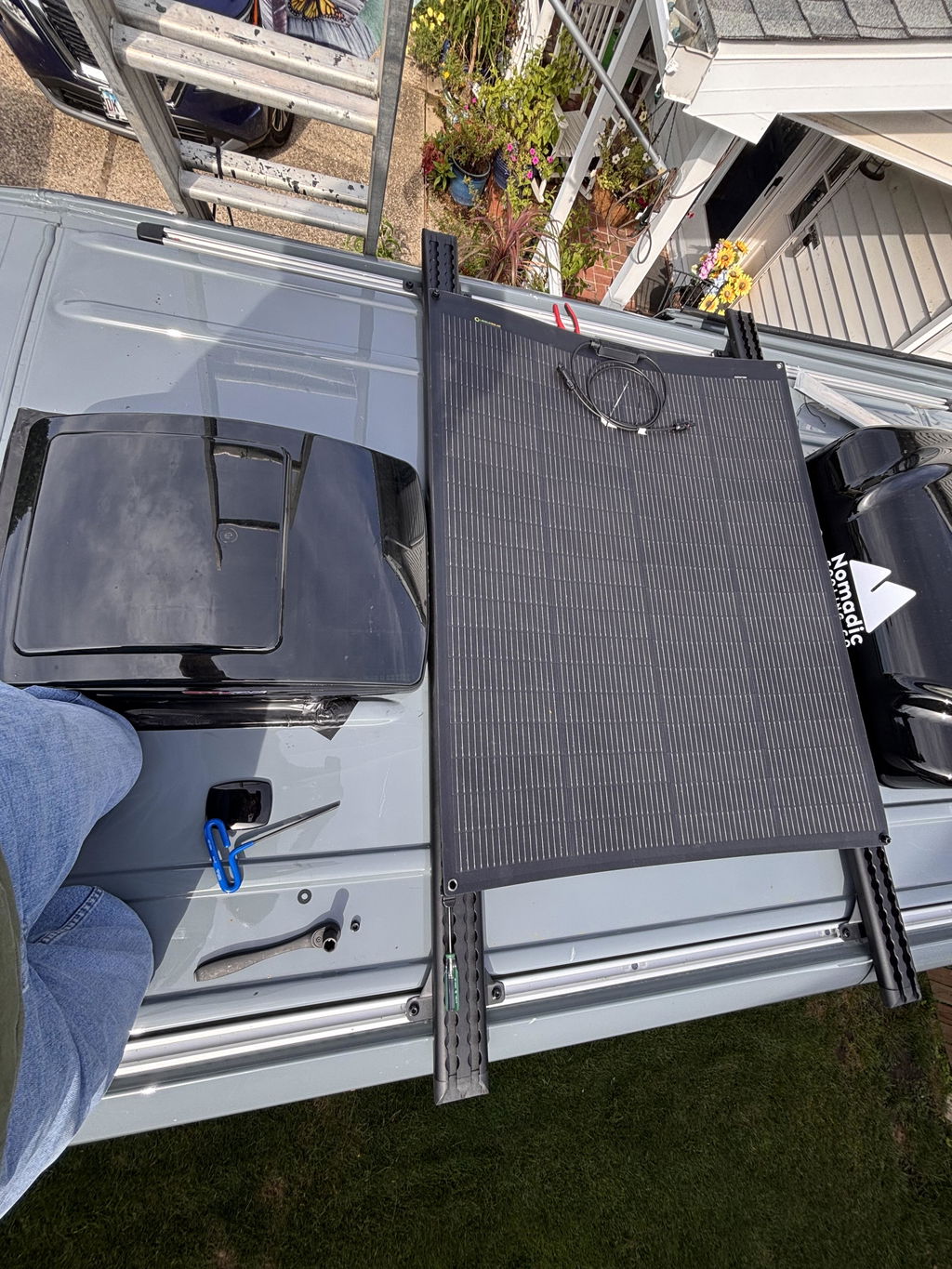
The system ships with all required hardware in labeled bags, Allen keys included. Assembly breaks into two phases: bracket-to-bar assembly (which can be done on a workbench before climbing onto the vehicle) and bar-to-vehicle mounting.
One installation detail worth noting from owner reports: some units may have powder coat residue in bracket threads from the finishing process. If a bolt binds during assembly, flip the bracket and run the bolt through from the opposite side to clear the thread. Blue Loctite on all fasteners is recommended for vibration resistance during off-road use.
DualTrack fits Both Platforms
The system is engineered for both Wagon and Quartermaster models. The mounting rails are identical across both variants, so the same crossbar kit fits either platform. Available in 2-bar and 4-bar configurations — 2-bar for minimalist builds, 4-bar for maximum load distribution and accessory capacity.
DualTrack™ Low-Profile Roof Crossbar System
Dual rows of full-length L-Track per bar. Mounts to the Grenadier's mounting rails. Approximately 1 inch total profile height. Available in 2-bar and 4-bar kits.
The Accessory Ecosystem
A roof rail system is only as useful as what you can mount to it. The advantage of an L-Track-based platform is that the accessory ecosystem extends beyond any single manufacturer's catalog — any standard L-Track fitting works with the channel. But purpose-built accessories designed for the specific profile and use case eliminate the fitment guesswork.
Awning Mounts

Awning installation is one of the most common roof rail use cases, and one where the dual-track design pays off. The Awning Mount for DualTrack slides into the outer L-Track channel, positioning the awning bracket at the optimal overhang distance from the vehicle. Because it's on the outer track, the inner track remains completely available for other accessories — lights, Starlink mount, cargo tie-downs — without interference.
Standard awning brands (270-degree, 180-degree, and side-pull designs) use bolt patterns that the mount adapts to. No drilling into the crossbar, no permanent modification to the rail.
L-Track Sliders

The L-Track Slider is the universal building block of the system. It converts any point along the L-Track into a threaded attachment point — bolt on a light bracket, strap anchor, rod holder, Pelican case mount, recovery board bracket, or any custom hardware you fabricate. The spring-loaded fitting slides in from the end of the track, positions anywhere along the channel, and locks under load.
roof LED light bar

The roof LED light bar mounts directly to the roof surface using high-strength adhesive tape — no drilling, no clamps, no rail attachment required. It sits flush against the roofline for the lowest possible profile. The DTP (Deutsch-style) plug-in connector means wiring is clean and the light bar integrates with the Grenadier's factory EXT circuit. Side-mount LED side lights and flood lights mount to the DualTrack crossbars to extend the illumination pattern for camp lighting or trail spotting.
Starlink Mini Roof Mount

The Starlink Mini Roof Mount v2 is purpose-built for the DualTrack system. The kickstand design holds the Starlink Mini at the optimal angle for satellite acquisition while keeping the dish low to the roofline. Slides into L-Track position, locks, and the Starlink drops into the cradle. Deploy in camp, remove for highway driving. No tools required for the dish itself.
Build Configuration Guide
Roof system selection depends on what you're actually mounting. Here's how the product lineup maps to common Grenadier build types:
The Touring Build
Goal: Awning, light bar, Starlink, and occasional cargo. Highway manners matter.
Setup: DualTrack 2-Bar Kit + Awning Mount + Starlink Mount + LED Light Bar
Height added: ~1 inch
The Overland Build
Goal: Roof-top tent, awning, recovery boards, lights, Starlink — the full expedition loadout.
Setup: DualTrack 4-Bar Kit + full accessory ecosystem
Height added: ~1 inch (before tent/accessories)
Roof-top tent builds should use the 4-bar configuration for maximum load distribution. Calculate total static load carefully: tent + bedding + occupants. Verify that the combined weight falls within the system's static load rating with appropriate margin. Several Grenadier owners are running RTT setups on DualTrack systems — check the forum threads linked below for real-world feedback.
Wind Noise and Aerodynamics
Wind noise is the single most common complaint in Grenadier roof system discussions. The vehicle's upright, slab-sided design creates significant airflow disruption at the roofline, and anything protruding above the roof surface amplifies it.
The physics are straightforward: aerodynamic noise is proportional to the frontal area of the obstruction and the turbulence it creates in the airstream. A full-length platform rack with 4–6 inches of vertical profile creates a wall of turbulence across the entire roof. Crossbar systems with ~1 inch of profile sit within the boundary layer of the existing roof surface, generating significantly less turbulence and correspondingly less noise.
This is why the low-profile approach matters for daily-driver Grenadiers. If you're building a dedicated expedition rig that lives off-road, wind noise at highway speed is a secondary concern. If your Grenadier is also your commuter and road-trip vehicle, the difference between a 1-inch crossbar and a 5-inch platform is the difference between conversational cabin noise and reaching for the volume knob.
Decision Framework
Before selecting a roof rail system, work through these questions:
What are you mounting?
Accessories (lights, awning, Starlink) → DualTrack 2-Bar. Full overland loadout with tent → DualTrack 4-Bar.
Does garage clearance matter?
If your parking situation has height restrictions, every inch counts. Low-profile systems preserve the factory roofline height within a tolerance that won't trigger clearance problems.
How often will you reconfigure?
If your roof setup changes seasonally or between trips, L-Track modularity eliminates the re-drilling and re-mounting cycle. Slide, position, lock.
Wagon or Quartermaster?
Both platforms use identical mounting rails. The DualTrack system fits both without modification. Quartermaster owners: plan your loading approach differently since there's no swing-out rear door or rear ladder for rooftop access from behind.
Is this reversible?
Systems that mount to factory gutters or mounting rails without drilling can be removed cleanly, returning the vehicle to stock condition. Drill-through and permanent-bond systems cannot. Consider resale implications.
The Complete DVA Grenadier Roof Ecosystem
roof LED light bar
Tape-mount to roof. DTP plug-in. Flush profile.
Community Resources
The Grenadier community has produced extensive discussion on roof systems. These threads contain real owner install experiences, photos, and long-term feedback:
- TheIneosForum.com: "DVA MECHANICS ROOF RAILS!" — detailed install writeup with step-by-step observations
- TheIneosForum.com: "Roof rack better in the gutter or on the grab rails?" — structural debate between mounting approaches
- TheIneosForum.com: "Factory Roof Rails" — discussion of what's underneath the plastic trim
- r/ineosgrenadier: "Best Roof Rack Mounting Option" — community comparison of gutter vs. rail mounting
- TheIneosForum.com: "DualTrack Roof Rails — Community Discount" — owner Q&A on the DualTrack system
Reading actual owner experiences — what worked, what needed adjustment, what they'd do differently — is worth more than any manufacturer spec sheet. The quotes throughout this guide come from these community discussions.