The 1.72° You Can't Ignore
Every body-on-frame vehicle flexes. It is not a defect — it is a design feature. The ladder chassis of the INEOS Grenadier is engineered to absorb terrain loads by twisting along its longitudinal axis, distributing energy across the frame rails rather than concentrating stress at a single point. The INEOS Body Builder Guide quantifies this movement precisely: up to 1.72 degrees of torsional twist measured at the rear of the chassis relative to the cab.
That number sounds small. In practice, it means the rear frame rails can move vertically by roughly 30 mm relative to the cab on full articulation. Any rigid structure bolted across that gap — a canopy, a service body, a camper module — must either accommodate that movement or absorb the stress. One approach works. The other leads to cracked welds, popped rivets, and warranty disputes.
Quick Answer
The INEOS Grenadier chassis twists up to 1.72° (≈30 mm rear vertical movement) under full articulation. Any Quartermaster canopy or service body spanning the frame must use floating rear mounts with rubber/polyurethane bushings (±15 mm vertical compliance). Rigid mounting transfers every degree of flex directly into canopy walls and door frames — leading to cracked welds, popped rivets, and water intrusion on corrugated tracks. Station Wagon owners face the same physics at the roof rack: distributed-load crossbar systems measurably reduce long-term fatigue compared to two-point systems at the same weight.
Why Chassis Flex Exists
A ladder-frame chassis is two parallel rails connected by crossmembers. When one wheel climbs an obstacle and the diagonally opposite wheel drops into a rut, the frame twists. This torsional compliance is intentional — it keeps the axles loaded and the tyres in contact with the ground. Lock the frame rigid and you get a vehicle that lifts wheels early, loses traction, and transmits brutal shock loads into the cabin.
The Grenadier's box-section ladder frame uses high-tensile steel with up to 4 mm wall thickness. INEOS designed it for "superb rigidity" in bending while allowing controlled torsional compliance. The cab is mounted to the frame through rubber-isolated body mounts that absorb vibration and allow relative movement between body and chassis.
What the Body Builder Guide Specifies
The INEOS Body Builder Guide — a technical document published for aftermarket vehicle converters working on the Quartermaster Chassis Cab — lays out the engineering constraints for anyone bolting structure to the frame. The critical specifications include:
- Maximum torsional twist: 1.72° at the rear overhang
- Chassis cab GVM: 3,550 kg (same as wagon)
- Wheelbase (QM): 3,227 mm — 305 mm longer than the wagon
- Rear overhang mounting zone: exposed ladder frame behind the passenger cabin
Engineering Principle
The 1.72° figure is measured under controlled articulation testing. Real-world off-road driving can approach these limits repeatedly. Any body or canopy must be designed for infinite fatigue cycles at this deflection, not just a one-time static load.
Floating vs. Rigid Mounts: The Critical Choice
Rigid Mounting
A rigidly mounted canopy bolts directly to the chassis rails or tray at multiple fixed points. The structure becomes part of the chassis — every degree of twist passes directly through the canopy walls, door frames, and window seals. On a highway, the flex is imperceptible. On a corrugated dirt road or a rocky trail with sustained articulation, the cumulative stress adds up fast.
Floating (Isolated) Mounting
A floating mount system uses rubber bushings, sliding joints, or a subframe that allows the canopy to move independently of the chassis twist. The front mounts are typically fixed (pinned to the cab or bulkhead) while the rear mounts incorporate lateral and vertical compliance. This is the same engineering principle used in the cab-to-chassis mounts on the Grenadier itself.
What Happens When You Get It Wrong
"Don't make it too heavy. Use good quality latches, seals, good fold profiles for sealing the doors and try to use the folds in the panels to add structural strength because a canopy does flex and does crack. Work out the weight distribution of what is going in it and make the fit out as light as possible."
"Heavily loaded utes just like trucks with rigid mounted bodies or heavy duty trays can have a fair amount of normal movement between the cab and tray. In Australia the industry standard tray for a dual cab is around 1600 to 1850 mm long."
The failure mode is predictable. Rigid canopies on body-on-frame vehicles develop hairline cracks at the mounting points first, then at window corners and door frame joints. Seal failures follow — dust intrusion, water leaks, and rattling that gets progressively worse. The longer the canopy relative to the wheelbase, the greater the angular displacement at the rear corners.
"Weather sealing, strong enough construction allowing for mounting on the sides, windows on front and rear, and a positive pressure vent to minimize dust intrusion. If you have plans of sleeping inside, add an insulated canopy and interior opening to the list."
Engineering Your Build for 1.72°
Rule 1: Isolate or Allow Movement
If your canopy or service body spans more than 1,500 mm behind the cab, you need floating rear mounts. Full stop. The longer the body, the more displacement at the rear corners. A 1,800 mm canopy on the Quartermaster will see roughly 28–32 mm of vertical movement between the front and rear mount points during full chassis articulation.
Rule 2: Reinforce the Right Places
The canopy structure itself needs to be stiff in bending (to support roof loads, side-mounted accessories, and internal fitout) but tolerant of the base moving underneath it. Think of it as designing a bridge deck on elastomeric bearings — the deck is rigid, the supports allow movement.
Rule 3: Account for Fatigue, Not Just Peak Load
A corrugated outback road delivers thousands of low-amplitude twist cycles per hour. The canopy does not need to survive one 1.72° twist — it needs to survive millions of sub-degree oscillations over a 200,000 km service life. Aluminium canopies are particularly vulnerable to fatigue cracking at weld toes unless the joint geometry is designed for it.
"The Grenadier's robust, box-section ladder frame provides exceptional structural integrity and torsional rigidity — the backbone of its off-road prowess. High-tensile steel, up to 4 mm wall thickness."
Rule 4: Keep Weight Low and Centred
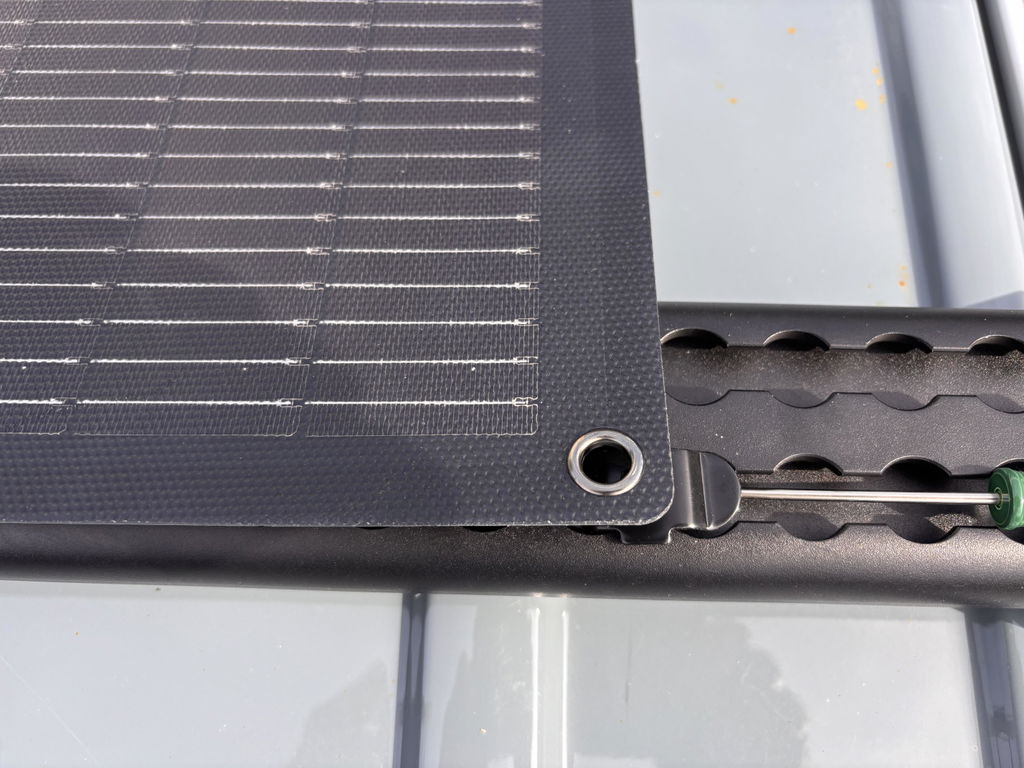
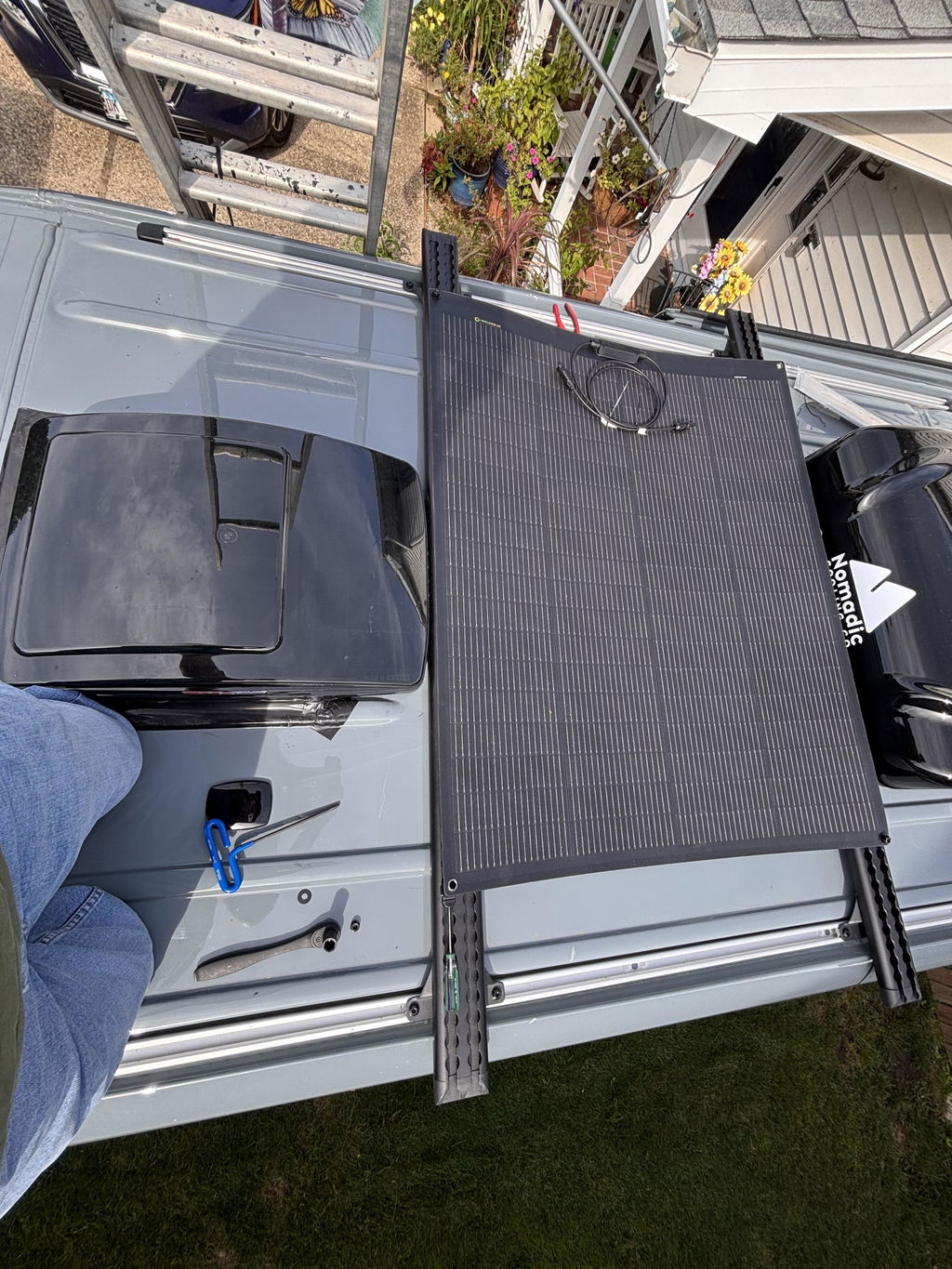
Every kilogram mounted high on a canopy amplifies the dynamic loads during chassis twist. A 200 kg canopy with 100 kg of gear mounted at roof height generates significantly more torsional stress at the mounting points than the same weight distributed at tray floor level. This is where DVA Mechanics' low-profile DualTrack™ Low-Profile Roof Crossbar System provides an advantage — keeping roof-mounted loads as close to the roofline as possible, reducing the moment arm that amplifies chassis twist forces.
What Professional Body Builders Do
Companies building canopies for the Quartermaster Chassis Cab — including operations in Australia, Europe, and North America — have all converged on the same basic approach:
- Front bulkhead pinned rigidly to the cab-back or a forward crossmember
- Rear mounts on polyurethane or rubber bushings with ±15 mm vertical compliance
- Longitudinal sliding joints at mid-span to prevent compression/tension in the canopy floor
- Sealed expansion gaps between canopy and cab using flexible rubber gaskets rated for UV and ozone exposure
- No rigid connections across the cab-to-body gap — wiring, plumbing, and air lines all run through flexible conduit
"I found this document from Ineos. They call it a body builder guide. Fantastic document, even if you don't want to modify things, there is a lot of useful information."
Implications for Wagon Owners
Station Wagon owners are not immune to torsion considerations. Any accessory that bridges the body-to-chassis gap or creates a rigid connection between body panels and the roof structure is subject to the same physics. Roof racks, for instance, bolt to the body — which is itself rubber-mounted to the chassis. The body mounts absorb most of the twist, but heavy roof loads amplify the forces transmitted through the body structure.
This is precisely why INEOS specifies different dynamic load ratings for on-road (150 kg) versus off-road use, and why aftermarket roof rack systems that add a third crossbar to distribute loads more evenly show measurably better long-term durability than two-point systems carrying the same weight.
DVA's DualTrack™ Roof Crossbar System is engineered specifically for the Grenadier's body-mount compliance — three-point load distribution keeps roof forces spread evenly across the body structure, reducing the torsion amplification that causes long-term fatigue in high-mounted accessories.
The Bottom Line
The 1.72° of chassis twist is not a limitation — it is the Grenadier doing exactly what a body-on-frame off-roader is supposed to do. The limitation is in how aftermarket builders account for it. A well-designed floating mount system turns chassis flex into a non-issue. A poorly designed rigid mount turns it into cracked panels, failed seals, and a vehicle that gets progressively worse the more you use it for its intended purpose.
Before commissioning any canopy or service body build, ask your builder one question: How do you accommodate 1.72 degrees of torsional twist? If they cannot answer it with specific engineering — bushing specifications, compliance travel, fatigue analysis — find a builder who can.
Build Smart from the Roof Down
DVA Mechanics' crossbar and accessory mounting systems are engineered to work with the Grenadier's chassis dynamics, not against them. Low-profile, distributed-load designs that respect the engineering.
Explore DVA Grenadier Products