For a full-time solo Sprinter build with fridge, lighting, and phone/laptop charging: 200Ah LiFePO4 covers 3–4 days off-grid. Couples or builds with a water pump and diesel heater: 300–400Ah LiFePO4. AGM requires double the rated capacity for the same usable power — 200Ah usable needs 400Ah AGM.
Decision rule: If budget allows, LiFePO4 — lighter, longer-lived, faster recharge. If budget is the hard constraint, AGM works, but size at 2× what you think you need.
Section 1: Do the Load Audit Before Picking a Battery
The single most common battery bank mistake in Sprinter builds is choosing capacity before running a load audit. "200Ah seems like a lot" is not a sizing method. Start with what you actually run.
The daily load worksheet
For each appliance, multiply rated watts × hours of use per day ÷ 12 (for 12V systems) = daily amp-hours. Common Sprinter loads:
| Appliance | Typical draw | Hrs/day | Daily Ah |
|---|---|---|---|
| 12V compressor fridge (2.5 cu ft) | 4–5A average | 24 | 40–55Ah |
| LED lighting (5 strips, full van) | 2–4A | 5 | 10–20Ah |
| Phone + laptop charging | 3–6A | 3 | 9–18Ah |
| MaxxAir fan (medium speed) | 1.5–3A | 8 | 12–24Ah |
| 12V water pump (on demand) | 5–8A while running | 0.25 | 1–2Ah |
| Diesel heater (Eberspächer or equivalent) | 0.5–2A running (10–12A start) | 8 | 4–16Ah |
| Inverter loads (blender, coffee) | 10–20A while in use | 0.5 | 5–10Ah |
Real-world totals by build type
- Minimalist solo (fridge + fan + phone): 65–90Ah/day
- Standard solo (above + full LED + laptop + diesel heater): 100–130Ah/day
- Couple or full-time (above + water pump + shower inverter load): 140–180Ah/day
- Work-from-van (monitors, camera charging, hotspot router 24/7): 200–250Ah/day
The forum consensus from Sprinter-Source thread #47452 ("Lithium vs. AGM") captures the planning logic well:
"AGM requires 50% over-size while Lithium requires 20%. Lithium wins on overall size, weight, max continuous current draw, cycles, and temp range, but cost much more per cell/package." — Forum discussion, Sprinter-Source.com Thread #47452: Lithium vs. AGM
Once you have your daily Ah total, multiply by the number of off-grid days you want as a buffer (typically 2–3), then apply the chemistry's usable fraction. That's your bank size.
Section 2: Lithium (LiFePO4) vs AGM — What the Numbers Actually Mean
Usable capacity: the number that matters
Battery labels show rated capacity (e.g., 200Ah). What you can safely use is different for each chemistry:
- LiFePO4 (lithium iron phosphate): 80–90% usable depth of discharge recommended. A 200Ah LiFePO4 bank gives you 160–180Ah usable.
- AGM (Absorbent Glass Mat lead-acid): 50% is the practical limit before cycle life degrades sharply. A 200Ah AGM bank gives you 100Ah usable.
This is the core math: to get 200Ah of usable power, you need 200–250Ah of LiFePO4 or 400Ah of AGM. For Sprinter van purposes, this difference affects cost, weight, and cabinet space.
| Metric | LiFePO4 | AGM |
|---|---|---|
| Usable depth of discharge | 80–90% | 50% |
| Cycle life (to 80% capacity) | 2,000–5,000 cycles | 300–500 cycles |
| Weight per 100Ah (12V) | ~27–30 lbs | ~60–70 lbs |
| Charge acceptance at 50% SOC | 0.5–1C (full bank in 1–2 hrs) | 0.1–0.2C (slow absorption required) |
| Low-temperature performance (below 32°F / 0°C) | Cannot charge below 32°F without heating | Reduced but functional |
| Cold weather discharge | Minimal capacity loss while discharging | Significant capacity loss |
| Self-discharge rate (per month) | 1–3% | 3–5% |
| Upfront cost per 100Ah (12V) | $200–$350 | $100–$180 |
| 10-year cost per usable kWh (lifecycle) | Lower (fewer replacements) | Higher (replacement every 3–5 years) |
The cold weather caveat
LiFePO4 chemistry cannot be charged below 32°F (0°C) without risk of lithium plating and permanent damage. This is the legitimate argument for AGM in New England winters or mountain camping. The practical fix for LiFePO4 in cold climates: batteries with integrated battery management systems (BMS) that include low-temperature charge cutoff, plus a small heating element or insulated battery box if ambient drops regularly below freezing. Forum posters in Sprinter-Source thread #47452 specifically raised this for full-time northern builds — the insulated floor compartment with a small resistive heater draws less than 3Ah overnight and solves the problem.
"My van will be used quite extensively fulltime in cold weather (New England winters) and interior space/access is a concern since most components are not going to be able to be exterior mounted. So unless I build an insulated box into the floor with warming coils, exterior mounted and flooded lead acid are out." — Original poster, Sprinter-Source.com Thread #47452: Lithium vs. AGM
Section 3: The Sizing Formula — Applied to Real Sprinter Builds
Bank size = (Daily Ah × Off-grid days) ÷ Usable fraction
Where usable fraction = 0.85 for LiFePO4, 0.50 for AGM
Example 1: Standard solo build (100Ah/day, 2-day buffer)
- LiFePO4: (100 × 2) ÷ 0.85 = 235Ah → buy 200Ah or 300Ah depending on budget
- AGM: (100 × 2) ÷ 0.50 = 400Ah
Example 2: Couple, full-time (160Ah/day, 3-day buffer)
- LiFePO4: (160 × 3) ÷ 0.85 = 565Ah → buy 2× 300Ah (600Ah total)
- AGM: (160 × 3) ÷ 0.50 = 960Ah → not practical by weight
Example 3: Weekend warrior (150Ah/day, 4 days)
- LiFePO4: (150 × 4) ÷ 0.85 = 706Ah → buy 2× 400Ah (overkill) or 2× 300Ah (acceptable)
- AGM: weight alone rules this out for larger banks — 960Ah AGM = ~600 lbs vs ~200 lbs for 600Ah LiFePO4
The Sprinter 2500 144" wheelbase has a typical payload capacity of 2,756–3,306 lbs depending on configuration. A fully equipped build (bed platform, insulation, kitchen, water system) typically consumes 800–1,200 lbs of payload before electrical. At that point, battery weight is not trivial — every pound counts.
"In rough, very rough numbers, 12.6 is full, roughly 12.0–12.2 is half, and 11.5 is, for useful purposes, a depleted battery. You should lower your threshold to at least 12.2, and that should give you lots of reserve." — Greg, Sprinter-Source.com Thread #72214: AGM Batteries and Heater
Section 4: Weight and Placement in the Sprinter
Where builders mount the bank
In a 144" Sprinter, the most common battery locations are under the forward bed platform (driver-side, near the factory fuse block), inside a floor-mounted battery box between the rear wheel wells, or under a bench cabinet behind the driver/passenger seats. The 170" wheelbase gives more flexibility — some builders run a dedicated battery cabinet in the mid-section with separate cable runs fore and aft.
Key placement rules from real builds:
- LiFePO4 under the bed: Standard 100Ah 12V LiFePO4 batteries are roughly 13" × 6.8" × 8.5" and weigh 28–31 lbs. Four of them (400Ah) fit under a standard 28–32" bed platform and weigh ~125 lbs total.
- AGM under the hood: The factory Mercedes auxiliary battery location (under the passenger step in NCV3 and VS30 Sprinters) accepts a Group 31 AGM without modification. This is for secondary/overflow use only — full AGM house banks are too heavy for the step location.
- Mixed AGM + lithium: Sprinter-Source thread #67007 documents this approach — 200Ah AGM under the hood as a buffer with a smaller lithium bank at the inverter. The parallel chemistry requires a DC-DC isolator to prevent the banks from fighting each other, but the builder reported it working well for a fridge-heavy build with no solar.
- Low and centered: Keep the bank as low and close to the van's center of gravity as possible. Rear-heavy banks hurt handling on the 2500 platform.
Whether you're housing the battery bank, inverter, or DC-DC charger, L-track floor rail provides the most flexible mounting option for Sprinter electrical bays. Components can be repositioned without drilling new holes, and DVA's L-Track Tie-Down Ring with Anchor Mount (4-pack) gives you rated tie-down points for securing the battery box or inverter tray to the van floor. The 1,124 lbf OEM-spec channel handles a full AGM bank without flexing.
Browse the full DVA L-track hardware collection — anchors, rings, and straps for the Sprinter cargo floor.
Payload weight breakdown for a 200Ah LiFePO4 build
- 2× 100Ah LiFePO4 batteries: ~60 lbs
- Inverter/charger (2000W): ~20–30 lbs
- DC-DC charger (40A): ~4 lbs
- Battery box, cable, fuse block, wiring: ~15–25 lbs
- Total electrical: ~100–115 lbs
For context, 400Ah AGM at the equivalent usable capacity would weigh ~260–280 lbs for the batteries alone — 2.5× heavier for the same usable power. That difference comes directly out of payload for water, gear, passengers, and roof equipment.
Section 5: Charging Sources — Solar, DC-DC, and Shore Power
A battery bank is only as useful as its charging system. Most Sprinter builds use three sources in combination: rooftop solar, a DC-DC (alternator-based) charger, and optional shore power via an AC/DC converter or battery charger.
Solar sizing
General rule: match your daily Ah consumption with 1.1–1.3× that in solar wattage, assuming 4–5 peak sun hours per day. At 200W of solar × 5 peak hours × 0.8 efficiency factor = 80Ah/day replenishment. For a 100Ah/day build, 200–300W is adequate in most climates. For 150–200Ah/day, plan for 400–600W.
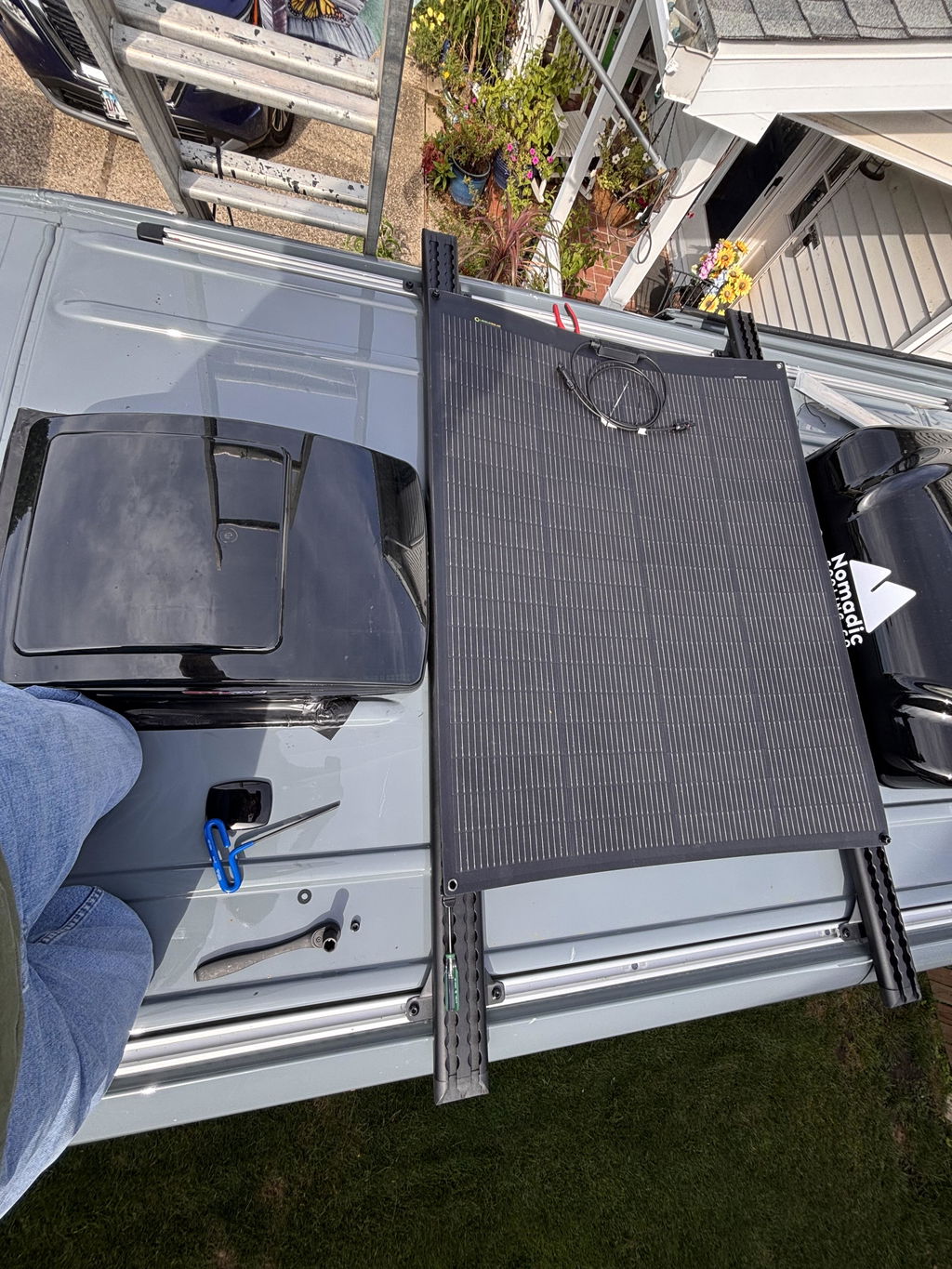
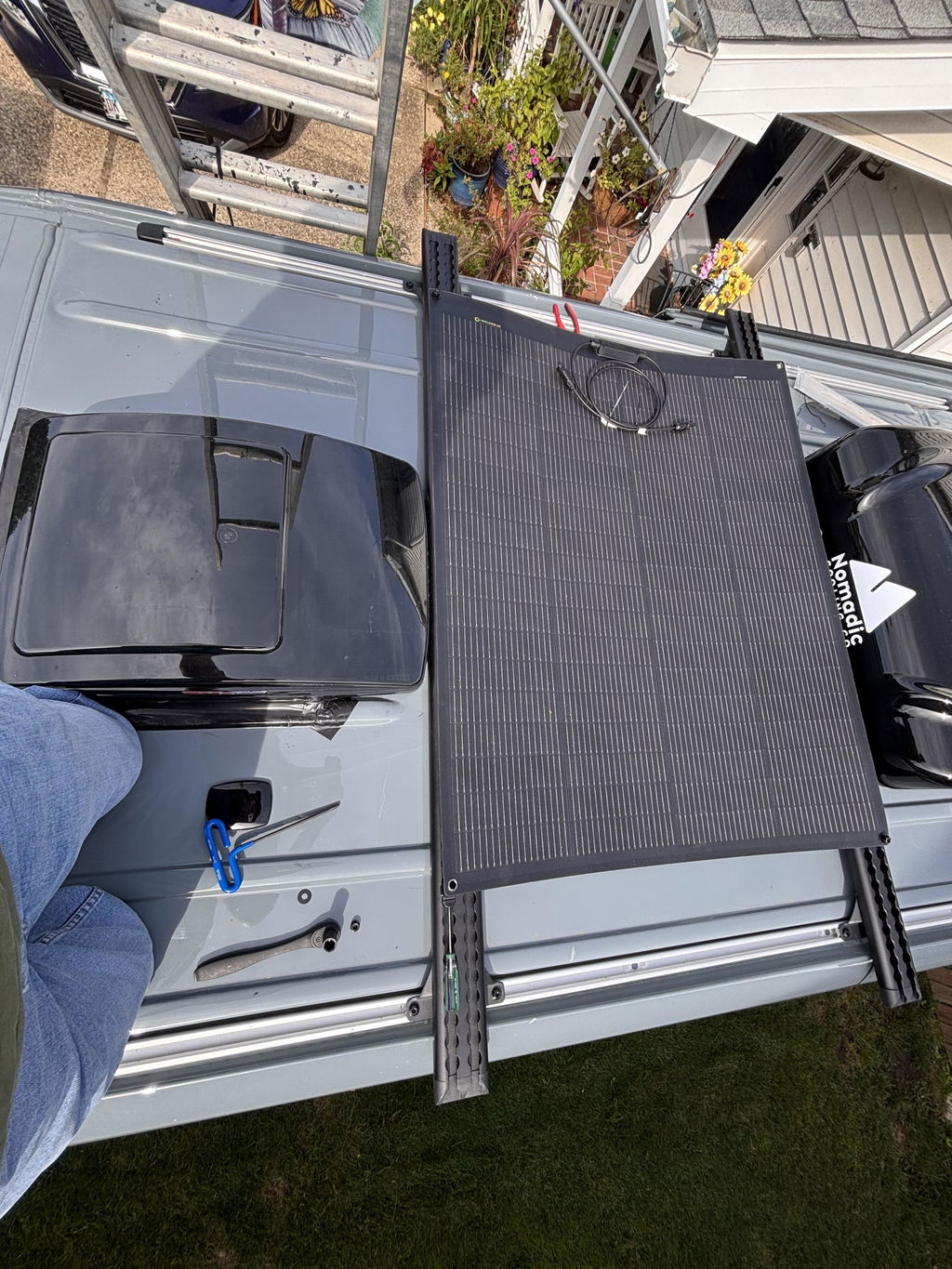
Sprinter roof constraints: the 144" van roof typically fits 2× 200W panels (400W) without extending past the rain rail. The 170" wheelbase fits 3–4 panels (600–800W). Panel placement matters — roof rails and crossbars determine how much of the roof is usable for flush-mounted panels vs. panel overhangs.
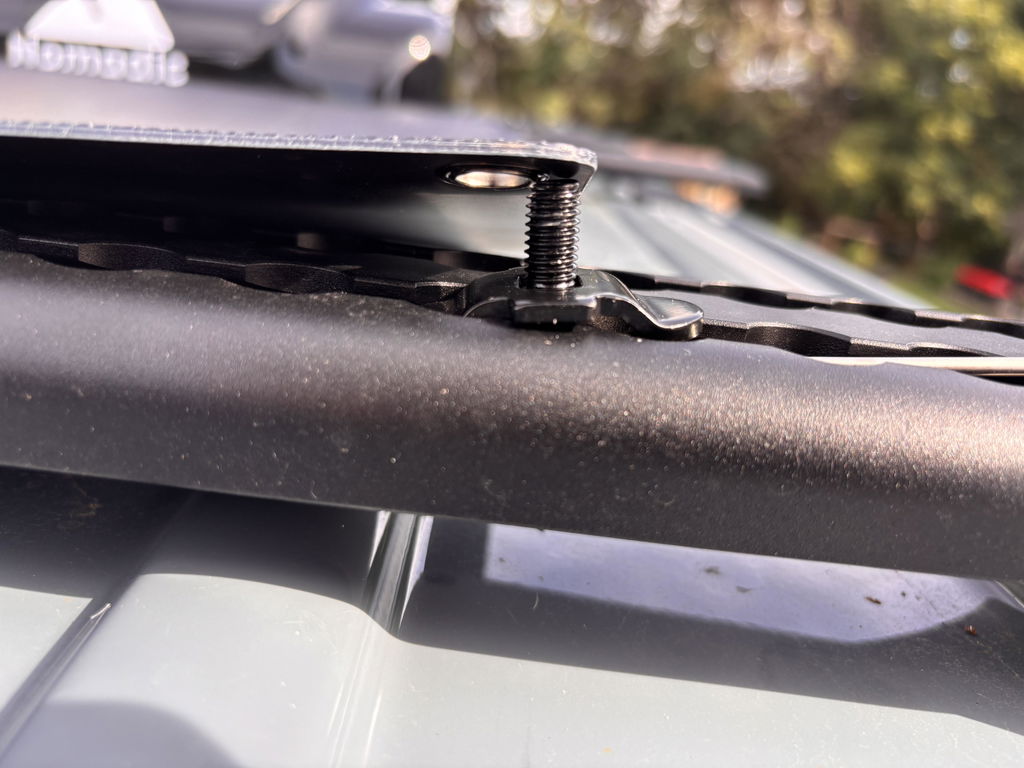
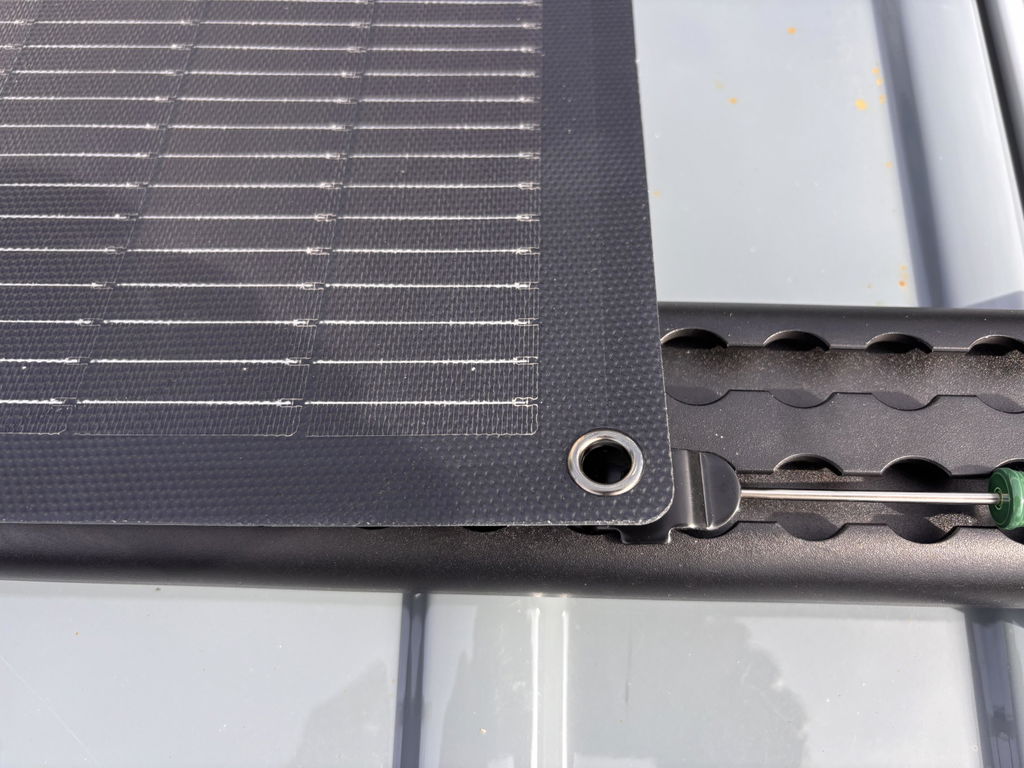
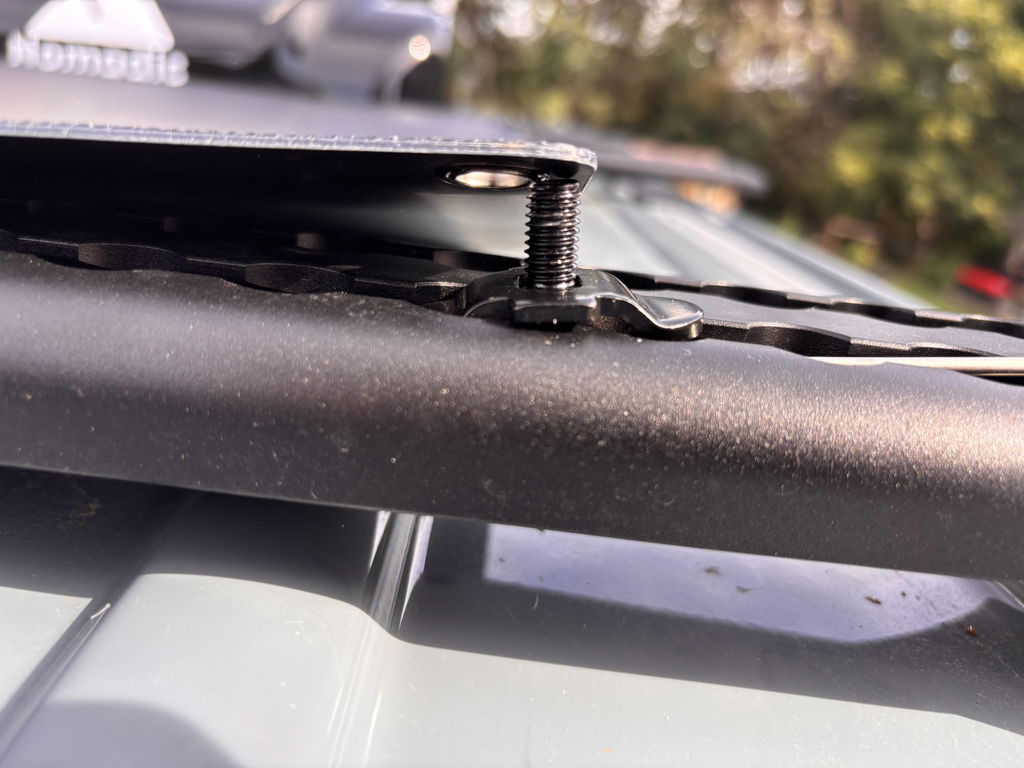
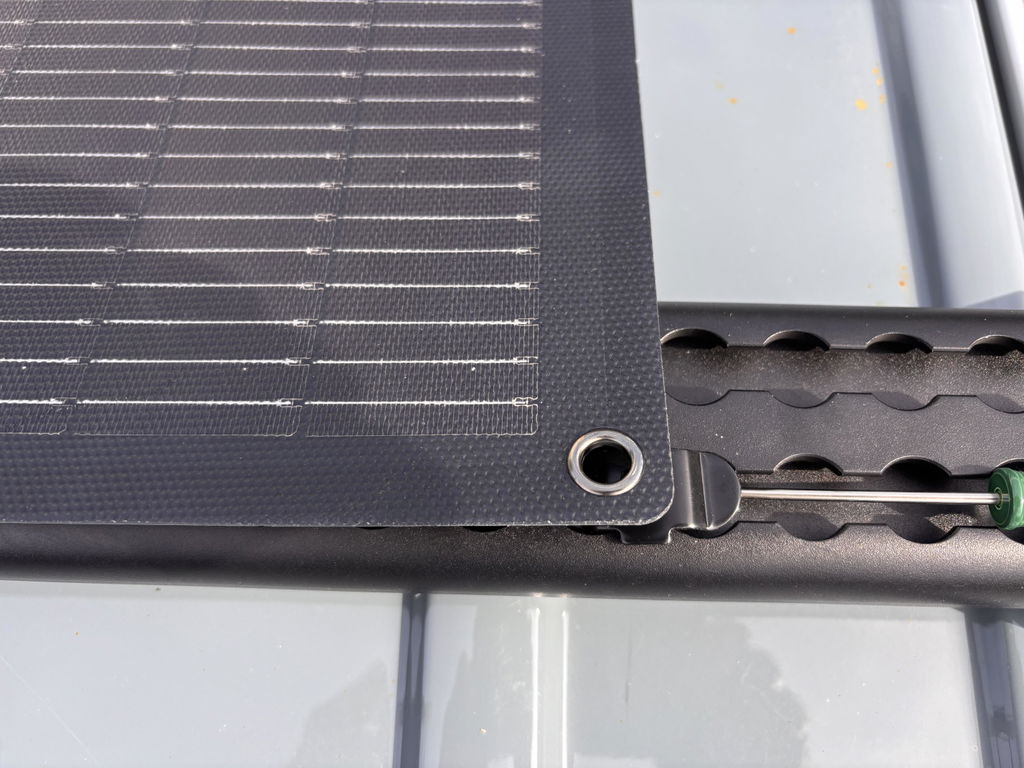
The DVA LoadSpan-T Dual-Channel Roof Rails for Sprinter give you a low-profile (less than 1" above the roof) mounting platform for flush-fit solar panels. The dual-channel design lets you span panels between rails without racking hardware, keeping the roof clean and aerodynamic. Combined with the DualTrack-T Crossbar Kit, you can mount up to 4× 200W panels and still have crossbar positions available for an awning or rooftop equipment.
The system's 330 lb dynamic load rating easily handles a full solar array (4× 200W panels ≈ 80–120 lbs with mounting hardware). See the complete Sprinter roof rail system for specs and installation notes.
DC-DC (alternator) charging
A DC-DC (or B2B) charger converts the alternator's output to the precise charge profile your house battery needs — critical for LiFePO4, which requires a specific charge voltage (14.4–14.6V) that differs from the chassis battery's float voltage. A 40A DC-DC charger produces ~500Wh per hour of driving — enough to recover 40Ah from a 2-hour highway run. Plan for 40A for small banks (100–200Ah), 60A for larger banks.
Note on the Sprinter alternator: the factory 180A alternator in the VS30 (2019+) can handle a 40A house charge draw without taxing the charging system. Some builders add a secondary alternator for high-draw electrical bays, as discussed in Sprinter-Source thread #67007 — the builder ran a 300A second alternator to power a fully isolated 200Ah AGM house bank for a fridge-heavy build without solar.
"I'm having a second 300 amp alternator installed in my 2017 144 WB 2500 Sprinter. It will be used exclusively with the house battery that will be completely isolated from the chassis battery. I plan on a Dometic CFX95DZW 12V Fridge Freezer, Microwave, Induction Cooktop, powered off a 3600 watt inverter. I am NOT adding any solar, and plan on running the 'engine generator' when cooking." — Poster, Sprinter-Source.com Thread #67007: AGM and Lithium — Why not?
Shore power
An AC-to-DC converter (shore power charger) fills the bank from a 120V outlet — at campgrounds, a friend's house, or a co-working space. A 30A shore power charger (~360W) can fully charge a 200Ah LiFePO4 bank from 20% in about 5–6 hours. For most part-time van lifers who plug in once or twice a week, this is all the charging they need in addition to solar.
Section 6: What Sprinter Builders Actually Choose
Based on Sprinter-Source forum data and build threads reviewed for this article, here is the breakdown by use case:
| Build type | Most common choice | Why |
|---|---|---|
| Weekend warrior, tight budget | 200–400Ah AGM | Lower upfront cost, short cycle life not a problem if used 50 days/year |
| Part-time (monthly trips) | 100–200Ah LiFePO4 | Weight, space efficiency; bank lasts 10+ years at this cycle rate |
| Full-time solo | 200–300Ah LiFePO4 | Daily cycling means AGM replacement every 2–3 years; lithium lifecycle wins |
| Full-time couple or WFV | 400–600Ah LiFePO4 | Higher daily load; AGM at this scale is impractical by weight (600–700 lbs) |
| Cold-climate full-time (northern winters) | 200Ah LiFePO4 + heated box, or 300–400Ah AGM | LiFePO4 charge limitation below 32°F requires heating solution; AGM sidesteps it |
"If you only use half of that for good battery longevity you have 1kWh of energy available in the bank. In other words you could draw 1000 watts for 1 hour. Let that decide the loads you want to run and then size the inverter appropriately for those loads." — Forum poster, Sprinter-Source.com Thread #67135: Free AGM Batteries
Common oversizing mistakes
- Buying 400Ah lithium for a 60Ah/day build: You'll never cycle the bank deeply enough to know if it's working. A smaller bank cycled regularly is healthier and costs less.
- Matching AGM to lithium labels: 200Ah AGM ≠ 200Ah LiFePO4 in usable power. Always compare usable, not rated, capacity.
- Ignoring charge rate: A 200Ah LiFePO4 bank with only 100W of solar in a consistently cloudy climate will spend half its life undercharged — which kills long-term capacity. Verify that your charging sources can replenish your daily draw on a typical day.
- Forgetting inverter draw: A 2000W inverter at full load draws ~170A from a 12V bank. A 200Ah LiFePO4 bank can only run at max inverter load for about 50–70 minutes. Match your inverter to your actual loads, not your worst-case scenario.
Section 7: Integrating the Electrical System with the Rest of Your Build
The battery bank doesn't exist in isolation — it connects to every other van system. The roof system determines how much solar you can mount. The floor cargo system determines where the battery bay sits and how it's secured. The overall payload budget determines how much of that budget you can allocate to electrical.
Payload planning: electrical weight vs. roof equipment weight
A common misstep in full builds: maxing out the battery bank (heavy) AND adding a roof rack with awning and overland equipment (also heavy). The Sprinter 2500's payload gets consumed quickly once you account for passengers, water (water system article covers this: 500+ lbs for a 60-gallon tank), and equipment.
The DVA LoadSpan-T Dual-Channel Roof Rails contribute only about 22 lbs to the roof load — significantly less than traditional rack systems. If your build is approaching payload limits, the lower-profile roof system leaves more budget for a larger battery bank. The tradeoff is real: every 10 lbs saved on the roof rail system is 10 lbs available for a bigger lithium bank or more water capacity.
See the Sprinter van water system guide for tank sizing and weight planning — water and electrical are the two heaviest systems and should be sized together against the overall payload budget.
The Bottom Line
- Run the load audit first — no number of forum recommendations substitutes for your actual daily Ah consumption.
- LiFePO4 wins on lifecycle cost for any build used more than 50 days/year — the upfront premium pays back by year 4–5 vs. replacing an AGM bank.
- AGM is valid for cold climates where LiFePO4 charging temperatures are a persistent issue, or for budget-constrained builds with low daily use.
- Size for 2–3 days off-grid without charging — this covers cloudy days and drives where alternator charging isn't practical.
- Match charging to consumption — the battery is only one part of the system; solar wattage and DC-DC charger amperage must keep pace with daily use.
- Integrate electrical into payload planning — weigh the battery bank against other heavy systems (water, roof equipment) against the Sprinter's GVWR budget.