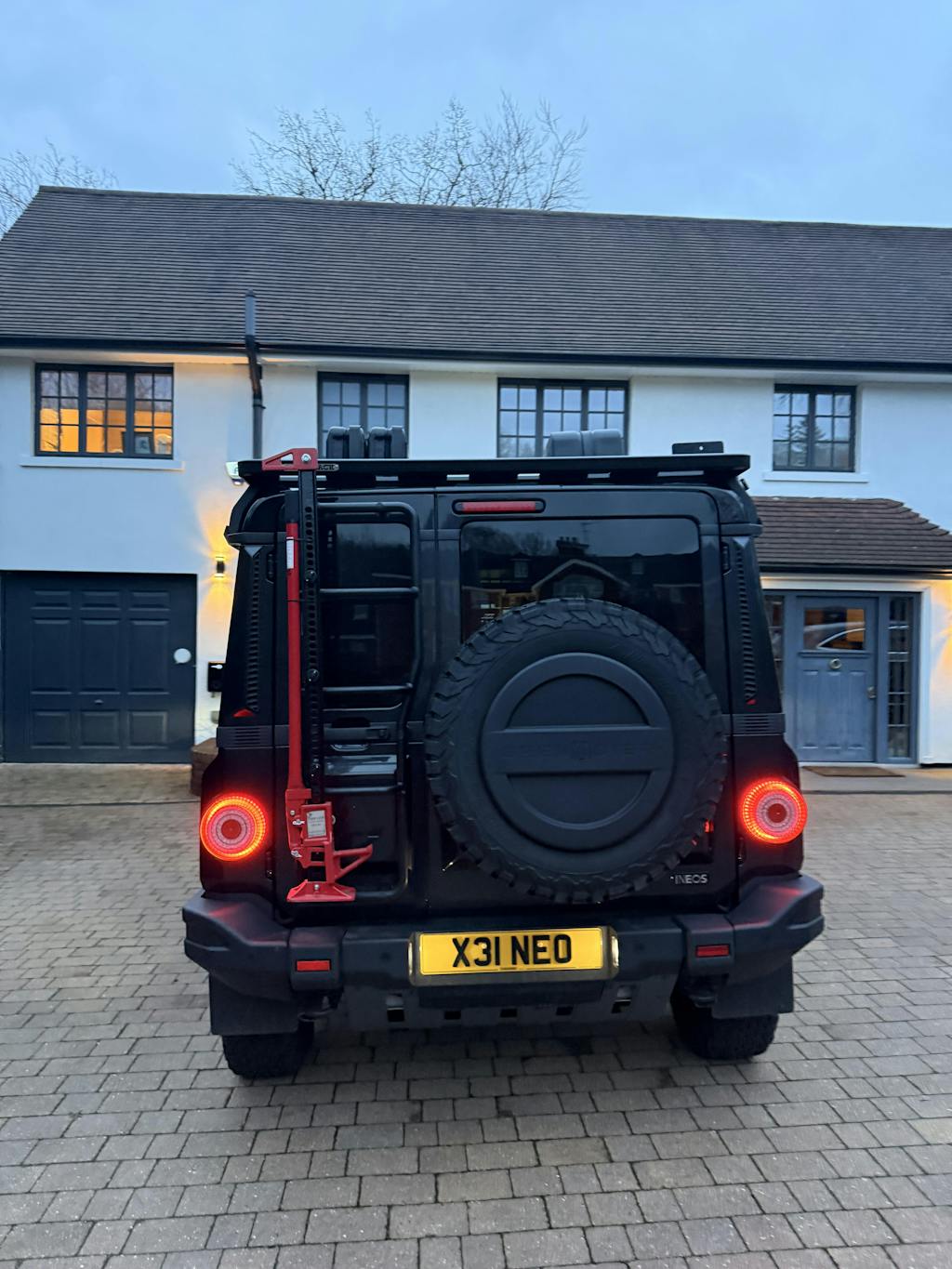
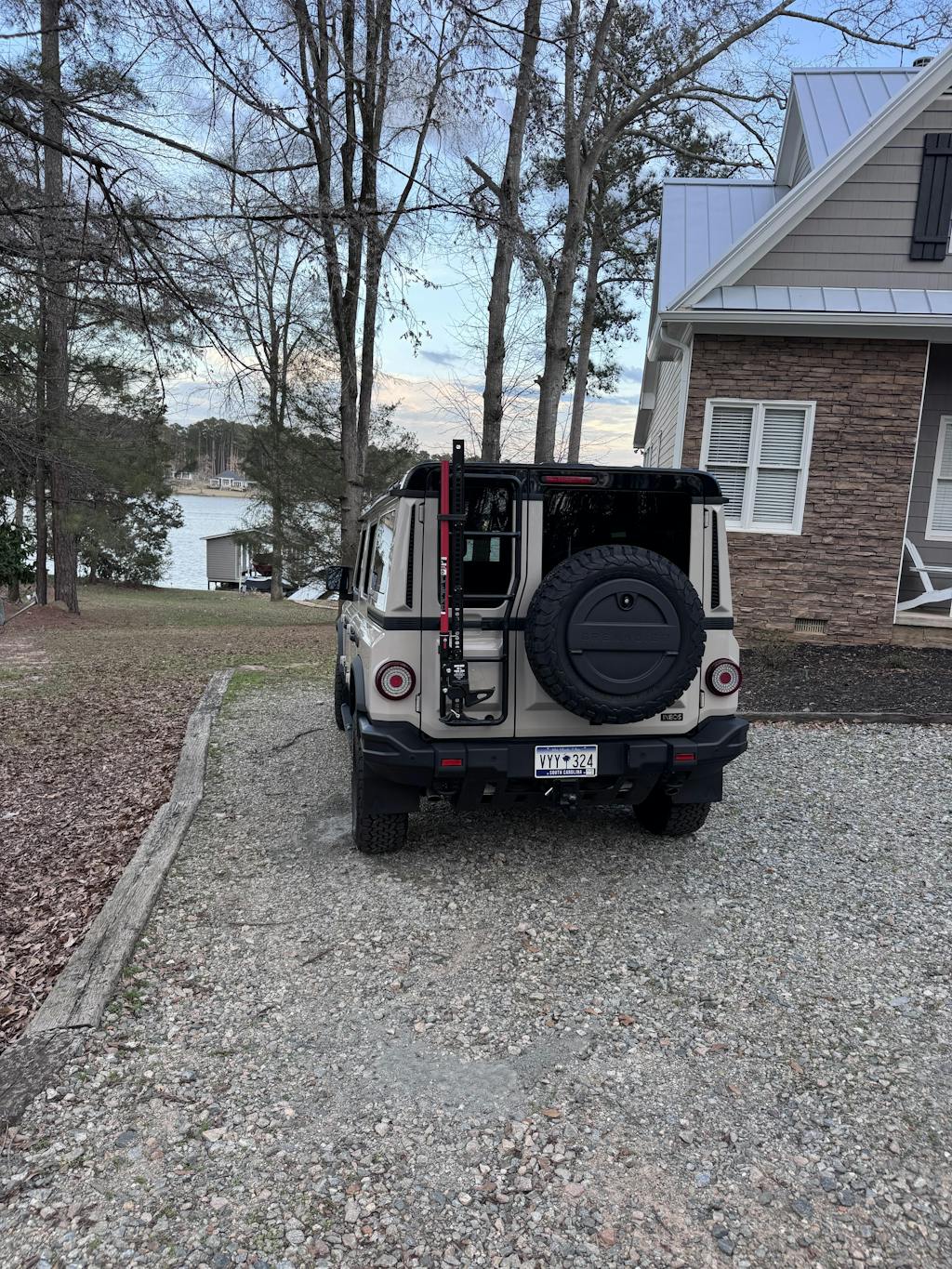
Axle Loads: 1,667 kg Front / 2,150 kg Rear and What That Means for Your Build
The Numbers That Define Your Build
The INEOS Grenadier's axle load ratings are the hard boundaries of every build decision you will make. Front axle: 1,667 kg. Rear axle: 2,150 kg. Gross Vehicle Mass (GVM): 3,550 kg. These numbers are not suggestions — they are the engineering limits validated through crash testing, brake testing, suspension testing, and type approval. Exceed them and you compromise braking distances, suspension geometry, steering response, and insurance coverage.
Understanding how these numbers interact — and how quickly they change when you start adding gear — is the difference between a well-planned build and an overweight liability.
Factory Weight Distribution
The Grenadier diesel Station Wagon has a published tare (kerb) weight of approximately 2,718 kg. Independent weighbridge measurements by Australian automotive journalists have shown real-world figures closer to 2,770–2,850 kg depending on specification level, with the Trialmaster sitting heavier due to its factory bull bar, winch provision, rock sliders, and second battery.
| Specification | Value |
|---|---|
| GVM | 3,550 kg |
| Front Axle Rating | 1,667 kg |
| Rear Axle Rating | 2,150 kg |
| Published Tare (diesel wagon) | ~2,718 kg |
| Real-World Tare (Trialmaster) | ~2,848 kg |
| Available Payload (published) | ~832 kg |
| Available Payload (real-world Trialmaster) | ~702 kg |
| Braked Towing Capacity | 3,500 kg |
| Towball Mass | 350 kg |
Critical Point
The sum of front and rear axle ratings (1,667 + 2,150 = 3,817 kg) exceeds the GVM of 3,550 kg. This means you will hit the GVM limit before you max out both axles simultaneously. The GVM is always the governing constraint.
Where the Weight Goes: A Worked Example
Let us take a Trialmaster with a real-world kerb weight of 2,848 kg and a roughly 53/47 front-to-rear weight distribution (approximately 1,510 kg front, 1,338 kg rear at kerb). Now add a typical touring build:
Front Axle Additions
| Item | Weight (kg) |
|---|---|
| Factory bull bar + winch | ~85 |
| Driver (90 kg) | ~65 (front axle share) |
| Passenger (80 kg) | ~58 (front axle share) |
| New Front Axle Load | ~1,718 kg |
⚠ Over Limit
With just two occupants and the factory bull bar, the front axle is already at 1,718 kg — 51 kg over the 1,667 kg rating. This is before adding a single accessory.
"The front axle load limit of 1,667 kg is a little low to be comfortable as you'll get very close to exceeding it if not over with their bar, winch and brushrails plus two people in front who enjoy a feed."
Rear Axle Additions
| Item | Weight (kg) |
|---|---|
| DVA crossbars + mounting hardware | ~14 |
| Roof-top tent (70 kg, rear-biased) | ~50 (rear axle share) |
| Rear drawer system | ~45 |
| Fridge + contents | ~35 |
| Recovery gear (rear) | ~25 |
| Water (40 L) | ~40 |
| Towball load (if towing) | ~350 |
| New Rear Axle Load (not towing) | ~1,547 kg |
| New Rear Axle Load (towing) | ~1,897 kg |
The rear axle has significant headroom at 2,150 kg. The constraint is almost always the front axle or total GVM.
"I did have to get a GVM upgrade to 3,800 kg as I was very close to max 3,550 with the van on the ball. Travelled about 16,000 km now, 13,000 towing heavy. Great vehicle and no regrets."
The GVM Trap
Adding our worked example together:
- Front axle: ~1,718 kg (over limit by 51 kg)
- Rear axle: ~1,547 kg (603 kg under limit)
- Total: ~3,265 kg (285 kg under GVM — but front axle is already exceeded)
This illustrates the core challenge with the Grenadier: the rear axle can handle substantially more weight than the front, but most heavy accessories (bull bar, winch, occupants) load the front. Every kilogram you add to the front of the vehicle needs to be weighed against the 1,667 kg front axle limit, which is genuinely tight for a vehicle of this class.
"The rear axle limit is great at 2,150 kg. However, most wagons suffer similar problems so this alone is not reason enough to discount the Grenadier, just don't expect it to be significantly better than other low-range wagons."
How DVA Products Fit the Weight Budget
Every DVA Mechanics product is designed with weight consciousness as a core engineering constraint. When your total build budget is 700–830 kg of payload, every gram matters.
| DVA Product | Approx. Weight | Axle Impact |
|---|---|---|
| DualTrack Crossbars (pair) | ~14 kg | Split front/rear |
| LED Light Kit (roof) | ~3 kg | Negligible |
| Exterior Utility Belt mounts | ~2 kg per side | Split front/rear |
| Hi-Lift Mount | ~3 kg | Roof/rear-biased |
| Bumper Mount accessories | ~4 kg | Front axle |
| Rear Carrier system | ~12 kg | Rear axle |
| Starlink Mount | ~1 kg | Negligible |
The total weight of a comprehensive DVA accessory package — crossbars, lights, mounts, and carrier — typically comes in under 40 kg. That is less than five percent of available payload on a base model, leaving maximum capacity for the gear that actually matters on a trip.
Strategies for Staying Legal
1. Weigh Your Vehicle
Get a corner-weight measurement at a public weighbridge. Know your actual tare weight, per-axle, before you add a single accessory. The published figures may not reflect your specific build.
2. Prioritise Rear-Loaded Weight
The rear axle has 600+ kg of headroom in most configurations. Heavy items — water, recovery gear, fridges, drawer systems — should go as far rearward as practical (while respecting centre-of-gravity constraints — see our article on the 30% rule).
3. Question Every Front-Axle Addition
A winch adds 25–30 kg to the front axle. A steel bull bar adds 40–60 kg. Brush rails add another 15–20 kg. Combined with two occupants, you may already be over. Consider whether you truly need all three, or whether a lighter approach serves your actual use case.
4. Consider a GVM Upgrade
In Australia, companies like JMACX offer GVM upgrades to 3,800 kg for the Grenadier, which provides additional breathing room. This typically involves uprated springs, shocks, and a compliance plate. In other markets, check local regulations.
"With me sat in it on a weighbridge it is 3,440 kg, so 60 kg off max weight. It drives and carries the weight well, but does sit a bit lower at the rear. I want some uprated rear springs to get it back up to normal kerb height."
The Bottom Line
The Grenadier's axle load ratings reward careful planning and punish impulse purchases. The front axle at 1,667 kg is the tightest constraint on most builds. The rear axle at 2,150 kg provides genuine carrying capacity. And the 3,550 kg GVM means every accessory decision is a trade-off against something else you could carry.
Build light, build smart, and weigh your vehicle before and after every major modification. The scales do not lie.
Lightweight Accessories, Maximum Function
DVA Mechanics products are engineered to deliver capability without consuming your payload budget. Every product is weighed, documented, and designed for the Grenadier's specific load constraints.
Shop DVA Mechanics