⚡ Quick Answer
- Choose the Wagon if you overland, daily drive, or need enclosed cargo — 36.1° departure angle (vs 22.6° QM), 330 lb dynamic roof load (vs 264 lb QM), 44.3 ft turning radius (vs 47.6 ft QM), rear ladder + barn-door accessory ecosystem.
- Choose the Quartermaster for open-bed hauling, farm/ranch work, or RTT-over-bed garage clearance — 61.6"×63.7" open bed rated at 1,680 lb, top-load access, hose-washable, accepts a Euro pallet.
- Price gap is mostly Chicken Tax: $86,900 QM vs $71,500 Wagon — the $15,400 difference is almost entirely a US light-truck import tariff, not engineering cost.
- Shared platform (85%): same B58 inline-six (281 hp), ZF 8-speed, Carraro solid axles, GVWR (7,716 lb), ground clearance (264 mm), wading depth (800 mm), approach angle (36.2°), and towing capacity.
The Forum Thread That Never Ends
Spend ten minutes in any Grenadier owner community and you'll find it: the thread where someone agonizes over Wagon versus Quartermaster. It runs for pages. Every few weeks, a new buyer starts it again. The responses split roughly 60/40 toward the Wagon, but the reasoning is all over the place.
This isn't a "which is better" article. That question doesn't have an answer because it depends entirely on how you use the vehicle. What this article does instead is lay out the engineering differences, the accessory implications most buyers miss, and the ownership realities that only become obvious after you've lived with either platform for six months.
"I have a 2024 Grenadier station wagon, base. When I got it, I had honestly wanted a Quartermaster but they weren't here yet." — r/ineosgrenadier, September 2025
That post captures something real. Many early Wagon buyers ordered before the Quartermaster existed in North America. Some are content. Others traded in the moment QM inventory showed up. The decision isn't trivial because these two vehicles share so much DNA that the differences are subtle — but those subtle differences compound over thousands of miles and hundreds of gear-loading sessions.
"Had my Trialmaster wagon in for service this week and was given a Quartermaster as a loaner for a few days. You definitely feel the truck bed back there. There's some jiggle and sway going over bumps." — r/ineosgrenadier, September 2025
Let's get into the numbers first, then translate them into lifestyle.
Dimensional and Specification Comparison
From the front doors forward, these two vehicles are identical. Same BMW B58 inline-six. Same ZF 8-speed. Same Carraro solid axles. Same permanent four-wheel drive with Tremec two-speed transfer case. The divergence starts behind the B-pillar.
| Specification | Station Wagon | Quartermaster |
|---|---|---|
| Overall Length | 4,856 mm (191.2") | 5,400 mm (212.6") |
| Width | 1,930 mm (76.0") | 1,943 mm (76.5") |
| Height | 2,036 mm (80.2") | 2,019 mm (79.5") |
| Wheelbase | 2,922 mm (115.0") | 3,227 mm (127.0") |
| Rear Overhang | 874 mm (34.4") | 1,328 mm (52.3") |
| Curb Weight | 5,827 lb | 5,827 lb* |
| GVWR | 7,716 lb | 7,716 lb |
| Payload Capacity | 1,889 lb | 1,889 lb |
| Bed Payload (QM) | N/A | 1,680 lb (760 kg) |
| Bed Dimensions | N/A | 61.6" L × 63.7" W |
| Towing Capacity | 7,716 lb | 7,716 lb |
| Ground Clearance | 264 mm (10.4") | 264 mm (10.4") |
| Approach Angle | 36.2° | 36.2° (same as Wagon) |
| Breakover Angle | 28.2° | 26.2° |
| Departure Angle | 36.1° | 22.6° |
| Wading Depth | 800 mm (34.5") | 800 mm (34.5") |
| Turning Radius | 44.3 ft | 47.6 ft |
| Dynamic Roof Load | 330 lb (150 kg) | 264 lb (120 kg) |
| Static Roof Load | 925 lb (420 kg) | 826 lb (375 kg) |
| Fuel Economy (EPA) | 15 MPG combined | 14 MPG combined |
| Engine | 3.0L B58 turbo I6, 281 hp / 331 lb-ft | 3.0L B58 turbo I6, 281 hp / 331 lb-ft |
| Base Price (US) | $71,500 | $86,900 |
Specifications sourced from INEOS Grenadier Media Center, OVR Magazine comparison data, EPA fuel economy database, and official INEOS marketing materials. Values marked with ~ are approximate where official specifications have not been published.
The critical engineering differences boil down to three numbers: 22.6° departure angle (vs 36.1° on the Wagon), 47.6 ft turning radius (vs 44.3 ft), and 264 lb dynamic roof load (vs 330 lb). Everything else is mechanically identical. The departure angle gap is the one that matters most off-road — the Quartermaster's longer rear overhang means you need to think more carefully about steep trail exits.
Why the Same Payload?
A common confusion: the Quartermaster's bed payload is listed at 1,680 lb, while both vehicles share a 1,889 lb total payload. The bed figure is a specific bed rating. Total payload (passengers, cargo, everything) is identical because curb weight and GVWR match per INEOS official specifications — though owner-measured curb weights suggest the Quartermaster may weigh 50–100 lb more due to the longer chassis and bed structure; verify against your vehicle's door jamb placard (source: owner reports on The INEOS Forum and r/ineosgrenadier, 2025). In practical terms, once you subtract driver and passengers from either vehicle, the remaining usable cargo capacity is nearly identical — you're just distributing it differently.
The Lifestyle Matrix: Who Buys What and Why
Numbers tell part of the story. How people actually use these trucks fills in the rest. After reading through hundreds of owner posts across Reddit, TheINEOSForum.com, and Facebook groups, clear patterns emerge.
The Overlander / Long-Distance Camper → Wagon
Overwhelmingly, owners who prioritize multi-day overlanding choose the Wagon. The reasoning is straightforward: enclosed cargo means weather protection, security at trailheads, and the ability to organize gear in a space that doesn't get rained on, dusty, or stolen from while you're on a day hike.
The Wagon's rear cargo area offers approximately 1,100 liters of enclosed space with the rear seats up. Fold the 60/40 split rear seats and that number roughly triples. The Quartermaster's rear seats are fixed and do not fold — there's a bulkhead behind them.
"For daily driving the practicality just wasn't there for me. Having that open bed is a bit of a drawback vs. the enclosed wagon." — r/ineosgrenadier, Trialmaster Wagon owner after driving QM loaner, September 2025
The Wagon also gets four roof bars (two per side) in the factory roof channel versus the Quartermaster's two, because the Wagon's roof is physically larger. This gives more mounting flexibility for rack-mounted accessories, solar panels, and awning brackets.
The Work Truck / Hauler → Quartermaster
If your use case involves throwing dirty equipment, lumber, or tools into the back, there's no substitute for an open bed. The Quartermaster's 61.6" × 63.7" bed accepts a standard Euro pallet and provides the kind of unstructured cargo space that enclosed vehicles can't match.
"If I had a farm or ranch and needed the truck bed I would definitely go with the Q. It also occurred to me that it might be easier to keep a RTT on over the bed 24/7 since I would be able to clear the garage door." — r/ineosgrenadier, September 2025
The garage door point is underrated. With a rooftop tent mounted on a bed rack, the Quartermaster sits slightly shorter (79.5" vs 80.2") than the Wagon. This height advantage, combined with the tent being over the bed rather than the full vehicle height, can make garage clearance workable where a Wagon with a roof tent wouldn't fit.
The Daily Driver → Wagon
The Quartermaster is almost two feet longer than the Wagon. In parking lots, urban streets, and tight garages, that length compounds the already-challenging turning radius. Both vehicles have recirculating ball steering that's slow by modern standards — per owner reports and early reviews, 2026 models reportedly feature improved steering hardware — but the QM's extra 3.3 ft of turning circle makes city driving noticeably more work.
"I honestly felt a bit conspicuous driving that thing around, at least more conspicuous than the basic wagon. I'd say it feels Hummer EV or maybe even Cybertruck adjacent." — r/ineosgrenadier, Wagon owner testing QM loaner, September 2025
"I enjoy driving mine a lot. The only time I hate it is when I'm doing lots of errands with short drives in between. There are literally oil tankers on the open ocean that have a better turning radius than the Grenadier." — r/ineosgrenadier, March 2025
That turning radius complaint is about the Wagon. Now add another 3+ ft to the circle and you start to understand why QM owners plan their parking lot routes in advance.
The Weekend Warrior → Depends on Your Weekend
This is where the decision gets personal. If your weekends mean trail riding, camping, and gear-hauling to remote locations — the Wagon's enclosed cargo, better departure angle, and tighter turning radius favor technical terrain. If your weekends mean loading motorcycles, kayaks, or bags of concrete for a cabin project, the Quartermaster's bed wins without contest.
"Perfect vehicle for me, TBH I'd prefer the Quartermaster as I miss having a tray, but when I ordered (2022) it wasn't an option." — r/ineosgrenadier, March 2025
"I ordered the station wagon, as it will be a gentleman's off roader like the plethora of Jeep Wranglers and Ford Broncos that have swamped the roads here in the valley." — TheINEOSForum.com, member from Boise, Idaho
Accessory Compatibility — The Hidden Difference
This is the section that saves you from an expensive surprise. Most buyers compare specs and aesthetics. Far fewer think about what they can bolt on after purchase — and the two platforms diverge more than you'd expect.
What Fits Both Platforms
The following accessories are compatible with both the Station Wagon and the Quartermaster:
- DualTrack roof rails — mount to the factory roof channel on both vehicles
- Crossbars — compatible with standard rail systems on both
- Front bumper lighting — identical front end
- Side steps / rock sliders — same mounting points
- Front utility belt — same front body panels
- Interior cargo rails — same interior mounting system
- Winch — same bumper receiver
- Alloy wheel upgrades — same axle and brake package
- LED lighting kits — compatible with both front-end configurations
Wagon-Only Accessories
Here's where it gets important. The Wagon has several mounting surfaces and features that the Quartermaster physically lacks:
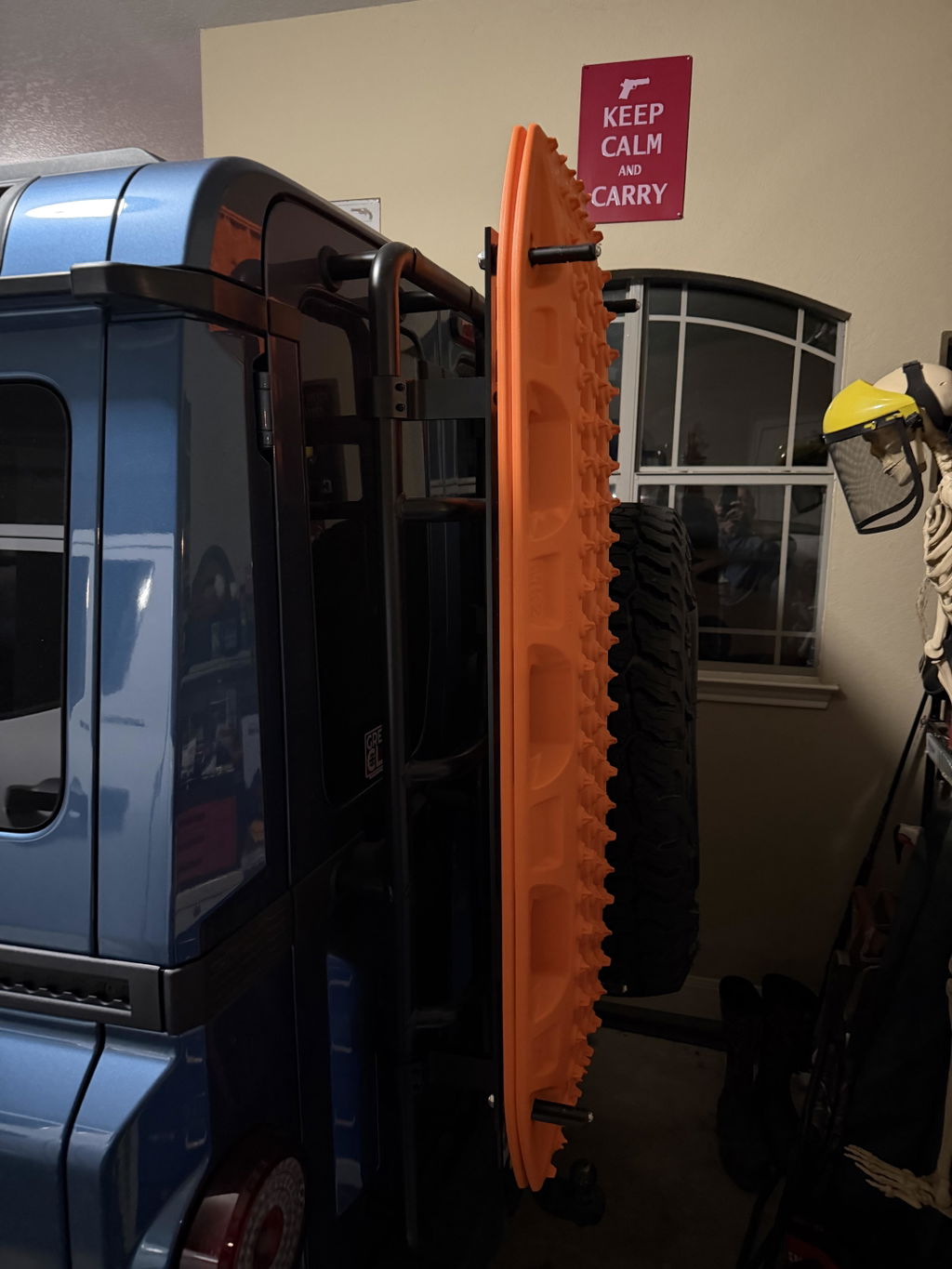
- Rear ladder — The Wagon's split rear doors accept a rear access ladder, which in turn becomes a mounting platform for recovery board carriers, hi-lift jack mounts, and other rear-door accessories. The Quartermaster has no rear ladder because it has no barn doors — it has a tailgate.
- Rear quarter windows — The Wagon's rear quarter windows and tailgate glass provide additional accessory mounting points. Owners install MOLLE panels, sun shades, and ventilation screens on these windows. The Quartermaster retains the front safari windows (above driver and passenger) but lacks the rear side windows and tailgate window due to the pickup bed configuration.
- Rear utility belt sections — The Wagon's body sides extend past the rear doors, creating mounting surface for rear utility belt accessories. The QM's body terminates at the cab.
- Fold-flat rear seats — The Wagon's 60/40 split rear seats fold to create a flat cargo floor. The QM's rear seat is fixed with a non-folding backrest.
- Four roof bars vs two — The Wagon's larger roof accommodates four factory roof bars (two per side); the QM's smaller cab roof gets two.
The rear ladder situation catches more Quartermaster buyers than any other single accessory difference. Wagon owners use the rear ladder as a mounting ecosystem — recovery boards on one side, a hi-lift on the other, maybe a small table or water tank bracket. QM owners discover after purchase that none of that rear-door accessory ecosystem exists for their vehicle. The bed compensates in some ways (bed racks, bed-mounted storage), but the mounting geometry is completely different.
Quartermaster Advantages
The QM isn't without its own accessory strengths:
- Bed rack systems — purpose-built for the 61.6" bed, enabling a dedicated second-tier cargo or tent platform
- Tonneau covers — roll-top and hard-fold options that protect bed cargo from weather
- Bed-mounted spare tire — INEOS places the spare in the bed by default, which likely preserves ground clearance and departure angle
- Easier bed access — loading and unloading heavy items is fundamentally simpler with a drop tailgate vs. barn doors
- Better rear visibility — no spare tire on the rear door blocking the view
"Rear visibility is better than in the wagon since there's no door seam or spare tire in the way." — r/ineosgrenadier, Wagon owner reviewing QM loaner, September 2025
Open Bed vs Enclosed Cargo: The Real Engineering Tradeoff
This is the foundational divergence. Everything else — accessory compatibility, lifestyle fit, resale — flows from this single design decision: did you want your cargo enclosed or exposed?
🚙 Wagon Enclosed Cargo
- ~1,100L cargo volume (seats up)
- Weather-sealed from rain, dust, snow
- Secure — locked behind steel doors
- Climate-adjacent to cabin (heat/AC bleed)
- 60/40 fold-flat seats triple usable space
- Interior lighting for nighttime access
- No separate cover needed
🛻 Quartermaster Open Bed
- 61.6" × 63.7" open bed
- Top-load access — no height restrictions
- Accepts Euro pallets
- Hose-washable (mud, blood, chemicals)
- No interior contamination from dirty loads
- Bed rack enables two-tier loading
- Tailgate drops for oversized items
The Canopy Question
Every Quartermaster buyer eventually considers a bed canopy (also called a bed cap or topper). It's the obvious answer to "I want a truck bed AND enclosed cargo." Third-party manufacturers offer canopies that convert the QM bed into a weather-sealed space. But here's what they don't tell you in the brochure:
- A canopy adds 80-150 lb to the vehicle, eating directly into your payload budget
- Canopy + bed rack combinations require careful height planning to avoid exceeding the dynamic roof load limit (264 lb on the QM cab roof, and any bed rack has its own separate load rating)
- You lose the open-bed advantage that was the reason for buying the QM in the first place
- Canopy installation and removal is not a quick process — most owners leave them on permanently
If you find yourself spec'ing a Quartermaster with a permanent canopy, rear window, and bed-to-cab pass-through, ask yourself honestly: would the Wagon have been the simpler answer?
Weight Distribution
The Wagon distributes cargo weight within the wheelbase, between the axles. This keeps the center of gravity predictable and doesn't significantly change handling characteristics as you load up. The Quartermaster, with cargo behind the rear axle, shifts the weight balance rearward as the bed fills. This is standard pickup truck physics — the front end gets lighter, steering gets vaguely lighter, and rear suspension compression increases. The QM's stiffer rear spring rate accounts for this (INEOS specifically tuned firmer springs for the pickup), but it means the ride is noticeably harsher when the bed is empty.
"The Quartermaster's differently tuned suspension rides stiffer than the Station Wagon. This is most noticeable on the highway when encountering bad pavement or potholes." — OVR Magazine, "The Same but Different: Station Wagon vs. Quartermaster," 2024 (8,000+ miles in the Station Wagon and Quartermaster launch event)
Resale and Market Reality
The Grenadier is a low-volume vehicle. Neither variant is going to appear at every intersection. But there are meaningful market differences between the two:
The Wagon Dominates Volume
Globally, the Station Wagon outsells the Quartermaster by a wide margin. This makes sense — INEOS launched the Wagon roughly a year before the Quartermaster, and the Wagon's $71,500 starting price (US) is $15,400 less than the QM's $86,900. That price gap isn't about more metal or more engineering; the majority of the gap is driven by the 25% Chicken Tax on light trucks imported to the US.
QM Rarity Cuts Both Ways
Lower Quartermaster volumes mean fewer available on the used market, which can support resale values through scarcity. But it also means a smaller buyer pool when you sell. A niche vehicle within a niche brand within a niche segment — the audience for a used Quartermaster is small. Whether that helps or hurts your specific resale depends on timing and local demand.
"I knew what I was buying and expected some obstacles, but I've never looked back. I would buy another one tomorrow. I'm actually considering adding a Quartermaster to our fleet." — TheINEOSForum.com, Wagon owner from Reno, Nevada
Depreciation Considerations
Based on available market listings, both variants appear to depreciate at similar rates as a percentage, though sample sizes remain small given the Grenadier's recent US launch. The QM's higher purchase price means the absolute dollar loss is greater. Lease deals (such as the $859/month 24-month zero-down QM lease reported in late 2025) suggest INEOS is working to move Quartermaster inventory — which tells you something about relative demand.
Decision Framework
Strip away the emotion and the forum debates, and the decision maps to a handful of concrete use-case questions.
Choose the Wagon If...
Choose the Quartermaster If...
The "Both" Answer
Some owners solve this by owning both. It sounds excessive until you hear the reasoning: the Wagon for daily driving and trips, the QM for property work and hauling. One forum member with six Grenadiers and a Quartermaster put 140,000 combined miles on the fleet with zero downtime. That's not a recommendation — that's a data point about how differently these two variants serve their owners.
"I have 6 Grenadiers and a Quartermaster. Wouldn't trade them for any other vehicle, past, present or future. I have about 140,000 miles total on the 7 and haven't had any of them down for any reason." — r/ineosgrenadier, October 2025
Frequently Asked Questions
Can I install the same roof rack on both the Wagon and Quartermaster?
Both platforms accept roof-mounted accessories via the factory roof channel, and crossbar systems like the DualTrack are compatible with both. However, the Wagon's larger roof provides more mounting area and a higher dynamic load rating (330 lb vs 264 lb). The Wagon also has four factory roof bars compared to the QM's two. Rack sizing will differ between platforms.
Is the Quartermaster worse off-road than the Wagon?
Not across the board. Ground clearance, approach angle, wading depth, and drivetrain are identical. The QM's 22.6° departure angle (vs 36.1°) and wider turning radius (47.6 ft vs 44.3 ft) are the meaningful disadvantages. On open trails and moderate terrain, you won't notice a difference. On steep descents and tight switchbacks, the Wagon has an edge.
Why is the Quartermaster so much more expensive?
The $15,400 price gap between the Wagon ($71,500) and Quartermaster ($86,900) is largely driven by the 25% Chicken Tax — a tariff on light trucks not manufactured in North America. The engineering and material differences between the two don't account for that delta. Outside the US, the price gap is significantly smaller.
Does the Quartermaster ride rougher than the Wagon?
Yes, noticeably. INEOS fitted the Quartermaster with stiffer rear springs to handle bed payload, which translates to a firmer ride when the bed is empty. Highway potholes and rough pavement are felt more sharply. When loaded, the ride evens out. The Wagon's suspension tuning is softer and more comfortable for unladen driving.
Where does the spare tire go on each vehicle?
The Wagon mounts its full-size spare on the 60% portion of the split rear barn doors. The Quartermaster stores the spare inside the bed. This placement likely preserves ground clearance and departure angle, though INEOS has not stated the rationale publicly. Pulling the spare from the bed is also easier off-road than from under the vehicle. The tradeoff is that the bed-mounted spare consumes cargo space.
Can I fold the rear seats in the Quartermaster?
No. The Quartermaster's rear bench has a fixed, non-folding backrest that's positioned close to the cab's rear bulkhead. There's minimal storage behind it. The Wagon's 60/40 split rear seats fold flat, creating a large, enclosed cargo floor — one of the most significant practical differences between the two.
The Real Decision
The Wagon and Quartermaster share roughly 85% of their engineering. Same engine, same transmission, same transfer case, same axles, same frame architecture, same drivetrain, same brakes, same interior forward of the B-pillar. The remaining 15% — body style, suspension tuning, dimensions, and the cascade of accessory differences — is what you're actually choosing between.
Most buyers who research thoroughly end up making the right choice for their use case. The ones who struggle are the ones who want both things: enclosed cargo AND an open bed, tight turning AND a long wheelbase, Wagon accessory ecosystem AND pickup utility. That tension doesn't resolve. You pick the 60% of your use case that matters most and build around it.
If you've been going back and forth for weeks, run this test: think about the last ten times you loaded something into a vehicle. Was it gear bags, coolers, and organized bins? Wagon. Was it lumber, bikes, and things that would scratch an interior? Quartermaster. The answer is usually already in your habits.
Consider your actual use pattern: daily driving with weekend camping favors the Wagon's enclosed versatility; regular hauling of gear, materials, or equipment favors the Quartermaster's open bed and hose-washable durability. Both platforms handle rooftop tent camping, both share the same drivetrain and off-road geometry (minus departure angle), and both accept the same accessory ecosystem. The price gap is largely tariff-driven, not engineering-driven. Let your loading habits — not spec sheet comparisons — make the call.
One Accessory Ecosystem, Both Platforms
One advantage worth noting: DVA's DualTrack roof rail system, utility belts, LED light kits, and DTP power cables are engineered to fit both the Wagon and Quartermaster. The factory roof channel, mounting points, and electrical architecture are shared between platforms — so whichever variant you choose, the accessory ecosystem follows. That cross-platform compatibility also protects your investment if you switch between a Wagon and QM down the road.