Grenadier Interior Accessories: L-Track, Cargo & Utility Guide
What Grenadier owners actually install inside the cargo area — from trunk L-track rails to DTP-powered gear — and the priority order that makes every square inch work harder.
Grenadier Interior Accessories — Quick Answer
The most impactful interior accessories for the INEOS Grenadier are: (1) Interior Utility Rails — two L-Track trunk rails (driver & passenger sides) for direct bolt-on cargo mounting, available OEM-optional or as a DVA aftermarket upgrade; (2) L-Track tie-down anchor rings rated to OEM cargo floor load limits; (3) L-Track sliders that bridge the interior rails, exterior Utility Belt, and DualTrack roof system into one unified mounting platform. Install the trunk rails first — they unlock every other cargo accessory.
The INEOS Grenadier was designed to be modular from the factory. The Utility Belt runs along the exterior flanks, the roof accepts aftermarket rail systems, and the trunk cargo area has a purpose-built rail channel for tie-down accessories. This guide covers the interior half of that ecosystem — what lives inside the cargo area — and how to build a system that actually works on the trail rather than rattling loose on the highway.
This article focuses on interior accessories: cargo management, L-Track rail systems, trunk utility mounts, and DTP-powered gear installed inside the vehicle. For exterior accessories — roof systems, side steps, skid plates, and recovery gear — see our Grenadier Aftermarket Accessories Guide. The two categories serve different goals; mixing them leads to a cluttered install order and missed cross-linking opportunities between inside and outside the vehicle.
The Interior Utility Rail System — Start Here
If you're building out the Grenadier's cargo area, the Interior Utility Rail System is the first decision. Everything else — tie-down rings, modular dividers, cooler mounts, gear bags — attaches to this foundation. Without rails, you're improvising with ratchet straps and cam buckles every time you load.
The INEOS Grenadier Station Wagon has two factory-compatible rail channels in the trunk area, running driver and passenger sides of the cargo floor/lower wall. INEOS offers an OEM Interior Utility Rail as a factory-order option. DVA offers the same geometry as a direct bolt-on aftermarket kit:
DVA Interior Utility Rails for INEOS Grenadier
- Included: 2× Interior Trunk L-Track Rails (Driver & Passenger sides) + OEM-equivalent mounting hardware
- Material: 6061 aluminum, anodized — same spec as OEM INEOS rail options
- Location: Trunk — driver & passenger sides of cargo area
- Install: Direct bolt-on, no permanent modification required
- Compatibility: All standard L-Track accessories, DVA L-Track sliders, OEM Grenadier tie-down hardware
Why aftermarket over OEM-order? The INEOS factory option has to be specified at vehicle order. If you bought your Grenadier without it — or purchased used — the DVA kit retrofits to the same mounting geometry without dealer labor costs or waiting on a parts order.
On TheIneosForum, a thread dedicated to retrofitting interior utility rails (started April 2024) quickly became the go-to reference for owners who ordered without the factory option:
"L-Track can be purchased here. Cut it to size (if needed)… Most of the third-party suppliers' quick-release tie-downs work on the Grenadier."
The early owners retrofitting generic L-Track learned two things fast: (1) the L-Track slot geometry on the Grenadier's factory rails is standard — off-the-shelf hardware fits; and (2) the cargo liner needs to be addressed before installing any rail kit to ensure proper load-path into the vehicle structure rather than into the liner plastic.
"If you don't have the rails, then the liner has not been cut… You probably want to take the liner out before installing a cargo system to get to the hard floor."
The DVA Interior Utility Rails bolt through to the vehicle structure — not into the liner — so the bolt-in sequence matters: remove liner panel where needed, install rail hardware into the structural mount points, reinstall liner around the rail.
L-Track Tie-Down Rings & Anchor Hardware
With interior rails installed, the next layer is the attachment hardware. L-Track tie-down rings slide anywhere along the rail channel and lock at any position — no drilling, no fixed anchor points, no compromised load paths from trying to anchor cargo to liner plastic.
The Grenadier's OEM floor and cargo rail system is rated to standard L-Track anchor load limits (comparable to the van-industry OEM floor rail standard of 1,124 lbf per anchor fitting in shear — verify your specific rail before exceeding). For trail use, this means a pair of anchor rings at either end of a cooler, recovery boards, or a jerry-can hold-down are the correct approach. Single-anchor loading should not exceed the fitting's shear limit.
DVA L-Track Tie-Down Ring with Anchor Mount (4-Pack) — the standard tie-down ring format compatible with all standard L-Track channels, including the DVA Interior Utility Rails. Four rings cover both rails and both ends of most cargo items.
TheIneosForum's L-Track compatibility thread — started July 2024 after owners began machining custom attachment points — confirmed the Grenadier's factory interior rail format accepts standard L-Track fittings:
"I have made some rails for the cargo walls using the L-track style profiles and the Ineos hardware fits this perfectly. It appears to be compatible as far as I can tell. I am about to machine some custom L-track attachment points for mounting accessories."
Standard L-Track hardware compatibility means the Grenadier cargo area integrates cleanly with off-the-shelf overlanding and cargo management accessories — cooler tie-downs, gear bag anchors, cargo barrier systems, and the DVA L-Track Slider. The slider is where the interior and exterior rail systems bridge.
L-Track Slider — Bridging Interior Rails and the Utility Belt
The Grenadier has three distinct L-Track surfaces: the interior trunk rails (floor/wall), the exterior Utility Belt (flanks), and — if installed — the DualTrack roof rail system. DVA's L-Track Slider was designed to work with all three:
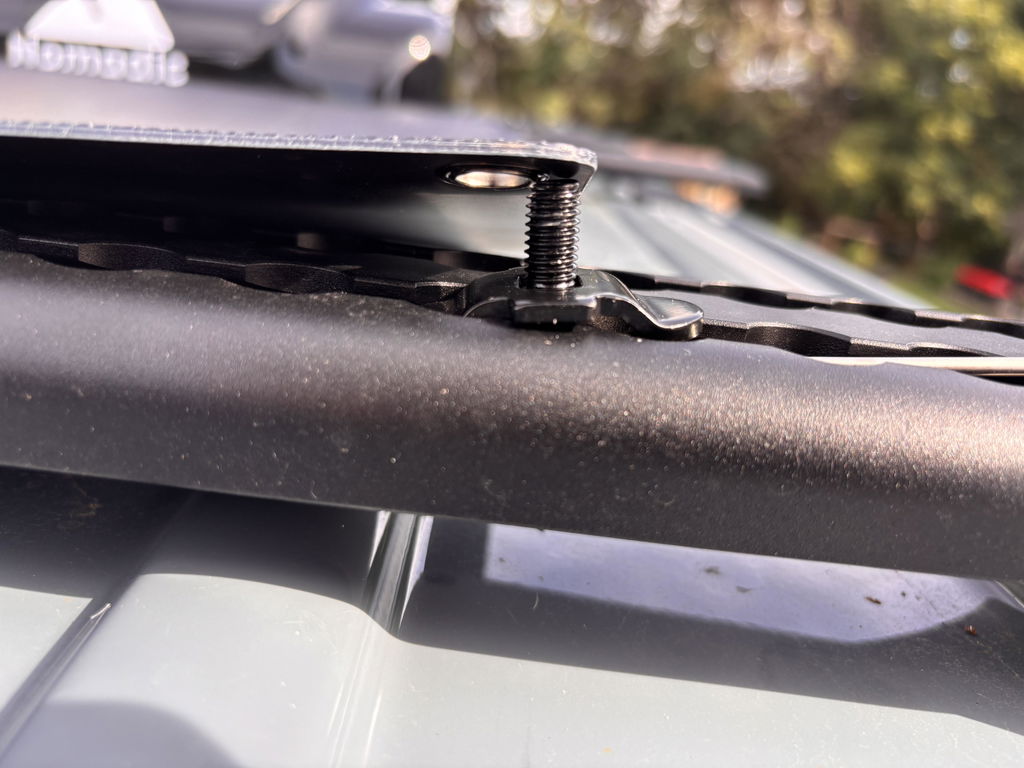
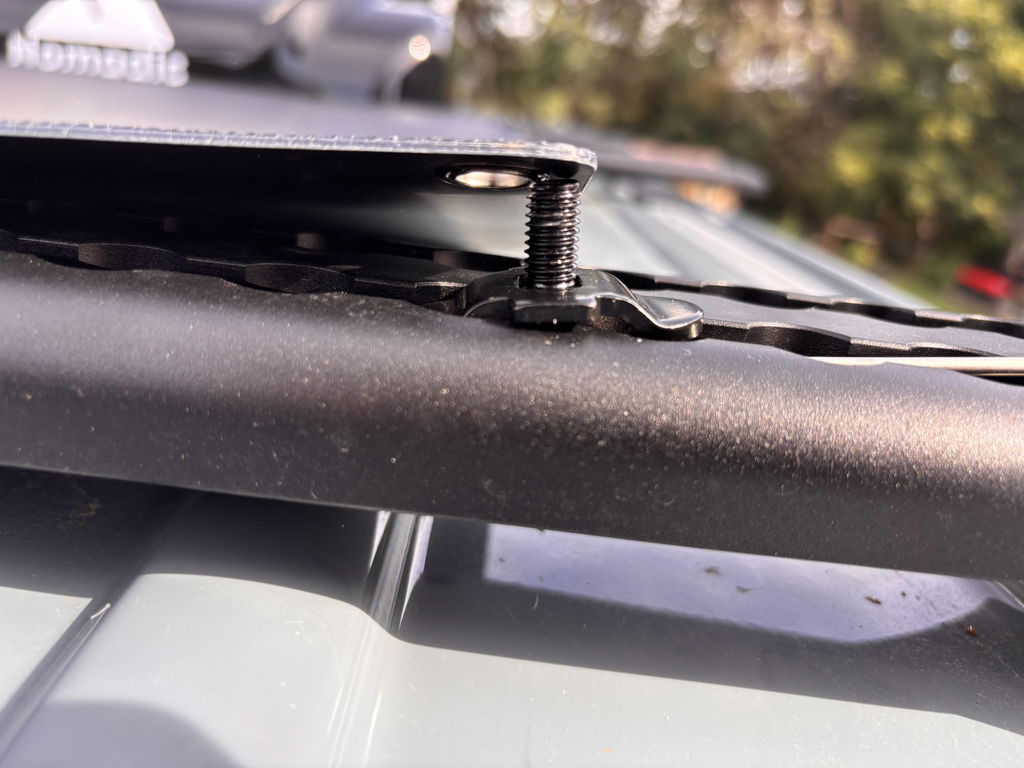
DVA L-Track Slider for DualTrack Roof Rails & INEOS Grenadier Utility Belt
Engineered for use with the DVA DualTrack Roof Rail, the INEOS Grenadier Exterior Utility Belt, and Interior Utility Rails — giving you universal mounting flexibility inside and out. $29.
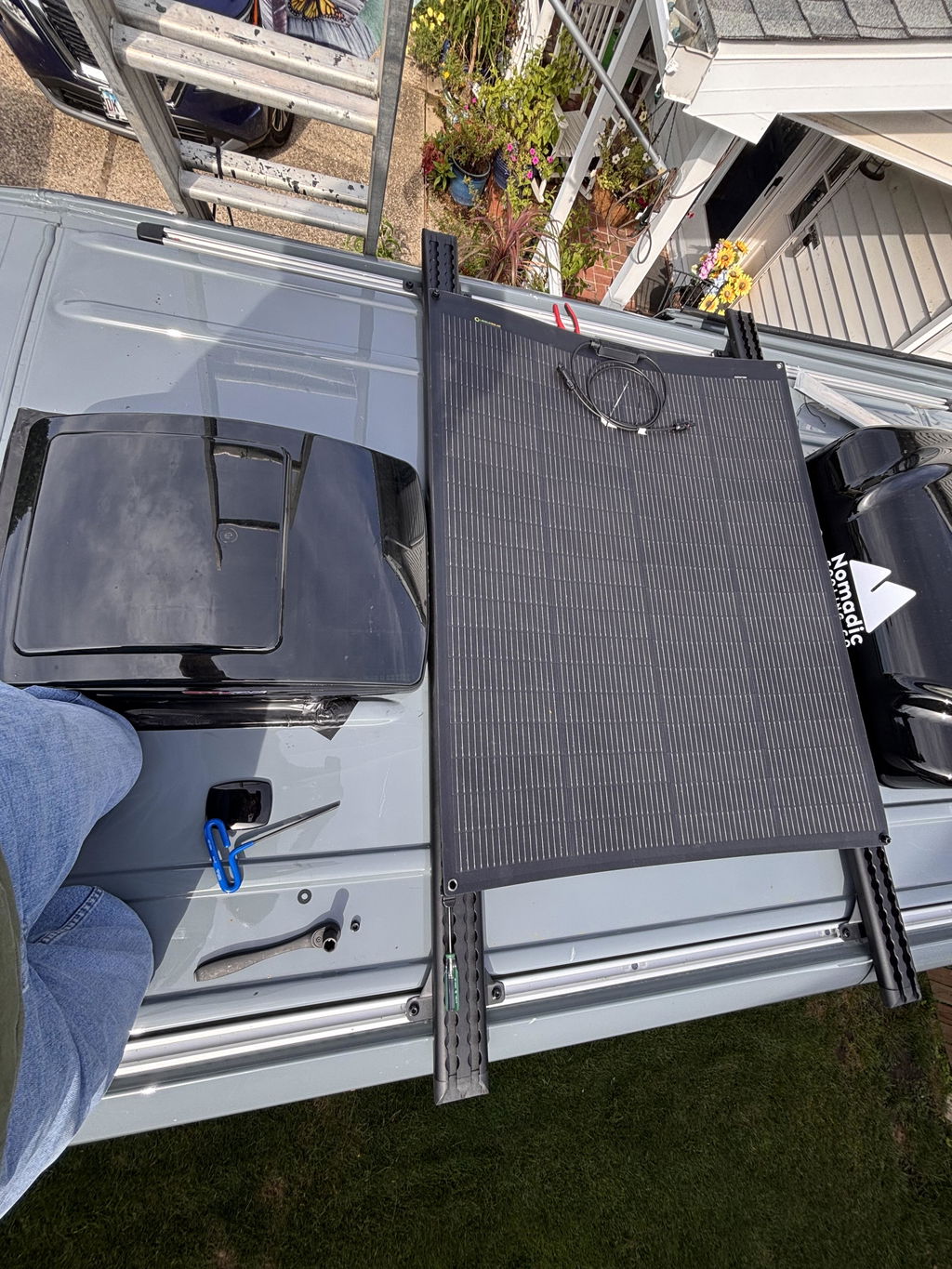
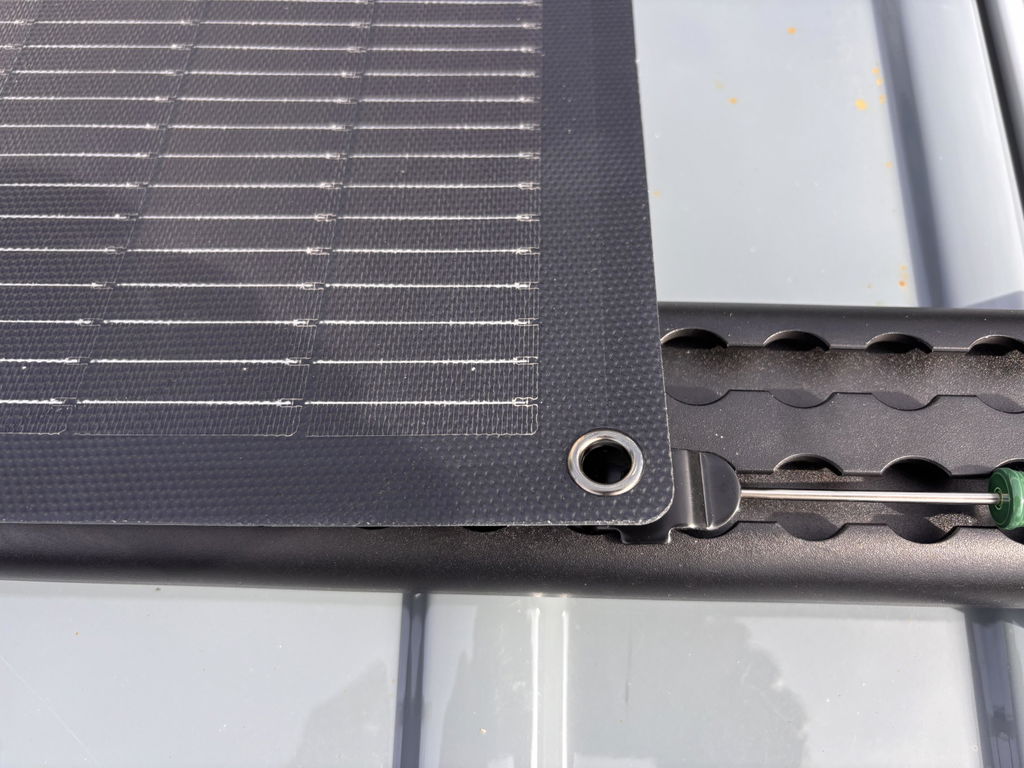
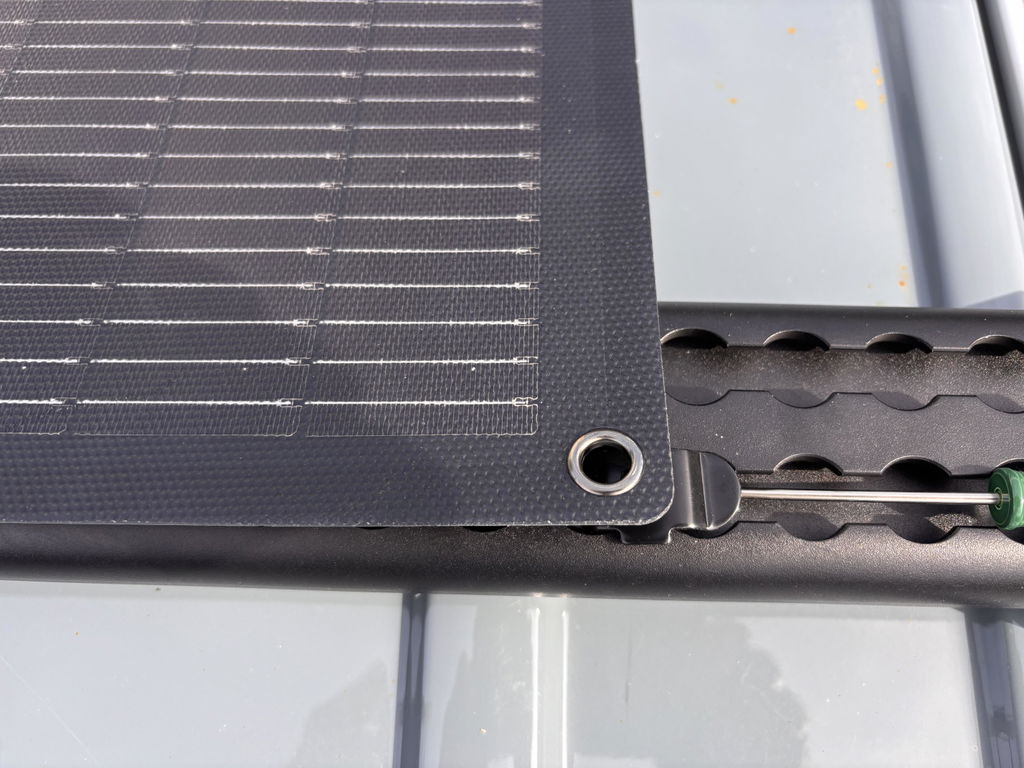
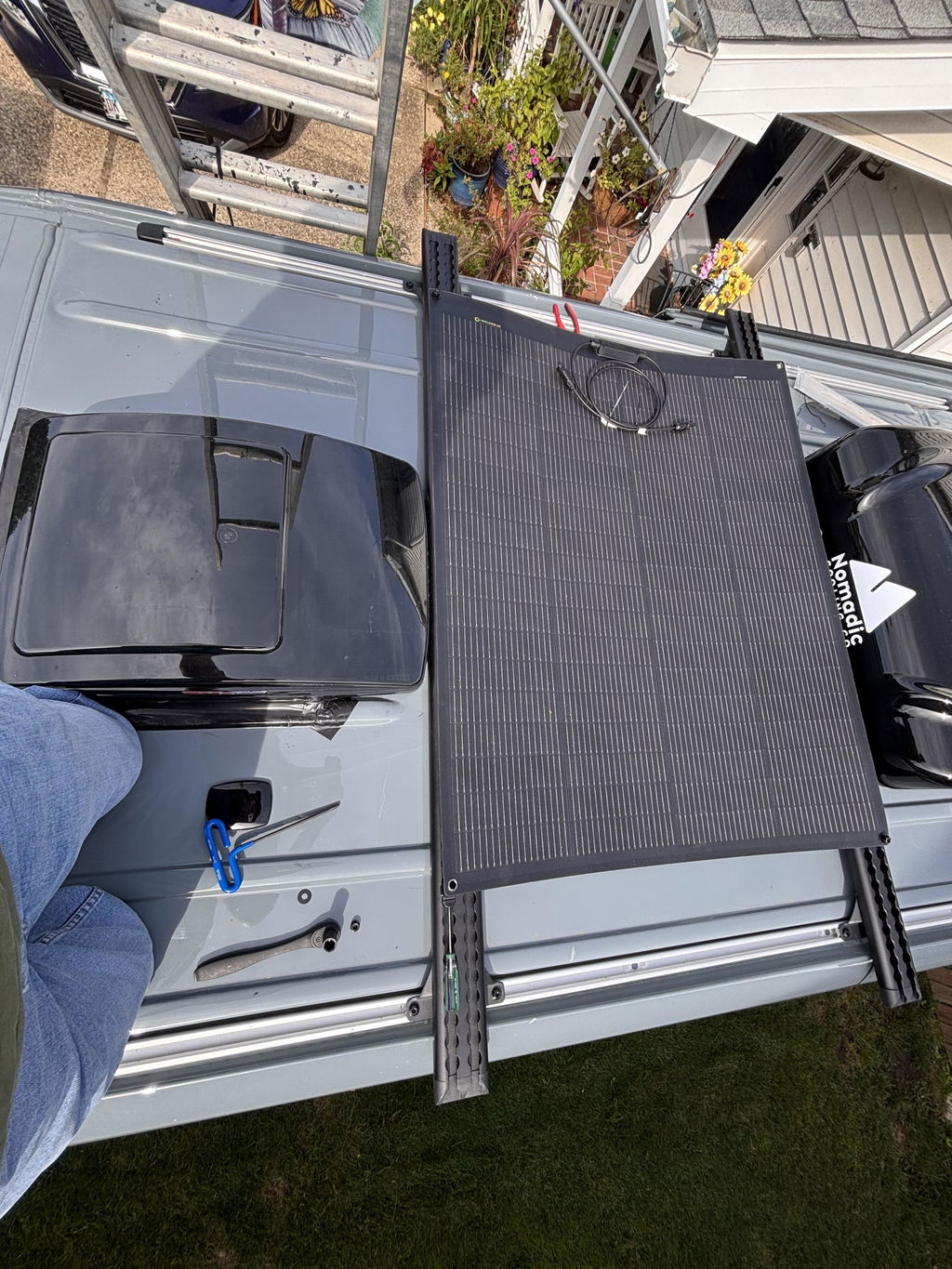
The practical implication: one type of accessory mount — one slider spec — works whether you're mounting to the interior trunk rails, clipping something to the Utility Belt mid-height on the side of the vehicle, or sliding a solar panel bracket along the DualTrack roof rail. This is the cross-ecosystem integration that defines the DVA Vehicle Utility Systems approach vs. buying a different mount format for every surface.
January 2026 saw TheIneosForum's "Cargo Area Side L-Track" thread show up with owners tackling the wall-mount variation:
"You need to make two spacers to get the track to be flush with the plastic surface. And two longer bolts. I find mine to be used often."
Side wall L-Track (cargo area walls, as opposed to trunk floor rails) requires different hardware: a spacer to clear the plastic panel surface and longer fasteners to reach the structural anchor points behind the liner. This is separate from the DVA Interior Utility Rails, which target the trunk floor channel specifically. For cargo wall side rails, the spacer-and-longer-bolt approach is the community-verified method.
What Grenadier Owners Actually Install Inside
The interior accessory priority order that shows up consistently in forum data is not what most new Grenadier owners expect. It's not about comfort or aesthetics first — it's about cargo security, DTP power management, and making the rear a functional working space.
An owner posting a full accessory rundown in August 2025 listed the rear cargo area setup after one year of trail and overland use:
"So far I've done: Rear cargo table (Ineos) — Rear cargo barrier (Ineos) — Side steps (Ineos) — [lighting] — floor and cargo liners — cargo tie-down straps in the rear."
What that list tells us: the first interior installs were OEM functional items (cargo table, barrier), then floor/cargo protection (liners), then cargo tie-down hardware. Comfort upgrades and lighting followed. This is the correct priority sequence — secure the cargo first, protect the surfaces second, optimize comfort third.
For owners building a more serious overland or overlanding-adjacent setup, the typical priority progression based on forum data:
- Interior Utility Rails — unlock all cargo anchor options
- L-Track tie-down rings (4-pack) — cargo security for gear and cooler
- Cargo floor liner / trunk liner — protect the cargo area from mud, water, gear scoring
- Cargo barrier — separate cargo from occupants in an emergency stop
- Rear cargo table or platform — workspace for camp setups, or flat sleeping base
- DTP power accessories — fridge, compressor, accessory outlets
The L-Track rails come first in that sequence because they're a prerequisite — a cargo barrier, table, or platform that requires secure anchor points can't be properly installed without them.
Interior Drawer Systems & Cargo Platforms
For owners who want to maximize the cargo area for both overland and daily use, a drawer system or elevated platform changes the calculus entirely. A well-designed drawer system creates a flat sleeping surface (with rear seats folded), organized under-deck storage, and a stable load floor for gear above.
A law enforcement-style drawer install post on Reddit in February 2025 highlighted the interior dimensions owners are working with:
"Our regular Grenadier drawer system is totally level with the folded seats so you can make a platform to sleep in, or anything else you want to do with it… It's mostly for ease of cargo. 99% of the time I have a Falcon or a Hawk in the back."
The key constraint for Grenadier drawer systems: the rear seat fold-down creates a near-flat floor with a small step at the front. Systems that account for this step (either with a leveling pad or by measuring to the folded-seat height) create a fully usable sleeping platform. Systems that don't account for it create an uncomfortable slope.
Interior Utility Rails become critical in a drawer setup — the drawer module's hold-down points, and anything stored on top of it, need secure L-Track anchor points to resist the lateral G-forces of off-road driving. Without rail-mounted anchors, a drawer system is only held in place by friction and the vehicle floor mounting bolts, which is insufficient for serious trail use.
DTP Power Management for Interior Accessories
The Grenadier's DTP (Data Transfer Points) are the electrical backbone for interior accessories. The DTP system provides switched power outlets accessible without any wiring modification — plug in, configure in the INEOS vehicle settings, power on. This is fundamentally different from traditional 12V accessory wiring and changes which interior accessories are practical to run.
Interior accessories that connect via DTP:
- Portable fridges/freezers — DTP-compatible portable fridge/freezer units using the appropriate DTP connector (DTP06-2S spec)
- 12V compressors — tire inflation, air lockers, air tools
- Lighting accessories — interior work lights, cargo area illumination
- USB/power hub accessories — charging stations in the cargo area for device management on long hauls
The DTP system uses a proprietary connector format (DTP06-2S for 2-pin accessories). When sourcing a DTP cable for a fridge or compressor, verify the connector spec matches your specific accessory's input. Incorrect connectors don't damage the DTP system, but they won't make a positive connection. Pre-wired DTP cables are available in DVA's accessories range for common connection configurations.
DVA's L-Track products cross-link to the DTP ecosystem at the cargo level: Interior Utility Rails secure the fridge in place, L-Track tie-down rings lock down the cooler or compressor mount, and the DTP cable handles power — no additional wiring, no drilling for power leads.
Interior Utility Systems Collection
L-Track rails, tie-down rings, sliders, and DTP-compatible accessories engineered specifically for the INEOS Grenadier's interior cargo architecture.
Cargo Organization Without Permanent Mounts
Not every interior accessory requires a permanent mount. The Grenadier's cargo area accommodates modular systems that set up and break down at the trailhead — particularly useful for owners who split use between work, daily driving, and weekend overland trips.
The modular interior approach typically involves:
- Rail-mounted dividers — slide along L-Track rails to create compartments for different gear categories; no permanent mounting, infinitely repositionable
- L-Track gear bags — overland-specific bags with L-Track attachment loops that lock directly to the interior rail system; load and unload as a unit
- Soft-sided organizers — seat-back and cargo barrier organizers for tools, first aid, navigation, recovery equipment documentation
- Cargo nets — secondary retention for loose items above the main L-Track load; anchor to tie-down rings for positive hold-down
The interior rail foundation makes modular organization practical — without fixed anchor points, loose cargo organization falls back on velcro and friction, which fails the first time a hard trail section sends everything to one side of the vehicle.
Interior vs. Exterior Accessories — The Install Sequence Question
The most common mistake Grenadier owners make is building out the exterior before the interior. Roof system, side steps, rock sliders, and exterior Utility Belt accessories all go up first because they're visible in the photos. The interior gets sorted "later" — and later often means cargo bouncing around on the trail while the roof looks great.
The recommended build sequence that emerges from forum data:
- Interior first: Rails, tie-down rings, cargo barrier, floor liner — everything that makes the cargo area a secure working space
- Power second: DTP accessories (fridge, compressor) — configure and test before adding complexity
- Exterior structural: Rock sliders or side steps — protection before cosmetic
- Roof system: DualTrack crossbars, roof carriers, Starlink mount — once interior and power are dialed in
- Exterior utility: Utility Belt accessories, recovery board carriers, jerry can mounts — final fit-out once the base systems are established
This sequence also reflects the natural debugging order: interior issues (cargo shifting, DTP connectivity, drawer clearances) are easiest to resolve before the roof system adds weight and complicates access. Exterior accessories are generally easier to bolt on after the interior is sorted than to rearrange interior gear around an already-built exterior.
Interior Accessories Priority Summary
| Accessory | Function | Install Priority | Notes |
|---|---|---|---|
| Interior Utility Rails | Cargo anchor foundation | 1 — First | Prerequisite for all L-Track accessories. Retrofits directly to factory mount points. |
| L-Track Tie-Down Rings (4-Pack) | Cargo anchor hardware | 1 — With rails | 4-pack covers both rails, both ends of most cargo. Slide-to-position, no fixed holes. |
| Cargo floor/trunk liner | Surface protection | 2 | Protect before heavy cargo use. Install after rails are set to avoid liner conflict. |
| Cargo barrier | Occupant protection | 2 | Critical for high-speed trail driving. Needs rail anchor points. |
| DTP-powered fridge/compressor | Power management | 3 | L-Track tie-downs secure the unit; DTP provides plug-and-play power. |
| Drawer system | Storage optimization | 3–4 | Account for fold-seat height step. Rail anchors required for off-road use. |
| L-Track Slider | Cross-ecosystem mounting | 4 | Bridges interior rails, Utility Belt, and DualTrack roof — one fitting for all three. |
The DVA Interior Utility System — Platform Thinking
The reason to think about interior accessories as a system rather than individual purchases: every interior mount point feeds into the same rail standard. Interior Utility Rails, exterior Utility Belt, and DualTrack roof crossbars all use L-Track geometry. The same slider, the same tie-down ring format, the same quick-release accessories move between surfaces without a separate mount format per location.
For Grenadier owners building toward a serious overlanding or expedition setup, this matters because gear moves — a Pelican case that rides in the trunk on the trail might live on the roof rack for a road section, or clip to the Utility Belt for basecamp access. A unified mounting standard means the case's attachment point works in all three locations without swapping brackets.
The DVA L-Track collection covers the full stack:
- Interior Utility Rails — $299, 2-rail kit, trunk driver & passenger
- L-Track Tie-Down Ring with Anchor Mount (4-Pack) — standard cargo anchor
- L-Track Slider for DualTrack & Utility Belt — $29 per slider
- Full L-Track & Cargo Accessories Collection →
Interior accessories aren't a finish detail — they're the load floor, the anchor system, and the power infrastructure that makes every exterior upgrade usable in the field. Build interior first. The trail will tell you why.
INEOS Grenadier Interior Utility Rails
Direct bolt-on retrofit. 6061 aluminum. 2-rail kit (driver & passenger trunk sides). OEM-equivalent mounting hardware. Works with all standard L-Track accessories and DVA's full cargo management ecosystem.
L-Track & Cargo Collection
Tie-down rings, sliders, anchor mounts, and the full DVA L-Track ecosystem for INEOS Grenadier interior, exterior Utility Belt, and DualTrack roof systems.